1960 Bob Thompson RCA LP Living Stereo 2145 1/S-1/S NM- Lounge/Cheesecake
$
46


Favourite Auctions
To save auctions to your favourites, please login
If you don't have an account, please register
Description
This is one of those great finds that does not come often. A great Collection of Living Stereo...high quality recordings/sound.
Great CLASSICAL and Lounge/Jazz/Swing...WOW!!!
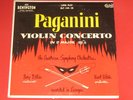
Record... looks NM-, a few minor paper marks. Cover... fabulous front graphic, shows minor age/wear, perhaps a pinched edge, see pics.
Lounge music is a type of easy listening music popular in the 1950s and 1960s. It may be meant to evoke in the listeners the feeling of being in a place, usually with a tranquil theme, such as a jungle, an island paradise or outer space.[1] The range of lounge music encompasses beautiful music-influenced instrumentals, modern electronica (with chillout, and downtempo influences), while remaining thematically focused on its retro-space-age cultural elements. The earliest type lounge music appeared during the 1920s and 1930s, and was known as light music. Contemporaneously, the term lounge music may also be used to describe the types of music played in hotels (the lounge, the bar), casinos, andpiano bars.
Retrospective usage
Exotica, space age pop, and some forms of easy listening music popular during the 1950s and 1960s are now broadly termed lounge. The term lounge does not appear in textual documentation of the period, such as Billboard magazine or long playing album covers, but has been retrospectively applied.
While rock and roll was generally influenced by blues and country, lounge music was derived from jazz and other musical elements borrowed from traditions around the world. Exotica from such artists as Les Baxter, Martin Denny and Arthur Lyman sold millions of records during its heyday. It combined music that was popular outside the USA, such as various Latin genres (e.g.,Bossa Nova, Cha-Cha-Cha, Mambo), Polynesian, French, etc. into a relaxed,[2] palatable sound. Such music could have some instruments exaggerated (e.g., a Polynesian song might have an exotic percussion arrangement using bongos, and vocalists imitating wild animals.) Many of these recordings were portrayed as originating in exotic foreign lands, but in truth were recorded in Hollywood recording studios by veteran session musicians. Another genre, space age pop, mimicked space age sound effects of the time and reflected the public interest in space exploration. With the advent of stereophonic technology, artists such as Esquivel used spatial audio techniques to full effect, creating whooshing sounds with his orchestra.
Allmusic describes lounge as less "adventurous" than exotica or space age pop, but not as "watered-down" as Muzak. "Instead, it occupied the middle ground, appealing to fans of traditional pop as well as space age pop."[3]
A good deal of lounge music was pure instrumental (i.e., no main vocal part, although there could be minor vocal parts). Sometimes, this music would be theme music from movies or TV shows, although such music could be produced independently from other entertainment productions. These instrumentals could be produced with an orchestral arrangement, or from an arrangement of instruments very similar to that found in jazz, or even rock and roll such as the Hammond Organ or electric guitar.
Lounge singers[edit]
Swinging music of the era is also considered lounge and consisted of a schmaltzy continuation of the swing jazz era of the 1930s and 1940s, but with more of an emphasis on the vocalist. The legendary Rat Pack of Frank Sinatra, Dean Martin, and Sammy Davis Jr., along with similar artists such as Bobby Darin, Jackie Gleason, Wayne Newton, Louis Prima, Sonny King, and Sam Butera are notable examples. The music of Burt Bacharach was soon featured as part of many lounge singers' repertoires. Such artists performed mainly at featured lounges in Las Vegascasinos. Documented pioneers of the Las Vegas lounge scene, the Mary Kaye Trio were first on the scene in the early 50's.
Lounge singers have a lengthy history stretching back to the decades of the early twentieth century. The somewhat derisive term lounge lizard was coined then, and less well known lounge singers have often been ridiculed as dinosaurs of past eras[4] and parodied for their smarmy delivery of standards.[5] In any event, these lounge singers, perhaps performing in a hotel or cocktail bar, are usually accompanied by one or two other musicians, and they favor cover songs composed by others, especially pop standards, many deriving from the days of Tin Pan Alley.
Many well-known performers got their start as lounge singers and musicians. Although he claims not to have worked for very long, Billy Joel worked as a lounge musician and penned the song"Piano Man" about his experience. Not all lounge singers, however, sing lounge music.
Resurgence[edit]
price rating