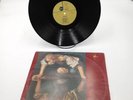
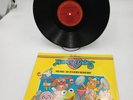
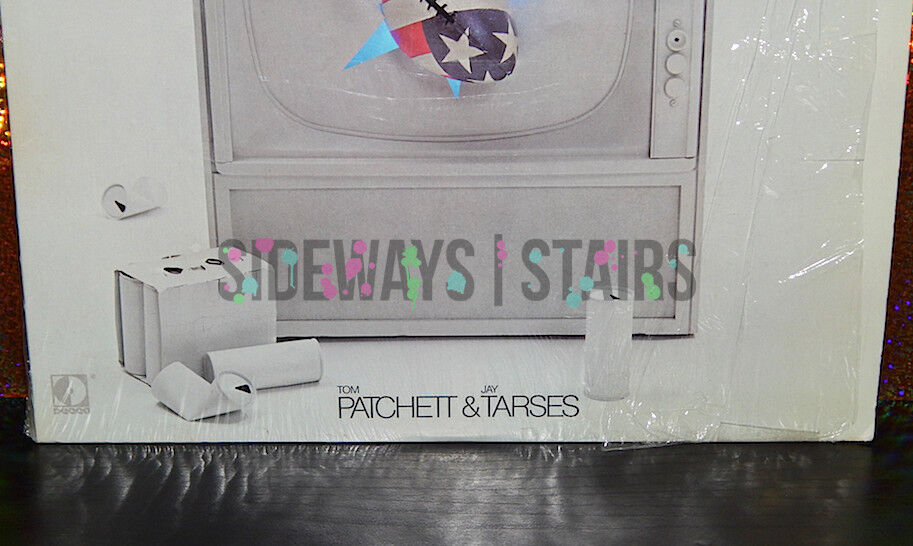
1971 INSTANT REPLAY TWO SIDES OF FOOTBALL LP sports comedy David Axelrod Fedco
$
23
Favourite Auctions
To save auctions to your favourites, please login
If you don't have an account, please register
Description
Check out our other new & used items>>>>>HERE! (click me)
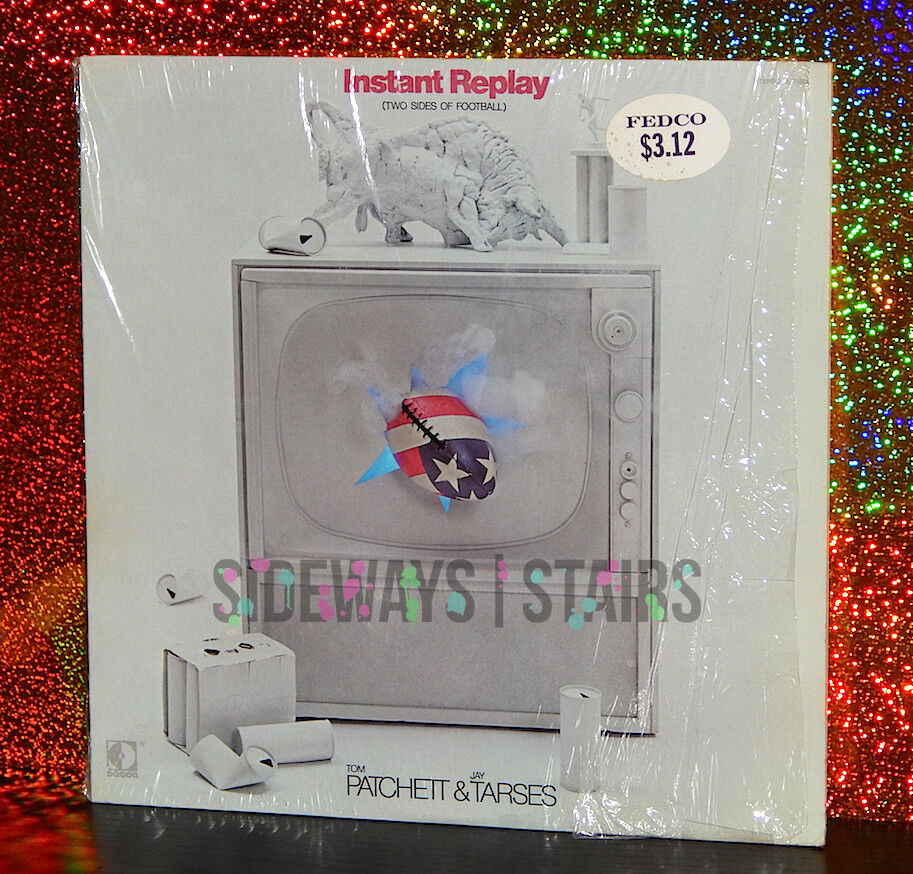
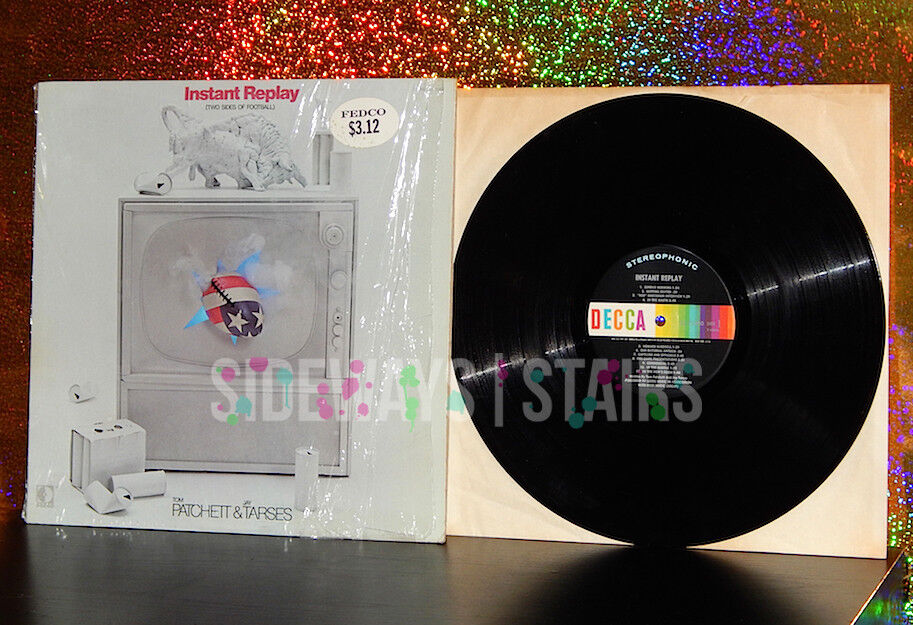
FOR SALE: A unique, sports comedy record featuring an exclusive song by David Axelrod 1971 INSTANT REPLAY (TWO SIDES OF FOOTBALL) LP VINYL RECORD
DETAILS: Exclusive David Axelrod jazz-funk song! The last track on this album is an exclusive song written/produced by jazz specialist and composer, David Axelrod. The song titled, "Run To Daylight", is most likely an outtake or extra song from David's, The Auction, sessions as the album was released the following year (1972). This album is the only way to hear the funky "Run To Daylight".
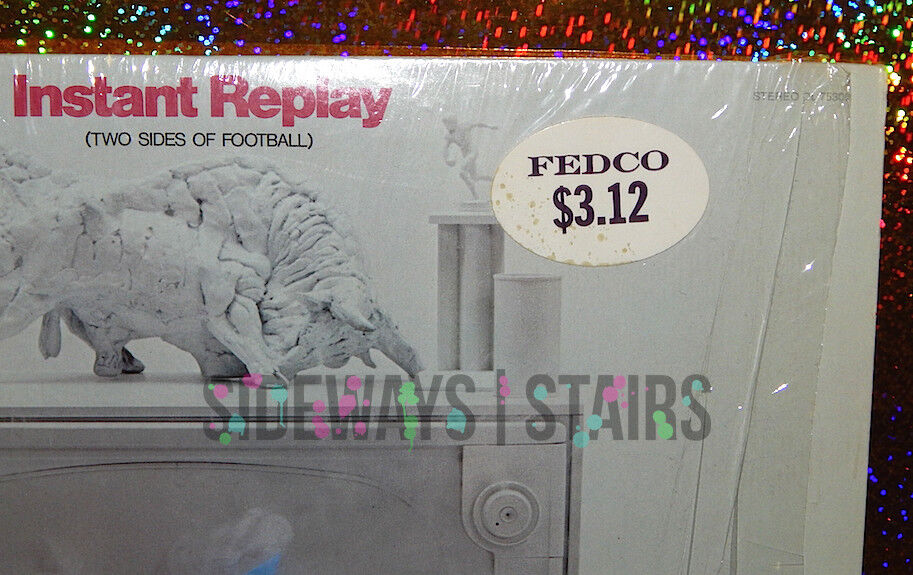
Original Fedco price sticker!
Remember Southern California's own Fedco (1945-1999)? It's been about 25 years since Fedco shut their doors, leaving behind generations of loyal fans of the U.S. Post Office employee-owned retail department store chain. Still attached to the shrink wrap, at the top-right corner, is a '70s Fedco price sticker - a blast from the past.
There's a tie to alien favorite, ALF! Record contributor Tom Patchett is a film director, screenwriter, actor, producer, and co-creator of ALF. Tom executive-produced the unique, comedic TV series and TV movie centered around a weird looking but lovable extraterrestrial. Tom also wrote, as well as directed, the very first episode of ALF.
Label: Decca Records Format: LP Country: US Released: 1971 Catalog #: DL 75300 Genre/Style: Comedy/Novelty, Stand-Up/Sketch, Sports
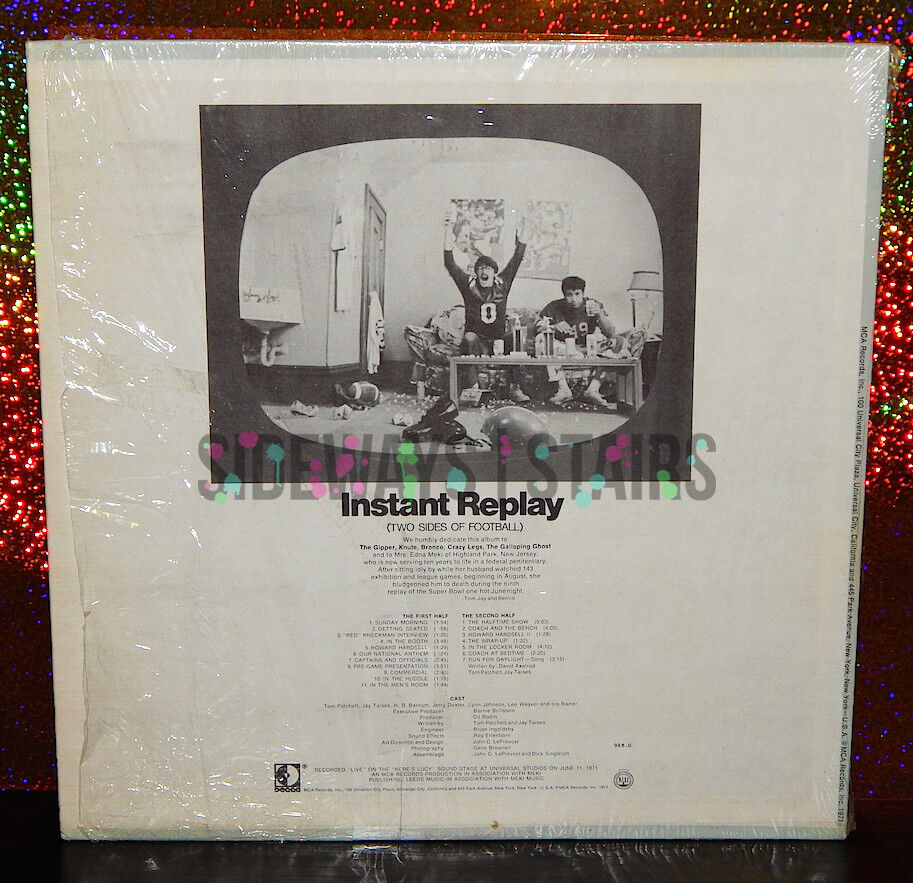
Track Listing: A1 Sunday Morning 1:54
A2 Getting Seated 0:58
A3 "Red" Kneckman Interview 1:20
A4 In The Booth 3:48
A5 Howard Hardsell 1:29
A6 Our National Anthem 0:24
A7 Captains And Officials 2:45
A8 Pre-Game Presentation 3:51
A9 Commercial 2:40
A10 In The Huddle 1:19
A11 In The Men's Room 1:44
B1 The Halftime Show 5:03
B2 Coach And The Bench 4:05
B3 Howard Hardsell II 1:28
B4 The Wrap-Up 1:22
B5 In The Locker Room 4:12
B6 Coach At Bedtime 2:20
B7 Run For Daylight 3:15
CONDITION: Record grade: Very Good Jacket grade: Very Good Plus In very good, pre-owned condition. The record shows previous use (light scratches/scuffs) but the acquired wear doesn't affect the listening experience. The original shrink wrap is still intact, though it has some tears that have been scotch-taped to prevent further damage. The original Fedco retail price sticker is still attached. Inner sleeve has acquired a tear and some discoloration. Please see photos. To ensure safe delivery all items are carefully packaged before shipping out.
THANK YOU FOR LOOKING. QUESTIONS? JUST ASK. *ALL PHOTOS AND TEXT ARE INTELLECTUAL PROPERTY OF SIDEWAYS STAIRS CO. ALL RIGHTS RESERVED.*
Goldmine Records: record grading guide
- Mint (M) Absolutely perfect in every way. Certainly never been played, possibly even still sealed.(More on still sealed under "Other Considerations"). Should be used sparingly as a grade, If at all.
- Near Mint (NM or M-) A nearly perfect record. Many dealers won't give a grade higher than this implying (perhaps correctly)that no record is ever truly perfect.
The record should show no obvious signs of wear. A 45 RPM or EP sleeve should have no more than the most minor defects, such as almost invisible ring wear or other signs of slight handling.
An LP cover should have no creases, folds, seam splits or other noticeable similar defects. No cut-out holes, either. And of course, the same should be true of any other inserts, such as posters, lyric sleeves and the like.
Basically, an LP in near mint condition looks as if you just got it home from a new record store and removed the shrink wrap.
Near Mint is the highest price listed in all Goldmine price guides. Anything that exceeds this grade, in the opinion of both buyer and seller, is worth significantly more than the highest Goldmine book value. - Very Good Plus (VG+) Generally worth 50 percent of the Near Mint value.
A Very Good Plus record will show some signs that it was played and otherwise handled by a previous owner who took good care of it.
Record surfaces may show some signs of wear and may have slight scuffs or very light scratches that don't affect one's listening experiences. Slight warps that do not affect the sound are "OK".
The label may have some ring wear or discoloration, but it should be barely noticeable. The center hole will not have been misshapen by repeated play.
Picture sleeves and LP inner sleeves will have some slight wear, lightly turned up corners, or a slight seam split. An LP cover may have slight signs of wear also and may be marred by a cut-out hole, indentation or corner indicating it was taken out of print and sold at a discount.
In general, if not for a couple things wrong with it, this would be Near Mint. All but the most mint-crazy collectors will find a Very Good Plus record highly acceptable. - Very Good (VG) Generally worth 25 percent of Near Mint value. Many of the defects found in a VG+ record will be more pronounced in a VG disc. Surface noise will be evident upon playing, especially in soft passages and during a song's intro and fade, but will not overpower the music otherwise. Groove wear will start to be noticeable, as with light scratches (deep enough to feel with a fingernail) that will affect the sound.
Labels may be marred by writing, or have tape or stickers (or their residue) attached. The same will be true of picture sleeves or LP covers. However, it will not have all of these problems at the same time, only two or three of them.
Goldmine price guides with more than one price will list Very Good as the lowest price. This, not the Near Mint price, should be your guide when determining how much a record is worth, as that is the price a dealer will normally pay you for a Near Mint record. - Good (G), Good Plus (G+) Generally worth 10-15 percent of the Near Mint value. Good does not mean Bad! A record in Good or Good Plus condition can be put onto a turntable and will play through without skipping. But it will have significant surface noise and scratches and visible groove wear (on a styrene record, the groove will be starting to turn white).
A cover or sleeve will have seam splits, especially at the bottom or on the spine. Tape, writing, ring wear or other defects will start to overwhelm the object.
It is a common item, you'll probably find another copy in better shape eventually. Pass it up. But, if it's something you have been seeking for years, and the price is right, get it...but keep looking to upgrade. - Poor (P), Fair (F) Generally worth 0-5 percent of the Near Mint price. The record is cracked, badly warped, and won't play through without skipping or repeating. The picture sleeve is water damaged, split on all three seams and heavily marred by wear and writing. The LP cover barely keeps the LP inside it. Inner sleeves are fully seam split, crinkled, and written upon.
Except for impossibly rare records otherwise unattainable, records in this condition should be bought or sold for no more than a few cents each.
"David Axelrod (April 17, 1931[1][nb 1] – February 5, 2017)[2] was an American composer, arranger, and producer. After starting out as a staff producer for record companies specializing in jazz, Axelrod became known by the mid-1960s in soul and jazz circles for his recording skills. In 1968, Axelrod embarked on a solo career and released several albums during the 1970s that showcased his characteristic sound, which combined heavily microphoned drums and baroque orchestration, and avant garde themes ranging from the environment to heightened mental awareness.[3]
With his early solo projects, Axelrod was one of the first recording artists to fuse elements of jazz, rock, and R&B.[4] One of his most important records, Song of Innocence (1968), featured instrumental interpretations of 18th-century poet William Blake's poetry collection of the same name done in a contemporary musical vein,[5] leading one critic at the time to coin the term "jazz fusion" and numerous hip hop producers to sample the album's music decades later.[6]
Early life
Born in Los Angeles, California, David Axelrod was raised in its South Central neighborhood, where he grew up listening to R&B and jazz. His father was active in radical labour union politics.[2]
Career
This section needs additional citations for verification. Please help improve this article by adding citations to reliable sources in this section. Unsourced material may be challenged and removed. (January 2020) (Learn how and when to remove this template message)
David Axelrod with Lou Rawls c. 1966
After a stint as a boxer, Axelrod found studio work in the film and television industry, and was soon in demand as a drummer, producer and arranger. He produced his first album in 1959, saxophonist Harold Land’s The Fox.
In late 1963, Axelrod joined Capitol Records as a producer and A&R man. He encouraged the label to develop their black musicians. He began working with Lou Rawls, producing his successful Live album and a succession of gold albums and hit singles including "Love Is a Hurtin' Thing", "Your Good Thing (Is About to End)" and "Dead End Street", which Axelrod wrote and produced. He also began working with Julian "Cannonball" Adderley, one of the most successful jazz crossover artists of the 1960s. Axelrod produced Adderley's 1967 album Mercy, Mercy, Mercy! Live at 'The Club', which spawned the jazz hit "Mercy, Mercy, Mercy”, written by the band's pianist Joe Zawinul, which reached No. 11 in the US pop charts.
Around this time Axelrod also began working with a regular group of leading session musicians, including Howard Roberts (guitar), Carol Kaye (bass) and Earl Palmer (drums). In 1968, Axelrod wrote Mass in F Minor and Release of an Oath in a contemporary rock vein for the Electric Prunes; they were released under the band's name, but because of their complexity were recorded by other musicians.[7] The Electric Prunes disbanded during the recording sessions and Axelrod's team completed the albums. Axelrod's success also encouraged Capitol to allow him to produce solo albums, the first two of which, Song of Innocence (1968) and Songs of Experience (1969), were homages to the mystical poetry and paintings of William Blake. These used sweeping strings, booming sound and heavy beats in a way that was unique for the time and became highly influential many years later. His third solo album, Earth Rot (1970), warned of the impact of environmental pollution and degradation.[5][6]
At the same time, Axelrod continued to work with Adderley and Rawls, and with the South African singer Letta Mbulu, bandleader David Rose, and unsuccessful psychedelic groups The Common People and Hardwater. In 1970, he left Capitol and over the next few years issued a rock version of Handel's oratorio Messiah and further solo albums, as well as continuing to work with Adderley on several albums until the latter's death in 1975. His approach fell out of fashion for a while, and three solo albums he recorded in the 1980s went unreleased.
His work as arranger and composer began to be rediscovered in the early 1990s, and to be sampled by artists such as Dr. Dre, DJ Shadow and Lauryn Hill. In 1993, he released his first album for over a decade, Requiem: Holocaust. Several compilations of his earlier work were also released. In 2000 he released David Axelrod, which used rhythm tracks originally recorded for a proposed third Electric Prunes album, with new arrangements. Dr. Dre used a David McCallum cut ("The Edge") for "The Next Episode" from 1999's 2001. Masta Ace also used a cut from "The Edge" in his song, "No Regrets" from the 2001 album, Disposable Arts. In addition, "The Edge" was heavily sampled on the Emperor Penguin track "Burnt Sienna and Avocado".
Axelrod appeared at the Royal Festival Hall, London, on 17 March 2004 as part of the Ether festival where he conducted a performance of his solo work. He was joined onstage by Richard Ashcroft who sang "Holy Are You", originally recorded by The Electric Prunes. During the intro of his song "The Edge", he spoke on the subject of sampling, saying "I'm such a hypocrite, I hate sampling because it takes jobs away from musicians, but it allows me to have fun. It's screw-you money. So I love this, naturally. Thank you Dre.".[8] At the end of this rare concert he informed the audience that he was suffering from ill health. In 2006, Live at Royal Festival Hall was released as a DVD and CD. Axelrod signed with Blue Note Records in 2005.
Axelrod died of lung cancer on February 5, 2017, at the age of 85.[2][9]
Discography
Albums
List of albums, with selected details Title Details
Song of Innocence
Released: 1968
Label: Capitol
Formats: CD, LP
Songs of Experience
Released: 1969
Label: Capitol
Formats: CD, LP
Earth Rot
Released: 1970
Label: Capitol
Formats: CD, LP
Rock Messiah
Released: 1971
Label: RCA
Formats: LP
The Auction
Released: 1972
Label: Decca
Formats: LP
Heavy Axe
Released: 1974
Label: Fantasy
Formats: LP, CD
Seriously Deep
Released: 1975
Label: Polydor
Formats: LP, CD
Strange Ladies
Released: 1977
Label: MCA
Formats: LP
Marchin'
Released: 1980
Label: MCA
Formats: LP
Requiem: The Holocaust
Released: 1993
Label: Stateside
Formats: CD
The Big Country
Released: 1995
Label: Stateside
Formats: CD
David Axelrod
Released: 2001
Label: Mo' Wax
Formats: CD
David Axelrod Live at Royal Festival Hall
Released: 2004
Label:
Formats: CD/DVD
Compilation
The Edge: David Axelrod At Capitol Records 1966-1970 (Capitol Jazz, 2005)
Singles
"Gumshoe" / "The Lost Lament" (Decca, 1972)
"The Leading Citizen" (Decca, 1972)
"The Dr & The Diamond" (Mo' Wax, 2001)
"Holy Thursday" (Stateside, 2002) (split)
"The Signs" (Capitol Jazz, 2005) (split)
"London" (Stateside, 2006)
Other credits
As arranger
With Hampton Hawes
Northern Windows (Prestige, 1974) - also producer
With The Electric Prunes
Mass in F Minor (Reprise, 1968)
Release of an Oath (Reprise, 1968)
With Gene Ammons
Brasswind (Prestige, 1974)
As producer
With David McCallum
Music...A Part Of Me (Capitol ST 2432, 1966)
Music...A Bit More Of Me (Capitol ST 2498, 1966)
Music...It's Happening Now! (Capitol ST 2651, 1967)
McCallum (Capitol ST 2748, 1968)
With Donna Loren
Beach Blanket Bingo (Capitol T-2323, ST-2323, 1965)
"Blowing Out the Candles" b/w "Just a Little Girl" (Capitol 5250, 1964)
"Ten Good Reasons" b/w "Ninety Day Guarantee" (Capitol 5337, 1964)
"New Love" b/w "So, Do the Zonk" (Capitol 5409, 1965)
These Are the Good Times: The Complete Capitol Recordings (Now Sounds CRNOW-47, 2014) (tracks: "Just a Little Girl", "So, Do the Zonk", "Good Things" [previously unreleased], "Leave Him to Me" [previously unreleased], "Ten Good Reasons", "Ninety Day Guarantee", "Blowing Out the Candles", "Drop the Drip" [previously unreleased], and the tracks from the Beach Blanket Bingo album).
With Cannonball Adderley
Cannonball Adderley Live! (Capitol, 1964)
Live Session! (Capitol, 1964))
Cannonball Adderley's Fiddler on the Roof (Capitol, 1964)
Domination (Capitol, 1965)
Mercy, Mercy, Mercy! Live at 'The Club' (Capitol, 1966)
74 Miles Away (Capitol, 1967)
Why Am I Treated So Bad! (Capitol, 1967)
In Person (Capitol, 1968)
Accent on Africa (Capitol, 1968)
Country Preacher (Capitol, 1969)
The Cannonball Adderley Quintet & Orchestra (Capitol, 1970)
Love, Sex, and the Zodiac (Capitol, 1970)
The Price You Got to Pay to Be Free (Capitol, 1970)
The Happy People (Capitol, 1972)
The Black Messiah (Capitol, 1972)
Music You All (Capitol, 1976)
Inside Straight (Capitol, 1973)
Pyramid (Capitol, 1974)
Walk Tall: The David Axelrod Years (Stateside, 2006)[2CD] – compilation" (wikipedia.org)
"Instant replay or action replay is a video reproduction of something that recently occurred which was both shot and broadcast live.
The video, having already been shown live, is replayed in order for viewers to see again and analyze what had just taken place.
Some sports allow officiating calls to be overturned after the review of a play. Instant replay is most commonly used in sports, but is also used in other fields of live TV.
While the first near-instant replay system was developed and used in Canada, the first instant replay was developed and deployed in the United States.
Outside of live action sports, instant replay is used to cover large pageants or processions involving major dignitaries (e.g. monarchs, religious leaders such as the Catholic Pope, revolutionary leaders with mass appeal), political debate, legal proceedings (e.g. O.J. Simpson murder case), royal weddings, red carpet events at major award ceremonies (e.g. the Oscars), grandiose opening ceremonies (e.g. 2022 Winter Olympics opening ceremony), or live feeds to acts of terrorism currently in progress.
Instant replay is used because the events are too large to cover from a single camera angle, events are too fast moving to catch all the nuance on the first viewing, the high points of the event are surrounded by much of a muchness, or punditry is supplied to punch the event up, such as analyzing the daring plunge of a plunging neckline to the last revealing millimeter.
In media studies, the timing and length of the replay clips as well as the selection of camera angles is a form of editorial content with a large impact on how the audience perceives the events covered.
Because of the origin of television as a broadcast technology, a "channel" of coverage is traditionally a single video feed consumed in the same way by all viewers. In the age of streaming media, live current events can be accessed by the final viewer with multiple streams of the same content playing concurrently in different windows or on different devices, often with direct end-user control over rewinding to a past moment, as well as an ability to select accelerated, slow-motion or stop-action replay speed....It is no longer difficult for the end viewer to linger over the portions which present novel information, such as updated results from daily case counts or new epidemiological models, and then to speed through the dull parts at accelerated playback speed. This can be framed as a novel media consumption modality of instantaneous time shifting.
History
During a 1955 Hockey Night in Canada broadcast[1][2] on CBC Television, producer George Retzlaff used a "wet-film" (kinescope) replay, which aired several minutes later. Videotape was introduced in 1956 with the Ampex Quadruplex system. However, it was incapable of displaying slow motion, instant replay, or freeze-frames, and it was difficult to rewind and set index points.
The end of the March 24, 1962, boxing match between Benny Paret and Emile Griffith was reviewed a few minutes after the bout ended, in slow motion, by Griffith and commentator Don Dunphy. In hindsight it has been cited as the first known use of slow motion replay in television history.[3]
CBS Sports Director Tony Verna invented a system to enable a standard videotape machine to instantly replay on December 7, 1963, for the network's coverage of the US military's Army–Navy Game. The instant replay machine weighed 1,300 pounds (590 kg).[4] After technical hitches, the only replay broadcast was Rollie Stichweh's touchdown. It was replayed at the original speed, with commentator Lindsey Nelson advising viewers "Ladies and gentlemen, Army did not score again!"[4] The problem with older technology was the difficulty of finding the desired starting point; Verna's system used audio tones activated as an interesting event unfolded, which technicians could hear during the rewinding process.
Replay from analog disk storage was tried out by CBS in 1965, and commercialized in 1967 by the Ampex HS-100, which had a 30-second capacity and freeze frame capability.[5]
Instant replay has been credited as a primary factor in the rise of televised American football, although it was popular on television even before then. While one camera was set up to show the overall "live" action, other cameras, which were linked to a separate videotape machine, framed close-ups of key players. Within a few seconds of a crucial play, the videotape machine would replay the action from various, close-up angles, in slow motion.[6]
Prior to instant replay, it was almost impossible to portray the essence of an American football game on television. Viewers struggled to assimilate the action from a wide shot of the field, on a small black-and-white television screen. However, as Erik Barnouw says in his book, "Tube of Plenty: The Evolution of American Television", with replay technology, "brutal collisions became ballets, and end runs and forward passes became miracles of human coordination".[6] Thanks in large part to instant replay, televised football became evening entertainment, perfected by ABC-TV's Monday Night Football, and enjoyed by a wide audience.[6]
Marshall McLuhan, the noted communication theorist, famously said that any new medium contains all prior media within it. McLuhan gave Tony Verna's invention of instant replay as a good example. "Until the advent of the instant replay, televised football had served simply as a substitute for physically attending the game; the advent of instant replay – which is possible only with the television – marks a post-convergent moment in the medium of television".
In sports production for television
During the live television transmission of sports events, instant replay is often used to show again a passage of play which was especially important or remarkable, or which was unclear at first viewing.
Replays are typically shown during a break or lull in the action; in modern broadcasts, it will be at the next break in play, although older systems were sometimes less instant. The replay may be in slow motion or feature shots from multiple camera angles.
Video servers, with their advanced technology, have allowed for more complex replays, such as freeze frame, frame-by-frame review, replay at variable speeds, overlaying of virtual graphics, instant analysis tools such as ball speed or immediate distance calculation. Sports commentators analyze the replay footage when it is being played, rather than describing the concurrent live action.
Instant replays are used today in broadcasting extreme sports, where the speed of the action is too high to be easily interpreted by the naked eye, using combinations of advanced technologies such as video servers and high-speed cameras recording at up to several thousand frames per second.
Sports production facilities often dedicate one or more cameras to cover star players, or a key player likely to make a big play in a specific context (e.g. on last down and long in North American football, production crews will often isolate a wide receiver with sure hands in a crowd and/or superior foot speed). These are sometimes called isolation cameras, isolated cameras, or iso-cams for short.[7]
Production equipment
This section contains content that is written like an advertisement. Please help improve it by removing promotional content and inappropriate external links, and by adding encyclopedic content written from a neutral point of view. (December 2021) (Learn how and when to remove this template message)
EVS LSM remotes in an OB Production Truck
EVS Broadcast Equipment is a leading manufacturer of replay production servers [8] which have been used by major broadcasters for large events such as the FIFA World Cup, Olympics, Super Bowl, MLB Playoffs, and NBA Playoffs. A 2019 Sports Video Group survey revealed that 213 out of 257 HD mobile production trucks were using some form of EVS replay gear. [9]
Evertz Microsystems' DreamCatcher [10] replay system is also widely used by college and pro sports clubs including teams in the NBA, MLB and NHL.
Variant Systems Group's Envivo Replay,[11] is also used by college and pro sports clubs including University Of Oregon, Western Michigan University, and the NBA Portland Trail Blazers.
Use by officials
Some sports organizations allow referees or other officials to consult replay footage before making or revising a decision about an unclear or dubious play. This is variously called video assisted referee (VAR), video referee, video umpire, instant replay official, television match official, third umpire or challenge. Other organizations allow video evidence only after the end of the contest, for example to penalize a player for misconduct not noticed by the officials during play.
The role of the video referee differs varies; often they can only be called upon to adjudicate on specific events. When instant replay does not provide conclusive proof, rules may say whether the original call stands, or whether a specific call must be done (most usually no score).
Leagues using instant replay in official decision making include the National Hockey League, National Football League, Canadian Football League, National Basketball Association, and Major League Baseball. It is used international in field hockey and rugby union as well. Since 2017, some association football competitions have employed the use of a "Video Assistant Referee" (aka "VAR").
Due to the cost of television cameras and other equipment needed for a video referee to function, most sports only employ them at a professional or top-class level.
Baseball
Main article: Instant replay in Major League Baseball
Umpires in St.Louis await the ruling.
In Major League Baseball, instant replay has been introduced to address "boundary calls", which include questions on whether or not a hit should be considered a home run (HR). Among reviewable plays are: Fair Ball-HR; Foul Ball, Ball Clearing Wall-HR; Ball Staying in Play-Live Ball; Ball Leaving Field of Play-HR; and, Ball or Player interfered with by spectators (called Spectator Interference). The latest MLB collective bargaining agreement, expands instant replay to include: Fair Ball; Foul Ball along foul lines, or Ball Caught for Out; Ball Trapped Against Ground or Wall; as well as expanding Interference calls to all walls regardless of whether it is a "boundary call" or not.
In Little League Baseball, instant replay was initially adopted for the Little League World Series only but later was expanded to include the qualifying regional tournaments as well. It includes all "boundary call" plays reviewable at the Major League Level, in addition to adding review to plays involving force outs, tag plays on the base paths, hit batters, and for defensive appeals regarding whether a runner missed touching a base.
Gridiron football codes
Main article: Replay review in gridiron football
Instant Replay booth at Raymond James Stadium
Referee (left) talking with the replay official
In American and Canadian football, instant replay can take place in the event of a close or otherwise controversial call, either at the request of a team's head coach (with limitations) or the officials themselves. There are restrictions on what types of plays can be reviewed. In general, most penalty calls or lack thereof cannot be reviewed, nor can a play that is whistled dead by the officials before the play could come to its rightful end.
American and Canadian football leagues vary in their application and use of instant replay review. In the National Football League, each coach is allowed two opportunities per game to make a coach's challenge, and get a third challenge if both of the original two challenges were successful. A challenge can only be made on certain reviewable calls on plays that begin before the two-minute warning and only when a team has at least one timeout remaining in the half. The Canadian Football League uses similar rules as the NFL, except the game has a three-minute warning near the end of each half instead of two. In NCAA football, each team only has one challenge per game, and gets a second challenge if the first one is successful. In all three rules codes, the challenging team is charged with a timeout if their challenge is unsuccessful.
U.S. high school rules prohibited the use of replay review, even if the venue had equipment that allows the practice, before 2019, when the National Federation of State High School Associations (NFHS) gave its member associations the option to allow its use in postseason games only. In Texas, where high schools have always based their rules on those of the NCAA, the University Interscholastic League, which governs public-school sports, allows its use only in state championship finals. The main governing body for Texas private schools, the Texas Association of Private and Parochial Schools, follows pre-2019 NFHS practice by banning replay review. " (wikipedia.org)
"American football is the most popular sport in the United States.[2][3][4][5][6][7][8] The National Football League has the highest revenue and average attendance of any sports league in the world. In the United States, the game is most often referred to as simply "football".
Organization in the United States
There is no single national governing body for American football in the United States or a continental governing body for North America. There is an international governing body, the International Federation of American Football, or IFAF. Befitting its status as a popular sport, football is played in leagues of different size, age and quality, in all regions of the country. A team / academy may be referred to as a 'football program'[9] – not to be confused with football program.
Professional
The governing body for American football in the United States is USA Football.
Action from the DC Defenders (red) and Seattle Dragons (white) in the XFL, a professional league that has undergone three incarnations in its history.
The 32-team National Football League (NFL) is currently the only major American football league in the United States. There have been numerous attempts over the past several decades to create a second major or high-level professional league, most of which failed within a few years or, in the cases of the All-America Football Conference and 1960s American Football League, merged with the NFL.
The NFL has not operated any developmental minor leagues since the folding of the NFL Europe League in 2007. From the time of the Spring Football League's 2000 collapse until the founding of the independent United Football League in 2009, there were no minor American football leagues (independent or affiliated) anywhere in the country. Since then, there has been the Stars Football League (which ran from 2011 through 2013), Fall Experimental Football League (which played from 2014 to 2015 before it was reformatted as the non-paying The Spring League from 2017 to 2022, then into the paying new United States Football League in 2022), and the Alliance of American Football, which played one abbreviated season in 2019 before collapsing in a management dispute. The AAF positioned itself as an upper-level minor league serving to transition between the college game and the NFL.
The XFL, a revamp of a league of the same name that played one season in 2001, began play in February 2020. In contrast to the former AAF, it does not position itself as a minor league, but an independent alternative league. But the five weeks into the season caused the league to go on hiatus, with the league set to return in 2023 under new ownership.
There are several professional and semi-professional indoor football leagues, played at Hockey-sized arenas. The largest and oldest one is the Indoor Football League which has 13 teams spanning from Ohio to California. Historically the Arena Football League, which launched in 1987 was the most prominent league but as the league had operational issues following its 2008 bankruptcy, teams folded and left for other leagues before the Arena Football League folded in 2019. The National Arena League includes the intellectual properties of several former AFL teams; other leagues such as the American Arena League and Champions Indoor Football are primarily semi-professional. Most indoor leagues are regional in nature. Indoor football leagues play by significantly different rules that accommodate a smaller field of play.
Some players that do not make the NFL play in the XFL, in indoor leagues, or go to Canada and play in the Canadian Football League, which operates professionally on a somewhat older rule system with a number of differences from the American game but still recognizable as "football" to the casual American football observer. The CFL allocates half of its teams' rosters for players born and raised in Canada but allows the rest of the players to be foreign born (in practice, these spots are almost always filled by Americans); the CFL also has television presence in the United States and as recently as 1995 played games in the U.S.
University and collegiate
Further information: College football
Alabama Crimson Tide football fans tailgating on the main campus of the University of Alabama. College football is particularly popular in the southeastern United States
College football is also popular throughout North America.[10] Most of college football in the United States is governed by the NCAA. Many colleges and universities have football teams, often with dedicated football stadiums. These teams mostly play other similarly sized schools, through the NCAA's divisional system, which divides collegiate sports teams into four divisions (I-FBS, I-FCS, II and III). The largest, most popular collegiate teams routinely fill stadiums larger than 75,000.[11] Eight college football stadiums—the University of Michigan's Michigan Stadium, Penn State's Beaver Stadium, Ohio State's Ohio Stadium, Texas A&M's Kyle Field, the University of Tennessee's Neyland Stadium, LSU's Tiger Stadium, Alabama's Bryant–Denny Stadium, and Darrell K Royal–Texas Memorial Stadium at the University of Texas at Austin—seat more than 100,000 fans and usually sell out. The weekly autumn ritual of college football includes marching bands, cheerleaders, homecoming, parties, the tailgate party; it forms an important part of the culture in much of small-town America.[12][13] Football is a major source of revenue to the athletic programs of schools, public and private, in the United States.[14] The top college football players enter the NFL Draft after their college careers are over, in hopes of signing with an NFL team.
"FBS" and "FCS" are abbreviations for the Football Bowl Subdivision and Football Championship Subdivision, two sections of Division I that exist only in football. These two subdivisions were formerly known as Divisions I-A and I-AA respectively. The Championship Subdivision, consisting mostly of smaller schools than the FBS but larger than D-II, has a multiple-round playoff system just like Divisions II and III, while the Bowl Subdivision has only a limited, and unofficial, four-team playoff and has historically only featured division championships and bowl games. FBS and FCS teams can, and often do, play against each other. Unofficially, the Bowl Subdivision is divided into two further subdivisions, "major conferences" (also known as "Power Five conferences") and "mid-majors" (known in modern parlance as the "Group of Five"). In practice, only major conference teams are eligible to compete for the national championship and receive significant favor in the opinion polling over mid-majors, and it was not until the addition of the BCS National Championship Game that mid-majors had a realistic chance at appearing in one of the major bowls. Although the FCS has a playoff, three conferences do not participate (the Ivy League does not allow its teams to play in the postseason, and the historically black SWAC and MEAC instead play each other in a bowl of their own). Division III teams do not offer scholarships to their players; two Division I FCS leagues also do not offer scholarships—the Ivy League, which prohibits athletic scholarships in any sport, and the Pioneer Football League, which only competes in football and whose members all offer scholarships in non-football sports.
With the exception of the annual Army–Navy Game, only Power Five conference teams air on national broadcast television, although mid-majors, FCS teams, D-II and D-III games can see more limited coverage on cable and local television.[citation needed]
Though the NCAA is the most publicized college athletic organization, the NAIA (which houses mostly smaller private colleges in the midwest), NJCAA (an association for community colleges), and California Community College Athletic Association (CCCAA) (that state's equivalent to the NJCAA) also sanction football games; there also exists a club football circuit for student-run teams and colleges that choose not to compete at the varsity level. In addition to this, 10 colleges field teams in the Collegiate Sprint Football League, a league in which all players must weigh no more than 178 pounds (81 kg) in order to be eligible to play; four of those teams are long-established sprint teams that co-exist alongside their NCAA counterparts (two from the Ivy League and two military academies), while six teams that have been added since the CSFL began an ongoing expansion in 2008 either never had a varsity squad (one recent addition, 2015 expansion team Chestnut Hill College, was an all-women's school that did not even admit men until 2003) or downgraded from an NCAA team to a sprint team.[citation needed]
High school
Further information: High school football
Most American high schools field football teams. High school football is popular; top schools regularly fill stadiums holding over 10,000 fans, and can afford artificial playing surfaces.[citation needed]
High school teams generally play only against other teams from their state (notable exceptions include matchups between nearby schools located on opposite sides of a state line and occasional matchups between two nationally ranked teams for television purposes). Still, some private Christian high schools play for national championships through organizations like the Federated Christian Athletic Association. Public high school football in most states, as is the case with other high school sports, is governed by the National Federation of State High School Associations (NFHS).
For rural schools that do not have the student body to support a full football team, the NFHS sanctions nine-man football (most popular in the upper Midwest), six-man football (most commonly used in Texas, although previously more widely popular and undergoing a minor revival elsewhere), and eight-man football (which the most common reduced-man format in most other states).
Adult Amateur Football and Semi-Pro Football
Adult amateur football, also known as semi-pro football, is a level of American football. It is commonly known as "working man's" football, meaning the players have regular jobs and play football on the weekends. Though the players do not get paid, the leagues and the games are run in a somewhat professional manner. For most leagues, it is against the rules to pay its players to play. The rules of the game are usually a hybrid of NFL and NCAA rules.
There are several different leagues playing in the United States:
The North American Football League (NAFL) was an adult amateur American football league. Its teams were located mainly in the Eastern, Midwestern and Southern United States. The teams mostly played regionally in the regular season to keep travel short. In the playoffs, winners of regional play will meet each other for the league championship.
The New England Football League (NEFL) has over 30 teams, with at least one in each of the six New England states. The league has three skill levels (A being more for recreational play; AAA being the most competitive; AA is somewhat in between).
The Eastern Football League, based in New England, but at times teams from New York state have competed, is one of the country's oldest semi-pro leagues. It started play in 1961.
The Mid Continental Football League began play in 1991 and by the 1990s had expanded through much of the midwest and mid-Atlantic United States before the league split apart and contracted into a four-state area in the midwest. Upstate New York also houses the oldest surviving professional football club in the United States, the Watertown Red & Black, founded in 1896.
The Pacific Northwest Football League (PNFL) started in 2016 and currently has six teams, including four in Portland, Oregon and 2 in Vancouver, Washington.
Several leagues supporting women's semi-professional football play have existed. The current major league is the Women's Football Alliance (WFA). The WFA started to play in 2009 stocked with teams from two dissolved leagues, the National Women's Football Association and Women's Professional Football League (NWFA and WPFL respectively).
US National American football team
Further information: United States national American football team
USA Football assembles a national football team for competition in the IFAF World Championship every four years. Because of concerns over competitive balance, USA Football did not field teams for the first two events in 1999 and 2003. The 2007 team consisted solely of amateur players who had graduated from college that spring, from a diverse mix of smaller and larger colleges and universities. The 2011 squad's criteria were looser, allowing some professional players to play (mostly unemployed, lower-end and minor league players; no NFL or NCAA stars participated). Both the 2007 and 2011 incarnations of the team won their year's respective world championship.
The IFAF also fields an U-19 team composed of high school football players that has participated in the 2009, 2012, 2014 and 2016 junior world championships. The national U-19 team won the 2009 and 2014 contests but lost the 2012 contest to Canada.
Women's Football in the United States
Main article: Women's Football in the United States
Women's Football teams in the United States have had many Sports leagues, among them can be named the Women's Professional Football League (1965-1973), the Women's Professional Football League, the Independent Women's Football League, the Women's Football Alliance and the X League. In 1970 Patricia Palinkas became the holder of the Orlando Panthers and became the first woman to play in the Atlantic Coast Football League,[15] and in 2010 Katie Hnida became the kicker for the Fort Wayne FireHawks in the Continental Indoor Football League." (wikipedia.org)
"The National Football League (NFL) is a professional American football league that consists of 32 teams, divided equally between the American Football Conference (AFC) and the National Football Conference (NFC). The NFL is one of the major professional sports leagues in the United States and Canada and the highest professional level of American football in the world.[5] The league is headquartered in New York City.
Each NFL season begins with a three-week preseason in August, followed by the 18-week regular season which runs from early September to early January, with each team playing 17 games and having one bye week. Following the conclusion of the regular season, seven teams from each conference (four division winners and three wild card teams) advance to the playoffs, a single-elimination tournament that culminates in the Super Bowl, which is contested in February and is played between the AFC and NFC conference champions.
The NFL was formed in 1920 as the American Professional Football Association (APFA) before renaming itself the National Football League for the 1922 season. After initially determining champions through end-of-season standings, a playoff system was implemented in 1933 that culminated with the NFL Championship Game until 1966. Following an agreement to merge the NFL with the rival American Football League (AFL), the Super Bowl was first held in 1967 to determine a champion between the best teams from the two leagues and has remained as the final game of each NFL season since the merger was completed in 1970.[6]
The NFL is the wealthiest professional sports league in the world by revenue[7] and the sports league with the most valuable teams.[8] The NFL also has the highest average attendance (67,591) of any professional sports league in the world[9] and is the most popular sports league in the United States.[10] The Super Bowl is also among the biggest club sporting events in the world,[11] with the individual games accounting for many of the most watched television programs in American history and all occupying the Nielsen's Top 5 tally of the all-time most watched U.S. television broadcasts by 2015.[12]
The Green Bay Packers hold the most combined NFL championships with thirteen, winning nine titles before the Super Bowl era and four Super Bowls afterwards. Since the creation of the Super Bowl, the New England Patriots and Pittsburgh Steelers are tied for the most Super Bowl victories at six each. The Kansas City Chiefs are the reigning league champions, as they defeated the Philadelphia Eagles 38–35 in Super Bowl LVII on February 12, 2023, to mark the end of the 2022 season....History
Main articles: History of the National Football League and History of American football
Founding and history
On August 20, 1920, a meeting was held by representatives of the Akron Pros, Canton Bulldogs, Cleveland Indians, and Dayton Triangles at the Jordan and Hupmobile auto showroom in Canton, Ohio.[13] This meeting resulted in the formation of the American Professional Football Conference (APFC), a group who, according to the Canton Evening Repository, intended to "raise the standard of professional football in every way possible, to eliminate bidding for players between rival clubs and to secure cooperation in the formation of schedules".[14]
Another meeting was held on September 17, 1920, with representatives from teams from four states: Akron, Canton, Cleveland, and Dayton from Ohio; the Hammond Pros and Muncie Flyers from Indiana; the Rochester Jeffersons from New York; and the Rock Island Independents, Decatur Staleys, and Racine (Chicago) Cardinals from Illinois.[15][16] The league was renamed to the American Professional Football Association (APFA).[14] The league elected Jim Thorpe as its first president, and consisted of 14 teams (the Buffalo All-Americans, Chicago Tigers, Columbus Panhandles and Detroit Heralds joined the league during the year). The Massillon Tigers from Massillon, Ohio was also at the September 17 meeting, but did not field a team in 1920. Only two of these teams, the Decatur Staleys (now the Chicago Bears) and the Chicago Cardinals (now the Arizona Cardinals), remain in the NFL.[17]
The Akron Pros won the first APFA (NFL) Championship in 1920.
Although the league did not maintain official standings for its 1920 inaugural season and teams played schedules that included non-league opponents, the APFA awarded the Akron Pros the championship by virtue of their 8–0–3 record.[18] The first event occurred on September 26, 1920, when the Rock Island Independents defeated the non-league St. Paul Ideals 48–0 at Douglas Park.[13][19] On October 3, 1920, the first full week of league play occurred.[20][21] The following season resulted in the Chicago Staleys controversially winning the title over the Buffalo All-Americans.[22] On June 24, 1922, the APFA changed its name to the National Football League (NFL).[23][24]
In 1932, the season ended with the Chicago Bears (6–1–6) and the Portsmouth Spartans (6–1–4) tied for first in the league standings.[25] At the time, teams were ranked on a single table and the team with the highest winning percentage (not including ties, which were not counted towards the standings) at the end of the season was declared the champion; the only tiebreaker was that in the event of a tie if two teams played twice in a season, the result of the second game determined the title (the source of the 1921 controversy). This method had been used since the league's creation in 1920, but no situation had been encountered where two teams were tied for first. The league quickly determined that a playoff game between Chicago and Portsmouth was needed to decide the league's champion. The teams were originally scheduled to play the playoff game, officially a regular-season game that would count towards the regular season standings, at Wrigley Field in Chicago, but a combination of heavy snow and extreme cold forced the game to be moved indoors to Chicago Stadium, which did not have a regulation-size football field. Playing with altered rules to accommodate the smaller playing field, the Bears won the game 9–0 and thus won the championship. Fan interest in the de facto championship game led the NFL, beginning in 1933, to split into two divisions with a championship game to be played between the division champions.[26] The 1934 season also marked the first of twelve seasons in which African Americans were absent from the league. The de facto ban was rescinded in 1946, following public pressure and coinciding with the removal of a similar ban in Major League Baseball.[27]
The NFL was always the largest professional football league in the United States; it nevertheless faced numerous rival professional leagues through the 1930s and 1940s. Rival leagues included at least three separate American Football Leagues and the All-America Football Conference (AAFC), on top of various regional leagues of varying caliber. Three NFL teams trace their histories to these rival leagues; the Los Angeles Rams who came from a 1936 iteration of the American Football League, and the Cleveland Browns and San Francisco 49ers, both from the AAFC. By the 1950s, the NFL had an effective monopoly on professional football in the United States; its only competition in North America was the professional Canadian football circuit, which formally became the Canadian Football League (CFL) in 1958. With Canadian football being a different football code than the American game, the CFL established a niche market in Canada and still survives as an independent league.
A new professional league, the fourth American Football League (AFL), began to play in 1960. The upstart AFL began to challenge the established NFL in popularity, gaining lucrative television contracts and engaging in a bidding war with the NFL for free agents and draft picks. The two leagues announced a merger on June 8, 1966, to take full effect in 1970. In the meantime, the leagues would hold a common draft and championship game. The game, the Super Bowl, was held four times before the merger, with the NFL winning Super Bowl I and Super Bowl II, and the AFL winning Super Bowl III and Super Bowl IV.[28] After the league merged, it was reorganized into two conferences: the National Football Conference (NFC), consisting of most of the pre-merger NFL teams, and the American Football Conference (AFC), consisting of all of the AFL teams as well as three pre-merger NFL teams.[29]
Today, the NFL is the most popular sports league in North America[30] – with much of the league's growth and popularity attributable to former Commissioner Pete Rozelle, who led the league from 1960 to 1989. Overall annual attendance increased from 3 million at the beginning of his tenure to 17 million by the end of his tenure, and 400 million global viewers watched 1989's Super Bowl XXIII.[31] The NFL established NFL Properties in 1963. The league's licensing wing, NFL Properties, earns the league billions of dollars annually; Rozelle's tenure also marked the creation of NFL Charities and a national partnership with United Way.[31] Paul Tagliabue was elected as commissioner to succeed Rozelle; his 17-year tenure, which ended in 2006, was marked by large increases in television contracts and the addition of four expansion teams,[32] as well as the introduction of league initiatives to increase the number of minorities in league and team management roles.[33] The league's current Commissioner, Roger Goodell, has focused on reducing the number of illegal hits and making the sport safer, mainly through fining or suspending players who break rules.[34] These actions are among many the NFL is taking to reduce concussions and improve player safety.[35] Prior to 2021, the NFL had utilized race-based adjustments of dementia claims in the $1 billion settlement of concussion claims, which had been criticized by critics before the NFL decided to end what was called "race-norming".[36][37]
Season and playoff development
Main article: List of National Football League seasons
From 1920 to 1934, the NFL did not have a set number of games for teams to play, instead setting a minimum. The league mandated a twelve-game regular season for each team beginning in 1935, later shortening this to eleven games in 1937 and ten games in 1943, mainly due to World War II. After the war ended, the number of games returned to eleven games in 1946, and later back to twelve in 1947. The NFL went to a 14-game schedule in 1961, which it retained until switching to a 16-game schedule in 1978.[38] In March 2021, the NFL officially adopted a 17-game schedule after gaining the agreement of the National Football League Players Association (NFLPA).[39]
Having an odd number of games in the schedule will give half the teams nine games as the home team, while half the teams have only eight home games. To minimize the perceived benefit on competition of having more home games, the extra home game will be rotated between the two conferences each year. This is because playoff berths are allocated at the conference level, so all teams within the conference will have played the same number of home games.
The NFL operated in a two-conference system from 1933 to 1966, where the champions of each conference would meet in the NFL Championship Game. If two teams tied for the conference lead, they would meet in a one-game playoff to determine the conference champion. In 1967, the NFL expanded from 15 teams to 16 teams. Instead of just evening out the conferences by adding the expansion New Orleans Saints to the seven-member Western Conference, the NFL realigned the conferences and split each into two four-team divisions. The four division champions would meet in the NFL playoffs, a two-round playoff.[40] The NFL also operated the Playoff Bowl (officially the Bert Bell Benefit Bowl) from 1960 to 1969. Effectively, a third-place game, pitting the two conference runners-up against each other, the league considers Playoff Bowls to have been exhibitions rather than playoff games. The league discontinued the Playoff Bowl in 1970 due to its perception as a game for losers.[41]
Following the addition of the former AFL teams into the NFL in 1970, the NFL split into two conferences with three divisions each. The expanded league, now with twenty-six teams,[29] would also feature an expanded eight-team playoff, the participants being the three division champions from each conference as well as one 'wild card' team (the team with the best win percentage) from each conference. In 1978, the league added a second wild card team from each conference, bringing the total number of playoff teams to ten, and a further two wild card teams were added in 1990 to bring the total to twelve. When the NFL expanded to 32 teams in 2002, the league realigned, changing the division structure from three divisions in each conference to four divisions in each conference. As each division champion gets a playoff bid, the number of wild card teams from each conference dropped from three to two.[42] The playoffs expanded again in 2020, adding two more wild card teams to bring the total to 14 playoff teams....Teams
See also: List of defunct National Football League franchises, Timeline of the National Football League, and National Football League franchise moves and mergers
Bills
Dolphins
Patriots
Jets
Ravens
Bengals
Browns
Steelers
Texans
Colts
Titans
Broncos
Chiefs
Chargers
Raiders
Cowboys
Giants
Eagles
Commanders
Bears
Lions
Packers
Vikings
Falcons
Panthers
Saints
Buccaneers
Jaguars
Cardinals
Rams
49ers
Seahawks
Map all coordinates using: OpenStreetMap
Download coordinates as: KML
The NFL consists of 32 clubs divided into two conferences of 16 teams each. Each conference is divided into four divisions of four clubs each. During the regular season, each team is allowed a maximum of 55 players on its roster; only 48 of these may be active (eligible to play) on game days.[53] Each team can also have a sixteen-player practice squad separate from its main roster.[54]
Each NFL club is granted a franchise, the league's authorization for the team to operate in its home city. This franchise covers 'Home Territory' (the 75 miles surrounding the city limits, or, if the team is within 100 miles of another league city, half the distance between the two cities) and 'Home Marketing Area' (Home Territory plus the rest of the state the club operates in, as well as the area the team operates its training camp in for the duration of the camp). Each NFL member has the exclusive right to host professional football games inside its Home Territory and the exclusive right to advertise, promote, and host events in its Home Marketing Area. There are a couple of exceptions to this rule, mostly relating to teams with close proximity to each other: teams that operate in the same city (e.g. New York City and Los Angeles) or the same state (e.g. California, Florida, and Texas) share the rights to the city's Home Territory and the state's Home Marketing Area, respectively.[55]
Every NFL team is based in the contiguous United States. Although no team is based in a foreign country, the Jacksonville Jaguars began playing one home game a year at Wembley Stadium in London, England, in 2013 as part of the NFL International Series.[56] The Jaguars' agreement with Wembley was originally set to expire in 2016 but was extended through 2020 prior to travel restrictions relating to the he Las Vegas Raiders (then in Oakland) played one game each in the 2018 and 2019 seasons in London, while each of the Los Angeles teams (Rams, Chargers) played a game there from 2016 to 2019.[58][59][60]
The Buffalo Bills played one home game every season at Rogers Centre in Toronto, Ontario, Canada, as part of the Bills Toronto Series from 2008 to 2013. Mexico also hosted an NFL regular-season game, a 2005 game between the San Francisco 49ers and Arizona Cardinals known as "Fútbol Americano",[61] and 39 international preseason games were played from 1986 to 2005 as part of the American Bowl series.[62] Three additional games have since been played in Mexico.[63]
According to Forbes, the Dallas Cowboys, at approximately US$5 billion, are the most valuable NFL franchise and the most valuable sports team in the world.[64] Also, 26 of the 32 NFL teams rank among the Top 50 most valuable sports teams in the world;[8] and 16 of the NFL's owners are listed on the Forbes 400, the most of any sports league or organization.[65]
The 32 teams are organized into eight geographic divisions of four teams each. These divisions are further organized into two conferences, the National Football Conference and the American Football Conference. The two-conference structure has its origins in a time when major American professional football was organized into two independent leagues, the National Football League and its younger rival, the American Football League. The leagues merged 1970, adopting the older league's name and reorganizing slightly to ensure the same number of teams in both conferences.
Division[66] Club[66] City Stadium[67] Capacity Coordinates First season[68] Head coach
American Football Conference
East Buffalo Bills Orchard Park, New York Highmark Stadium 71,608 42.774°N 78.787°W 1960 (AFL), 1970 (NFL) Sean McDermott
Miami Dolphins Miami Gardens, Florida Hard Rock Stadium 64,767 25.958°N 80.239°W 1966 (AFL), 1970 (NFL) Mike McDaniel
New England Patriots Foxborough, Massachusetts Gillette Stadium 65,878 42.091°N 71.264°W 1960 (AFL), 1970 (NFL) Bill Belichick
New York Jets East Rutherford, New Jersey MetLife Stadium[B] 82,500 40.814°N 74.074°W 1960 (AFL), 1970 (NFL) Robert Saleh
North Baltimore Ravens Baltimore, Maryland M&T Bank Stadium 71,008 39.278°N 76.623°W 1996[C] John Harbaugh
Cincinnati Bengals Cincinnati, Ohio Paycor Stadium 65,515 39.095°N 84.516°W 1968 (AFL), 1970 (NFL) Zac Taylor
Cleveland Browns Cleveland, Ohio Cleveland Browns Stadium 67,895 41.506°N 81.699°W 1946 (AAFC), 1950 (NFL)[C] Kevin Stefanski
Pittsburgh Steelers Pittsburgh, Pennsylvania Acrisure Stadium 68,400 40.447°N 80.016°W 1933 Mike Tomlin
South Houston Texans Houston, Texas NRG Stadium 71,995 29.685°N 95.411°W 2002 DeMeco Ryans
Indianapolis Colts* Indianapolis, Indiana Lucas Oil Stadium 67,000 39.760°N 86.164°W 1953 Shane Steichen
Jacksonville Jaguars Jacksonville, Florida TIAA Bank Field[D] 67,814 30.324°N 81.638°W 1995 Doug Pederson
Tennessee Titans* Nashville, Tennessee Nissan Stadium 69,143 36.166°N 86.771°W 1960 (AFL), 1970 (NFL) Mike Vrabel
West Denver Broncos Denver, Colorado Empower Field at Mile High 76,125 39.744°N 105.020°W 1960 (AFL), 1970 (NFL) Sean Payton
Kansas City Chiefs* Kansas City, Missouri GEHA Field at Arrowhead Stadium 76,416 39.049°N 94.484°W 1960 (AFL), 1970 (NFL) Andy Reid
Las Vegas Raiders* Paradise, Nevada Allegiant Stadium 65,000 36.090°N 115.184°W 1960 (AFL), 1970 (NFL) Josh McDaniels
Los Angeles Chargers* Inglewood, California SoFi Stadium[E] 70,240 33.953°N 118.339°W 1960 (AFL), 1970 (NFL) Brandon Staley
National Football Conference
East Dallas Cowboys Arlington, Texas AT&T Stadium 80,000 32.748°N 97.093°W 1960 Mike McCarthy
New York Giants East Rutherford, New Jersey MetLife Stadium[B] 82,500 40.814°N 74.074°W 1925 Brian Daboll
Philadelphia Eagles Philadelphia, Pennsylvania Lincoln Financial Field 69,176 39.901°N 75.168°W 1933 Nick Sirianni
Washington Commanders* Landover, Maryland FedExField 82,000 38.908°N 76.864°W 1932 Ron Rivera
North Chicago Bears*† Chicago, Illinois Soldier Field 61,500 41.863°N 87.617°W 1920 Matt Eberflus
Detroit Lions* Detroit, Michigan Ford Field 65,000 42.340°N 83.046°W 1930 Dan Campbell
Green Bay Packers Green Bay, Wisconsin Lambeau Field 81,441 44.501°N 88.062°W 1921 Matt LaFleur
Minnesota Vikings Minneapolis, Minnesota U.S. Bank Stadium 66,860 44.974°N 93.258°W 1961 Kevin O'Connell
South Atlanta Falcons Atlanta, Georgia Mercedes-Benz Stadium 71,000 33.755°N 84.401°W 1966 Arthur Smith
Carolina Panthers Charlotte, North Carolina Bank of America Stadium 75,523 35.226°N 80.853°W 1995 Frank Reich
New Orleans Saints New Orleans, Louisiana Caesars Superdome 73,208 29.951°N 90.081°W 1967 Dennis Allen
Tampa Bay Buccaneers Tampa, Florida Raymond James Stadium 65,618 27.976°N 82.503°W 1976 Todd Bowles
West Arizona Cardinals*† Glendale, Arizona State Farm Stadium 63,400 33.528°N 112.263°W 1920 Jonathan Gannon
Los Angeles Rams* Inglewood, California SoFi Stadium[E] 70,240 33.953°N 118.339°W 1936 (Second AFL), 1937 (NFL) Sean McVay
San Francisco 49ers Santa Clara, California Levi's Stadium 68,500 37.403°N 121.970°W 1946 (AAFC), 1950 (NFL) Kyle Shanahan
Seattle Seahawks Seattle, Washington Lumen Field 69,000 47.595°N 122.332°W 1976 Pete Carroll
* Club has relocated at some point in its existence
† Club was a founding member of the NFL
Season format
Main article: List of National Football League seasons
The NFL season format consists of a three-week preseason, an 18-week regular season (each team plays 17 games), and a 14-team single-elimination playoff culminating in the Super Bowl, the league's championship game.
Preseason
Main article: National Football League preseason
The NFL preseason begins with the Pro Football Hall of Fame Game, played at Tom Benson Hall of Fame Stadium in Canton.[74] Each NFL team is required to schedule three preseason games. NFC teams must play at least two of these at home in odd numbered years and AFC teams must play at least two at home in even numbered years. However, the teams involved in the Hall of Fame game, as well as any team that played in an American Bowl game, play four preseason games.[75] Preseason games are exhibition matches and do not count towards regular-season totals.[76] Because the preseason does not count towards standings, teams generally do not focus on winning games; instead, they are used by coaches to evaluate their teams and by players to show their performance, both to their current team and to other teams if they get cut.[77] The quality of preseason games has been criticized by some fans, who dislike having to pay full price for exhibition games,[78] as well as by some players and coaches, who dislike the risk of injury the games have, while others have felt the preseason is a necessary part of the NFL season.[77][78]
Regular season
Main article: NFL regular season
POS AFC East AFC North AFC South AFC West
1st Bills Bengals Titans Chiefs
2nd Patriots Steelers Colts Raiders
3rd Dolphins Browns Texans Chargers
4th Jets Ravens Jaguars Broncos
POS NFC East NFC North NFC South NFC West
1st Cowboys Packers Buccaneers Rams
2nd Eagles Vikings Saints Cardinals
3rd Commanders Bears Falcons 49ers
4th Giants Lions Panthers Seahawks
This chart of the 2021 season standings displays an application of the NFL scheduling formula. The Rams in 2021 (highlighted in green) finished in first place in the NFC West. Thus, in 2022, the Rams will play two games against each of its division rivals (highlighted in light blue), one game against each team in the NFC South and AFC West (highlighted in yellow), one game each against the first-place finishers in the NFC East and NFC North (highlighted in orange) and one game against the team who finished first in the AFC East (highlighted in pink).
Currently, the 14 opponents each team faces over the 17-game regular season schedule are set using a pre-determined formula:[79] The league runs an 18-week, 272-game regular season. Since 2021, the season has begun the week after Labor Day (the first Monday in September) and concluded the week after New Year.[80] The opening game of the season is normally a home game on a Thursday for the league's defending champion.[81]
Most NFL games are played on Sundays, with a Monday night game typically held at least once a week and Thursday night games occurring on most weeks as well.[81] NFL games are not normally played on Fridays or Saturdays until late in the regular season, as federal law prohibits professional football leagues from competing with college or high school football. Because high school and college teams typically play games on Friday and Saturday, respectively, the NFL cannot hold games on those days until the Friday before the third Saturday in December. While Saturday games late in the season are common, the league rarely holds Friday games, the most recent one being on Christmas Day in 2020.[82] NFL games are rarely scheduled for Tuesday or Wednesday, and those days have only been used three times since 1948: in 2010, when a Sunday game was rescheduled to Tuesday due to a blizzard; in 2012, when the Kickoff game was moved from Thursday to Wednesday to avoid conflict with the Democratic National Convention;[83][84] and in 2020, when a game was postponed from Sunday to Tuesday d
NFL regular season matchups are determined according to a scheduling formula. Within a division, all four teams play 14 out of their 17 games against common opponents or each other– two games (home and away) are played against the other three teams in the division, while one game is held against all the members of a division from the NFC and a division from the AFC as determined by a rotating cycle (three years for the conference the team is in, and four years in the conference they are not in). Two of the other games are intraconference games, determined by the standings of the previous year – for example, if a team finishes first in its division, it will play two other first-place teams in its conference, while a team that finishes last would play two other last-place teams in the conference. The final game is an inter-conference based on a rotating cycle and determined by previous season's standings.[85] In total, each team plays 17 games and has one bye week, where it does not play a game.[86]
Although a team's home and away opponents are known by the end of the previous year's regular season, the exact dates and times for NFL games are not determined until much later because the league has to account for, among other things, the Major League Baseball postseason and local events that could pose a scheduling conflict with NFL games. During the 2010 season, over 500,000 potential schedules were created by computers, 5,000 of which were considered "playable schedules" and were reviewed by the NFL's scheduling team. After arriving at what they felt was the best schedule out of the group, nearly 50 more potential schedules were developed to try to ensure that the chosen schedule would be the best possible one.[87]
Postseason
Main articles: NFL playoffs, Pro Bowl, and Super Bowl
The seeding bracket for the NFL playoffs through the 2019 NFL season
Following the conclusion of the regular season, the NFL Playoffs, a 14-team single-elimination tournament, is then held. Seven teams are selected from each conference: the winners of each of the four divisions as well as three wild card teams (the three remaining teams with the best overall record, with tiebreakers in the event of two or more teams having the same record). These teams are seeded according to overall record and tiebreakers, with the division champions always ranking higher than the wild card teams.[88] The top team (seeded one) from each conference are awarded a bye week, while the remaining six teams (seeded 2–7) from each conference compete in the first round of the playoffs, the Wild Card round, with the 2-seed competing against the 7-seed, the 3-seed competing against the 6-seed and the 4-seed competing against the 5-seed. The winners of the Wild Card round advance to the Divisional Round, which matches the lower seeded team against the 1-seed and the two remaining teams against each other. The winners of those games then compete in the Conference Championships, with the higher remaining seed hosting the lower remaining seed. The AFC and NFC champions then compete in the Super Bowl to determine the league champion.
The only other postseason event hosted by the NFL is the Pro Bowl, the league's all-star game. Since 2009, the Pro Bowl has been held the week before the Super Bowl; in previous years, the game was held the week following the Super Bowl, but in an effort to boost ratings, the game was moved to the week before.[89] Because of this, players from the teams participating in the Super Bowl are exempt from participating in the game. The Pro Bowl is not considered as competitive as a regular-season game because the biggest concern of teams is to avoid injuries to the players....Trophies and awards
Main article: List of National Football League awards
Team trophies
Main articles: Vince Lombardi Trophy, Ed Thorp Memorial Trophy, and Brunswick-Balke Collender Cup
The National Football League has used three different trophies to honor its champion over its existence. The first trophy, the Brunswick-Balke Collender Cup, was donated to the NFL (then APFA) in 1920 by the Brunswick-Balke Collender Corporation. The trophy, the appearance of which is only known by its description as a "silver loving cup", was intended to be a traveling trophy and not to become permanent until a team had won at least three titles. The league awarded it to the Akron Pros, champions of the inaugural 1920 season; however, the trophy was discontinued and its current whereabouts are unknown.[91]
A second trophy, the Ed Thorp Memorial Trophy, was issued by the NFL from 1934 to 1967. The trophy's namesake, Ed Thorp, was a referee in the league and a friend to many early league owners; upon his death in 1934, the league created the trophy to honor him. In addition to the main trophy, which would be in the possession of the current league champion, the league issued a smaller replica trophy to each champion, who would maintain permanent control over it. The current location of the Ed Thorp Memorial Trophy, long thought to be lost,[92] is believed to be possessed by the Green Bay Packers Hall of Fame.[93]
The current trophy of the NFL is the Vince Lombardi Trophy. The Super Bowl trophy was officially renamed in 1970 after Vince Lombardi, who as head coach led the Green Bay Packers to victories in the first two Super Bowls. Unlike the previous trophies, a new Vince Lombardi Trophy is issued to each year's champion, who maintains permanent control of it. Lombardi Trophies are made by and are worth anywhere from US$25,000 to US$300,000.[94] Additionally, each player on the winning team as well as coaches and personnel are awarded Super Bowl rings to commemorate their victory. The winning team chooses the company that makes the rings; each ring design varies, with the NFL mandating certain ring specifications (which have a degree of room for deviation), in addition to requiring the Super Bowl logo be on at least one side of the ring.[95] The losing team are also awarded rings, which must be no more than half as valuable as the winners' rings, but those are almost never worn.[96]
The conference champions receive trophies for their achievement. The champions of the NFC receive the George Halas Trophy,[97] named after Chicago Bears founder George Halas, who is also considered one of the co-founders of the NFL. The AFC champions receive the Lamar Hunt Trophy,[98] named after Lamar Hunt, the founder of the Kansas City Chiefs and the principal founder of the American Football League. Players on the winning team also receive a conference championship ring....Player and coach awards
See also: Category:National Football League trophies and awards
The NFL recognizes a number of awards for its players and coaches at its annual NFL Honors presentation. The most prestigious award is the AP Most Valuable Player (MVP) award.[101] Other major awards include the AP Offensive Player of the Year, AP Defensive Player of the Year, AP Comeback Player of the Year, and the AP Offensive and Defensive Rookie of the Year awards.[102] Another prestigious award is the Walter Payton Man of the Year Award, which recognizes a player's off-field work in addition to his on-field performance.[103] The NFL Coach of the Year award is the highest coaching award.[104] The NFL also gives out weekly awards such as the FedEx Air & Ground NFL Players of the Week[105] and the Pepsi MAX NFL Rookie of the Week awards. Media coverage
Main article: National Football League on television
See also: List of current National Football League broadcasters
In the United States, the National Football League has television contracts with five networks: ABC, CBS, ESPN, Fox, and NBC. Collectively, these contracts cover every regular season and postseason game. In general, CBS televises afternoon games in which the away team is an AFC team, and Fox carries afternoon games in which the away team belongs to the NFC. These afternoon games are not carried on all affiliates, as multiple games are being played at once; each network affiliate is assigned one game per time slot, according to a complicated set of rules.[107] Since 2011, the league has reserved the right to give Sunday games that, under the contract, would normally air on one network to the other network (known as "flexible scheduling").[108] The only way to legally watch a regionally televised game not being carried on the local network affiliates is to purchase NFL Sunday Ticket, the league's out-of-market sports package, which is only available to subscribers to the DirecTV satellite service. The league also provides RedZone, an omnibus telecast that cuts to the most relevant plays in each game, live as they happen.
In addition to the regional games, the league also has packages of telecasts, mostly in prime time, that are carried nationwide. NBC broadcasts the primetime Sunday Night Football package', which includes the Thursday NFL Kickoff game that starts the regular season and a primetime Thanksgiving Day game. ESPN carries all Monday Night Football games.[107] The NFL's own network, NFL Network, broadcasts a series titled Thursday Night Football, which was originally exclusive to the network, but which in recent years has had several games simulcast on CBS (since 2014) and NBC (since 2016) (except the Thanksgiving and kickoff games, which remain exclusive to NBC).[109] For the 2017 season, the NFL Network will broadcast 18 regular season games under its Thursday Night Football brand, 16 Thursday evening contests (10 of which are simulcast on either NBC or CBS) as well as one of the NFL International Series games on a Sunday morning and one of the 2017 Christmas afternoon games. In addition, 10 of the Thursday night games will be streamed live on Amazon Prime. In 2017, the NFL games occupied the top three rates for a 30-second advertisement: $699,602 for Sunday Night Football, $550,709 for Thursday Night Football (NBC), and $549,791 for Thursday Night Football (CBS).[110]
The Super Bowl television rights are rotated on a three-year basis between CBS, Fox, and NBC.[107] In 2011, all four stations signed new nine-year contracts with the NFL, each running until 2022; CBS, Fox, and NBC are estimated by Forbes to pay a combined total of US$3 billion a year, while ESPN will pay US$1.9 billion a year.[111] The league also has deals with Spanish-language broadcasters NBC Universo, Fox Deportes, and ESPN Deportes, which air Spanish language dubs of their respective English-language sister networks' games.[112][113] The league's contracts do not cover preseason games, which individual teams are free to sell to local stations directly; a minority of preseason games are distributed among the league's national television partners.
Through the 2014 season, the NFL had a blackout policy in which games were 'blacked out' on local television in the home team's area if the home stadium was not sold out. Clubs could elect to set this requirement at only 85%, but they would have to give more ticket revenue to the visiting team; teams could also request a specific exemption from the NFL for the game. The vast majority of NFL games were not blacked out; only 6% of games were blacked out during the 2011 season,[114] and only two games were blacked out in 2013 and none in 2014.[115] The NFL announced in March 2015 that it would suspend its blackout policy for at least the 2015 season.[115] According to Nielsen, the NFL regular season since 2012 was watched by at least 200 million individuals, accounting for 80% of all television households in the United States and 69% of all potential viewers in the United States. NFL regular season games accounted for 31 out of the top 32 most-watched programs in the fall season and an NFL game ranked as the most-watched television show in all 17 weeks of the regular season. At the local level, NFL games were the highest-ranked shows in NFL markets 92% of the time.[116] Super Bowls account for the 22 most-watched programs (based on total audience) in US history, including a record 167 million people that watched Super Bowl XLVIII, the conclusion to the 2013 season.[117]
In addition to radio networks run by each NFL team, select NFL games are broadcast nationally by Westwood One (known as Dial Global for the 2012 season). These games are broadcast on over 500 networks, giving all NFL markets access to each primetime game. The NFL's deal with Westwood One was extended in 2012 and continued through 2017.[118] Other NFL games are nationally distributed by Compass Media Networks and Sports USA Radio Network under contracts with individual teams.
Some broadcasting innovations have either been introduced or popularized during NFL telecasts. Among them, the Skycam camera system was used for the first time in a live telecast, at a 1984 preseason NFL game in San Diego between the Chargers and 49ers, and televised by CBS.[119] Commentator John Madden famously used a telestrator during games between the early 1980s to the mid-2000s, boosting the device's popularity.[120]
The NFL, as a one-time experiment, distributed the October 25, 2015, International Series game from Wembley Stadium in London between the Buffalo Bills and Jacksonville Jaguars. The game was live streamed on the Internet exclusively via Yahoo!, except for over-the-air broadcasts on the local CBS-TV affiliates in the Buffalo and Jacksonville markets.[121][122][123]
In 2015, the NFL began sponsoring a series of public service announcements to bring attention to domestic abuse and sexual assault in response to what was seen as poor handling of incidents of violence by players.[124]
The NFL finished the new contract negotiation for the media rights deal worth over $110 billion on March 18, 2021. In this contract, ABC would be eligible to broadcast the Super Bowl on U.S. television for the first time since it broadcast Super Bowl XL after the end of the 2005 NFL season. Also in current agreement, Amazon would be the new home for Thursday Night Football starting in 2023.[125][126][127]
On August 25, 2021, the NFL sent a memo to all 32 teams that only fully vaccinated personnel, with a maximum of 50 people, will have access to locker rooms while players are present on game days. The memo also stated that non-club-affiliated media are not permitted in the locker room.[128]
On February 9, 2022, as part of efforts to increase the sport's international reach, the NFL announced that Munich will host its first regular-season game in Germany in 2022." (wikipedia.org)
"A phonograph record (also known as a gramophone record, especially in British English), a vinyl record (for later varieties only), or simply a record is an analog sound storage medium in the form of a flat disc with an inscribed, modulated spiral groove. The groove usually starts near the periphery and ends near the center of the disc. For about half a century, the discs were commonly made from shellac, with earlier records having a fine abrasive filler mixed in. Starting in the 1940s polyvinyl chloride became common, the "vinyl records" of the late 20th century.
Overview
The phonograph record was the primary medium used for music reproduction throughout the 20th century. It had co-existed with the phonograph cylinder from the late 1880s and had effectively superseded it by around 1912. Records retained the largest market share even when new formats such as the compact cassette were mass-marketed. By the 1980s, digital media, in the form of the compact disc, had gained a larger market share, and the record left the mainstream in 1991.[1] Since the 1990s, records continue to be manufactured and sold on a smaller scale, and during the 1990s and early 2000s were commonly used by disc jockeys (DJs), especially in dance music genres. They were also listened to by a growing number of audiophiles. The phonograph record has made a niche resurgence as a format for rock music in the early 21st century—9.2 million records were sold in the US in 2014, a 260% increase since 2009.[2] Likewise, sales in the UK increased five-fold from 2009 to 2014.[3]
Phonograph records are generally described by their diameter in inches (12-inch, 10-inch, 7-inch) (although they were designed in millimeters[4]), the rotational speed in revolutions per minute (rpm) at which they are played (8+1⁄3, 16+2⁄3, 33+1⁄3, 45, 78),[5] and their time capacity, determined by their diameter and speed (LP [long playing], 12-inch disc, 33+1⁄3 rpm; SP [single], 10-inch disc, 78 rpm, or 7-inch disc, 45 rpm; EP [extended play], 12-inch disc or 7-inch disc, 33+1⁄3 or 45 rpm); their reproductive quality, or level of fidelity (high-fidelity, orthophonic, full-range, etc.); and the number of audio channels (mono, stereo, quad, etc.).
The phrase broken record refers to a malfunction[6] when the needle skips/jumps back to the previous groove and plays the same section over and over again indefinitely.[7][8][9]
Continued production
As of 2017, 48 record pressing facilities exist worldwide, 18 in the US and 30 in other countries. The increased popularity of the record has led to the investment in new and modern record-pressing machines.[10] Only two producers of lacquers (acetate discs or master discs) remain: Apollo Masters in California, and MDC in Japan.[11] On February 6, 2020, a fire destroyed the Apollo Masters plant. According to the Apollo Masters website, their future is still uncertain....New sizes and materials after WWII: 45 rpm singles, LPs, and vinyl records
See also: LP record
A 12-inch LP being played. The stylus is in contact with the surface.
Grooves on a modern 33 rpm record
Uncommon Columbia 7-inch vinyl 33+1⁄3 rpm microgroove ZLP from 1948
CBS Laboratories had long been at work for Columbia Records to develop a phonograph record that would hold at least 20 minutes per side.[54][55]
Research began in 1939, was suspended during World War II, and then resumed in 1945.[56] Columbia Records unveiled the LP at a press conference in the Waldorf Astoria on June 21, 1948, in two formats: 10 inches (25 centimetres) in diameter, matching that of 78 rpm singles, and 12 inches (30 centimetres) in diameter.[56][57][58]
Boston Pops conductor Arthur Fiedler demonstrating the new RCA Victor 45 rpm player and record in February 1949
Unwilling to accept and license Columbia's system, in February 1949, RCA Victor released the first 45 rpm single, 7 inches in diameter with a large center hole. The 45 rpm player included a changing mechanism that allowed multiple disks to be stacked, much as a conventional changer handled 78s. The short playing time of a single 45 rpm side meant that long works, such as symphonies, had to be released on multiple 45s instead of a single LP, but RCA Victor claimed that the new high-speed changer rendered side breaks so brief as to be inaudible or inconsequential. Early 45 rpm records were made from either vinyl or polystyrene.[59] They had a playing time of eight minutes.[60]
At first the two systems were marketed in competition, in what was called "The War of the Speeds".[61]
Speeds
Shellac era
Edison Records Diamond Disc label, early 1920s. Edison Disc Records always ran at 80 rpm.
At least one attempt to lengthen playing time was made in the early 1920s. World Records produced records that played at a constant linear velocity, controlled by Noel Pemberton Billing's patented add-on speed governor.[62]
In the 1920s, 78.26 rpm was standardized when stroboscopic discs and turntable edge markings were introduced to standardize the speeds of recording lathes. At that speed, a strobe disc with 92 lines would "stand still" in 60 Hz light. In regions of the world that use 50 Hz current, the standard was 77.92 rpm (and a disk with 77 lines).[63]
Columbia and RCA Victor's competition extended to equipment. Some turntables included spindle size adapters, but other turntables required snap-in inserts like this one to adapt Victor's larger 45 rpm spindle size to the smaller spindle size available on nearly all turntables.[64] Shown is one popular design in use for many years.
The older 78 rpm format continued to be mass-produced alongside the newer formats using new materials in decreasing numbers until the summer of 1958 in the U.S., and in a few countries, such as the Philippines and India (both countries issued recordings by the Beatles on 78s), into the late 1960s. For example, Columbia Records' last reissue of Frank Sinatra songs on 78 rpm records was an album called Young at Heart, issued in November, 1954.[65]
Microgroove and vinyl era
Columbia and RCA Victor each pursued their R&D secretly.[66]
1959 Seeburg 16 rpm record (label only)
The Seeburg Corporation introduced the Seeburg Background Music System in 1959, using a 16+2⁄3 rpm 9-inch record with 2-inch center hole. Each record held 40 minutes of music per side, recorded at 420 grooves per inch.[67]
The commercial rivalry between RCA Victor and Columbia Records led to RCA Victor's introduction of what it had intended to be a competing vinyl format, the 7-inch (175 mm) 45 rpm disc, with a much larger center hole. For a two-year period from 1948 to 1950, record companies and consumers faced uncertainty over which of these formats would ultimately prevail in what was known as the "War of the Speeds" (see also Format war). In 1949 Capitol and Decca adopted the new LP format and RCA Victor gave in and issued its first LP in January 1950. The 45 rpm size was gaining in popularity, too, and Columbia issued its first 45s in February 1951. By 1954, 200 million 45s had been sold.[68]
Eventually the 12-inch (300 mm) 33+1⁄3 rpm LP prevailed as the dominant format for musical albums, and 10-inch LPs were no longer issued. The last Columbia Records reissue of any Frank Sinatra songs on a 10-inch LP record was an album called Hall of Fame, CL 2600, issued on October 26, 1956, containing six songs, one each by Tony Bennett, Rosemary Clooney, Johnnie Ray, Frank Sinatra, Doris Day, and Frankie Laine.[65]
45 rpm vinyl record from 1965
The 45 rpm discs also came in a variety known as extended play (EP), which achieved up to 10–15 minutes play at the expense of attenuating (and possibly compressing) the sound to reduce the width required by the groove. EP discs were cheaper to produce and were used in cases where unit sales were likely to be more limited or to reissue LP albums on the smaller format for those people who had only 45 rpm players. LP albums could be purchased one EP at a time, with four items per EP, or in a boxed set with three EPs or twelve items. The large center hole on 45s allows easier handling by jukebox mechanisms. EPs were generally discontinued by the late 1950s in the U.S. as three- and four-speed record players replaced the individual 45 players. One indication of the decline of the 45 rpm EP is that the last Columbia Records reissue of Frank Sinatra songs on 45 rpm EP records, called Frank Sinatra (Columbia B-2641) was issued on 7 December 1959.[65]
From the mid-1950s through the 1960s, in the U.S. the common home record player or "stereo" (after the introduction of stereo recording) would typically have had these features: a three- or four-speed player (78, 45, 33+1⁄3, and sometimes 16+2⁄3 rpm); with changer, a tall spindle that would hold several records and automatically drop a new record on top of the previous one when it had finished playing, a combination cartridge with both 78 and microgroove styli and a way to flip between the two; and some kind of adapter for playing the 45s with their larger center hole. The adapter could be a small solid circle that fit onto the bottom of the spindle (meaning only one 45 could be played at a time) or a larger adapter that fit over the entire spindle, permitting a stack of 45s to be played.[64]
RCA Victor 45s were also adapted to the smaller spindle of an LP player with a plastic snap-in insert known as a "spider".[64] These inserts, commissioned by RCA president David Sarnoff and were invented by Thomas Hutchison.[69]
Capacitance Electronic Discs were videodiscs invented by RCA, based on mechanically tracked ultra-microgrooves (9541 grooves/inch) on a 12-inch conductive vinyl disc.[70]
High fidelity
Further information: High fidelity
The term "high fidelity" was coined in the 1920s by some manufacturers of radio receivers and phonographs to differentiate their better-sounding products claimed as providing "perfect" sound reproduction.[71] The term began to be used by some audio engineers and consumers through the 1930s and 1940s. After 1949 a variety of improvements in recording and playback technologies, especially stereo recordings, which became widely available in 1958, gave a boost to the "hi-fi" classification of products, leading to sales of individual components for the home such as amplifiers, loudspeakers, phonographs, and tape players.[72] High Fidelity and Audio were two magazines that hi-fi consumers and engineers could read for reviews of playback equipment and recordings.
Stereophonic sound
Decoding the left channel
A stereophonic phonograph provides two channels of audio, one left and one right. This is achieved by adding another vertical dimension of movement to the needle in addition to the horizontal one. As a result, the needle now moves not only left and right, but also up and down. But since those two dimensions do not have the same sensitivity to vibration, the difference needs to be evened out by having each channel each take half its information from each direction, by turning the channels 45 degrees from horizontal.[73]
As a result of the 45-degree turn and some vector algebra, it can be demonstrated that out of the new horizontal and vertical directions, one would represent the sum of the two channels, and the other representing the difference. Record makers decide to pick the directions such that the traditional horizontal direction codes for the sum. As a result, an ordinary mono disk will be decoded correctly as "no difference between channels", and an ordinary mono player would simply play the sum of a stereophonic record without too much loss of information.[73]
In 1957 the first commercial stereo two-channel records were issued first by Audio Fidelity followed by a translucent blue vinyl on Bel Canto Records, the first of which was a multi-colored-vinyl sampler featuring A Stereo Tour of Los Angeles narrated by Jack Wagner on one side, and a collection of tracks from various Bel Canto albums on the back....Types of records
The usual diameters of the holes on an EP record are 0.286 inches (7.26 mm).[83]
Sizes of records in the United States and the UK are generally measured in inches, e.g. 7-inch records, which are generally 45 rpm records. LPs were 10-inch records at first, but soon the 12-inch size became by far the most common. Generally, 78s were 10-inch, but 12-inch and 7-inch and even smaller were made—the so-called "little wonders".[84]
A standard wide-hole 7-inch vinyl record from 1978 on its sleeve
Standard formats
Diameter Finished Diameter Name Revolutions per minute Approximate duration
16 in (41 cm) 15+15⁄16″ ±3⁄32″ Transcription disc 33+1⁄3 rpm 15 min/side
12 in (30 cm) 11+7⁄8″ ±1⁄32″ LP (Long Play) 33+1⁄3 rpm 22 min/side
Maxi Single, 12-inch single 45 rpm 15 min/side
Single 78 rpm 4–5 min/side.
10 in (25 cm) 9+7⁄8″ ±1⁄32″ LP (Long Play) 33+1⁄3 rpm 12–15 min/side
EP (Extended Play) 45 rpm 9–12 min/side
Single 78 rpm 3 min/side
7 in (18 cm) 6+7⁄8″ ±1⁄32″ EP (Extended Play) 33+1⁄3 rpm 7 min/side
EP (Extended Play) 45 rpm 8 min/side
Single 45 rpm 5+1⁄3 min/side
Example of 7″ EMI single with notched center hole
Notes:
Columbia pressed many 7-inch 33+1⁄3 rpm vinyl singles in 1949, but were dropped in early 1950 due to the popularity of the RCA Victor 45.[85][full citation needed]
Original hole diameters were 0.286″ ±0.001″ for 33+1⁄3 and 78.26 rpm records, and 1.504″ ±0.002″ for 45 rpm records.[86]
Less common formats
Main article: Unusual types of gramophone records
Flexi discs were thin flexible records that were distributed with magazines and as promotional gifts from the 1960s to the 1980s.
In March 1949, as RCA Victor released the 45, Columbia released several hundred 7-inch, 33+1⁄3 rpm, small-spindle-hole singles. This format was soon dropped as it became clear that the RCA Victor 45 was the single of choice and the Columbia 12-inch LP would be the album of choice.[87] The first release of the 45 came in seven colors: black 47-xxxx popular series, yellow 47-xxxx juvenile series, green (teal) 48-xxxx country series, deep red 49-xxxx classical series, bright red (cerise) 50-xxxx blues/spiritual series, light blue 51-xxxx international series, dark blue 52-xxxx light classics. Most colors were soon dropped in favor of black because of production problems. However, yellow and deep red were continued until about 1952.[88] The first 45 rpm record created for sale was "PeeWee the Piccolo" RCA Victor 47-0147 pressed in yellow translucent vinyl at the Sherman Avenue plant, Indianapolis on December 7, 1948, by R. O. Price, plant manager.[89]
In the 1970s, the government of Bhutan produced now-collectible postage stamps on playable vinyl mini-discs.[90]
Structure
Comparison of several forms of disk storage showing tracks (tracks not to scale); green denotes start and red denotes end.
* Some CD-R(W) and DVD-R(W)/DVD+R(W) recorders operate in ZCLV, CAA or CAV modes.
Increasingly from the early 20th century, and almost exclusively since the 1920s, both sides of the record have been used to carry the grooves. Occasional records have been issued since then with a recording on only one side. In the 1980s Columbia records briefly issued a series of less expensive one-sided 45 rpm singles.[91]
Since its inception in 1948, vinyl record standards for the United States follow the guidelines of the Recording Industry Association of America (RIAA).[92]
Vinyl quality
The sound quality and durability of vinyl records is highly dependent on the quality of the vinyl. During the early 1970s, as a cost-cutting move, much of the industry began reducing the thickness and quality of vinyl used in mass-market manufacturing. The technique was marketed by RCA Victor as the Dynaflex (125 g) process, but was considered inferior by most record collectors.[93]
New or "virgin" heavy/heavyweight (180–220 g) vinyl is commonly used for modern audiophile vinyl releases in all genres. Many collectors prefer to have heavyweight vinyl albums, which have been reported to have better sound than normal vinyl because of their higher tolerance against deformation caused by normal play....Vinyl
"Broken record" redirects here. For other uses, see Broken Record (disambiguation).
Although vinyl records are strong and do not break easily, they scratch due to its soft material sometimes resulting in ruining the record. Vinyl readily acquires a static charge, attracting dust that is difficult to remove completely. Dust and scratches cause audio clicks and pops. In extreme cases, they can cause the needle to skip over a series of grooves, or worse yet, cause the needle to skip backwards, creating a "locked groove" that repeats over and over. This is the origin of the phrase "like a broken record" or "like a scratched record", which is often used to describe a person or thing that continually repeats itself.[97]
A dusty/scratched vinyl record being played. The dust settles into the grooves.
A further limitation of the gramophone record is that fidelity steadily declines as playback progresses; there is more vinyl per second available for fine reproduction of high frequencies at the large-diameter beginning of the groove than exist at the smaller diameters close to the end of the side. At the start of a groove on an LP there are 510 mm of vinyl per second traveling past the stylus while the ending of the groove gives 200–210 mm of vinyl per second—less than half the linear resolution.[98]
There is controversy about the relative quality of CD sound and LP sound when the latter is heard under the very best conditions (see Comparison of analog and digital recording). It is notable, however, that one technical advantage with vinyl compared to the optical CD is that if correctly handled and stored, the vinyl record will be playable for decades and possibly centuries,[99] which is longer than some versions of the optical CD.[100] For vinyl records to be playable for years to come, they need to be handled with care and stored properly. Guidelines for proper vinyl storage include not stacking records on top of each other, avoiding heat or direct sunlight and placing them in a temperature controlled area that will help prevent vinyl records from warping and scratching. Collectors store their records in a variety of boxes, cubes, shelves and racks.[101]
Equalization
History of equalization
Further, even after officially agreeing to implement the RIAA equalization curve, many recording labels continued to use their own proprietary equalization even well into the 1970s. Columbia is one such prominent example in the US, as are Decca, Teldec and Deutsche Grammophon in Europe.[102]
Sound fidelity
At the time of the introduction of the compact disc (CD) in 1982, the stereo LP pressed in vinyl continued to suffer from a variety of limitations:
The stereo image was not made up of fully discrete Left and Right channels; each channel's signal coming out of the cartridge contained a small amount of the signal from the other channel, with more crosstalk at higher frequencies. High-quality disc cutting equipment was capable of making a master disc with 30–40 dB of stereo separation at 1,000 Hz, but the playback cartridges had lesser performance of about 20 to 30 dB of separation at 1000 Hz, with separation decreasing as frequency increased, such that at 12 kHz the separation was about 10–15 dB.[103] A common modern view is that stereo isolation must be higher than this to achieve a proper stereo soundstage. However, in the 1950s the BBC determined in a series of tests that only 20–25 dB is required for the impression of full stereo separation.[104]
Thin, closely spaced spiral grooves that allow for increased playing time on a 33+1⁄3 rpm microgroove LP lead to a tinny pre-echo warning of upcoming loud sounds. The cutting stylus unavoidably transfers some of the subsequent groove wall's impulse signal into the previous groove wall. It is discernible by some listeners throughout certain recordings, but a quiet passage followed by a loud sound will allow anyone to hear a faint pre-echo of the loud sound occurring 1.8 seconds ahead of time.[105]
LP versus CD
Further information: Comparison of analog and digital recording
Audiophiles have differed over the relative merits of the LP versus the CD since the digital disc was introduced.[106] In large part, the claim for vinyl superiority is due to the necessity for digital recordings to presume upper and lower bounds, sampling the tones and soundwaves within those limits and using the resulting information to store and recall the audio. Effectively, the digital recording is an idealized representation of a physical soundwave, while an analog recording captures the physical vibrations across their full frequency. Because most modern vinyl records are made from playbacks of files recorded digitally, there is no out-of-bounds audio to transfer to the disc.[107] Vinyl's drawbacks, however, include surface noise, less resolution due to a lower dynamic range, and greater sensitivity to handling.[108] Modern anti-aliasing filters and oversampling systems used in digital recordings have eliminated perceived problems observed with very early CD players.[109]
There is a theory that vinyl records can audibly represent higher frequencies than compact discs, though most of this is noise and not relevant to human hearing. According to Red Book specifications, the compact disc has a frequency response of 20 Hz up to 22,050 Hz, and most CD players measure flat within a fraction of a decibel from at least 0 Hz to 20 kHz at full output. Due to the distance required between grooves, it is not possible for an LP to reproduce as low frequencies as a CD. Additionally, turntable rumble and acoustic feedback obscures the low-end limit of vinyl but the upper end can be, with some cartridges, reasonably flat within a few decibels to 30 kHz, with gentle roll-off. Carrier signals of Quad LPs popular in the 1970s were at 30 kHz to be out of the range of human hearing. The average human auditory system is sensitive to frequencies from 20 Hz to a maximum of around 20,000 Hz.[110] The upper and lower frequency limits of human hearing vary per person. High frequency sensitivity decreases as a person ages, a process called presbycusis.[111]
Preservation
45 rpm records, like this single from 1956, usually had a chosen A-side, for radio promotion as a possible hit, with a flip side or B-side by the same artist—though some had two A-sides.
As the playing of gramophone records causes gradual degradation of the recording, they are best preserved by transferring them onto other media and playing the records as rarely as possible. They need to be stored on edge, and do best under environmental conditions that most humans would find comfortable.[112]
Where old disc recordings are considered to be of artistic or historic interest, from before the era of tape or where no tape master exists, archivists play back the disc on suitable equipment and record the result, typically onto a digital format, which can be copied and manipulated to remove analog flaws without any further damage to the source recording. For example, Nimbus Records uses a specially built horn record player[113] to transfer 78s. Anyone can do this using a standard record player with a suitable pickup, a phono-preamp (pre-amplifier) and a typical personal computer. However, for accurate transfer, professional archivists carefully choose the correct stylus shape and diameter, tracking weight, equalisation curve and other playback parameters and use high-quality analogue-to-digital converters.[114]
As an alternative to playback with a stylus, a recording can be read optically, processed with software that calculates the velocity that the stylus would be moving in the mapped grooves and converted to a digital recording format. This does no further damage to the disc and generally produces a better sound than normal playback. This technique also has the potential to allow for reconstruction of broken or otherwise damaged discs.[115]
Current status
See also: Vinyl revival
This section needs to be updated. Please help update this article to reflect recent events or newly available information. (April 2018)
A DJ mixing vinyl records with a DJ mixer at the Sundance Film Festival in 2003
Groove recordings, first designed in the final quarter of the 19th century, held a predominant position for nearly a century—withstanding competition from reel-to-reel tape, the 8-track cartridge, and the compact cassette. The widespread popularity of Sony's Walkman was a factor that contributed to the vinyl's lessening usage in the 1980s.[116] In 1988, the compact disc surpassed the gramophone record in unit sales. Vinyl records experienced a sudden decline in popularity between 1988 and 1991,[117] when the major label distributors restricted their return policies, which retailers had been relying on to maintain and swap out stocks of relatively unpopular titles. First the distributors began charging retailers more for new products if they returned unsold vinyl, and then they stopped providing any credit at all for returns. Retailers, fearing they would be stuck with anything they ordered, only ordered proven, popular titles that they knew would sell, and devoted more shelf space to CDs and cassettes. Record companies also removed many vinyl titles from production and distribution, further undermining the availability of the format and leading to the closure of pressing plants. This rapid decline in the availability of records accelerated the format's decline in popularity, and is seen by some as a deliberate ploy to make consumers switch to CDs, which unlike today, were more profitable for the record companies.[118][119][120][121]
In spite of their flaws, such as the lack of portability, records still have enthusiastic supporters. Vinyl records continue to be manufactured and sold today,[122]
In the United Kingdom, the popularity of indie rock caused sales of new vinyl records (particularly 7 inch singles) to increase significantly in 2006.[123][124]
In the United States, annual vinyl sales increased by 85.8% between 2006 and 2007, although starting from a low base,[125] and by 89% between 2007 and 2008.[126] However, sales increases have moderated over recent years falling to less than 10% during 2017.[127]
Figures released in the United States in early 2009 showed that sales of vinyl albums nearly doubled in 2008, with 1.88 million sold—up from just under 1 million in 2007.[128] In 2009, 3.5 million units sold in the United States, including 3.2 million albums, the highest number since 1998.[129][130]
Sales have continued to rise into the 2010s, with around 2.8 million sold in 2010, which is the most sales since record keeping began in 1991, when vinyl had been overshadowed by Compact Cassettes and compact discs.[131]
In 2021, Taylor Swift sold 102,000 copies of her ninth studio album Evermore on vinyl. The sales of the record beat the largest sales in one week on vinyl since Nielsen started tracking vinyl sales in 1991. The sales record was previously held by Jack White who sold 40,000 copies of his second solo release, Lazaretto, on vinyl in 2014. In 2014, the sale of vinyl records was the only physical music medium with increasing sales with relation to the previous year. Sales of other mediums including individual digital tracks, digital albums and compact discs have fallen, the last having the greatest drop-in-sales rate.[132]
In 2011, the Entertainment Retailers Association in the United Kingdom found that consumers were willing to pay on average £16.30 (€19.37, US$25.81) for a single vinyl record, as opposed to £7.82 (€9.30, US$12.38) for a CD and £6.80 (€8.09, US$10.76) for a digital download.[133]
In 2015 the sales of vinyl records went up 32%, to $416 million, their highest level since 1988.[134] There were 31.5 million vinyl records sold in 2015, and the number has increased annually ever since 2006.[135] Vinyl sales continued to grow in 2017, comprising 14% of all physical album sales. The number one vinyl LP sold was the re-release of The Beatles' Sgt. Pepper's Lonely Hearts Club Band.[136]
According to the RIAA's midyear report in 2020, phonograph record revenues surpassed those of CDs for the first time since the 1980s." (wikipedia.org)
"Tom Patchett is an American film director, screenwriter, actor and producer who is best known as the co-creator of ALF. He co-wrote the films Up the Academy, The Great Muppet Caper, The Muppets Take Manhattan, and Project ALF.[1][2][3] He also wrote episodes of The Bob Newhart Show, We've Got Each Other, The Tony Randall Show, The Carol Burnett Show, and Buffalo Bill." (wikipedia.org)
"ichael Jay Tarses (born July 3, 1939) is an American screenwriter, producer and actor. He created and produced The Days and Nights of Molly Dodd and The Slap Maxwell Story, co-created Buffalo Bill (with Tom Patchett), and was an executive producer for The Bob Newhart Show.
Tarses was born in Baltimore, Maryland. He graduated from Williams College in 1961.[1] He was co-creator and co-writer (with Andy Hamilton) of BBC Radio 4's situation comedy Revolting People, which was set in colonial-era Baltimore; he played the role of sour shopkeeper Samuel Oliphant to Hamilton's cheerfully corrupt British soldier Sergeant McGurk. His most notable acting role was as Coach Bobby Finstock in the 1980s teen comedy Teen Wolf (1985). He also co-starred with Jim Carrey on the sitcom The Duck Factory in 1984.[citation needed] In 1990, he received an exclusive deal with NBC.[2][3]
Personal life
Tarses and his wife, Rachel,[4] have three children: TV executive Jamie Tarses (1964-2021); TV writer Matt Tarses; and teacher and writer Mallory Tarses.[5] An emergency exit at MassMoCA is named in honor of Tarses and his wife.[6]
Selected filmography
The Bob Newhart Show (1972-1976, TV)
The Carol Burnett Show (1972-1978, TV)
The Tony Randall Show (1976-1978, TV, Co-creator, with Tom Patchett)
We've Got Each Other (1977-1978, TV)
Mary (1978, TV)
Up the Academy (1980, feature film, with Tom Patchett)
The Great Muppet Caper (1981, feature film, with Tom Patchett, Jerry Juhl and Jack Rose)
Open All Night (1981-1982, TV, Creator)
Buffalo Bill (1983-1984, TV, Co-creator, with Tom Patchett)
The Muppets Take Manhattan (1984, feature film with Tom Patchett and Frank Oz)
The Slap Maxwell Story (1987-1988, TV, Creator)
The Days and Nights of Molly Dodd (1987-1991, TV, Creator)
Black Tie Affair (1993, TV)
Public Morals (1996, TV, Co-creator, with Steven Bochco)
Radio
Revolting People (2000) (BBC, Co-Creator, with Andy Hamilton)" (wikipedia.org)
"ALF is an American television sitcom that aired on NBC from September 22, 1986, to March 24, 1990.
The title character, called ALF (an acronym for "Alien Life Form") but whose real name is Gordon Shumway, crash-lands in the garage of the suburban middle-class Tanner family.[3] The series stars Max Wright as father Willie Tanner, Anne Schedeen as mother Kate Tanner and Andrea Elson and Benji Gregory as their children, Lynn and Brian Tanner. ALF was performed by puppeteer Paul Fusco, who co-created the show with Tom Patchett.[4] However, in the scenes in which the character appeared in full body, a small costumed actor was briefly used (then uncredited in that role), the Hungarian-born Michu Meszaros.
Produced by Alien Productions, ALF ran for four seasons and produced 99 episodes, including three one-hour episodes ("Try to Remember", "ALF's Special Christmas" and "Tonight, Tonight") that were divided into two parts for syndication, totaling 102 episodes. The series proper concluded with an unresolved cliffhanger, but a later TV movie, Project: ALF, served as a series finale for the franchise.
In August 2018, Warner Bros. Television announced the development of an ALF reboot. These plans were canceled in November of that year. In February 2022, it was announced that Shout! Factory had acquired distribution rights to the ALF titles, and would "develop new ALF-related content."[5]
Plot
Gordon Shumway is an alien from the planet Melmac who follows an amateur radio signal to Earth and crash-lands into the garage of the Tanners, a suburban middle-class family who live in the San Fernando Valley area of California. The family consists of social worker Willie (Max Wright), his wife Kate (Anne Schedeen), their teenage daughter Lynn (Andrea Elson), younger son Brian (Benji Gregory) and their pet cat Lucky (whom Gordon wishes to consume). Willie Tanner gives Gordon the nickname ALF ("Alien Life Form").
Unsure what to do, the Tanners take ALF into their home and hide him from the Alien Task Force (part of the U.S. military specializing in aliens) and their nosy neighbors Trevor and Raquel Ochmonek (John La Motta and Liz Sheridan), until ALF can repair his spacecraft. He generally hides in the kitchen. It is eventually revealed ALF's home planet Melmac exploded, due to nuclear war.[6] In the season one episode "Pennsylvania 6-5000", ALF tries to convince the President of the United States to stop the nuclear program, as ALF fears Earth might suffer a fate similar to Melmac's, though miscalculating his words causes the President and national security to call the FBI to arrest Willie. ALF was off the planet when it was destroyed because he was part of the Melmac Orbit Guard. ALF is homeless but is not the last survivor of his species. He becomes a permanent member of the family, although his culture shock, survivor guilt, general boredom, despair, and loneliness frequently cause difficulty for the Tanners. Despite the problems and inconveniences his presence brings into their lives, they grow to love him, though some episodes make it clear they are also afraid of how their lives would be turned upside down if word got out that he has been living with them.
While most of the science fiction of ALF was played for comedic value, there were a few references to actual topics in space exploration; for example, ALF uses a radio signal as a beacon in the pilot episode. In the episode "Weird Science", ALF tells Brian, who is building a model of the solar system for his science project, that there are two planets beyond Pluto called "Dave" and "Alvin" (as in David Seville and Alvin from the Alvin and the Chipmunks franchise), which gets Brian in trouble at school. However, after ALF makes a call to an astronomical organization and states that "Dave" is known by the organization, Willie comes to believe that "Dave" could be the planetoid Chiron or "Object Kowal". ALF then shows Willie exactly where "Dave" is on an intergalactic map of the universe.
Episodes dealt with ALF learning about Earth and making new friends both within and outside the Tanner family, including Willie's brother Neal (Jim J. Bullock), Kate's widowed mother Dorothy (Anne Meara) with whom ALF has a love-hate relationship, her boyfriend (and later husband) Whizzer (Paul Dooley), the Ochmoneks' nephew Jake (Josh Blake), a psychologist named Larry (Bill Daily) and a blind woman named Jody (Andrea Covell) who never figures out that ALF is not human (although she is aware through touch that he is short and hairy).
Changes occur within the Tanner household over the course of the series, including the birth of a new child, Eric (the reason for adding a baby in the series being that Anne Schedeen was pregnant at the time); ALF's move from his initial quarters in the laundry room to the attic, which he and Willie converted into an "apartment" and the death of Lucky in season four's "Live and Let Die"; in this instance, as ALF finds, despite his occasional attempts to catch Lucky with the intention of making the cat a meal, as cats are the equivalent of cattle on Melmac, he has come to love and respect the family pet too much to do anything untoward with Lucky's remains. When ALF acquires a new cat with the intent of eating it, he actually grows fond of it and allows it to be adopted by the family, although he admits to the Tanners he has become the worst kind of Melmackian, a "cat lover". In the 1996 movie Project ALF, which stars ALF after his capture by the USAF, the Tanners do not appear – they have relocated to Iceland.
Episodes
Main article: List of ALF episodes
Season Episodes Originally aired Rank Rating
First aired Last aired
1 26 September 22, 1986 May 11, 1987 #28 16.5[note 1]
2 26 September 21, 1987 May 9, 1988 #10 18.8[note 2]
3 26 October 3, 1988 May 8, 1989 #15 17.5[note 3]
4 24 September 18, 1989 March 24, 1990 #39 13.7[note 4]
Notes:
Tied with Hunter
Tied with The Wonder Years
Tied with Monday Night Football
Tied with Family Matters and Jake and the Fatman[7]
Cast
Main article: List of ALF characters
Main
Paul Fusco – ALF (lead puppeteer, voice)
Michu Meszaros – credited as one of ALF's assistants (in costume)
Lisa Buckley – ALF (assistant puppeteer)
Bob Fappiano – ALF (assistant puppeteer)
Max Wright – Willie Tanner (Father)
Anne Schedeen – Kate Tanner (Mother)
Andrea Elson – Lynn Tanner (Daughter)
Benji Gregory – Brian Tanner (Son)
Recurring
Josh Blake – Jake Ochmonek (seasons 2–3)
Jim J. Bullock – Neal Tanner (season 4)
Andrea Covell – Jody
Bill Daily – Dr. Larry Dykstra
Paul Dooley – "Whizzer" Deaver
John LaMotta – Trevor Ochmonek
Anne Meara – Dorothy Halligan Deaver
Charles Nickerson – Eric Tanner (season 4)
Liz Sheridan – Raquel Ochmonek
Minor
Eric Christmas – Bernie
Mark Clayman - Randy
Elisha Cook, Jr. – Uncle Albert
Ricky Paull Goldin - Danny Duckworth
Phillip Gordon – Luis
Randee Heller – Elaine Ochmonek
Keri Houlihan – Tiffany
Phil Leeds – Jack
Joseph Maher – Angel Bob
David Ogden Stiers – Pete "Flaky" Finnegan
Amzie Strickland – Rebecca
Pete Willcox – Aaron King
Melmacians
Lisa Buckley – Rhonda
Bob Fappiano – Skipper "Skip" III
Paul Fusco – Rick Fusterman
Ellen-Ray Hennessy – Stella
Production
The series was videotaped at Century Studios, 8660 Hayden Place in Culver City California.
Producer Bernie Brillstein was approached to see Fusco's audition with a puppet character but was initially uninterested, having managed Jim Henson for years and regarding Henson as the best puppeteer in showbiz. However, Fusco's brief performance as ALF won over Brillstein, who thought the character was hilarious and strong enough to be the focus of a series.[8]
Fusco co-produced the series with Tom Patchett. Patchett also co-created, wrote, and directed the series. The series was first syndicated by Warner Bros. Television and Lorimar-Telepictures. The US syndication rights were eventually passed over to Debmar-Mercury when its parent company, Lionsgate, owned home video rights. Now Shout! Factory controls all distribution rights to the series.
Due to the inherent nature of producing a show featuring hand-operated puppets (à la Jim Henson's The Muppet Show), ALF was technically difficult and extremely demanding on series creator Fusco as well as its four lead actors. All confirmed during a 2000 People magazine interview that there were constantly high levels of tension on the set.[9] Max Wright stated that he despised supporting a technically demanding inanimate object that received most of the good lines of dialogue. He admitted to being "hugely eager to have ALF over with."[9] Artie Lange, who later worked with Wright on The Norm Show, told of a time when Wright had become "crazed" and physically attacked ALF, causing producers to have to pull Wright off the puppet.[10] Anne Schedeen said that on the last night of taping the final episode, "there was one take and Max walked off the set, went to his dressing room, got his bags, went to his car and disappeared... There were no goodbyes." Schedeen herself said "there was no joy on the set...it was a technical nightmare – extremely slow, hot and tedious... A 30-minute show took 20, 25 hours to shoot." While fond of her on-screen children, Schedeen said some adults had "difficult personalities. The whole thing was a big dysfunctional family." Schedeen added, "It's astonishing that ALF really was wonderful and that word never got out what a mess our set really was."[9] Andrea Elson, who suffered from bulimia during the second season of shooting, stated, "If ALF had gone one more year, everybody would have lost it."[9] Wright later admitted that as the years passed he looked back at ALF with less animosity and conceded that "It doesn't matter what I felt or what the days were like, ALF brought people a lot of joy."[9] In reference to the tension, Fusco commented in 2012 that "It was just the nature of the beast. There was no way we could have made it go any further or any faster," he insisted. "I think it was frustrating that it would take so long, but people got paid for what they did. Despite what people thought, that there was a lot of tension on set, there really wasn't."[11]
Fusco was notoriously secretive about his character up until the series' premiere. During the show's production, Fusco refused to acknowledge that the puppet ALF was anything other than an alien. All involved with the production were cautioned not to reveal any of ALF's production secrets.
The set was built on a platform raised four feet above the ground, with trap doors constructed at many points so that ALF could appear almost anywhere; Fusco operated him from underneath, so the unoccupied holes all over the floor were deep and treacherous. The trap doors had to be reset multiple times, sometimes during a single scene. Principal puppeteer Paul Fusco (who was mainly left-handed when puppeteering) used his left hand to control ALF's mouth, while his right hand controlled ALF's right arm. Another puppeteer, Lisa Buckley, who would go on to perform on Sesame Street, assisted Fusco beneath the stage, operating ALF's left arm. At times when ALF's full body was shown in the sitting position, Lisa controlled ALF's left hand by cable allowing slight finger movements. There was additionally a third puppeteer, Bob Fappiano, who controlled ALF's facial and ear movements via a radio control offscreen. During tapings, Fusco would wear a head-mounted microphone to record ALF's voice. The process resulted in numerous mistakes and retakes, making it impossible to record ALF in front of a live audience. A laugh track was added during post-production.
To avoid wear and tear on the principal ALF puppet, the performers rehearsed with a crude early version of ALF, nicknamed "RALF" For ("Rehearsal Alien Life Form").[12] Fusco did not like to rehearse, and would often substitute his hand or RALF for the real ALF puppet during rehearsals.[12]
In an interview on Late Night with Conan O'Brien, Tina Fey said that her biggest frustration as producer of NBC's 75th-anniversary special was dealing with ALF's "people". Fey said Fusco would only allow ALF to appear on the show if the puppeteers were hidden from everyone else. After ALF's cameo alongside former Family Ties star Michael Gross, ALF disappeared through a hole in the riser, was stuffed into a case, and immediately removed from the building.
While a puppet was usually used for ALF, there were some shots of the tiny alien running or walking around. This was accomplished by the 2' 9" (84 cm) actor Michu Meszaros wearing an ALF costume. This can be seen in one of the series' intros, which concludes with the Tanner family getting their picture taken; ALF (played by Meszaros) walks over to be part of the photo. However, Meszaros' services became too costly as well as time-consuming, and the full ALF costume was abandoned after the first season.
ALF scored its highest ratings during Season 2 (reaching tenth place in the Nielsen ratings). Ratings remained at a steady fifteenth place during Season 3, but plummeted to 39th place during Season 4. NBC moved the show from its traditional Monday night slot to Saturday in March 1990 and eventually moved to Sunday, but ratings continued to fall.
The season-ending cliffhanger "Consider Me Gone" became an unintentional series finale when NBC gave Alien Productions a verbal commitment for a fifth season, but ultimately withdrew its support.[11][13] ABC resolved the cliffhanger on February 17, 1996, with the TV movie Project: ALF. NBC executive Brandon Tartikoff later told Fusco that the network regretted cancelling ALF prematurely, saying "It was a big mistake that we cancelled your show, because you guys had at least one or two more seasons left."[11]
Censorship
Unbalanced scales.svg
This section may lend undue weight to certain ideas, incidents, or controversies. Please help improve it by rewriting it in a balanced fashion that contextualizes different points of view. (July 2016) (Learn how and when to remove this template message)
Fusco commented in 2007 that his most enjoyable experience on ALF was sitting in the Writers' Room and pitching jokes while pushing the limit as to what NBC censors would allow. Fusco commented that, "the greatest things were the jokes we couldn't put in the show."[12] Specifically, puns dealing with ALF eating cats and other pets were problematic after NBC reported that a child placed a cat in a microwave after watching the show.[12] In the pilot episode "A.L.F.", ALF is seen consuming a beer with Brian. Fusco defended the premise saying that "ALF is 285 years old, he can drink beer, he's old enough." However, as ALF became more popular with children, NBC told Fusco "you can't have him drinking; the kids are watching, it's a bad role model." Even though Fusco believed that ALF was "an adult: he can do it," the alcohol consumption concept was discarded by the end of the first season.[12] with the exception of the episode "Varsity Drag" where he inspires an alcoholic to check into rehab after a night of drinking with her and making her think he was a . The cat-eating concept carried sporadically into the second season, with references including the "wedding cat" in the episode "Something's Wrong With Me," the Melmacian equivalent of a wedding cake.
For the hour-long season 1 episode, "Try to Remember," originally broadcast on February 9, 1987, ALF tries to simulate a jacuzzi by bringing Kate's electric mixer into the bathtub, thus receiving an electrical shock that caused amnesia. Fusco ended the original episode with a public service announcement from ALF himself, warning of the dangers of mixing water and electricity. Despite this, NBC reported that a child attempted to recreate the scenario and nearly electrocuted himself in the process (Fusco confirmed that the child was unharmed); Fusco was forced to refilm the opening sequence, replacing the electric mixer with a manual egg beater. ALF's amnesia is instead caused by a cranial concussion received after slipping in the shower (a "thud" is heard rather than a "zap"), with all mentions of being shocked either overdubbed with new dialogue or deleted entirely (including ALF's public service announcement). This edited version was used for a Fall 1988 rebroadcast, as well as all future U.S. and Canadian syndicated airings.[12]
In 2010, blooper footage surfaced in which ALF was made to deliver racial jokes and sexual comments. He was actually mocking a then-recent episode of L.A. Law dealing with Tourette syndrome. Asked to comment, producer Steve Lamar stated that the footage was from an era when things were not so "ridiculously PC".[14]
International broadcast history
In France, ALF aired on Antenne 2 in 1988.
ALF was very popular in Germany after it began airing on ZDF. The actor who dubbed ALF's voice in German, Tommi Piper, recorded two albums and four singles as ALF between 1988 and 1991.[15]
In Italy, ALF aired on Rai 2 in 1988. In the United Kingdom it was broadcast on CITV.[16]
Home media
United States and Canada
Between 2004 and 2006, Lionsgate Home Entertainment released all four seasons of ALF on DVD in Region 1. All releases contained syndicated versions, with running times of 21 minutes, compared to the original length of 24 minutes. Episodes are arranged in production order, rather than broadcast order. However, the 60-minute episodes "Try to Remember" and "ALF's Special Christmas" (from season one and season two, respectively), were presented in their original hour-long formats (though "Try to Remember" was presented in its censored version and "ALF's Special Christmas" has a minor scene using the song "Santa Claus Is Coming To Town" excised). The 60-minute episode "Tonight, Tonight", however, was split into two parts for syndication. The season four episode "Make 'Em Laugh" was presented in nearly its original length, with a single line of dialogue edited out.
The "To Be Continued..." disclaimer was also removed from the series finale, "Consider Me Gone", as NBC canceled ALF after its initial airing.
In addition, most copyrighted music was excised from selected shows, shortening the running time by up to six minutes. (The DVD release of The Odd Couple also suffered from this practice.)
Lionsgate insisted they had to utilize syndicated versions for the DVD release of ALF, saying it would be cost-prohibitive to remaster the original NBC-TV broadcast versions for release. This resulted in heavy criticism.[17]
DVD Name Ep # Release Date Additional Information
Season One 25 August 10, 2004
Original Un-Aired Pilot
Gag/Outtakes Reel
ALF Trivia Facts
The hour-long episode "Try to Remember" is the censored version.
Season Two 25 August 23, 2005
Contains the first episode of ALF: The Animated Series and the first episode of ALF Tales
Season Three 25 May 30, 2006
Contains all Season 3 episodes, though not in original broadcast order. "Mind Games" and "Fever" were produced for Season 3, but did not air until Season 4.
Season Four 24 September 5, 2006
The episode "Make 'Em Laugh" runs 23:27 and is nearly unedited, with a single line of dialogue edited out.
Video Service Corporation previously released two other DVDs of ALF. The ALF Files was released exclusively in Canada on November 1, 2002. The hour-long episodes "Try to Remember", "ALF's Special Christmas" and "Tonight, Tonight" were presented in their original hour-long format. "Try to Remember", however, contains the re-edited version pertaining to ALF's electric shock in the bathtub.
On September 13, 2005, Project: ALF was released. Both DVDs featured optional commentary by creator Paul Fusco, with co-creator Tom Patchett joining him on the first release.
On February 24, 2022, it was announced that Shout! Factory acquired the distribution rights to the series.[18]
The first two seasons of ALF now[dubious – discuss] appear on Amazon Prime Canada.
Europe
Warner Home Video released the first season of ALF in Germany on September 4, 2009, and in the Netherlands and France on September 9. The DVDs are in PAL format, with English-language menus. The language selections available are English, French, German, and Spanish (except for season 2 which, despite being dubbed, oddly doesn't feature Spanish, and the episode "Tonight, Tonight" which had not dubbed into German), with subtitles available in French, Dutch, Spanish, English, and German. The series was released on HBO Max on April 26, 2022, in Spain[19] and July 12, 2022[20][21] in Nordics and Portugal.
The episodes span four discs and are complete, unlike their American-edited counterparts, with a few exceptions:
A scene from "For Your Eyes Only" where ALF and friend Jody are singing "Ragtime Cowboy Joe" and "The Chipmunk Song (Christmas Don't Be Late)" by Alvin and the Chipmunks was removed because of music copyright issues with Bagdasarian Productions, owners of the Chipmunks franchise.
The censored version of "Try to Remember" was utilized, removing the mention of electrocution.
The syndicated version of "Somewhere Over the Rerun" (a.k.a. "The Ballad of Gilligan's Island") was utilized, though the Gilligan's Island theme was retained.
The series finale "Consider Me Gone" retained the "To Be Continued..." caption seen during its original March 1990 broadcast.
DVD Name Ep # Release Date Additional Information
Season One 26 September 4, 2009 Contains all 26 episodes from season one
No bonus features
Almost all original music
Unedited episodes, except "For Your Eyes Only" and "Try to Remember"
Season Two 26 December 11, 2009 Contains all 26 episodes from season two
No bonus features
All original music
Unedited episodes, except for "Somewhere Over the Rerun"
Season Three 26 June 25, 2010 Contains all 26 episodes from season three
No bonus features
All original music
Unedited episodes
Season Four 24 October 15, 2010 Contains all 24 episodes from season four
No bonus features
All original music
Unedited episodes
Oceania
In Region 4, Warner Home Video released the first two seasons of ALF on DVD in Australia and New Zealand on April 7, 2010.[22][23] Seasons 3 and 4 have yet to get released in Region 4.
Latin America
Since December 22, 2021, ALF is available on HBO Max.[24][25]
Awards
In the U.S., ALF has won numerous awards. In 1987, the show won a People's Choice Award for Favorite New TV Comedy Program; in 1988 it won Favorite Show at the Kids' Choice Awards; and at the 1989 Kids' Choice Awards, ALF himself won Favorite TV Actor. Benji Gregory and Andrea Elson were also nominated in various Young Actor categories for their work on ALF at the Young Artist Awards during 1987–1989, with the show also receiving a nomination for Best Family Television Series.[26]
Syndication
Reruns of ALF entered off-network syndication in September 1990 when NBC replaced it with The Fresh Prince of Bel-Air. Repeats of the show debuted on cable in 1999 on the Odyssey Network,[27] remaining on the schedule after Hallmark took full control and airing until 2002. It also ran on Nick at Nite for a short time in 2001, and aired on the Hub Network from June 4, 2012 to October 12, 2014.[28] On January 2, the show would start airing on Laff.
International broadcast
In the Philippines, the show aired on GMA Network with a simulcast on ABS-CBN and RPN-9 from 1986-1990. It moved to ABC-5, where it aired while dubbed in Tagalog from 1999-2002.
Spinoffs and related programming
Animated series
Main articles: ALF: The Animated Series and ALF Tales
This article needs additional citations for verification. Please help improve this article by adding citations to reliable sources. Unsourced material may be challenged and removed.
Find sources: "ALF" TV series – news · newspapers · books · scholar · JSTOR (December 2012) (Learn how and when to remove this template message)
To capitalize on the success of the series, a spin-off animated series was produced, airing Saturday mornings on NBC. ALF: The Animated Series, set on ALF's home planet of Melmac, ran from 1987 to 1988 and was produced by DIC Entertainment. This was a prequel series, set on Melmac before the planet exploded. The show focused on ALF, his family, his friends, and his girlfriend Rhonda and their various exploits. Each episode was book-ended by a live-action sequence involving ALF talking to the television viewers, setting up the episode, and commenting on it afterward. When the cartoon entered its second season, it was paired in a one-hour block with its own spin-off ALF Tales, which took Gordon and the cast of characters from season one, and recast them as characters from assorted classic fairy tales.
Select episodes of both shows are included as special features on the ALF: Season 2 DVD as well as the cartoon-specific releases ALF Animated Adventures – 20,000 Years in Driving School and Other Stories and ALF and The Beanstalk and Other Classic Fairy Tales.
The animated version of ALF also appeared in Cartoon All-Stars to the Rescue.
ALF's Hit Talk Show
In 2004, ALF's Hit Talk Show debuted on U.S. cable channel TV Land, which featured ALF as a Johnny Carson-type TV talk-show host and co-starring Ed McMahon as his sidekick. Guests included Drew Carey, Tom Green, and Merv Griffin. It ran for seven episodes.
Films
Following the end of the series a made-for-television movie was produced, in 1996, intending to give the series a proper end. Project: ALF starts right after the series final episode but, especially because of the absence of the Tanners, it failed at obtaining success.
On May 21, 2012, Paul Fusco said he was pitching an ALF movie.[11] In August 2012, it was reported that Sony Pictures Animation had acquired the rights to ALF and would develop the property into a CGI-Live action hybrid feature. The Smurfs producer Jordan Kerner, would also produce the film, along with Tom Patchett and Paul Fusco.[29]
Cancelled reboot
On August 1, 2018, it was announced that Warner Bros. would produce an ALF reboot. The reboot would have likely focused on ALF returning to Earth, with a new family and characters.[30] In November 2018, it was reported that the reboot was cancelled." (wikipedia.org)
"Federal Employees' Distributing Company, known as Fedco, was a membership department store chain that operated in Southern California from 1948 to 1999.
History
Beginning
The chain was unusual in that it was a nonprofit consumers' cooperative. It was founded by 800 U.S. Post Office employees who wanted to leverage their buying power by purchasing goods directly from wholesalers, and eliminate the additional markup of a retail store. The Board of Directors, headed by Robert Kee, established the first store on Slauson Avenue in Los Angeles. Members would come into the store and find items they wished to purchase in various catalogs. As demand grew, the Board of Directors began to carry merchandise in the store. Business flourished and they took over adjoining storefronts. Under the guidance of Kee, FedScript was developed. This allowed a form of "borrowing" but ensured that the funds could only be spent at Fedco. Lines included general merchandise, grocery, and, in some locations, auto services and furniture. Lifetime membership was less than five dollars for employees of the U.S. government, students, and their family members.
The organization of the company was similar to that used for credit unions, in which the stores were owned and operated by a not-for-profit organization that was owned by its members, who elected a board of directors. Like a credit union, store membership was legally restricted to a defined group. Over the years, the membership pool was widened to include anyone who had any relationship with the federal or local governments, as well as their employees, children, etc. It also included anyone who received regular payments from the government, such as social security pensions.
Membership cards were required to enter a store and to use a check as payment. However, it was very difficult to restrict non-members from purchasing from the stores in cash, since the lifetime membership cards did not include photographic ID like those used by later membership stores such as Sam's Club. Anyone could borrow or take a member's card and enter. Names on the cards were only checked when paying by check.
Fedco's lifetime membership cost $10 in 1998.[1][2]
At its peak, Fedco had ten department stores plus three appliance-only stores, and served 4 million members.
Business model
The management strove to make Fedco a one-stop shopping destination, similar to a hypermarket concept. The customer/member was presented with a wide variety of consumer products: camera equipment, office machines, major and minor appliances, garden supplies, clothing, jewelry, liquor and groceries. The stores also had a full-service deli and a separate produce department. Many stores also had a tire and battery shop. The corporate buyers often found one-of-a-kind deals on miscellaneous items, including seasonal items like toys during the Christmas holiday season.
The stores were tightly managed. To foster smooth operation, romantic interest between employees was discouraged, and married couples were not allowed to hold Fedco jobs concurrently.[citation needed]
Some of the departments around the periphery of the building were not Fedco businesses, but instead were concessions operated by others. For example, the Stereo Components department was run by Coastron, seller of the Soundcraftsmen line of stereo equipment. Coastron paid rent to Fedco to operate in the building. Other concessions included the Optical Department (later bought out by Fedco), the Shaver Shop, and the Key & Lock Shop. Fedco offered a variety of private label items, including electronics, liquor, watches and some groceries.
The membership model was successful for Fedco for decades.[3][4] It was common for the stores to be crowded, with long lines at checkout. A picture of a packed LA Coliseum, posted above the drinking fountain near the exit of the San Bernardino store, proclaimed, "More people shop at Fedco stores each week than the attendance of the 1984 Olympic Games opening ceremonies!" There were separate registers for general merchandise, groceries and produce. At one time, purchased merchandise was placed in a bag and a color-coded tape was placed on the stapled bag. The tape color varied from day to day to prevent theft. In later years, as merchandise was bagged, the bags were stapled shut and the receipt stapled on the top. In a precursor to the common practice at most membership clubs today, the sealed bags and receipts were checked at the exit.
A Fedco price tag marking a compact disc
Fedco had an aggressive pricing model and employed "secret shoppers" to determine prices of other retailers. The Fedco price on many items ended in 87 cents to claim the lowest price, even if it was only pennies below the customary 99 cent prices of competitors.
For most of its lifetime, Fedco was closed on Wednesdays, though some employees would work, re-stocking or taking inventory. During the Christmas season, Fedco was open 7 days a week to accommodate the customer surge. Fedco would sometimes require employees to work up to 10 hours a day.[citation needed] Working 6 days a week was possible during the summer surge and the Christmas season.
Front of a Fedco Fedcharge Card
Back of a Fedco Fedcharge Card
Fedco employees were members of the Teamsters Union, many in Local 232 and 542. They went on strike against the company in the summer of 1979, seeking higher pay as compared to members of the Retail Clerks Union. The strike was resolved after about 3 weeks.
In 1994, Fedco was one of the first membership stores to start accepting bank-issued credit cards. Most discount stores of this type did not accept credit cards because transaction fees charged by the credit card transaction processors were quite high in relation to their (single-digit percent range) margins, and they would have to raise prices to compensate, putting them at a competitive disadvantage to stores that did not accept credit cards.[5][6]
Fedco stores
Fedco at Cerritos, California
Fedco had several locations in Southern California including:
Van Nuys (Los Angeles), 14920 Raymer St., store #1, replaced by Target (1956-1999)[7]
La Cienega (Los Angeles), 3535 S. La Cienega Blvd., store #2, replaced by Target (1961-1999)[8]
San Bernardino, 570 S. Mount Vernon Ave., store #3 replaced by El Super (1968-1999)[9]
Cerritos, 11525 South St., store #4 (1970-1999), replaced by Target[10][11]
National City, 1100 Highland Ave., store #5, replaced by Walmart (1984-1999)[12]
Pasadena, 3111 E. Colorado Blvd., store #6, replaced by Target (1965-1999)[13]
Costa Mesa, 3030 Harbor Blvd., store #7 replaced by Target (1972-1999)[14]
Ontario, 2534 S. Archibald Ave., store #8, replaced by Ontario Police Department facility (1982-1999)[15]
Escondido, 1475 E. Valley Pkwy., store #9, replaced by Home Depot (1986-1999)[16]
Buena Park, 8450 La Palma Ave., store #10 (formerly May Co.), replaced by Walmart (1993-1999)[17][18][19][20][21]
Previous locations:
Los Angeles, 3928 W. Slauson Ave., replaced by La Cienega Blvd. store in 1961[8]
San Bernardino, 1140 W. 2nd Street, replaced by the Mt. Vernon Avenue store in 1968[9]
Lakewood, 5436 N. Woodruff, replaced by the Cerritos store in 1970
San Diego, 54th and Euclid, replaced by the National City store (1957-1984)[12]
Fedco Reporter
The Fedco Reporter was the store's catalog and magazine. Board President Robert Kee and Edward Butterworth were instrumental in establishing the Reporter. Edward Butterworth rose from company attorney to Board member to the position of CEO. The department was run by art director and art department manager Sal Heredia and editor Anita McManes. The Reporter was a bi-monthly 62-page dated catalog mailed to members. There were seasonal specials and sales with themes like "Buyers' Goof Days". In addition to showcasing products, it also contained short one-column articles. Most issues contained one article about updates in federal policy that might affect federal employees. The majority of the articles were about minor but colorful stories in California history, and were labeled with a "California Historical" logo.
Copies of the Fedco Reporter and other Fedco paraphernalia are now being maintained as part of the Fedco Superstores Inc. Collections Archived 2014-10-18 at the Wayback Machine in the Cal State L.A. University Library.
Bankruptcy
Fedco predated the giant chains Walmart, Target, Kmart, Ames, and fellow membership chains Costco and Sam's Club, but remained a regional chain and eventually was unable to compete with the national chains.
The management tried many new ideas to keep up with competitors, such as accepting bank cards when other stores were only accepting private store credit cards, refurbishing stores,[22][23] and by allowing fast food chains to open restaurants, such as Panda Express,[24] inside select stores.
The company lost $14 million caused by damages done to the La Cienega store during the Los Angeles riots of 1992.[25][26]
Fedco filed for Chapter 11 bankruptcy in 1999, at which point it had been the longest-operating membership-based store in the country. Most of its locations were sold to the Target chain,[27][28][29][30][31][32][33][34][35] while others (like the Escondido, California, location) were razed, and the Ontario location became the city's police department. The $10 lifetime membership at Fedco was exchanged for a $300 Target coupon book at the 1999 bankruptcy.[36] The proceeds of the bankruptcy sale were placed in a trust fund intended to charitably serve communities that had hosted Fedco stores." (wikipedia.org)
price rating