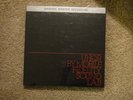
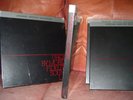
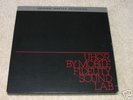
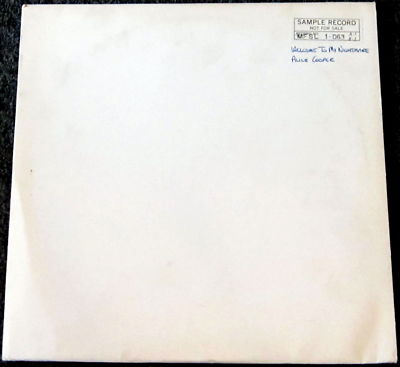
1981 Alice Cooper Welcome To My Nightmare MFSL 1-063 Test Pressing LP Japan RARE
$
355


Favourite Auctions
To save auctions to your favourites, please login
If you don't have an account, please register
Description
Artist: Alice Cooper Album: Welcome to My Nightmare "Test Pressing" Release Date: 1981 Label: MFSL-1-063 Genre: Rock Notes: Mfg by Victor Co of JAPAN
Vinyl Grade: NM Extremely Clean, Sounds Great! (notes: dead wax writing "M-T 5R/2 MFSL-1-063-A1 ORTOFON 111+") Cover Grade: EX
Tracks
Title Composer Time 1 Welcome to My Nightmare Cooper, Wagner 5:19 2 Devil's Food Cooper, Ezrin, Jay 3:38 3 The Black Widow Cooper, Ezrin, Wagner 3:37 4 Some Folks Cooper, Ezrin, Gordon 4:19 5 Only Women Bleed Cooper, Wagner 5:59 6 Department of Youth Cooper, Ezrin, Wagner 3:18 7 Cold Ethyl Cooper, Ezrin 2:51 8 Years Ago Cooper, Wagner 2:51 9 Steven Cooper, Ezrin 5:52 10 The Awakening Cooper, Ezrin, Wagner 2:25 11 Escape Anthony, Cooper, Fowley 3:20 * credit: http://www.allmusic.com*Review
With the 1974 disintegration of the original Alice Cooper group, Alice was free to launch a solo career. He wisely decided to re-enlist the services of Bob Ezrin for his solo debut, Welcome to My Nightmare, which was a concept album tied into the story line of the highly theatrical concert tour he launched soon after the album's release. While the music lost most of the gritty edge of the original AC lineup, Welcome to My Nightmare remains Alice's best solo effort -- while some tracks stray from his expected hard rock direction, there's plenty of fist-pumping rock to go around. The disco-flavored, album-opening title track would be reworked on the stage as more of a hard rock tune, while "Some Folks" dips into cabaret territory, and "Only Women Bleed" is a sensitive ballad that became a Top Ten hit. But the rockers serve as the album's foundation -- "Devil's Food," "The Black Widow," "Department of Youth," and "Cold Ethyl" are all standouts, as is the more tranquil yet eerie epic "Steven." Despite this promising start to Cooper's solo career, the majority of his subsequent releases were often not as focused and were of varying quality.
+ Half-Speed LP MasteringMFSL initially became known to the public for the Half-Speed Mastering technique, which has since been employed by many other record companies. It was the first label to use this as standard on all of its LP releases. The use of this technique was pioneered by engineer Stan Ricker, who mastered all of the early MFSL releases. Ricker's work can be recognized by the signature "SR/2" carved between the run out grooves.
With some notable exceptions, MFSL uses the original master tape as its source. This tape was then played back at half its original speed (if the master tape were recorded at 30 inches per second, it would be played back at 15 ips.) Simultaneously the record cutting lathe runs at 16 ⅔ revolutions per minute (half of its regular speed of 33 ⅓ RPM.)
The Half-Speed Mastering technology allows for cleaner reproduction of high frequencies (by cutting the actual transfer frequency in half) and allows twice as much time to carve a groove that accurately represents the sound on the master tape. It also permits extended high frequency response, extending into the ultrasonic region.
Jack Hunt ("JH/2") mastered many of MFSL's releases in the 1970s and 1980s. Some later titles were mastered by John LeMay and Paul Stubblebine, with a few uncredited releases. Currently, Shawn R. Britton and Rob LoVerde are mastering most LPs for MFSL. CD, SACD, and audio cassette mastering has been done by a variety of engineers, most recently by Britton. The company has only had a handful of engineers in its history.
SupervinylEarly MFSL titles were pressed by JVC in Japan on virgin 180 gram "SuperVinyl" LP discs. JVC originally developed this proprietary plastic compound in the early 1970s to reduce record wear on discreet 4-channel quadraphonic LP records. Supervinyl is a harder and more durable plastic than is normally used for LP records. The pressings exhibit a very low amount of surface noise, pops, clicks or other defects. Supervinyl remains a proprietary JVC technology and in the late 1980s JVC stopped production of the product. JVC has declined to license the use of Supervinyl to any other manufacturer, including MFSL.
Early History and the LP Era – 1971 to 1984Recording engineer Brad Miller (1939–1998) created the first recordings on the Mobile Fidelity label during the late 1950s and 1960s. These were highly realistic recordings of environmental and locomotive sounds which drew interest from audiophiles but gained little attention from the public. In 1971, while located in Burbank California, the company released a 7" 45rpm single, MFP-1 "Saunders Ferry Lane"/"Early Morning" by Clare (Torry) which was produced by Brad Miller. (The promotional version used stereo and mono versions of the A-side.) The record was re-issued as A&M Records 1299-S through the Mendes/Graham Association.
MFSL gained a reputation for emphasizing quality at all points in the sound duplication and manufacturing process. At this time MFSL was very unusual in the record industry by offering a premium quality product at prices significantly higher than the major record companies. Simultaneously, most large record labels were forced to lower costs and reduce quality standards. The decline in quality at the major labels was brought on by uncertain economic conditions and high inflation, declining record sales and increasing vinyl costs. In 1977 most major labels were using relatively poor quality disc mastering and duplication methods and had begun pressing their product on thin and often recycled vinyl. These low cost methods led to an unnecessary increase in surface noise and other audio distortions.
By 1977 Miller and entrepreneur Gary Giorgi established Mobile Fidelity Sound Lab as a record company originally based in the suburb of Veradale, Washington, near Spokane. MFSL's first four LPs in this series were pop-orchestral titles performed by the Mystic Moods Orchestra. These albums also made extensive use of natural sound effects. Following this MFSL shifted course, offering mostly well known Rock, Pop, and Jazz titles licensed from major record companies. The first of these was Crime of the Century by Supertramp, originally released by A&M Records in 1974. Another early success was Katy Lied by Steely Dan, licensed from ABC Records.
MFSL moved to the Chatsworth neighborhood of Los Angeles California in 1978. In 1979 Herbert A. Belkin, a music industry attorney and executive who had previously worked at ABC Records and Capitol Records, bought the company from Miller. MFSL reached greater recognition and acclaim with their release of titles such as George Benson's Breezin', Fleetwood Mac's second eponymous album. Pink Floyd's The Dark Side of the Moon was the label's biggest success in this period when it was re-issued on LP in the Original Master Recording series in 1979.
MFSL's releases received increased publicity in 1981 when they released a box set of Beatles recordings. This comprised all 13 original British versions of their albums, mastered from the original Abbey Road Studio master tapes with the exception of Magical Mystery Tour which was sourced from a copy of the original US Capitol tapes. An album-sized booklet displaying the original album covers was also included. This project was the first and only time the Beatles master tapes ever left Abbey Road studios.
The box set was followed up with similar box sets of Frank Sinatra and The Rolling Stones. In addition to the regular-weight LP releases and box sets, MFSL also released eight UHQR (Ultra High Quality Record) title on LP. Each was a single-record box set limited to 5000 copies and individually numbered. UHQRs were pressed on heavy-weight (200 gram) "virgin" vinyl and pressed on the master stamper, also at JVC in Japan.
+ credit: http://wikipedia.com
RECORD GRADING (abbreviations & explanations)
MINT, NM, EX or VG++, VG+ VG, G (w/minor exceptions to G+ and VG-), F & P (Trash) some Fair records will be wanted but very, very few.<
·MINT (M)
These are absolutely perfect in every way. Often rumored but rarely seen, Mint should never be used as a grade unless more than one person agrees that the record or sleeve truly is in this condition. There is no set percentage of the Near Mint value these can bring; it is best negotiated between buyer and seller.
·NEAR MINT (NM OR M-)
A good description of a NM record is "it looks like it just came from a retail store and it was opened for the first time." In other words, it’s nearly perfect. Many dealers won’t use a grade higher than this, implying (perhaps correctly) that no record or sleeve is ever truly perfect.
NM records are shiny, with no visible defects. Writing, stickers or other markings cannot appear on the label, nor can any "spindle marks" from someone trying to blindly put the record on the turntable. Major factory defects also must be absent; a record and label obviously pressed off center is not Near Mint. If played, it will do so with no surface noise. (NM records don’t have to be "never played"; a record used on an excellent turntable can remain NM after many plays if the disc is properly cared for.)
NM covers are free of creases, ring wear and seam splits of any kind.
·VERY GOOD PLUS (VG+)
or EXCELLENT (EX)
A good description of a VG+ record is "except for a couple minor things, this would be Near Mint." Most collectors, especially those who want to play their records, will be happy with a VG+ record, especially if it toward the high end of the grade (sometimes called VG++ or EX+).
VG+ records may show some slight signs of wear, including light scuffs or very light scratches that do not affect the listening experience. Slight warps that do not affect the sound are OK. Minor signs of handling are OK, too, such as telltale marks around the center hole, but repeated playing has not misshapen the hole. There may be some very light ring wear or discoloration, but it should be barely noticeable.
VG+ covers should have only minor wear. A VG+ cover might have some very minor seam wear or a split (less than one inch long) at the bottom, the most vulnerable location. Also, a VG+ cover may have some defacing, such as a cut-out marking. Covers with cut-out markings can never be considered Near Mint.
·Very Good (VG)
Many of the imperfections found on a VG+ record are more obvious on a VG record. That said, VG records — which usually sell for no more than 25 percent of a NM record — are among the biggest bargains in record collecting, because most of the "big money" goes for more perfect copies. For many listeners, a VG record or sleeve will be worth the money.
VG records have more obvious flaws than their counterparts in better shape. They lack most of the original gloss found on factory-fresh records. Groove wear is evident on sight, as are light scratches deep enough to feel with a fingernail. When played, a VG record has surface noise, and some scratches may be audible, especially in soft passages and during a song’s intro and ending. But the noise will not overpower the music otherwise.
Minor writing, tape or a sticker can detract from the label. Many collectors who have jukeboxes will use VG records in them and not think twice. They remain a fine listening experience, just not the same as if it were in better shape.
VG covers will have many signs of human handling. Ring wear in the middle or along the edges of the cover where the edge of a record would reside, is obvious, though not overwhelming. Some more creases might be visible. Seam splitting will be more obvious; it may appear on all three sides, though it won’t be obvious upon looking. Someone might have written or it or stamped a price tag on it, too.
·Good (G),
Good Plus (G+)
or Very Good Minus (VG–)
Good does not mean bad! The record still plays through without skipping, so it can serve as filler until something better comes along. But it has significant surface noise and groove wear, and the label is worn, with significant ring wear, heavy writing, or obvious damage caused by someone trying to remove tape or stickers and failing miserably. A Good to VG– cover has ring wear to the point of distraction, has seam splits obvious on sight and may have even heavier writing, such as, for example, huge radio station letters written across the front to deter theft.
POOR (P)
and Fair (F)
Records are cracked, impossibly warped, or skip and/or repeat when an attempt is made to play them. Covers are so heavily damaged that you almost want to cry.