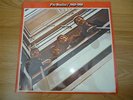
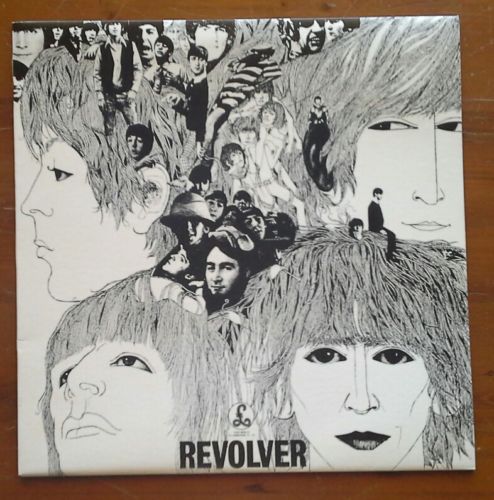
(BEATLES-Revolver)-Their first psychedelic masterpiece-Orange/Black labels-C7-LP
A$
29
$
19


Favourite Auctions
To save auctions to your favourites, please login
If you don't have an account, please register
Description
ITEM: VINYL 12” LP 33 1/3rpm
ARTIST: THE BEATLES
TITLE: Revolver
COUNTRY: OZ
CAT No: EMI/PARLOPHONE, PCSO-7009
COVER: (Grade at MINT-)
LABELS: Orange/Black labels (Grade at MINT-)
VINYL: (Grade at EXCELLENT+)
TRACKS:
1. Taxman (by George Harrison)
Opens with background grumbling, yawning, as though the band was just forced to begin the album — or just realizing that wealthy people such as themselves pay a lot of taxes. Wry humor throughout includes bipartisan references to British political leaders at the time Harold Wilson (Labour) and Edward Heath (Tory).
2. Eleanor Rigby (by John Lennon/Paul McCartney)
Mostly Paul McCartney’s work. A tribute to lonely people, remarkable in its use of string musicians (violin) while the Beatles don’t play a single instrument. A major turning point in band’s transition (already underway) from standard pop to deeper, reflective creations. Ranked 137 on Rolling Stone’s top 500 greatest songs of all time list.
3. I’m Only Sleeping (by John Lennon/Paul McCartney)
Not included on the U.S. vinyl version of the album. A whimsical work by John Lennon and a sign of the band’s mega-success, an apparent indulgent inside joke. Despite the drug influences on much of the album, apparently is a simple tune about dozing (Lennon would later write “I’m So Tired” for the White Album officially called “The Beatles”). George Harrison does the guitar solo.
4. Love You To (by George Harrison)
A very startling inclusion for its time. Notable not for its groove, which is awkward, but for signaling how broad the Beatles’ interests were becoming, particularly involving India. Actually the longest song on the album at 3:01 (tied with “I’m Only Sleeping”). George Harrison learned the sitar from Ravi Shankar and would contribue another similarly inspired song, and a seemingly more polished work, “Within You, Without You,” to the “Sergeant Pepper” album.
5. Here, There and Everywhere (by John Lennon/Paul McCartney)
A Paul McCartney production, representative of the type of gentle love songs he would later write for Wings. Almost feels too quiet, and its bittersweet nature is overshadowed by another epic track on the album. Yet, was a very popular tune among the band itself.
6. Yellow Submarine (by John Lennon/Paul McCartney)
More famous as the title track for the animated 1968 movie. An appealing child-like fantasy with psychedelic overtones. Written by Paul McCartney for Ringo Starr to sing, with parallels to the later “Octopus’ Garden” (written by Starr himself). Described as psychedelic pop, but at heart a children’s song.
7. She Said She Said (by John Lennon/Paul McCartney)
One of the most famous Beatles songs linked to drug experience. A John Lennon work, said by the band and Peter Fonda to be inspired by a frequent comment of Fonda “I know what it’s like to be dead” while the group took LSD in a frenzied California guest house. Added late, almost as an afterthought. A rare Beatles track on which Paul McCartney did not play, but the drumwork of Ringo Starr is highly regarded.
8. Good Day Sunshine (by John Lennon/Paul McCartney)
Effusive pop by Paul McCartney that bursts forth on Side 2 of the vinyl. Ends somewhat abruptly in a cascading chorus. A straightforward melody like “Yellow Submarine” that fits in with the blatant psychedelic references on other songs on the album.
9. And Your Bird Can Sing (by John Lennon/Paul McCartney)
Another track not on the U.S. vinyl version. Not a favorite of John Lennon, who wrote it, and likely the least noteworthy song on the album. Feels influenced by the band’s “Revolver” environment but seems more representative of the band’s standard material of a year or two earlier.
10. For No One (by John Lennon/Paul McCartney)
In this estimation, the greatest pop song of all time. Paul McCartney tells, in gentle terms of baroque pop, the horror of heartbreak, realizing the life you’ve invested yourself in is over, not to be recovered. The genius is the fraction-of-a-second opening chord that immediately sets the tone in a remarkably concise song lasting two minutes, one second, tied for shortest on the album. Lyrical anguish aside, the song simply passes away, and so will the feeling ... won’t it?
11. Doctor Robert (by John Lennon/Paul McCartney)
The third and final track not on the U.S. vinyl version. A John Lennon song with Paul McCartney contribution. Several overt drug references, though not nearly as famous nor psychedelic-sounding as other tracks on the album. Whether “Doctor Robert” was a real person or creation, no one is quite sure.
12. I Want to Tell You (by George Harrison)
Significant in marking the first time George Harrison placed three songs on a Beatles album. While the lyrics (“my head is filled with things to say”) could seem an indulgent inside joke about a lost conversation, they neatly represent life at breakneck speed the Beatles were experiencing at the time, a band receiving far more influences (wanted and otherwise) than anyone could hope to constructively digest and express.
13. Got to Get You Into My Life (by John Lennon/Paul McCartney)
Famous for the trumpets, the Motown appeal and the overt marijuana references that also suggest a romantic relationship. The capstone of Paul McCartney’s landmark contributions to this album, it brings Side 2 of the vinyl full circle from the optimism of “Good Day Sunshine” to the despair of “For No One” to this declaration for whatever it is that makes people feel good.
14. Tomorrow Never Knows (by John Lennon/Paul McCartney)
By the standards of the time, a grinding, relentless foray into psychedelia. Noteworthy as the first song recorded, yet placed last on the album as an indication of the experimental direction of the band. John Lennon’s famous voice, called by some the best in rock/popular music, is a steady and authoritative summary of life as a Beatle circa 1966. At least partly inspired by Timothy Leary. Title is not heard in the song, but stems from a Ringo Starr quip.
(Widescreenings.com generally sticks to film criticism, but happily makes an exception for this landmark album.)
PERSONEL: According to Mark Lewisohn
The Beatles
?John Lennon – lead, acoustic and rhythm guitars, lead, harmony and backing vocals, piano, Hammond organ and harmonium, tape loops and sound effects, cowbell, tambourine, maracas, handclaps, finger snaps
?Paul McCartney – lead, acoustic and bass guitars, lead, harmony and backing vocals, piano, clavichord, tape loops, sound effects, handclaps, finger snaps
?George Harrison – lead, acoustic and rhythm guitars, bass, lead, harmony and backing vocals, sitar, tamboura, sound effects, maracas, tambourine, handclaps, finger snaps
?Ringo Starr – drums, tambourine, maracas, handclaps, finger snaps, lead vocals on "Yellow Submarine"
Additional musicians and production staff
?Anil Bhagwat – tabla on "Love You To"
?Alan Civil – French horn on "For No One"
?Brian Jones – background vocals on "Yellow Submarine" (uncredited)
?Donovan – background vocals on "Yellow Submarine" (uncredited)
?Geoff Emerick – recording and mixing engineer; tape loops of the marching band on "Yellow Submarine"
?George Martin – producer; mixing engineer; piano on "Good Day Sunshine" and "Tomorrow Never Knows"; Hammond organ on "Got to Get You into My Life"; tape-loops of the marching band on "Yellow Submarine"
?Mal Evans – bass drum and background vocals on "Yellow Submarine"
?Marianne Faithfull – background vocals on "Yellow Submarine" (uncredited)
?Neil Aspinall – background vocals on "Yellow Submarine" (uncredited)
?Pattie Boyd – background vocals on "Yellow Submarine" (uncredited)
?Tony Gilbert, Sidney Sax, John Sharpe, Jurgen Hess – violins; Stephen Shingles, John Underwood – violas; Derek Simpson, Norman Jones – cellos: string octet on "Eleanor Rigby", orchestrated and conducted by George Martin (uncredited, with Paul McCartney)
?Eddie Thornton, Ian Hamer, Les Condon – trumpet; Peter Coe, Alan Branscombe – tenor saxophone: horn section on "Got To Get You Into My Life" orchestrated and conducted by George Martin (uncredited, with Paul McCartney)
ALBUM’S RECEPTION: From Wikipedia
... The Beatles had initiated a second pop revolution – one which while galvanising their existing rivals and inspiring many new ones, left all of them far behind. —Ian MacDonald, Revolution in the Head: The Beatles' Records and the Sixties[1]
In 1997, it was named the third greatest album of all time in a Music of the Millennium poll conducted in the United Kingdom by HMV Group, Channel 4, The Guardian and Classic FM.
In 2000, Q magazine placed it at number 1 in its list of the 100 Greatest British Albums Ever. The same magazine's readers placed it at number 4 of greatest albums of all time in 2006.
In 2001, the TV network VH1 named it the number 1 greatest album of all time,[31] a position it also achieved in the Virgin All Time Top 1,000 Albums.[32]
In 2002, the readers of Rolling Stone ranked the album the greatest of all time.
In 2003, the album was ranked number 3 on Rolling Stone magazine's list of the 500 greatest albums of all time.[33] It placed behind only the Beatles' own Sgt. Pepper's Lonely Hearts Club Band and The Beach Boys' Pet Sounds.
In 2006, the album was chosen by Time magazine as one of the 100 best albums of all time.[34]
In 2006, Guitar World readers chose it as the 10th best guitar album of all time.[35]
In 2007, a PopMatters review described the album's content – "the individual members of the greatest band in the history of pop music peaking at the exact same time".[36]
In 2010, Revolver was named as the best pop album of all time by the official newspaper of the Holy See, L'Osservatore Romano.[37]
Revolver currently holds the number 3 spot on Rate Your Music's top 1000 albums chart.
REVIEW: By Neil McCormick
Their first psychedelic masterpiece, Revolver represents the Beatles at their most creative and cohesive, still a tight rocking unit firing on all cylinders but with a surging freedom of self-expression. It is arguably their greatest album, in which they introduce whole new vistas of sound yet still contain them within tightly structured and performed songs.
There is just so much going on: Indian tablas and sitars creating mystical magic for Harrison’s droning Love You Too, a sawing string quartet driving the heartbreaking vignette of loneliness in Eleanor Rigby, the ripe horns surging through the soulful Got to Get You Into My Life, recorded history’s first backwards guitar solo on the dreamy I’m Only Sleeping, dynamic twin lead on the blistering rocker And Your Bird Can Sing, the snappy R&B and political sniping of Taxman, the gorgeous harmonies of McCartney’s favourite ballad Here, There and Everywhere, tape loops, mountainous drumming and a spirit of anything-goes madness blowing out on the utterly extraordinary psychedelic epic Tomorrow Never Knows. Even Ringo, reliably the singer of the Beatles’ worst songs, is well catered for with the surrealist children’s playground classic Yellow Submarine.
Before the woolly politics of flower power had really taken over psychedelia, Revolver remains sharp and acerbic, its cutting quality emphasised by great electric guitar-playing from both George and John. The band looked fantastic, too, in hipster suits and dark glasses. Pound for pound and song for song, Revolver is as good as it gets, a real monster.
VINYL GRADING SYSTEM
MINT:
RECORD: New condition with no surface marks or loss of sound quality.
COVER: New condition with no surface marks, creases or wear.
NEAR MINT:
RECORD: Barely noticeable surface mark with no loss of sound quality.
COVER: Barely noticeable surface mark/ wear.
EXCELLENT:
RECORD: Some signs of being played with extremely little if no loss of sound quality.
COVER: Slight wear or creasing.
VERY GOOD:
RECORD: Obviously been played with noticeable surface marks & the occasional light scratches but exhibits no major loss of sound quality.
COVER: Noticeable wear on cover, seam or spine.
+(PLUS)/-(MINUS):
Slightly up or down in condition as appears in the comments above.
NOTE:
Gradings are done visually unless there appears to be a questionable surface mark on the vinyl, it is then put on the turntable to check. A comment describing the outcome will appear if this is the case.
COMBINED/BULK POSTAGE SAVINGS
WITHIN AUSTRALIA
1 LP:
Use the Post Calculator or see above to find the POST COST of this item within OZ.
WANT TO ADD MORE ITEMS?
ALL AUSTRALIAN STATES=$18.95 for 2-17 LPs (or up to 5kg).
NOTE:
Double albums count as 2 LPs; triple albums count as 3 LPs etc
PAYMENT METHOD
WITHIN AUSTRALIA
Option…
Internet Bank Deposit /Money Order/Personal Cheque (waiting period 5 days till cleared) /Paypal in $AUD
GUARANTEE
We strive to provide an accurate grading to ensure a quality product.
But sometimes an error is made.
If you consider this is the case, then please contact us for the refund of your purchase.
FEEDBACK
When you get your item, please examine or test it.
If you are satisfied, then leave some positive feedback for me.
I will have already left feedback for you.
price rating