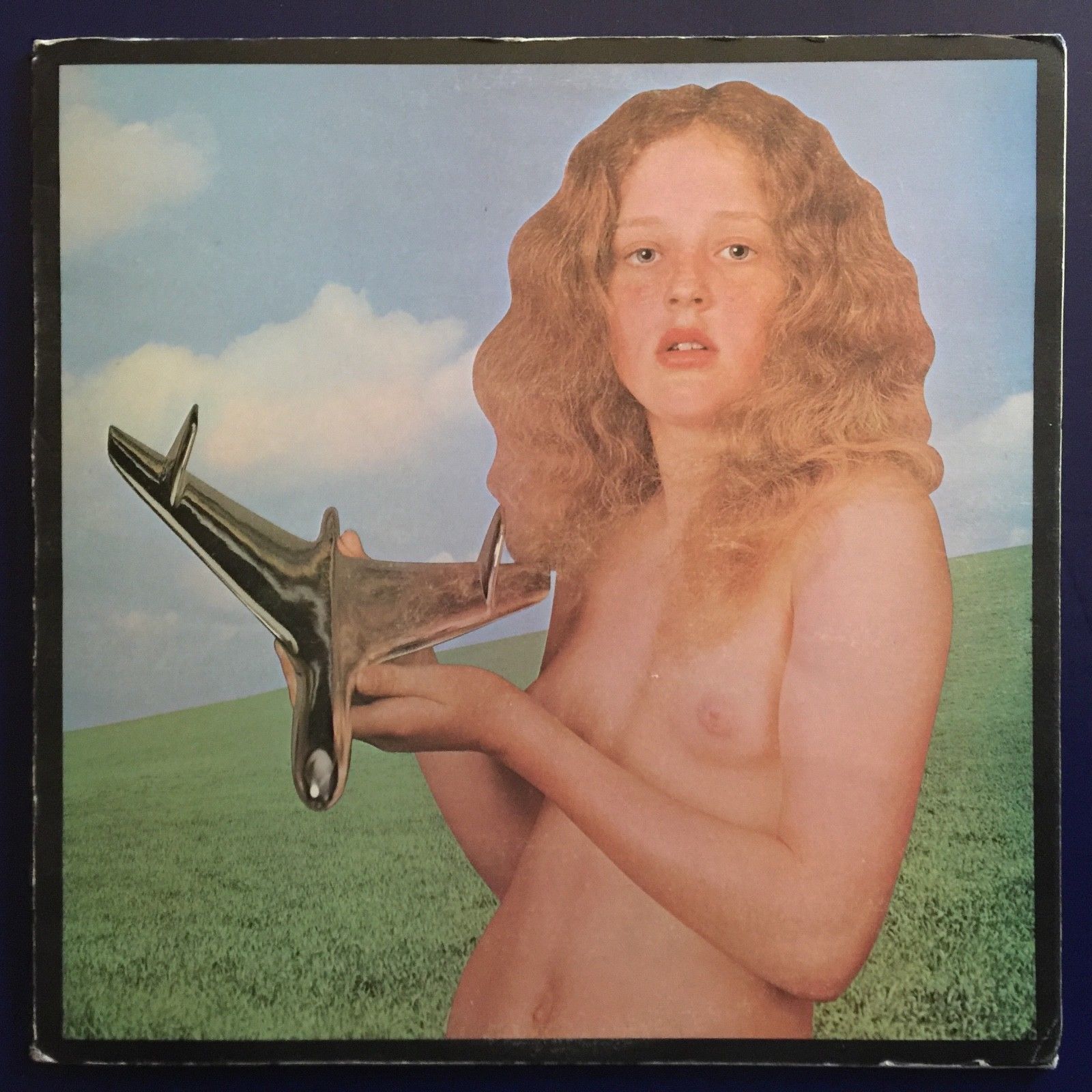
BLIND FAITH "BLIND FAITH" 1969 UK VINYL LP POLYDOR 583059
£
23
$
30


Favourite Auctions
To save auctions to your favourites, please login
If you don't have an account, please register
Description
More Images
Blind Faith (2) ?– Blind Faith
Label:
Polydor ?– 583 059, Polydor ?– 583059
Format:
Vinyl, LP, Album, Gatefold
Country:
UK
Released:
1969
Genre:
Rock
Style:
Classic Rock
Tracklist Hide Credits
A1 Had To Cry Today Written-By – Winwood* A2 Can't Find My Way Home Written-By – Winwood* A3 Well All Right Written-By – Holly*, Allison*, Mauldin*, Petty* A4 Presence Of The Lord Written-By – Clapton* B1 Sea Of Joy Written-By – Winwood* B2 Do What You Like Written-By – Baker*Companies, etc.
- Pressed By – Phonodisc Ltd.
- Made By – MacNeill Press Ltd.
- Printed By – MacNeill Press Ltd.
- Manufactured By – Polydor Records Ltd.
- Lacquer Cut At – Phonodisc Ltd.
- Distributed By – Island Records Ltd.
- Distributed By – Polydor Records Ltd.
- Published By – Island Music
- Published By – Southern Music
- Published By – Throat (2)
- Published By – P. E. Baker Music Ltd.
Credits
- Artwork [Spaceship Built By] – Mick Milligan
- Design [Cover], Photography By – Bob Seideman*
- Executive-Producer [By Arrangement With] – Chris Blackwell, Robert Stigwood
- Producer – Jimmy Miller
Notes
First issue with labels flat to edge, then a dropoff, slightly smaller phonographic copyright symbol than alternate version, Blind Faith (2) - Blind Faith. In press from 1969 to 1973/4.
Stevie Winwood & Rick Grech appear through the courtesy of Island Records Ltd.
A1, A2, B1: Island.
A3: Southern.
A4: Throat.
B2: P.E. Baker.
Printed and made by MacNeill Press.
Manufactured by Polydor Records Limited London.
Made in England. ? 1969
Barcode and Other Identifiers
- Matrix / Runout (Variant 1 Side A runout stamped): 583059 A//1 ? 420
- Matrix / Runout (Variant 1 Side B runout stamped): 583059 B//1 ? 420
Blind Faith were an English blues rock band, composed of Eric Clapton, Ginger Baker, Steve Winwood, and Ric Grech. The band, which was one of the first supergroups, released their only album, Blind Faith, in August 1969. They were stylistically similar to the bands in which Winwood, Baker, and Clapton had most recently participated, Traffic and Cream. They helped to pioneer the genre of blues/rock fusion.
Formation and early history[edit]
The beginnings of Blind Faith begin in mid-1968, with the break-up of Cream. Today considered to be the first true super group, Cream had become a financial powerhouse, selling millions of records within a few years and bringing international popularity to both the group and each individual member. Despite that success, the band was crumbling from within because of frequent animosity between Jack Bruce and Ginger Baker, with Eric Clapton doing his best to mediate. In addition, Clapton had tired of playing commercially-driven blues and hoped to move forward with a new, experimental, less straitjacketed approach to the genre.[citation needed]
Steve Winwood was facing similar problems in The Spencer Davis Group, where he had been the lead singer for three years. Winwood wanted to experiment with the band's sound by infusing jazz elements, but left due to his musical differences, instead forming a new band—Traffic—in 1967. That band split temporarily in 1969, and Winwood started to jam with his good friend Clapton in Clapton's basement in Surrey, England. Winwood and Clapton had previously collaborated on the "Powerhouse" project.
Clapton was pleased with the jam sessions, but was hesitant to start a serious group. Ginger Baker turned up again one day to sit in with them in 1969, and the band took near-final form. Clapton questioned letting Baker in the band, because he had promised Jack Bruce that, if they were to work with one another again, all three of them would play. Moreover, Clapton didn't want to reunite with Cream barely nine weeks after the break-up, and also didn't want to deal with another "Cream-like" super-stardom situation. Winwood ultimately persuaded Clapton to finalize Baker's inclusion in the line-up, arguing that Ginger Baker strengthened their musicianship and that it would be hard to find an equally talented drummer.
By May 1969, Ric Grech, bassist with Family, was invited to join them (leaving Family in mid-tour).
Debut and touring[edit]
News of the group's formation created a buzz of excitement among the public and press, which even heralded the band as "super Cream". The group debuted at a free concert at London's Hyde Park on 7 June 1969.[2] The performance was well received by fans there, but troubled Clapton, who thought that the band's playing was sub-par [3] and that the adulation was undeserved and reminiscent of his Cream days when the crowds would applaud for nearly everything. Clapton, knowing the band had not rehearsed enough and was unprepared, was reluctant to tour and feared that the band would develop into a Cream repeat.
Because Steve Winwood was signed to Island Records, he had to be "leased" to Polydor Records (to whom Clapton and Baker were signed in the U.K.). Possibly as part of this deal, a promotional single was released by Island, although the promotion was for Island itself. It was a single announcing the fact that they were moving their offices. Titled "Change Of Address From 23 June 1969", the one-sided promo featured an instrumental jam by the group which was not mentioned on the label (the only other label info is the new address, phone number, and new cable address of Island). Recorded at Olympic, probably sometime between March and May 1969, it is thought that around 500 copies of the single were pressed, mostly sent to UK disc jockeys and other music industry insiders. The track was finally released widely when it appeared as a bonus track on the two-CD "Deluxe Edition" of the Blind Faith album in 2000 (titled "Change Of Address Jam").
The recording of their album continued, followed by a short tour of Scandinavia, where the band played smaller gigs and was able to rehearse their sound and prepare it for bigger audiences in the US and UK. After Scandinavia, the band toured the United States, making their debut at Madison Square Garden on 12 July before more than 20,000. The band toured for seven more weeks in the US, finishing their tour in Hawaii on 24 August 1969.[4]
A major problem with the tour was that the band had only a few songs in their catalogue – barely enough to fill an hour. They were forced to play old Cream and Traffic songs, to the delight of a crowd which usually preferred their older, popular material to their new Blind Faith material. Clapton was now exactly where he didn't want to be – stuck in a "super Cream" that was causing riots during their live shows. They were playing the same material from his Cream days, to appease the audience and to fill the void left by the lack of adequate new material.
Opening acts for the band included the bands Free, Taste and an R&B-based rock act called Delaney & Bonnie. Because Clapton liked the soulful, folksy-sounding blues of Delaney & Bonnie, he began spending most of his time with them instead of Blind Faith, letting Winwood take a more prominent role in the band. Clapton even began sitting in on their opening sets, sometimes simply playing percussion, and showing more interest in them than his own band. Baker has since said it was obvious that Clapton was going to leave the band as soon as the tour was over.
Album release and controversy[edit]
"Presence of the Lord" MENU 0:00 29 second sample of the song "Presence of the Lord" as performed by Blind Faith Problems playing this file? See media help.Upon its release in July 1969, Blind Faith topped both the UK chart and Billboard's chart for Pop Album in the U.S., and peaked at No. 40 on the Black Albums chart – an impressive feat for a British rock quartet. The album sold more than half million copies in the first month of its release and was a huge profit-making device for both Atlantic Records(on their Atco label in the US) and for Clapton and Baker (Blind Faith sales were helping to stimulate demand for Cream albums, also distributed by Atco).
The release of the album provoked controversy because the cover featured a topless pubescent girl,[5] holding in her hands a silver space ship designed by Mick Milligan, a jeweller at the Royal College of Art.[6] Some perceived the ship as a phallic symbol.[7] The silver spaceship is, or strongly resembles, the hood ornament of a 1955 Chevrolet. The US record company issued it with an alternative cover with a photograph of the band on the front.[5] In the UK an alternative cover was also issued simultaneously with the topless one, a thin and laminated cover with the back and front consistent with the inside of the foldout version. The original record number on the alternative cover is the same but ends with a "B" (583 059B). The record is the same and, since this was only issued for a short time, always had early matrix numbers and mothers.
The cover art was created by photographer Bob Seidemann, a personal friend and former flatmate of Clapton, who is known primarily for his photos of Janis Joplin and the Grateful Dead. Rumours about the girl's relationship to the band fuelled the controversy; among them were that she was Baker's illegitimate daughter, and that she was a groupie kept as a slave by the band members. Actually, the young girl was a London suburbanite, who posed upon consent by her parents and for a fee, as described in Seidemann's mini essay about the origins of the Blind Faith album cover artwork.[8]
The cover was nameless – only the wrapping paper told the buyer who the artist was and the name of the album. Though initially banned in some countries, the original artwork was quite popular and collectible. It also became available later in the 1970s on the RSO label worldwide. Under licensing agreement during the mid-1980s, the Blind Faith album was remastered to high definition vinyl and gold compact disc by Mobile Fidelity Sound Lab. During 2000 the entire album was remastered and re-released as a two-CD deluxe edition release from Polydor that includes alternates, out-takes and studio rehearsal versions of the band's music created during the early months of 1969.
price rating