Beethoven (6) "Piano Sonata Cycle" Appelbaum Westminste
$
100


Favourite Auctions
To save auctions to your favourites, please login
If you don't have an account, please register
Description
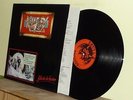
Beethoven (6) "Piano Sonata Cycle" Kurt Appelbaum 'piano' Westminster
High Fidelity Beethoven The liner notes of Westminster WL 5075 deal extensively with the structure and the nature of Beethoven's Op. 111 and Op. 2 No. 2. There are however no data about the pianist Kurt Appelbaum with whom Westminster started a complete cycle of Beethoven Sonatas. From six discs produced only the one containing Sonatas Nos. 9 and 24 was well received (WL 5090). Westminster apparently abandoned the project and substituted Appelbaum for Paul Badura-Skoda but Demotte says that the wisdom of this choice was to be questioned because Badura-Skoda was much too young. However, in hindsight, WL 5075 gives a remarkable example of what was feasable as far as High Fidelity is concerned. It is amazing how clear and clean and well defined and also how natural the sound of the grand piano is captured and engraved in the disc. The sleeve says "Copyright 1951" and at the time the extremely high sound quality was recognized by engineers, critics and record collectors alike. If the standard of technique was already that high in 1951 why were not more records produced in the same technical vein at the time and also in the years thereafter? Westminster's recording quality in later years never reached the same height and as far as dynamics were concerned lost the superiority and many recordings had dull sound. Specifically the cycle with Wilhelm Kempff on Deutsche Grammophon (in the USA released on American Decca) could not at all be recommended because of low recording quality. Even if Appelbaum lacks the necessary lightness, seriousness, playfullness and humor to explore Beethoven's realm, this recording is nevertheless pleasing to the ear. Louis Alexander, an amateur pianist who studied with Kurt Appelbaum from 1979-1981 in New York wrote: "Appelbaum (...) was from Berlin, studied with Artur Schnabel, and his first wife was Anna Cassirer (daughter of Ernst Cassirer). (...) Off and on, I have tried to write about the years I spent as his student as he was without doubt one of the most profound teachers and pianists I have come across. That you find his recording of Op2 #2 without such things as lightness, seriousness and so on I do find surprising. I will have to revisit this recording. Actually, this is a work we spent a great deal of time on and I found his insights and playing to be most insightful. As you pointed out, only one of his recordings was well received and this seems to have been the curse of his life. He was so frustrated with audiences not understanding his interpretations that he walked away from the stage in the early 1950's. As I recall, he felt that it was this move that led Westminster to drop his contract, but I am not certain if I am remembering this correctly. (...) Perhaps Appelbaum would have agreed with your criticism that there were times when his interpretation was a little less of Beethoven and more of him. But, I believe he would have said something to the effect that B would have understood this and indeed would have expected this from an interpreter. Actually, I am not sure how A would have answered this. One thing I do remember from my study of the Op 2 #2 with him was the tremendous difficulty I had with the runs in the first movement. Appelbaum had an uncanny ability to use langauge as a way of reaching an understanding of how to approach such difficulties. He said that in order to understand such passages one had to become a tiger and run up the keyboard as it would. This visual image had such physical power for me that I learned from it how to play these rather difficult runs. In fact, A had me practice them by playing the notes in bunches and to pounce my way up the keyboard as if I were a tiger running after its prey. Gradually, he had me play the notes in succession rather than in bunches. It worked! This (...) does show you something of his teaching style. About Appelbaum, I am afraid there is painfully little information as he led a rather hermetic life (...) when I knew him in the late 1970s. Your mentioning of Badura-Skoda taking over the recording contract did remind me of his mentioning this. I do not remember him as having any ill feelings towards Badura-Skoda. Appelbaum's life as a performer seems to have had a tragic quality to it in that public opinion seemed to go against him."
Westminster WL 5150 'Hammerklavier'
Condition ...... Vinyl "VG++" 1 visible paper scuff that should not effect audio quality ...... Jacket "VG++"
Westminster WL 50-44 "Piano Sonata in C Major Op 53 ... Piano Sonata in D Major Op 10 No 3"
Condition ...... Vinyl "VG+++" ...... Jacket "VG++"
Westminster WL 5090 "Piano Sonata in F Sharp Major Op 78 ... E Major Op 14, No 1 ... A Flat Op 110"
Condition ...... Vinyl "VG+++" ...... Jacket "VG++"
Westminster WL 5133 "Sonata in F Minor Op 57 ... G Major Op 31 No 1"
Condition ...... Vinyl "VG+++" ...... Jacket "VG++"
Westminster 5075 "Sonata Op 111 C Minor ... Op 2, No 2, A Minor"
Condition ...... Vinyl "VG+++" ...... Jacket "VG++"
Westminster WL 5078 "Moonlight ... Sonata AQuasi Una Fantasia ... Piano Sonata No 11 B Flat Op 22"
Condition ...... Vinyl "VG+++" ...... Jacket "VG++"
Shjpping for this item to all locations will be invoiced.
price rating