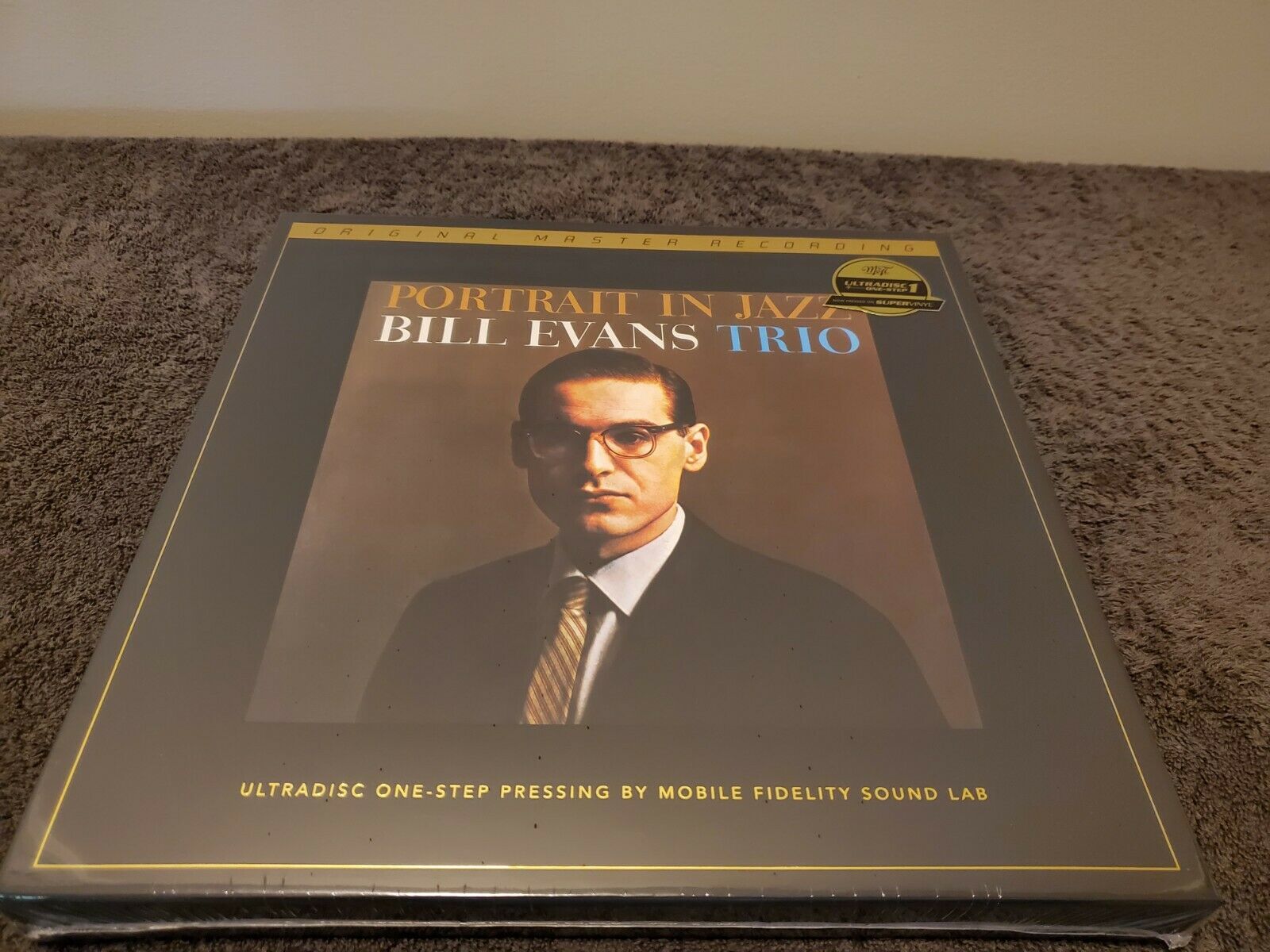
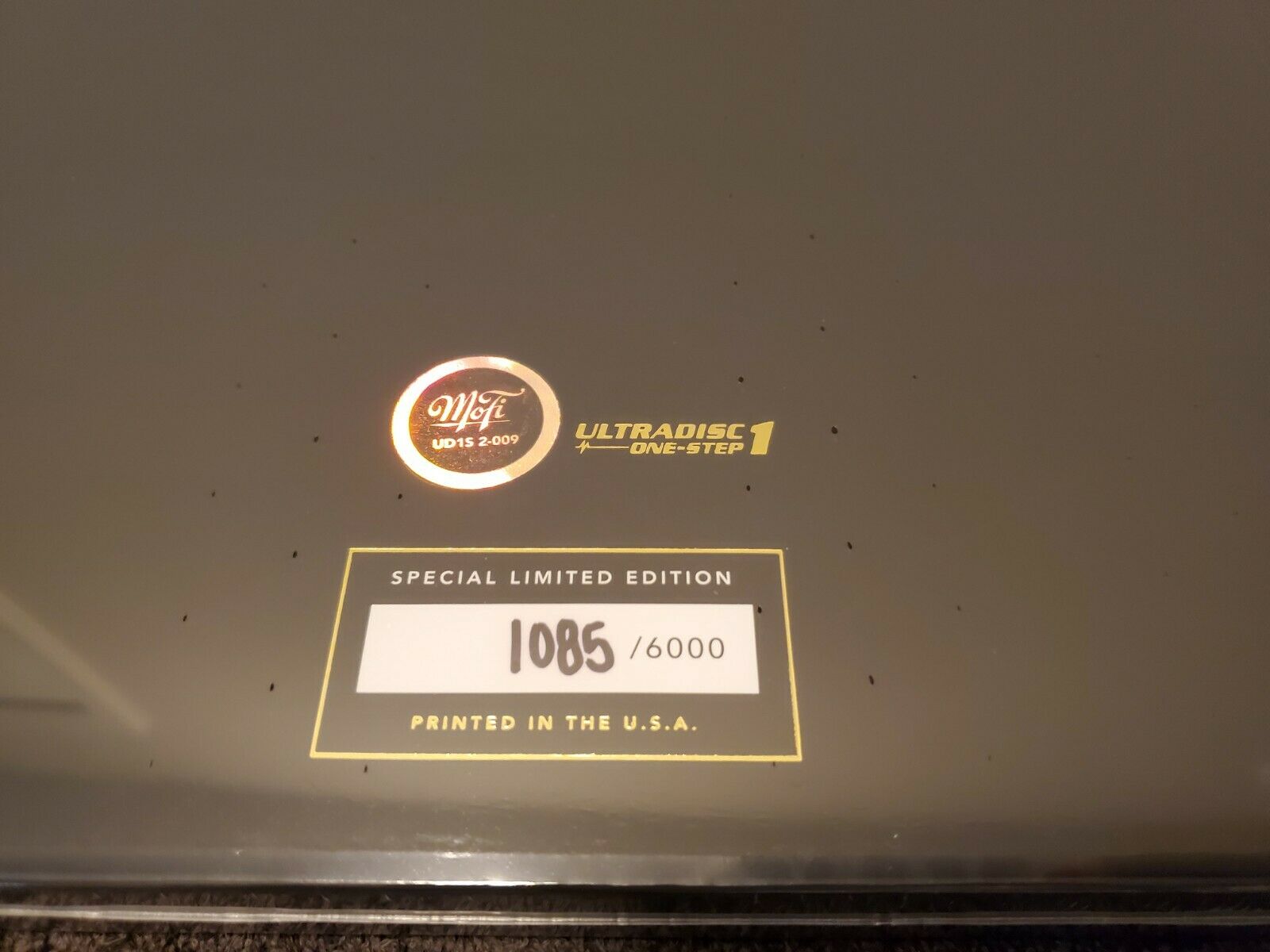
Bill Evans Portrait In Jazz MOFI Ultradisc One Step Vinyl 45 RPM LP SEALED #1085
$
250


Favourite Auctions
To save auctions to your favourites, please login
If you don't have an account, please register
Description
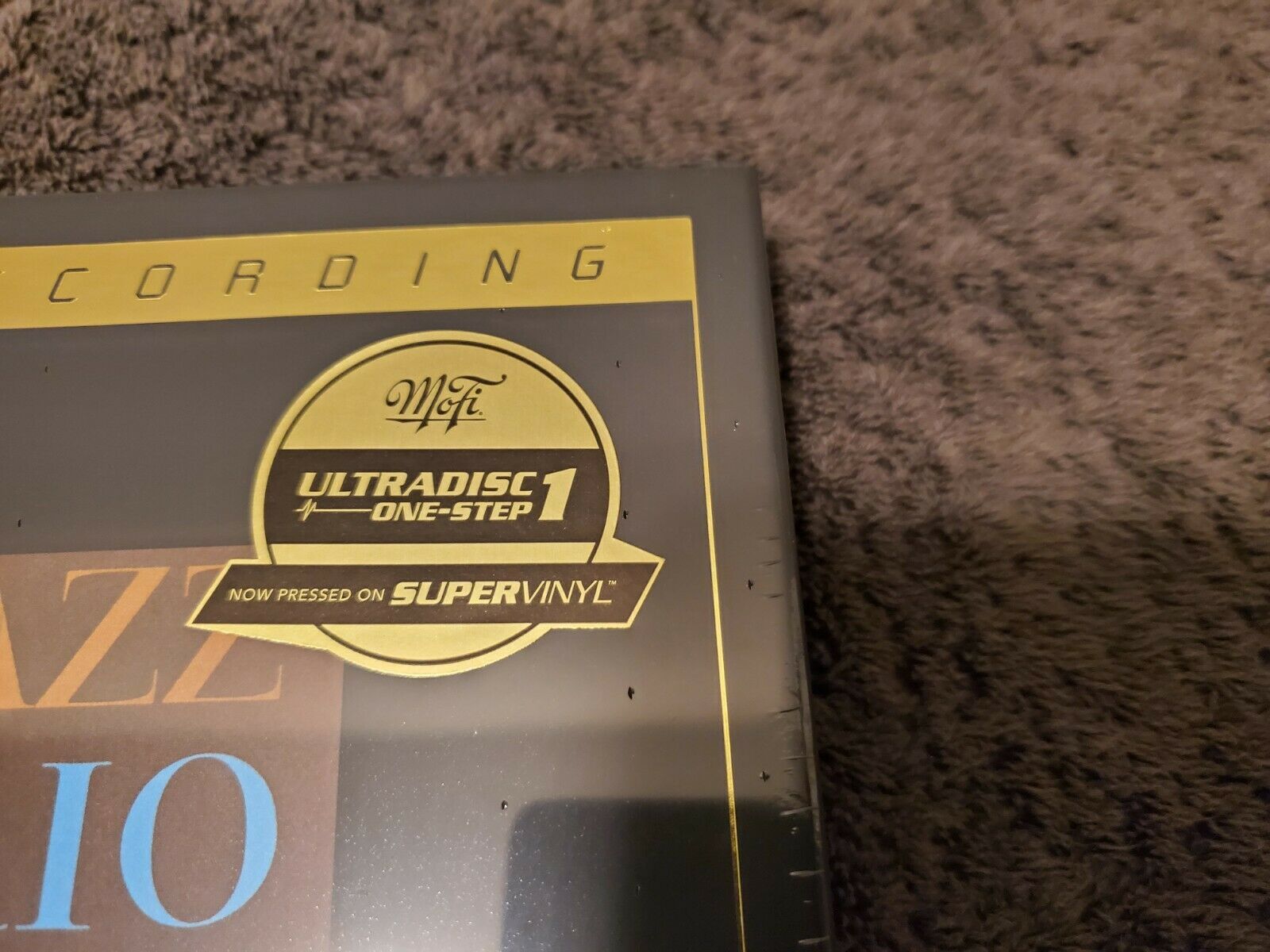
You are bidding on a Brand New Sealed #1085/6000 Bill Evans Trio Portrait In Jazz MOFI Ultradisc One Step 45 RPM LP Boxed Set. Fresh off collaborations with Miles Davis and John Coltrane on the EPIC Kind of Blue this album sets the stage for all jazz trio albums to follow. Pressed on new formulation SuperVinyl at RTI the MOFI Ultradisc One Step is the best sounding version hands down!! Below is the track listing and some more info about the album and the Ultradisc One Step process directly from MOFI. Please note that I will be leaving town on July 19 and returning on July 23. I will have limited access and will try my best to respond to questions in a timely fashion, but I will not be able to ship items while I'm away.
Don't miss your chance to get the GREATEST SOUNDING version of one of the GREATEST JAZZ albums ever!! Currently LOWEST # on EBAY #1085/6000 ! Trust me you will not regret it!! HAPPY BIDDING!
Track listing: Side A: Come Rain or Come Shine Autumn Leaves Side B: Witchcraft When I Fall in Love Peri's Scope Side C: What Is This Thing Called Love? Spring Is Here Side D: Someday My Prince Will Come Blue in Green
Info about the album from MOFI:
Mastered from the Original Master Tapes with Mobile Fidelity's One-Step Process: The Ultimate Analog Version of Bill Evans' Studio Breakthrough Luxurious Packaging Includes Opulent Box, Foil-Stamped Jackets, MoFi SuperVinyl LPs Pressed at RTI: Strictly Limited to 6,000 Numbered Copies It's impossible to exaggerate the stature, brilliance, and splendor of Bill Evans' Portrait in Jazz. The result of Evans having collaborated just eight months prior with Miles Davis, John Coltrane, and company on the watershed Kind of Blue and soon after finding a bassist (Scott LaFaro) who suited his style and boasted world-class chops, the 1960 album established the standard that all similarly configured jazz trios continue to follow. This is the moment the bass, until then relegated to accompaniment status, gets an equal say in the compositions with the piano. That Evans, LaFaro, and drummer Paul Motian deliver each passage with resplendent soulfulness, poetic modality, and sublime empathy only adds to its charm. Not to mention Orrin Keepnews' demonstration-quality production that now sounds utterly transcendent.
Mastered from the original master tapes, pressed at RTI on MoFi SuperVinyl, and strictly limited to 6,000 numbered copies, Mobile Fidelity's opulent UD1S (UltraDisc One-Step) box set provides sonic and tactile experiences that match the quality of the music within Evans' studio breakthrough. You'll enjoy deep-black backgrounds, pointillistic details, and staggering dynamics. Experienced via UD1S, Portrait in Jazz places Evans and his esteemed colleagues in your listening room. Every note, harmonic, and movement captured by the microphones are reproduced with exquisite accuracy and wowing clarity. Close your eyes at you're practically at Reeves Sound Studios in New York City in late December 1959.
The lavish packaging and luxurious presentation of Mobile Fidelity's Portrait in Jazz UD1S pressing befit its extremely select status. Housed in a deluxe box, the collectible version contains special foil-stamped jackets and faithful-to-the-original graphics that illuminate the splendor of the recording. Aurally and visually, it exists a curatorial artifact meant to be preserved, poured over, touched, and examined. It is made for discerning listeners that prize sound quality and creativity, and who desire to fully immerse themselves in the art – and everything involved with the album, from the images to the textures and liner notes.
Pored over by generations of listeners and musicians alike to grasp the group's then-revolutionary approach, high-wire interplay, and seamless chemistry, Portrait in Jazz retains a blend of timeless classicism and forward-looking modernism that makes it as revered now as it was nearly six decades ago. The three instrumentalists operate in complete unison and achieve supreme democratic balance. Expressing their intent via shared conversations, they alight on sublime pieces flush with thematic discovery, swing-based dialogue, and raw feeling.
Writing for The Penguin Guide to Jazz, Richard Cook and Brian Morton attempt to put it all into context: "The bassist's melodic sensitivity and insinuating sound flowed between Evans and Motian like water...the playing of the three men is so sympathetic that it set a universal standard for the piano-bass-drums setup [that] has persisted to this day." Indeed, hearing Evans and his mates put their signature stamp on standards ("Come Rain or Come Shine," "Witchcraft," "Autumn Leaves") and originals ("Peri's Scope," "Blue in Green") is akin to witnessing new trails blazed for generations to come. Their Evans-deemed "simultaneous improvisation" teems with freshness and sensitivity, their rhythms and lines pregnant with an irresistible combination of vulnerability, confidence, energy, and elan.
To even think Portrait in Jazz marked the first session with LaFaro boggles the mind. To then consider the man Evans credited as "more or less the father or the wellspring of modern players" would be dead 18 months after completing the record in the studio invokes a cascade of emotions – and lends even greater gravitas to the work's import.
History only allows for so many "firsts." Portrait in Jazz claims such a designation. It meets every definition of must-have and you'll never hold or hear a better copy than Mobile Fidelity's UD1S edition.
Info on the One Step process from MOFI:
MoFi Ultradisc One-Step Instead of utilizing the industry-standard three-step lacquer process, Mobile Fidelity Sound Lab's new Ultradisc One-Step (UD1S) uses only one step, bypassing two processes of generational loss. While three-step processing is designed for optimum yield and efficiency, UD1S is created for the ultimate in sound quality. Just as Mobile Fidelity pioneered the Ultra High-Quality Record (UHQR) with JVC in the 1980s, UD1S again represents another state-of-the-art advance in the record-manufacturing process. MFSL engineers begin with the original master tapes and meticulously cut a set of lacquers. These lacquers are used to create a very fragile, pristine UD1S stamper called a "convert." Delicate "converts" are then formed into the actual record stampers, producing a final product that literally and figuratively brings you closer to the music. By skipping the additional steps of pulling another positive and an additional negative, as done in the three-step process used in standard pressings, UD1S produces a final LP with the lowest noise floor possible today. The removal of the additional two steps of generational loss in the plating process reveals tremendous amounts of extra musical detail and dynamics, which are otherwise lost due to the standard copying process. The exclusive nature of these very limited pressings guarantees that every UD1S pressing serves as an immaculate replica of the lacquer sourced directly from the original master tape. Every conceivable aspect of vinyl production is optimized to produce the most perfect record album available today.
Ultradisc One-Step: The Future of Hi-Fi Everything begins with the meticulous cutting of a set of lacquers for a strict number of records to be pressed. After being cleaned with a proprietary chemical, the lacquers are rinsed in de-ionized water and dipped in stannous chloride, enabling pure silver to adhere to the surface. This leaves a pristine, extremely intricate silver layer. The lacquer is then mounted onto a conductive copper bar and immersed into a tank with nickel anodes at 98 degrees. As electricity is applied to the silvered lacquer, the nickel begins to deposit onto the lacquer, while preserving the integrity of the grooves. The nickel-plated silvered lacquer is then placed into a high-speed rotary tank at 120 degrees and spun at 88RPM to ensure the even application of a nickel layer. Once the desired thickness of .012" is achieved, the disc is removed from the plating tank and the nickel convert is separated from the lacquer. At this point, the convert is formed into a single-use record stamper. This first-generation convert is used to make the pinnacle of audiophile vinyl that literally and figuratively brings listeners closer to the music.
Info on SuperVinyl from MOFI:
SuperVinyl MoFi SuperVinyl is a new proprietary compound developed by NEOTECH and RTI to address two specific areas of improvement: noise floor reduction and enhanced groove definition. The vinyl composition features a new carbonless dye (hold the disc up to the light and see) and produces the world's quietest surfaces. This high-definition formula also allows for the creation of cleaner grooves that are indistinguishable from the original lacquer. Mobile Fidelity Sound Lab feels SuperVinyl provides the closest approximation of what we hear in the mastering lab.
price rating
![Gorillaz ?– Gorillaz [LPX2]](https://www.popsike.org/php/thumbnail.php?url=https://www.popsike.pics/pix/20141127/171559803022.jpg)