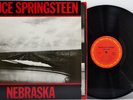
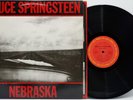
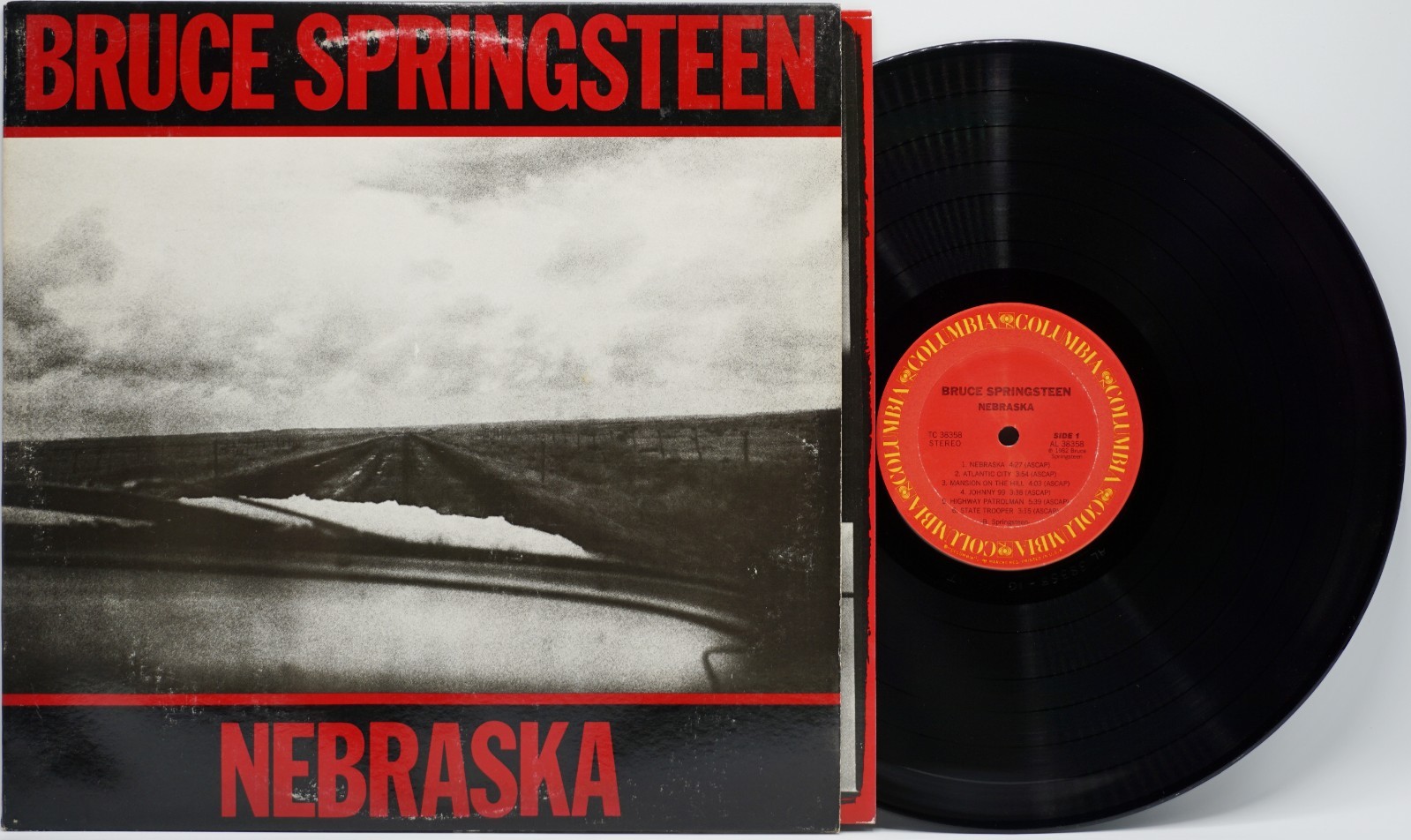
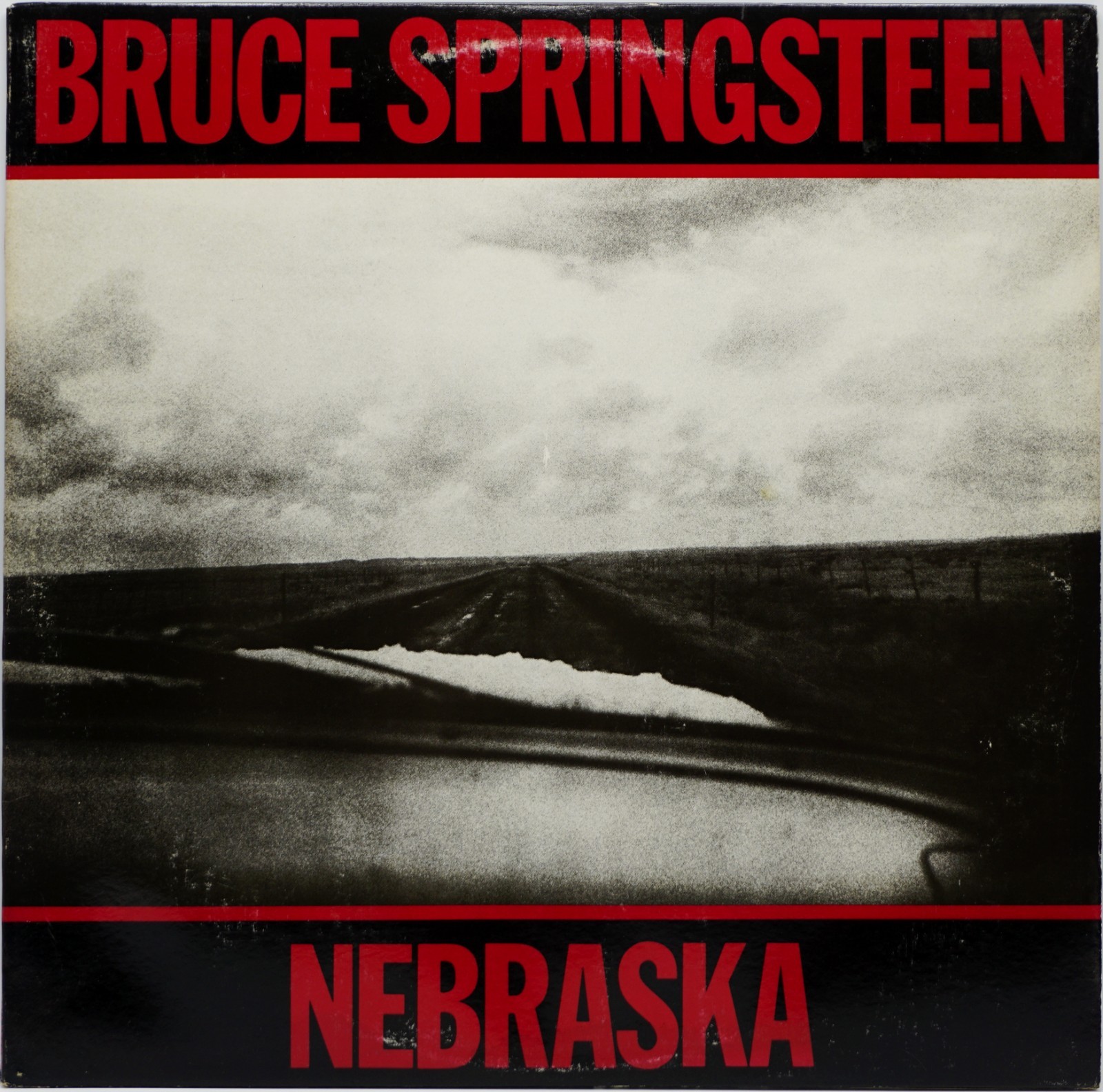
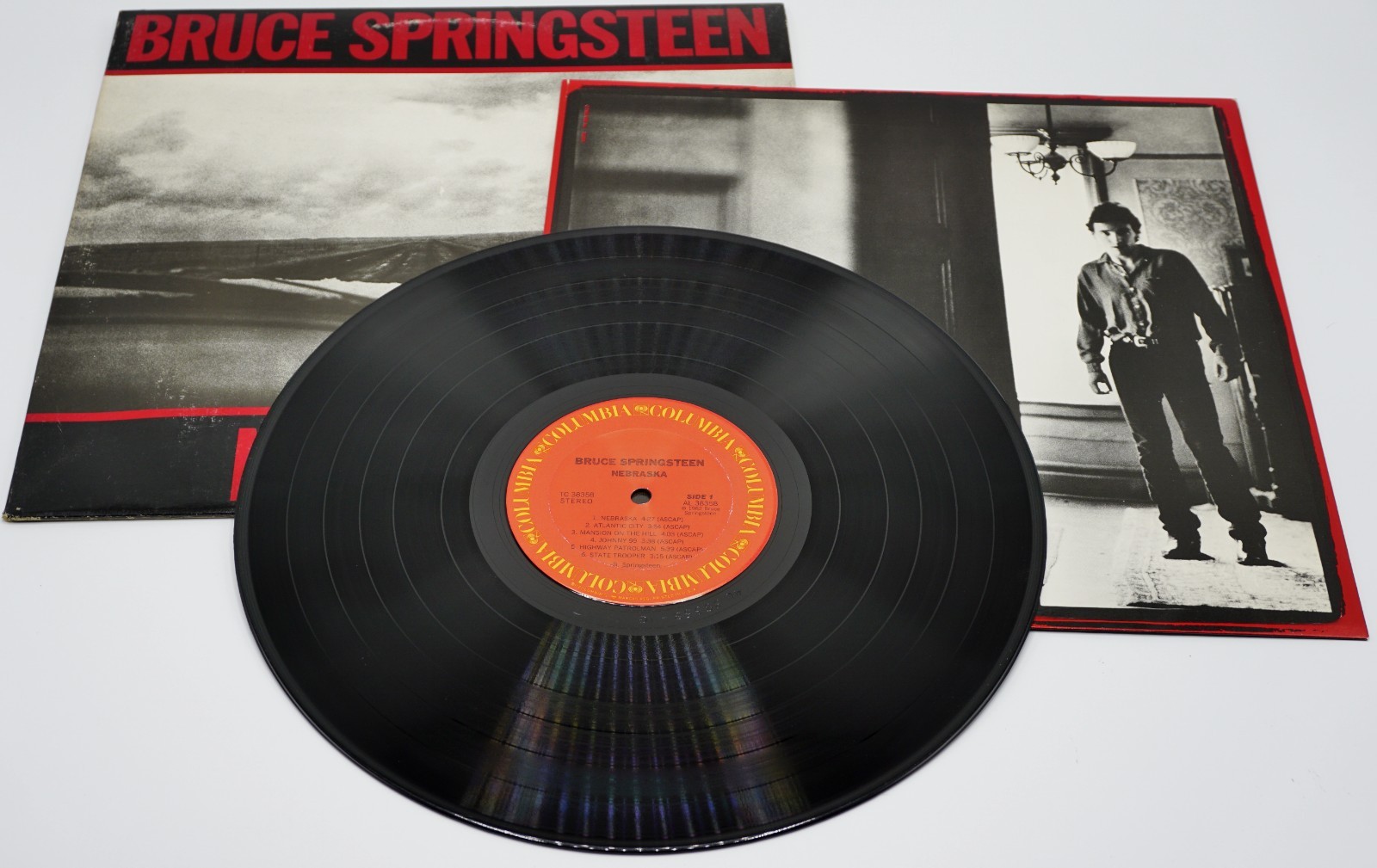
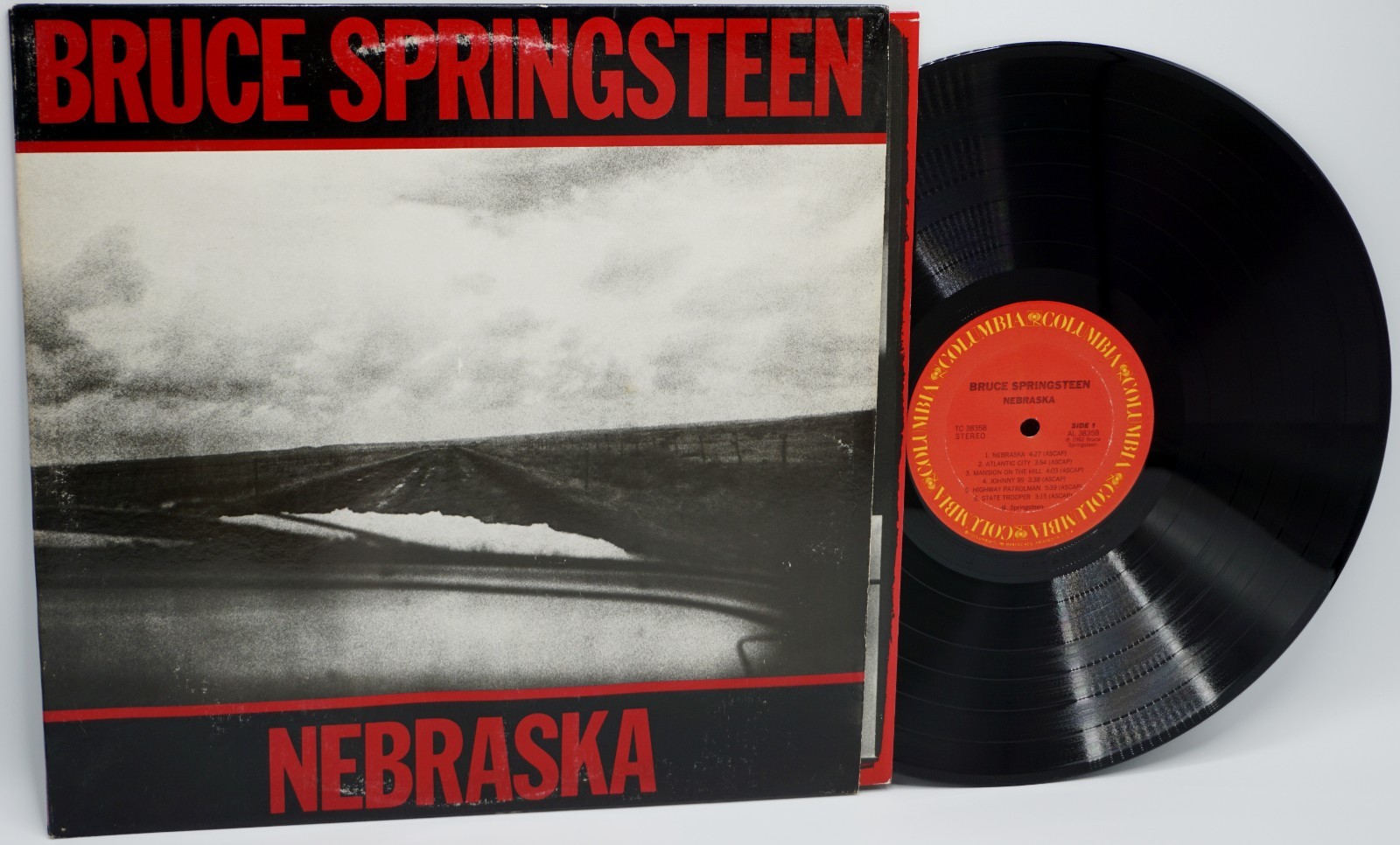
Bruce Springsteen Nebraska Rare 1982 Columbia Original LP w/Insert NM Vinyl
$
80
Favourite Auctions
To save auctions to your favourites, please login
If you don't have an account, please register
Description
Welcome to Classic Cadillac Records! I visually grade all my records as accurately as possible and will never grade anything above Near Mint unless it's still sealed. Please note that a visual grade can differ from a play grade, and am happy to spot check a record upon request. All orders are shipped within 1 business day (usually sooner) and packed with extra care to ensure fast, safe arrival. Please look closely at all pictures, read all relevant details and ask any questions you may have before buying. I offer a full 30-day return policy on everything I sell, so buy with confidence! 20% restocking fee charged on items returned for reasons other than it not working properly. Thanks for looking!
Nebraska Studio album by Bruce Springsteen Released September 30, 1982 Recorded
- December 17, 1981 – January 3, 1982
- (except May 25, 1982, for "My Father's House")
(1980) Nebraska
(1982) Born in the U.S.A.
(1984) Singles from Nebraska
- "Atlantic City"
Released: October 1982 (Europe and Japan only) - "Open All Night"
Released: November 22, 1982 (Europe only)
Nebraska is the sixth studio album by the American singer-songwriter Bruce Springsteen, released on September 30, 1982, through Columbia Records. Springsteen recorded the songs unaccompanied on a four-track recorder in the bedroom of his home in Colts Neck, New Jersey. He had intended to rerecord the tracks with the E Street Band but decided to release them as they were, after deeming the full-band renditions to be unsatisfactory. The tape contained seventeen songs, of which ten were used for Nebraska; the others appeared in full-band renditions on the follow-up album Born in the U.S.A. (1984) or as B-sides.
Living isolated in Colts Neck, Springsteen was influenced by folk music, American literature, and film when writing the lyrics. The short stories of Flannery O'Connor particularly inspired him to write about his childhood memories. The album contains a stark, lo-fi sound, as the tracks tell the stories of blue-collar workers who try to succeed in life but fail at every turn, while searching for a deliverance that never comes. Some of the lyrics are in the voice of outlaws and criminals, including the killer Charles Starkweather on the title track. The album's artwork is a 1975 photograph by David Michael Kennedy which depicts a black-top road under a cloudy sky through the windshield of a car.
Nebraska stylistically stood apart from other releases in 1982. Commercially, it charted within the top 10 in Australia, Canada, Japan, the Netherlands, New Zealand, Norway, Sweden, the United Kingdom, and the United States. The album was accompanied by two European singles—"Atlantic City" and "Open All Night"; the former supported by Springsteen's first music video. He did not do promotional work for the record, believing listeners should experience it for themselves. Critics praised the album as brave and artistically daring, considering it Springsteen's most personal record up to that point. Negative reviews felt that the songs stylistically merged, and their dark themes would appeal only to fans. The album appeared on several year-end lists.
Retrospectively, critics regard Nebraska as a timeless record and one of Springsteen's finest works. The album has appeared on numerous lists of the greatest albums of all time. It is recognized as one of the first do it yourself (DIY) home recordings by a major artist and has had a significant influence on the indie rock and underground music scenes. Numerous artists have paid tribute to the album and have cited its impact on their music. A biographical film based on the album's creation, titled Springsteen: Deliver Me from Nowhere, was released on October 24, 2025. An expanded edition of the album, featuring Electric Nebraska, was released the same day.
Critical reception
Professional ratings Initial reviews Review scores Source Rating Record Mirror Rolling Stone Smash Hits 6½/10 Sounds The Village Voice A−On its original release, critical reception to Nebraska was mostly positive. It was hailed by critics for its boldness and individuality, being called an unexpected, brave, and artistically daring record. Its stylistic departure from Springsteen's previous works came as a shock to some critics. Robert Hilburn compared the change in style to when Bob Dylan went electric, and called Nebraska "one of the most bold uncompromising artistic statements since John Lennon's Plastic Ono Band album in 1970".
Critics described Nebraska as Springsteen's most personal album up to that point; the San Francisco Chronicle's Joel Selvin declared: "Never before has a major recording artist made himself so vulnerable or open." In The New York Times, Robert Palmer summarized: "It's been a long time since a mainstream rock star made an album that asks such tough questions and refuses to settle for easy answers – let alone an album suggesting that perhaps there are no answers." Rolling Stone's Steve Pond praised Nebraska as a "tactical masterstroke", positively compared it to Darkness on the Edge of Town (1978), and commended Springsteen's "sharp focus" and "insistence on painting small details so clearly and his determination to make a folk album firmly in the tradition". Trouser Press's Jon Young praised Springsteen's growth as an artist and felt he succeeded as a "guitar-strumming storyteller", saying: "He may have scaled down his attack, but Springsteen hasn't diminished his ambition one bit."
Several reviewers commented on the acoustic instrumentation. In Record Mirror, Mike Gardner felt that critics who believed Springsteen's power came solely from the E Street Band would be proven wrong, and wrote that his "gift for making epic aural stories out of such material is turned on its head by the simple backing". Writing for Sounds magazine, Johnny Waller enjoyed the "new perspective" gained from listening to the material in a back-to-basics approach. Time magazine's Jay Cocks compared the sound to "a Library of Congress field recording made out behind some shutdown auto plant". Cocks noticed a recycling of lyrical themes from older records, but felt they worked to Springsteen's advantage: "he can get the same sort of mythic resonance from this setting that John Ford took out of Monument Valley." Commenting on the album's recording methods, The Boston Phoenix's Ariel Swartley said Nebraska is "the rock-and-roller's version of joining a monastery or running away to farm: solo, acoustic, old-fashioned, homemade."
Other critics were more negative. Some felt that, due to similar music and themes, the songs stylistically merged together. The Village Voice's Robert Christgau criticized the music, arguing that Springsteen lacked the vocal and melodic imagination to "enrich these bitter tales of late capitalism" with bare instrumentation. More negatively, The Washington Post's Richard Harrington said Nebraska "may be the most undynamic album of 1982", panning the "horrid" and "flat" sound quality and concluding: "One applauds Springsteen's commitment, but questions its ponderous and portentous execution." Musician magazine's Paul Nelson said the album sounded "demoralizing", "murderously monotonous", and "deprived of spark or hope", but in the end, he "found a road map that led to the right places". In Smash Hits, David Hepworth felt that due to the album's dark tone and "bleak pessimism", it would likely only be appreciated by fans. In Creem, Richard C. Walls enjoyed the album, but suspected that most listeners would find it "more admirable than likable".
Rankings
Nebraska has appeared on multiple best-of lists. In 1989, it was ranked 43rd on Rolling Stone magazine's list of the 100 greatest albums of the 1980s. In 2003, it was ranked number 224 on Rolling Stone's list of the 500 greatest albums of all time, 226 in a 2012 revised list, and 150 in a 2020 reboot of the list. In 2006, Q placed the album at number 13 in its list of "40 Best Albums of the '80s". In 2012, Slant Magazine listed the album at number 57 on its list of "Best Albums of the 1980s". The following year, NME ranked it number 148 in their list of the 500 greatest albums of all time. Two years later, Ultimate Classic Rock included it in a list compiling the 100 best rock albums of the 1980s. In 2018, Pitchfork listed it as the 28th greatest album of the 1980s. In a 2022 list compiling the 50 best albums of 1982, Spin placed Nebraska at number 17. In 2024, Paste magazine placed it at number 223 in their list of the 300 greatest albums of all time. The album was also included in the book 1001 Albums You Must Hear Before You Die.
Track listing
All tracks are written by Bruce Springsteen.
Side one No. Title Length 1. "Nebraska" 4:27 2. "Atlantic City" 3:54 3. "Mansion on the Hill" 4:03 4. "Johnny 99" 3:38 5. "Highway Patrolman" 5:39 6. "State Trooper" 3:15 Side two No. Title Length 1. "Used Cars" 3:05 2. "Open All Night" 2:55 3. "My Father's House" 5:43 4. "Reason to Believe" 4:09 Total length: 41:02price rating