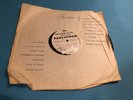
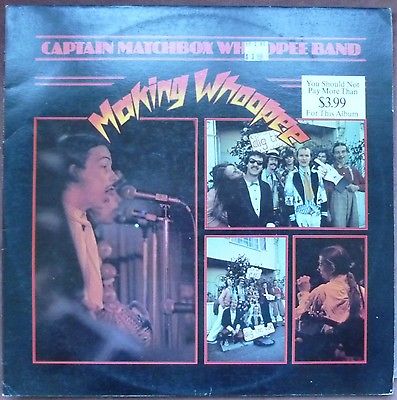
Captain Matchbox Whoopee Band Making Whoopee LP 1976 rare compilation alt takes
A$
30
$
20


Favourite Auctions
To save auctions to your favourites, please login
If you don't have an account, please register
Description
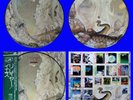
Captain Matchbox Whoopee Band Making Whoopee LP 1976 rare compilation
Original Australian pressing on Image, contains some alternate takes.
If asked to name the most entertaining and best-loved Australian band of the early '70s, it's a fair bet that most young people who lived through that period would nominate The Captain Matchbox Whoopee Band. This crazily brilliant Melbourne-based ensemble played a uniquely Aussie brand of jug-band blues, spiced with jazz, swing, popular standards, cabaret, sideshow alley schtick and vaudeville routines including slapstick, tap dancing, juggling, magic and even fire-eating.
An obvious and common comparison would be England's Bonzo Dog Doo Dah Band, but it would be quite wrong to label Matchbox as mere copyists -- in fact Mic Conway has said that didn't hear the Bonzos until long after Captain Matchbox had been formed. The Conway brothers were born into a family with strong background in music and popular entertainment, particularly vaudeville theatre and opera -- their grandfather was an original vaudevillean, and their Aunt Lyla was a dancer on the famed Tivoli circuit.
As related in the documentary film The Jim Conway Blues, Mic and Jims father (a wool buyer) tried to dissuade his children from the uncertainty of a musical career, to no avail. The greasepaint obviously ran in the veins of his illustrious scions; as well as Mic and Jims well-known exploits, their sister Janie is also a noted musician whose credits including the late '70s Melbourne new wave band Stiletto with Jane Clifton.
As teenagers at Melbournes Camberwell High School, Mic and Jim formed the forerunner to Matchbox, The Jellybean Jug Band and entered the school's annual talent quest "for a laugh" but they annihilated the competition, as this former CHS student recalls:
"I remember standing in the packed gym, watching the Jelly Bean Jug Band -- with Mic on ukelele, washboard and the whisky keg (filled with jelly beans which were thrown at the audience after the performance! Jim played the kazoo and harmonica (and later became Australia's best proponent of that instrument) The whole gym erupted into cheers when they won the event ... we all knew they were talented and SO different. Jug band music in 1969 was a new sound to us. When they evolved later into Captain Matchbox, their first album, Wangaratta Wahine was the most popular LP around. It was everywhere. I still treasure my copy.
After high school Mic and Jim founded their first professional band, The Captain Matchbox Whoopee Band, which centred throughout its life on the Conway brothers. Their inspirations came from their family background in vaudeville, and in particular from Mics fascination with the family collection of vintage 78rpm records of music by Fats Waller, Jelly Roll Morton and other classics of jazz, swing and hot music. In a recent interview with the Sydney Morning Herald, Mic also named American satirical composer Tom Lehrer as one of his musical idols.
Probably the very first film of the band's in its earliest days (which was featured in the Jim Conway documentary) was captured on film by their neighbour and fellow CHS student Chris Lofven, who went on to be a pioneer of Australian music video. Chris is well known for the classic film-clips he made for Spectrums "I'll Be Gone" and Daddy Cool's "Eagle Rock " in 1971, and directed the cult road 1976 movie Oz. These wonderful images of the original Captain Matchbox were taken from Chris Lofven's experimental short film 806, which also includes priceless footage of Sons of the Vegetal Mother, Myriad and Quinn. Happily, this long-unseen short is now available as a bonus feature on the DVD edition of Oz.
Captain Matchbox emerged at a time when there was a vogue for these styles and they were contemporary with similar local acts such as The 69-ers, Starving Wild Dogs, The Original Battersea Heroes, The Gutbucket Blues Band, The Stovepipe Spasm Band and The Moonshine Jug and String Band (which later evolved into The Angels). Billed as Australias loudest jug band, the unique, irreverent Matchbox style was a hit on the theatrically inclined Melbourne underground scene and they became a regular attraction at venues like the TF Much Ballroom and the Thumpin' Tum, alongside acts such as Spectrum, Daddy Cool and Jeff Crozier.
Their popularity with so-called head audiences was doubtless enhanced by their repertoire, which was liberally spiked with covers of classic jazz and blues numbers that contained thinly-veiled dope references -- songs like "Smoke Dreams", "If Youse A Viper", "That Cat Is High" and "My Canary Has Circles Under His Eyes".
Their first mainstream exposure came through an appearance in Tim Burstall's 1971 film Stork, starring Bruce Spence and Jackie Weaver. During the year they also performed in Sydney at The Yellow House, the famous multimedia gallery/performance space set up by artist Martin Sharp, which operated during 1970-71.
The band signed to Image Records in 1972 and issued their debut single "My Canary Has Circles Under His Eyes", which was a Top 40 hit in Melbourne in November. During the year a brief snippet of their TF Much Ballroom act (performing "Who Walks Out When I Walk In") was captured (in colour) by film maker Peter Weir in his short documentary Three Directions In Australian Pop Music, which also featured performances by Spectrum and Wendy Saddington & Teardrop. Matchbox also featured in an episode of GTK, where they were interviewed by reporter Jeune Pritchard and gave a live-in-the-studio performance of "Mobile Line".
In June-July of 1972 Captain Matchbox supported folk legend Phil Ochs on his first tour of Australia. Their next single "I Can't Dance (Got Ants in My Pants)" / "Jungle Dance" was released in April 1973 and their debut album Smoke Dreams was released in June. The album was comprised entirely of 1930s and 1940s jazz, blues and jug-band standards. The lineup for these recordings was Mic (vocals, washboard, ukelele), Jim (harmonica, kazoo, vocals), Dave Hubbard (guitar), Peter Inglis (guitar, vocals), Peter Scott (tea chest bass), Mick Fleming (banjo, mandolin, guitar, vocals) and Jim Niven (piano, pedal organ).
Image also arranged a reciprocal deal with the American ESP label, whereby ESP released Smoke Dreams in the USA, while Image released the LP Godzundheit by American band The Godz. The ESP version of Smoke Dreams was also remixed and released in the then newfangled Quadraphonic audio format, and this version of this LP is evidently now something of a collector's item for Quad fanatics.
Sometime during 1973 Image also released an Captain Matchbox EP, entitled Matchbox Madness. By this time the EP had all but died out as a viable format for pop-rock releases, and the paucity of information about it suggests that it is now quite rare, and probably a valuable collector's item. If anyone can tell us more about it, or provide a tracklisting and/or a photo of the cover, we'd love to hear from you!
By November 1973 the line-up had changed to the Conway brothers, Jimmy Niven and Mick Fleming with new members Geoff Hales, Fred Olbrei and Dave Flett (ex-Lipp and The Double Dekker Brothers, Armadillo). Jon Snyder (guitar) joined at the beginning of 1974, and their next single, a cove of the Fats Waller classic "Your Feets Too Big" came out in February 1974, followed in July by their inimitable reading of the tango classic "Hernando's Hideaway", a tribute to another of Mic's idols, Spike Jones . The B-side "Wait For Me Juanita", written by Mic and Dave Flett, was one of the first original Matchbox compositions to be released.
Another Conway-Flett original, "Wangaratta Wahine", became the title track to and first single from the band's breakthrough second album, which came out at the end of 1974. The LP featured the classic cover design by cartoonist Michael Leunig which won the award for Album Cover of the Year in 1974. Assisted by their memorable first appearance on Countdown, performing "Wangaratta Wahine", the album became their biggest success, peaking at #4 on the national charts by August 1975.
During 1975, Fleming and Hales left to be replaced by Chris Worral (ex-Pelaco Brothers) and Manny Paterakis (a former member of Armadillo with Dave Flett and The Ferrets Bill Miller). Mushroom signed the band after their Image contract expired and issued the satirical single "Australia" in October 1975 and the album Australia. Another entertaining mix of originals and covers the album included songs like "Cocaine Habit", "Sweeny Todd the Barber", Noel Coward's classic "20th Century Blues" and the Matchbox fan favourite "Masochism Tango". In keeping with the band's loopy sense of humour, the album credits listed Mic as "Microphone" Conway and Worral as "Christmas" Worral.
There were more line-up changes in 1976 with Jack Sara replacing Olbrei, Graeme Isaac replacing Paterakis, Gordon McLean replacing Worral, and Jimmy Niven leaving to join the newly formed Sports. The band's old label, Image, issued the perennial compilation album Making Whoopee (October 1976), which featured alternate versions of some of the best tracks from the first two LPs.
Captain Matchbox had a long association with Melbourne's alternative theatrical scene, notably Melbournes La Mama and Pram Factory theatres, and in late 1976 this led to the creation of a new performing entity dubbed Soapbox Circus, which combined the talents of Matchbox and the Australian Performing Group. By this time Flett had left (he went on to a stint in Redgum in 1980s) and two new members, Peter Mulheisen (bass) and Rick Ludbrook (guitar, sax) had joined. The new group recorded the live album The Great Stumble Forward at the Pram Factory, the single "If I Can't Hav-Anna in Cuba" / "Chiropodist Shop", and appeared in the play Smackin' The Dacks. In 1978 Soapbox Circus evolved into the now world-famous Circus Oz, of which Mic was a founding member.
By 1978 the band was known simply as Matchbox with the line-up now comprising Mic, Jim, Ludbrook, Mulheisen, McLean, Tony Burkys (guitar, ex-Original Battersea Heroes) and Stephen Cooney (guitar, later of Redgum), who was replaced by Louis McManus (ex-Bushwackers). Matchbox released the Slightly Troppo album, and the delightful single "Sleep" (June 1978), followed by "Love Is Like A Rainbow" (January 1979), as well as making an appearance in Tim Burstall's 1979 feature film version of the Jack Hibberd play Dimboola.
By mid-1979, the line-up of the Conways, McManus and Mulheissen had been augmented by Robert Ross (drums, ex-Manning), Eric McCusker (guitar) and Chris Coyne (sax, flute). That version of the band introduced a more rock-oriented sound, but it lasted only about a year; McCusker left to join Ross Wilson's Mondo Rock and was replaced briefly by Peter Martin. IN itsw final incarnation as The Matchbox Band, the group released one last recording, an independent single, "Juggling Time" / "Dirty Money", before breaking up in September 1980.
Side 1:
"Wait For Me Juanita"
"Sophisticated Mama"
"Nagasaki"
"Jungle Love"
Side 2:
"Hernando's Hideaway"
"Hotsy Totsy"
"Down Undergroundsville"
"Your Feet's Too Big"
"That Cat Is High"
"Viper Sequence"
All tracks except "Hernando's Hideaway" are alternate takes, with some studio dialogue left in.
CONDITION:
SLEEVE: VG+
RECORD: VG+ Minor marks
I NO LONGER MAIL TO ITALY! ALSO NOT TO BRAZIL, UKRAINE OR RUSSIAN FEDERATION.
Any bids or purchases from these countries will be cancelled immediately.
price rating