Chillum - VINYL LP 1971 - Rare Prog Psych (Mushroom) (Second Hand third album)
£
90
$
119


Favourite Auctions
To save auctions to your favourites, please login
If you don't have an account, please register
Description
The vinyl is in very good condition. Some light surface marks on both sides but it plays very well. Nothing serious at all. Just the odd light surface noise and a couple of crackles - no more than that! The vinyl is lovely and thick.
The original plain white inner back has yellowed with age. But its lined and that clearly has helped protect the vinyl over the years.
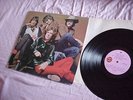
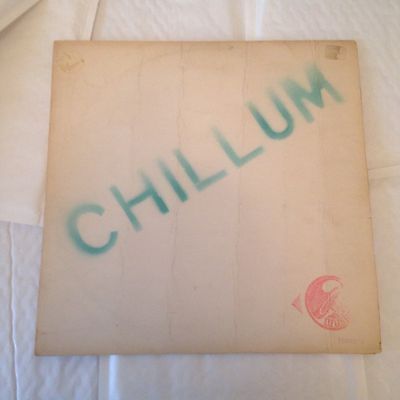
The cover is well worn. Clearly a low-budget affair when originally made! As a result its virtually impossible to find a cover in pristeen condition.
The cover is faded and grubby and is creased. The crease lines themselves are grubby.
Some sticker residue to the top left and top right of the front cover.
Fantastic, rare and obscure pysch/prog LP from 1971.
Chillum evolved from the ashes of Second Hand who recorded two rare albums for Polydor.
History
Formation and early years (1965-1968)
Ken Elliott was 15 in 1965, when his schoolmate Kieran O'Connor, a drummer, suggested that they set up a band. Ken quickly learned to play the harmonica and the piano. Kieran also asked his friends Bob Gibbons, who played the guitar, and Grant Ramsay (bass) to join the group. The band's title was The Next Collection, the group was based in Streatham, South London. Ramsay was replaced by Arthur Kitchener soon afterwards. With him on board, the band won the Streatham ice rink battle of the bands and were awarded the privilege to make a demo recording at Maximum Sound Studios. The Next Collection recorded two songs during this session, "A Fairy Tale" and "Steam Tugs". These demo recordings were later released as bonus tracks to the 2007 reissue of the albumReality. Vic Keary, the owner of the studio, liked the band and decided to become their producer.
The Polydor years (1968-1969)
With Keary's support, the band signed to a prestigious Polydor label under the title The Moving Finger (a reference to one of the Omar Khayyám poems). The band started working on their first studio album, Reality with Arthur Kitchener on bass, but he quit the band during the sessions, and the bassist Nick South was found through an ad in Melody Maker. As a result, half of the songs on the album were recorded with Kitchener on the bass, and the other half with South.
The album was to be released in September, but Polydor found out that the band called The Moving Finger had already released a single on Mercury Records, and so the band had to change its name. They called themselves Second Hand, as all their instruments had been bought used. The album was released at the end of 1968 and failed because of complete lack of promotional support by Polydor.
I don't think there was a single press ad. It wasn't in the shops, i didn't get reviewed, it wasn't played on the radio... It was like it never existed.
—?Ken Elliott. Polydor also didn't release a supporting single. All this became a reason for the band to leave the label.
Line-up changes and new experimental label (1969-1971)
The band's morale was low, and they embarked on a tour of Europe in 1969, hoping that something would change. However, this only prompted Bob Gibbons to leave the band following the tour to grant his mother's wishes. The group was completely demoralized. (After a series of setbacks, Bob committed suicide in 1977.)
After several tours throughout Europe, Second Hand gained some popularity, especially in France. The line-up changed again: George Hart replaced Nick South on the bass, and Ken's brother Rob was engaged as a freestanding vocalist. They went on to record their second studio album, Death May Be Your Santa Claus, at Chalk Farm Studio in 1970. Vic Keary, who became the band's close friend, formed his own label called Mushroom and invited Second Hand to release their album there. The album was released in April 1971 with a supporting single called "Funeral", featuring "Hangin' On An Eyelid" (track 2 from the LP) as the B-side. The album was far more successful than the previous one, using a heavy symphonic rock style obviously influenced by Arthur Brown's vocal manner (Rob Elliott was a big fan of him). The album was recorded without a guitarist - as Ken Elliott said, "Gibbons was irreplaceable". Moogy Mead, a session guitarist, was only involved in one song. However, all this didn't make the band really famous.
Chillum project (1971)
The band retired from touring and did not give any more live performances. All this looked like the beginning of an end. A young guitarist, Tony McGill, was invited to record the third album, but Rob Elliott left the band shortly after that. His departure called the entire project into question, but Vic persuaded the band to record the album just as it was planned originally. An experimental jam album was recorded in one day and released in late 1971. The band members decided to indicate Chillum both as the artist and the album title. The album went unnoticed, and Ken Elliott decided to disband Second Hand in the early 1972.
Mushroom label.
Catalogue number 100MR 11.
Side 1:
Brain Strain
Side 2:
Land Of A Thousand Dreams
Too Many Bananas
Yes! We Have No Pajamas
Promenade Des Anglaises




![Elvin Jones - At Onkel Po's Carnegie Hall Hamburg [New Vinyl LP] 2 Pack](https://www.popsike.org/php/thumbnail.php?url=https://www.popsike.pics/pix/20190515/133053258497.jpg)