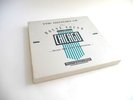
DE LA SOUL 3 Feet High And Rising VINTAGE 1989 ORIGINAL Vinyl Comic Insert LP
$
51


Favourite Auctions
To save auctions to your favourites, please login
If you don't have an account, please register
Description
This is a LP featuring DE LA SOUL 3 Feet High And Rising 1989 Vintage Vinyl w Comic Insert LP TOMMY BOY
3 Feet High and Rising is the debut studio album by the American hip hop group De La Soul, released on February 6, 1989, by Tommy Boy Records.
It was the first of three collaborations with the producer Prince Paul, and was the critical and commercial peak of both parties.
The album title comes from the Johnny Cash song "Five Feet High and Rising".
The album contains the singles "Me Myself and I", "The Magic Number", "Buddy", and "Eye Know".
The album was a critical and commercial success.
It is consistently placed on lists of the greatest albums of all time by noted critics and publications, with Robert Christgau calling it "unlike any rap album you or anybody else has ever heard".
In 1998, it was selected as one of The Source's "100 Best Rap Albums" and in 2020 was ranked 103 on Rolling Stone's 500 Greatest Albums of All Time list.
It was selected by the Library of Congress as a 2010 addition to the National Recording Registry, which selects recordings annually that are "culturally, historically, or aesthetically significant".
As of 2025, it is the only De La Soul album to be certified platinum by the RIAA.
Along with the rest of De La Soul's back catalog, 3 Feet High and Rising was not made available for digital purchase or streaming until 2023, due to concerns about the legality of the samples for digital releases.
Musical style Released amid the late-1980s boom in gangsta rap, which gravitated towards hardcore, confrontational, violent lyrics, 3 Feet High and Rising stood out from this trend by showcasing De La Soul's more positive style.
The mirth and intelligence of De La Soul's self-presentation led many observers to label them a "hippie" group, a characterization that De La Soul's members have consistently disputed.
On the album, De La Soul sought to explicitly distance themselves from gangsta rap by "lampoon[ing] emerging tropes" such as the growing materialism within the genre.
Their lyrics are instead characterized by a variety of "bizarre and surreal" choices of subject matter, such as dandruff, gardening metaphors, and "Dr. Dolittle-esque interactions with animals".
The album features a recurring lyrical motif of the "D.A.I.S.Y. Age", an acronym that stands for "Da Inner Sound, Y'all".
Group member Posdnuos has described the daisy motif as intended to indicate the group's "sunnier", more playful ethos.
3 Feet High and Rising uses a sample-heavy production style; in addition to sampling from funk and soul tracks, as was popular in the hip-hop of the era, the album also draws from sources such as doo-wop, psychedelic rock, and children's music.
It has been described as "the first psychedelic hip-hop record".
The album has also been noted for its use of unconventional song structures.
Posdnuos recounts that the group used Casio's RZ-1 drum machine and an Eventide-brand harmonizer to record, manipulate, and combine their samples on the album.
The album is also known for its quiz show-themed series of skits, leading it to be frequently credited with inventing or popularizing the hip-hop skit.
The album's artwork was designed by Toby Mott of the British art collective the Grey Organisation (GO), who had relocated to New York City after their attack on Cork Street's art galleries and subsequent prosecution.
3 Feet High and Rising received widespread critical acclaim upon its release.
"An inevitable development in the class history of rap, [De La Soul is] new wave to Public Enemy's punk", wrote Robert Christgau of the album in his 1989 "Consumer Guide" column for The Village Voice.
"Their music is maddeningly disjunct, and a few of the 24-cuts-in-67-minutes (too long for vinyl) are self-indulgent, arch.
But their music is also radically unlike any rap you or anybody else has ever heard — inspirations include the Jarmels and a learn-it-yourself French record.
And for all their kiddie consciousness, junk-culture arcana, and suburban in-jokes, they're in the new tradition – you can dance to them, which counts for plenty when disjunction is your problem.
"Rolling Stone magazine's Michael Azerrad called 3 Feet High and Rising "(o)ne of the most original rap records ever to come down the pike", and described it as an "inventive, playful" record which "stands staid rap conventions on their def ear".
When The Village Voice held its annual Pazz & Jop critics' poll for 1989, 3 Feet High and Rising was ranked at number one, outdistancing its nearest opponent (Neil Young's Freedom) by 21 votes and 260 points.
Sampling artists as diverse as Johnny Cash, Hall & Oates, Steely Dan and the Turtles, 3 Feet High and Rising is often viewed as the stylistic beginning of 1990s alternative hip hop (and especially jazz rap).
Writing in retrospect for The A.V. Club, Nathan Rabin credits Prince Paul for helping "create progressive hip hop" with his production on 3 Feet High and Rising, while author John Riordan says "its comedy skits and positive lyrics established the group as a progressive hip-hop act at odds with the increasingly violent image of mainstream rap."
Phil Witmer of Noisey cites De La Soul's "sampledelia" on the album as an "old-school" example of sampling being applied to "jarring, collage-like effect".
3 Feet High and Rising is also credited with introducing the hip hop skit, a style of comedic sketch used both to introduce rap albums and as interludes between songs.
On the Billboard charts, 3 Feet High and Rising peaked at No. 1 on the R&B/Hip Hop charts and No. 24 in the Top 200.
THIS LP IS IN VINTAGE GOOD please see pics CONDITION
I HAVE NO WAY TO PLAY OR TEST THIS
ITEM SOLD AS-IS please see pics for condition
.
price rating