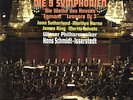
DECCA LP SXL-6233: BEETHOVEN Symphony No. 9 - Schmidt-Isserstedt VPO 1966 UK ED1
$
70
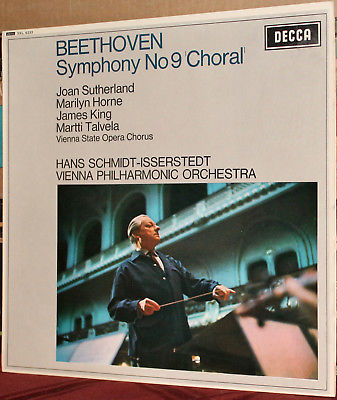


$ 70
Sold For
Mar 1, 2019
Sold Date
Jan 8, 2018
Start Date
$ 100
Start price
1
Number Of Bids
USA
Country Of Seller
eBay
Sold at
Favourite Auctions
To save auctions to your favourites, please login
If you don't have an account, please register
Description
****Welcome to our listing, thanks very much for looking!
****See our own website! We have lots of out of print and rare LPs and CDs! Find us on the web at -
hearthedifference.net
****Shipping cost is only an estimate - it depends on the actual weight and size of the package as well as the service required. We do not profit from shipping costs, so if we overcharge, we will refund the difference back to you. It's always best to wait for our invoice before paying for your item. We will combine shipping for multiple items purchased.****Please see our other listings for more great LPs and CDs - new items added daily!
****To access our eBay store click on the little red door at the top right section of any of our eBay listings or, click on -
http://stores.ebay.com/Hear-The-Difference
Background -
There are records and then there are "RECORDS". This one belongs in the latter category. Decca is one of the most highly collectible labels produced. The LPs the company issued in the "golden age" of LP recordings are the most sought after by audiophiles across the globe.Hans Schmidt-Isserstedt (5 May 1900 – 28 May 1973) was a German conductor and composer. Born in Berlin, he studied music in Heidelberg and Münster. He was also a composition student with Franz Schreker at the Berlin Hochschule für Musik, and received a doctorate in 1923.
He was a repetiteur at the Wuppertal Opera starting in 1923. He held conducting positions at the opera houses of Rostock (1928 - 1931) and Darmstadt (1931 - 1933). He had the post of first conductor at the Hamburg State Opera from 1935 to 1943. In 1944, he was named music director at the Berlin State Opera.
In 1945, after the end of World War II, the British military authorities invited Schmidt-Isserstedt (who had avoided joining the Nazi Party) to found an orchestra at the North German Radio in Hamburg. Six months later, he assembled the North German Radio Symphony Orchestra and conducted its first concert in November 1945. He was subsequently the orchestra's first principal conductor. During his years in this role, he became an advocate of music by composers whose music had been outlawed in Germany during the Third Reich: such as Bartók, Stravinsky and Hindemith. His favorite composer, however, was Mozart, and he made several recordings and gave many notable performances of his works. In particular his recordings of Mozart's operas Idomeneo and La finta giardiniera are greatly admired.
From 1955 to 1964, he was principal conductor also of the Royal Stockholm Philharmonic Orchestra. He conducted memorable performances of The Marriage of Figaro at the Glyndebourne Festival in 1958, and of Tristan und Isolde at The Royal Opera, Covent Garden in 1962.
He made a well-regarded recording of all the Beethoven symphonies. In Germany, he was a noted champion of the music of Tippett.
Schmidt-Isserstedt's own compositions included songs, the opera Hassan gewinnt (Rostock, 1928), and works for orchestra. His son was the British record producer Erik Smith.
Hans Schmidt-Isserstedt died in Holm, Pinneberg, West Germany, in 1973.
Hans Schmidt-Isserstedt is one of those conductors whose work was renowned far more among the ranks of his peers (and of very serious listeners) than among the general classical audiences of his era. A believer in strict rhythmic precision, transparent orchestral textures, and the avoidance of excessive mannerisms, Schmidt-Isserstedt and his work were loved by fellow musicians and listeners committed enough to seek it out, eclipsed as it often was by his more flamboyant and well-known rivals. It is a measure of his place in the pantheon of early and middle twentieth century conductors that, while only two or three of his recordings are represented on CDs from major labels, dozens of his performances appear on private collectors labels.
Schmidt-Isserstedt was born in Berlin in 1900 and studied music in Berlin at the university. Although his interest in music extended into modern and contemporary works, his first love was Mozart and he authored a dissertation on the Italian influences in Mozart's early operas. He conducted in different theaters and also composed music during the earlier part of his career, including several orchestral works, Lieder, chamber pieces, and one opera (Hassan gewinnt), which was performed for the first time in 1928. During the 1930s, he began recording regularly, most notably in a series of concertos with the legendary violin virtuoso Georg Kulenkampff, in which he conducted the Berlin Philharmonic. Schmidt-Isserstedt remained in Germany during the period of the Nazi regime and in 1935 was appointed principal Kappelmeister at the Hamburg State Opera. He became the opera director at the Deutsche Oper in Berlin in 1943 and the company's general music director in 1944.
Schmidt-Isserstedt was among the less-controversial musicians working in Germany during the war, and his work and career continued virtually uninterrupted by the Allied victory and the fall of the Nazi regime in 1945. He founded the North German Radio (or NDR) Symphony Orchestra in Hamburg during 1945, which he directed until his retirement in 1971. Schmidt-Isserstedt successfully took the NDR Symphony Orchestra on tour in Europe, the Soviet Union, and the United States during the 1950s. He also began recording regularly for the British Decca/London label with several different orchestras, including the Vienna Philharmonic Orchestra. From 1955 until 1964, he was also the principal conductor of the Stockholm Philharmonic and made appearances as a guest conductor with more than 100 orchestras around the world, in all of the world's major cities, and with the Glyndebourne Opera (The Marriage of Figaro, 1958) and Covent Garden (Tristan und Isolde, 1962). During this period, he was also a fervent advocate for the music of Bartók, Stravinsky, and Hindemith.
Schmidt-Isserstedt was popular throughout Europe and his recordings were usually more easily available there than in the United States, where he was most familiar to a cadre of serious listeners. His Beethoven symphonic cycle with the Vienna Philharmonic (which featured some of the most consistently fine and inspired playing in the V.P.O.'s history), however, was readily available in the American catalog for many years and is still highly regarded. His recording of the Symphony No. 9, in particular, is still singled out for critical praise. For many years, it was considered one of the two or three finest available on LP (back in the 1970s, if you found this record in someone's collection, you could be certain that they really knew their stuff and cared about their music). In the 1990s, the CD version of this performance was chosen by the author of The Beethoven Companion as the one through which the interactive computer software operates and lifts its cues. His recordings of the Mozart operas, most notably Idomineo (his last, released in 1972) and La finta giardiniera (recorded in the then-extant German translation, as Die Gartnerin aus Liebe) remain among the choicest performances of these works.
Hans Schmidt-Isserstedt never courted publicity or glory in the way that his contemporaries, such as Wilhelm Furtwängler or younger rivals like Herbert von Karajan, did. As a result, he was never a household name. Working quietly, however, and building an orchestra and a postwar reputation from the ground up, he ended up leaving behind a handful of recordings whose worth speaks loudly, even in the digital era, some decades after his death. - Bruce Eder
Hans Schmidt-Isserstedt was among those older conductors who, luckily for us, lived long enough into the stereophonic age to have left us any number of fine stereo recordings. He was one of an elite group of conductors that included people like Bruno Walter, Otto Klemperer, Fritz Reiner, Rafael Kubelik, Karl Bohm, Eugene Jochum, and their like. There were other conductors who came along during and after their tenures who offered more glamor, like Herbert von Karajan, or more pizzazz, like Georg Solti, and conductors like Roger Norrington and John Eliot Gardiner who performed on period instruments using period practices. But it’s hard to beat the grace and refinement the older hands brought to the music, especially to Beethoven. This LP has Schmidt-Isserstedt’s classic 1965 recording of the Beethoven Ninth, and it couldn’t be better.
Beethoven (1770-1827) wrote and premiered his Symphony No. 9 in D minor, Op. 125, in 1824, and it would be his final completed symphony. Its use of vocals in the final movement gave it the title “Choral Symphony,” and the work proved to be at least as revolutionary as his Symphony No. 3. There are critics to this day who consider the Ninth the greatest piece of music ever written, and it’s hard to argue with them.
We can learn a lot about Schmidt-Isserstedt’s style from his handling of the first movement, the Allegro, ma non troppo, un poco. It sounds exactly right (Schmidt-Isserstedt’s handling, not Beethoven’s tempo markings). To give you an idea of that “rightness,” I compared his timing for the movement with other recordings I had on hand: Solti: 17:39; Jochum: 16:31; Schmidt-Isserstedt: 16:26; Bohm: 14.54; Norrington: 14:13; Zinman: 13:35. So Schmidt-Isserstedt is pretty much in the middle of the crowd when it comes to tempos, yet the pace actually seems quicker because he puts such emphasis on dynamic contrasts, making his interpretation as lively as any of the others. Still, it never seems hurried. In each movement, Schmidt-Isserstedt takes the time to elucidate, illuminate, and clarify every note.
And so it goes, always with Schmidt-Isserstedt keeping a bounce in his step but never overstepping the bounds of classical propriety. His is a thrilling yet elegant performance. The third-movement Cantabile is as beautiful as any I’ve heard, and then comes that big finish: the “Ode to Joy,” based on the poem by Friedrich Schiller and sung here by probably the finest quartet ever assembled for the occasion: Martti Talvela, bass; James King, tenor; Marilyn Horne, mezzo-soprano; and Dame Joan Sutherland, soprano. Along with the Vienna Philharmonic Orchestra, one of the best ensembles in the world, and the Vienna State Opera Chorus at the top of their game, one could not ask for more.
This is not a flashy Ninth, not a monumental one, not a grandiose one, not a zippy, rushed one. Schmidt-Isserstedt’s account is simply a most-fulfilling, most-pleasing, most-rewarding one. It’s a dignified, spacious reading, well balanced and relaxed, yet invariably riveting, a performance that is hard to fault and, thus, a performance easy to live with and easy to enjoy upon repeat listening.
Decca recorded the music in the Sofiensaal, Vienna, in 1965. The sound is as good as any Beethoven Ninth on record and better than most. Let’s just say there is nothing seriously better. Clarity is outstanding, without being in any way bright or edgy, and while it may not be as ultimately transparent as some other recordings, it is more lifelike than most. The stereo spread is wide; dynamics are strong; transient response is quick; orchestral depth is moderately good; and bass and treble appear reasonably well extended. A pleasant ambient bloom and almost no background noise give the whole affair a natural, realistic feel. Very nice. “Top of the world!” — James Cagney, White Heat
At long last Decca reissues Hans Schmidt-Isserstedt’s Vienna Philharmonic Beethoven cycle from the 1960s in full, together with the conductor’s accounts of the concertos, featuring soloists Wilhelm Backhaus and Henryk Szeryng. In the main, the symphonies are superbly played, benefiting from the Vienna Philharmonic’s perpetually singing tone quality from the string section, characterfully inflected woodwinds, and broad, comfy brass sonorities. Schmidt-Isserstedt’s straightforward, sober interpretations strike a happy medium between the formal, unvarnished Teutonic styles of Klemperer and Barenboim and the astringent classicism typical of Toscanini, Szell, and at times, Böhm.
One of the Decca catalog’s great Ninth Symphonies tops this cycle, featuring a vocal-soloist dream team. Bass Martti Talvela makes an imposing impression by taking his recitative cadenza in a single, effortless breath. James King’s ever-present tenor and bel canto’s Dynamic Duo of Marilyn Horne and Joan Sutherland also linger in your ear long after the music stops. - Jed Distler
"well-paced with a lively 2nd movement and amazing vocals. after listening to this i decided to listen to abbado's version, and felt the latter was dull and workmanlike. then i noticed that in the 2nd movement, for example, shmidt-isserstedt is a bit over 10 min, abbado over 13. barenboim was 15! karajan from the early 60's was a bit over 10 min but felt hurried instead of lively. bernstein, leading the vpo, at 11 min wasn't bad, but didn't have the life and energy of s-i's vpo. reading reviews of other versions, some speak very highly of fricsay's version- i listened and it is, indeed, good. the 2nd movement, for comparison, is 10:30 and has the same kind of propulsive thrust as s-i's. fricsay had a very good vocal quartet, too, and the baritone dietrich fischer-dieskau does well by his part. otoh, the bass martti talvela, in this version, sounds like the voice of god. i'm sure i needn't say much about the quality of the other vocalists here- marilyn horne and joan sutherland are so well-known that even i [very much not an opera buff] knew of them, the tenor- james king, and the bass were names i didn't know, but are of similar stellar quality. highly recommended,” - Jeffry K.
"Here is purity of tempo, phrasing and detail. This is the finest Beethoven Ninth of which I am aware. You will get an overall experience not an episodic one that is so common, there is no bravura here. It is a performance enhanced by a wonderful recording, you hear as the conductor intended not heavy handed recording engineers with too many sliders and dials. Embrace this musically and technically pure performance. I have the vinyl of this which is wonderful.” - Matthew Brown
-
LP made by DECCA Records, in the UK / England / Great Britain
-
LP released in 1966 (ED1)
-
LP is recorded in STEREO
-
Record Catalog Number: SXL 6233
-
Record Labels are primarily BLACK & SILVER with inverse SILVER and BLACK lettering, featuring the earliest Decca Records logo on the record labels, with "Original Recording By" at the 11 o'clock position.
- This is the first UK version for this catalog number.
LABELS:
- Black/silver 'grooved wideband' labels
- "ORIGINAL RECORDING BY" at 11 o'clock
- "Made in England" at bottom
- "? 1966"
- Decca 'Musical Notes' logo on both sides
- Tax code "K/T"
- "S" to the right of tax code
- Matrix numbers printed upside-down
SLEEVE:
- Front laminated
- No flipbacks
- Bold "STEREO" on spine
- "© 1966, The Decca Record Company Limited, London."
- "Printed in England by James Upton Ltd. Birmingham & London."
- "Laminated with 'Clarifoil' made by British Celanese Limited"
- Uncredited sleeve notes in English only on back
INSERT:
- 1 full-size sheet, 1 page printed
- Contains the lyrics in original language and English translations
- "English translation (c) 1966 The Decca Record Company Limited."
- "Printed in England by James Upton Ltd. Birmingham & London."
OTHER INFORMATION:
- Recorded 8 - 12 December 1965 in the Sofiensaal, Vienna
- Labelography code: ED1
• Matrix / Runout (Runout side A - stamped): ZAL-7143-7G GA KT 2,1
• Matrix / Runout (Runout side B - stamped): ZAL-7144-17G C KT 1
• Matrix / Runout (Matrix on label - side A): ZAL 7143
• Matrix / Runout (Matrix on label - side B): ZAL 7144
• Other (Corresponding mono cat# on insert): LXT 6233
• Mastered At – Decca Studios
• Pressed By – Decca Record Co. Ltd., Pressing Plant, UK.
• Printed By – James Upton Ltd.
• Copyright (c) – The Decca Record Company Limited
Beethoven // Hans Schmidt-Isserstedt
LP Title and Music on this rare LP -Beethoven - Symphony No. 9 "Choral"
1. Symphony no 9 in D minor, Op. 125 "Choral" by Ludwig van Beethoven
Performer: Martti Talvela (Bass), James King (Tenor), Marilyn Horne (Mezzo Soprano),
Dame Joan Sutherland (Soprano)
Conductor: Hans Schmidt-Isserstedt
Orchestra/Ensemble: Vienna Philharmonic Orchestra
Period: Classical
Written: 1822-1824; Vienna, Austria
Language: German
Symphony No. 9 In D Minor, Op. 125 "Choral"
A1 Allegro Ma Non Troppo, Un Poco Maestoso
A2 Molto Vivace
A3 Adagio Molto E Cantabile (Part 1)
B1 Adagio Molto E Cantabile (Concluded)
B2 Finale: Presto - Allegro Ma Non Troppo - Allegro Assai
Performers / Credits on this disc include -
• Bass Vocals – Martti Talvela
• Chorus Master – Wilhelm Pitz
• Composed By – Beethoven
• Conductor – Hans Schmidt-Isserstedt
• Contralto Vocals – Marilyn Horne
• Design [Sleeve Design] – Decca Publicity Art Department
• Engineer [Uncredited] – James Lock
• Liner Notes [English Rendering] – Peggie Cochrane
• Lyrics By – Schiller (tracks: B2)
• Mastered By – G (22)
• Orchestra – Vienna Philharmonic Orchestra
• Photography By [Cover Photo] – Elisabeth Speidel
• Producer [Uncredited] – Erik Smith
• Soprano Vocals – Joan Sutherland
• Tenor Vocals – James King
CONDITION Details:
The LP jacket is in near mint minus condition. The jacket is tight and clean, with NO seam splits. It has "clarifoil" on the front of the jacket, not back. The corners are solid. The colors on the jacket are sharp with NO discoloration on the front or back. The corners and seams show very little shelf wear due to the age (see pictures with this listing for more detail as they are of the actual item).
The LP is in near mint minus condition! There are no serious marks on the vinyl. There may be some very light spider marks on the LP which are caused by sliding the LP in and out of the inner sleeve. Most of the time, these types of marks are not audible, but it really depends on the sensitivity of your audio gear. This is not a new audiophile LP....some extraneous sound is inevitable and should be expected for a vintage LP. A record from the 1960s is rarely perfect. The LP retains much of the original gloss and sheen! There are NO serious spindle marks on the record labels either. That said, acquiring a vintage LP like this is for the performance and rarity of the LP, not necessarily just for the sound quality.A Short Note About LP GRADING -
- Mint = Only used for sealed items.
- Near Mint = Virtually flawless in every way.
- Near Mint Minus = Item has some minor imperfections, some audible.
- Excellent = Item obviously played and enjoyed with some noise.
- Very Good Plus = Many more imperfections which are noticeable and obtrusive.
For best results, always thoroughly clean your LPs before playing them.
LPs can be audiophile quality pressings (any collector of fine MFSL, half speeds, direct to discs, Japanese/UK pressings etc., can attest to the difference a quality pressing can make to an audio system).
Don't let this rarity slip by!!!price rating