DEEP PURPLE 'MACHINE HEAD' FIRST PRESSING US WB 'GREENIE' w/ POSTER 1972 BS-2607
$
25
Favourite Auctions
To save auctions to your favourites, please login
If you don't have an account, please register
Description
DEEP PURPLE 'MACHINE HEAD' FIRST PRESSING US WB 'GREENIE' w/ POSTER 1972 BS-2607
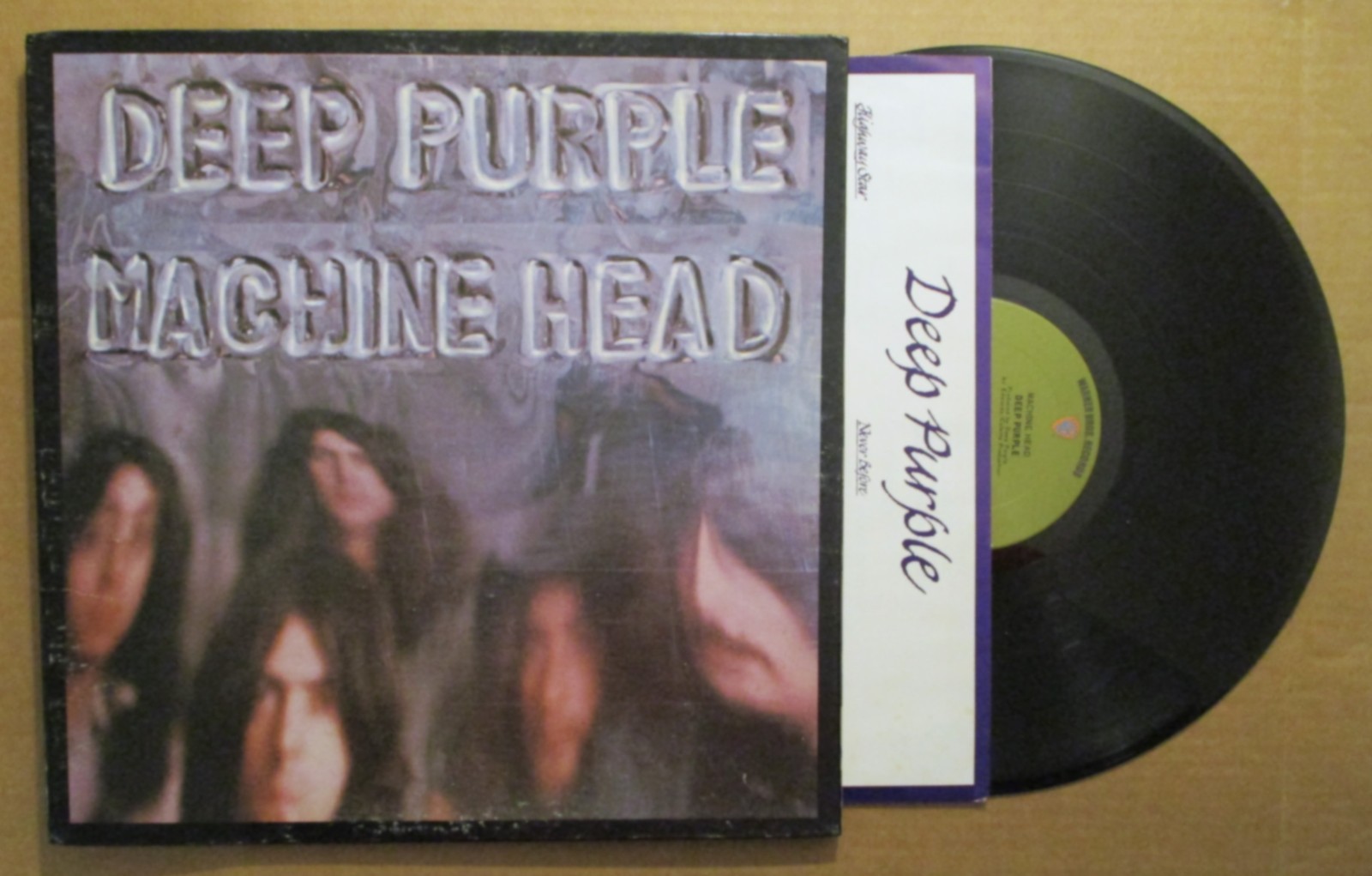
DEEP PURPLE "MACHINE HEAD" FIRST PRESSING ~ GATEFOLD ~ GREEN WARNER LABEL ~ LYRICS POSTER RELEASED: MARCH 25th 1972 LABEL: WARNER BROTHERS – BS 2607 LABELS: EARLY GREEN WARNER BROTHERS "GREENIE" w/ SHIELD LABEL w/ 'EDWARDS/COLETTA' AND 'HEC MUSIC' DESIGNATION RECORDED: GRAND HOTEL ~ MONTREAUX SWITZERLAND DECEMBER 1971 RECORDED FROM DECEMBER 6th TO DECEMBER 21st 1971 RECORDED BY THE ROLLING STONES MOBILE UNIT RECORDING ENGINEER: MARTIN BIRCH MASTERED/LACQUERS CUT AT ARTISAN SOUND STUDIOS PRODUCERS: DEEP PURPLE ALBUM COVER PHOTOGRAPHY: SHEPARD SHERBELL MATRIX (SIDE A): BS-2607 A 40125 - 1A [Artisan Logo] MATRIX (SIDE B): BS-2607 B 40126 - 1A [Artisan Logo]
CONDITION: VINYL: VG+ GATEFOLD JACKET: VG+ POSTER: VG+ ~~~~~~~~~~~~~~~~~~~~~~~~~
I've been going thru my large vinyl record collection the past few months and pulling out some LPs that I thought that someone else would want for their collection. I've been collecting records for nearly 50 years and it's time to pass some of them on to the next generation of collectors.
After all, we are just temporary 'caretakers' of these musical gems until the next owner and next collection takes them in.
This week on EBay I'm offering up this rare, clean, excellent condition, excellent sounding, early First Pressing of Deep Purple's classic, seminal, heavy, hard-rocking, proto-metal, 1972 album 'Machine Head' on the original olive green Warner label.
This is my personal, original copy that I purchased back in the early 70's, shortly after its release, and has remained in my record collection ever since.
Please read the full description of this album's content, odd recording history, musical impact, and more details on the record's condition below. ~~~~~~~~~~~~~~~~~~~~~~~~~~~~~~~
This is a nice clean original 1972 First Pressing on the early olive green Warner Brothers label with the small orange shield at the top and the large 'Stereo' at the bottom.
These original American "Greenie" First Pressings sound amazing. They are renowned for their clear, detailed, powerful and dynamic sound reproduction and this pressing has the kind of energy, presence, and fullness needed to bring the best out of Deep Purple's music. Also, the warm, natural, pure analog sound quality to the vocals and instruments is just awesome.
These early green Warner pressings allow you to hear and experience the rich, clear, raw energy of Deep Purple in the way the band originally intended, and in a way that remains timeless and impressive.
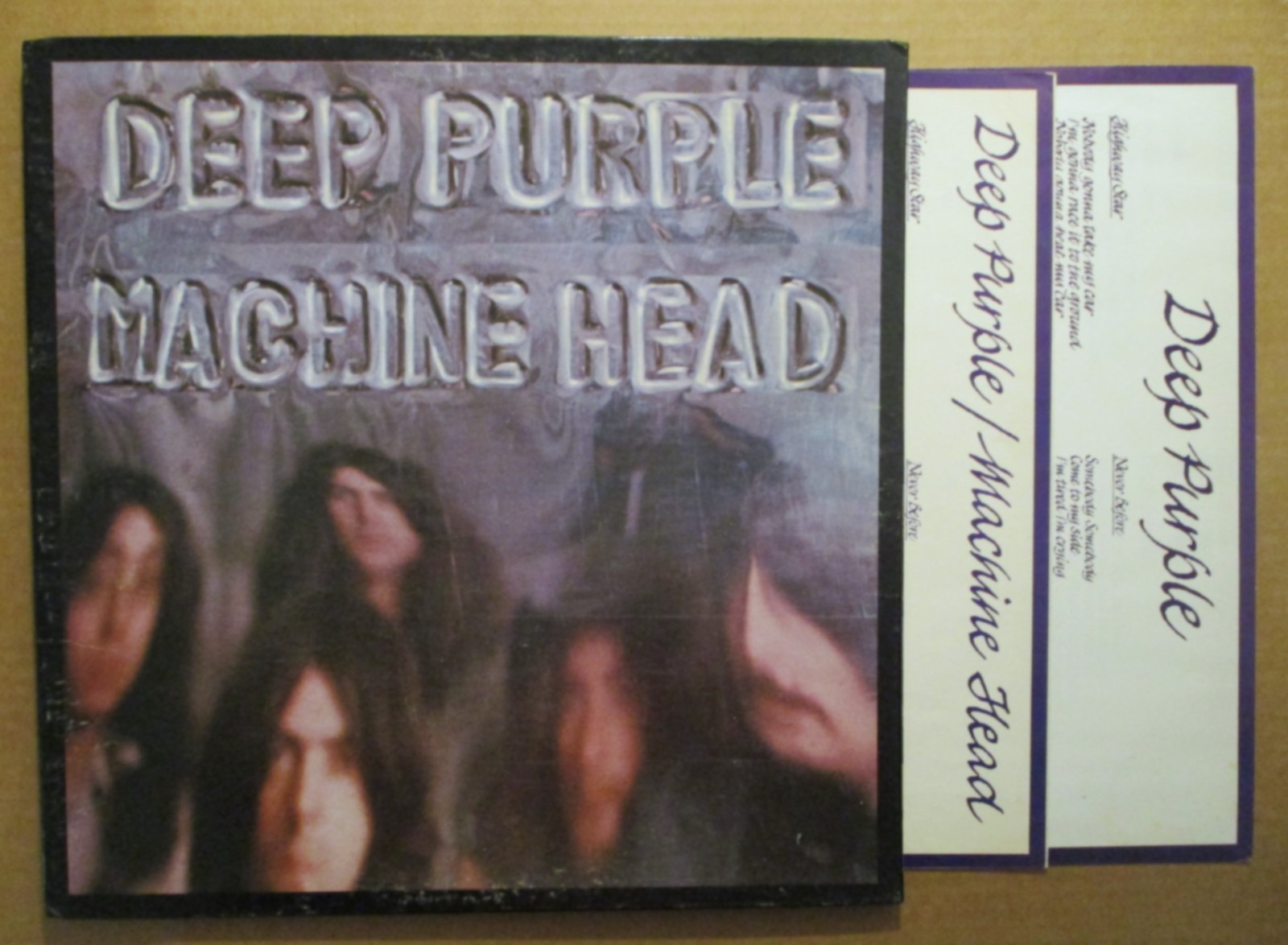
This original gatefold copy also comes with it's original tri-fold lyrics poster, which is almost always missing, and still has it's original, clean, "Warner/Reprise Loss Leaders" inner sleeve, which can be dated to 1972.
There are actually 3 lyrics posters in this copy. Original posters just had the band name at the top, with the album title at the bottom. This was changed very early on to put both the band name and the album title at the top. Originals are also printed in a cool 'deep purple' color, later ones are simply dark blue. By the mid 70's, Warner quit adding these lyric sheets to copies of 'Machine Head'.
Over the decades, whenever I stumbled onto a loose lyric sheet I just tossed it in with my copy of the album, and I was surprised to find 3 lyric sheets in my copy when I pulled it out to list. The original, and 2 other early ones. I'll include all 3 with this record. ~~~~~
These First pressings can be identified by their early style poster, the early green Warner 'small orange shield' labels with "Warner Bros. Records Inc., a Subsidiary & Licensee of Warner Bros. Inc." in the perimeter, and the 'Edwards/Coletta' and 'HEC Music' designations on the label.
John Coletta and Tony Edwards were the 'Money' people and early Managers of Deep Purple.
The etched Matrix numbers have the first pressing '1A' suffix and these first pressing jackets have the '0598' price code on the spine.
This copy is the preferred 'Artisan' mastered version with the lacquers cut at Artisan Sound Recording Studio in southern California using a state of the art Neumann VMS-66 lathe with a SX-68 cutting head, which was considered revolutionary at the time. The Artisan "drum and drumsticks" logo is in the deadwax on both sides of this record.
A nice, clean, complete, well mastered, amazing sounding first American pressing. A great album and a nice survivor. ~~~~~~~~~~~~~~~~~~~~~~~~~~~~~~~~~~~~~~~~~~~~~~~~
THE STORY OF THE RECORDING OF 'MACHINE HEAD'
Deep Purple's classic album 'Machine Head' is famous and iconic for several reasons, but it's best known for the story and dramatic, unexpected circumstances surrounding it's recording in Montreux Switzerland.
It all began late in 1971 when Deep Purple were preparing to cut another album after a punishing year of touring and recording.
Recording sessions for the band's previous albums, 'In Rock', released in mid-1970 and 'Fireball' released in July 1971, had to be squeezed into the group's busy, hectic touring schedule, resulting in some great songs, but with a hurried, dry, sterile, studio sound.
Deep Purple were developing a reputation for their powerful live shows, and wanted to capture that spontaneous live energy on their next album.
Under pressure to cut a new album as good as 'Fireball', Deep Purple wanted to set aside some dedicated writing and recording time, away from their hectic touring, away from England, away from distractions, to try out some new ideas. The band were already performing songs planned for their next album, such as 'Highway Star' and 'Lazy' on their 'Fireball' tour but wanted to write some new, more powerful and developed songs.
The band wanted to find a place where they could get away from the typical recording studio environment, which was sterile, mechanical, and expensive, bond together as a cohesive group, and concentrate on making new music. They were hoping it would result in creating a tight, unified sound closer to their live shows.
The band knew Claude Nobs, the man in charge of the annual Montreux Jazz Festival, having played the festival previously, and he told them that the Montreux Casino Theater, a fair sized hall with good sound, would be available for a month in December. The town of Montreux was large enough to be hip, modern and fun, yet small enough to ensure the band's privacy.
The band booked the Casino Theater for a 2-week slot to record the new album. Thus the tranquil, dignified town of Montreux, Switzerland, situated on the shore of Lake Geneva and at the foot of the Alps, became host to the wild, heavy metal, rock pioneers.
Deep Purple planned to set up their gear on the Casino Theater stage and record the tracks, almost as if in a 'live' situation to capture a more raw, open and immediate sound.
The Rolling Stones' Mobile Unit, a high quality studio on wheels, was hired specially for the job. The Mobile arrived from France and Deep Purple's gear came over by truck from London, arriving in Geneva in early December.
Everything was ready to go, but the band had to wait for the Theater to be empty before it could be turned over to them for recording the new album.
The beautiful, ornate, 90-year old Casino Theater was still booked for a final performance by Frank Zappa and The Mothers, on December 4, 1971, the last scheduled show of the season before the casino 'closed' for winter renovations.
The members of Deep Purple attended that Zappa show.
Ian Gillan recalled what happened next. They were seated "in some really nice seats right in front of the stage. Towards the end of the show, which was spectacular," he says, "some guy came in with a flare gun and shot it into the roof." Sparks and fire soon ignited the decorative ceiling over the audience.
According to Roger Glover, "The band stopped playing. Hurried whispers took place before a deadpan Frank announced that no one should panic but there was a…FIRE!...Frank and his amused and bewildered band, as well as the entire audience were evacuated in a fairly orderly fashion." All of Zappa and The Mothers’ gear was lost, but thankfully and amazingly, no one was hurt.
Minutes later, the Casino and Theater was an inferno and burned to the ground thru the night of December 4th/5th, 1971.
The members of Deep Purple stuck around and watched it burn through the window of a nearby bar while they drank and partied.
"We were sitting in this bar...about a quarter of a mile from The Casino," Gillan recalls, "and it was blazing. The wind was coming down off the mountains and taking the smoke and flames across the lake, and the smoke was hanging like a curtain over the lake." Smoke on the water.
Those destructive smoke clouds had a silver lining. The Casino fire on lake Geneva inspired Deep Purple to write their biggest song ever, 'Smoke on the Water', with one of the most instantly recognizable—and widely covered—hard rock riffs, and the famous lyrics “some stupid with a flare gun, burned the place to the ground.”
With just two weeks booked to cut the new LP, and the Casino Theater now burned to the ground, Deep Purple had suddenly lost their recording venue. A frantic search was on for an alternative place to record.
The band chose a small, ornate, art nouveau theater in the center of town called the Pavilion Theater that was used for summer plays and concerts. With the Stones' mobile studio parked outside, the band set up their gear on the stage and got to work.
At the Pavilion, the band laid down the first new track.
"We started jamming around a new riff of Ritchie's...called 'Title #1', with no idea about what the lyrics might be. We sketched out a quick arrangement, organizing verses, hooks, and solos. It was well past midnight when we started going for actual 'takes' and after two false starts, we finished the first, and as it turned out, the only complete take."
Meanwhile, outside the Pavilion Theater, the roadies and staff from the mobile studio, were desperately holding the doors closed against the police, who were attempting to stop them from working, as the noise level was intense and keeping the entire town awake and angry.
"Title #1" would eventually become 'Smoke on the Water'. It was the only track recorded in the Pavilion as they were quickly forced out after 1 or 2 days.
Deep Purple, like most hard rock bands, preferred to work from late afternoon through the night until breakfast, so they were quickly forced to abandon the downtown Pavilion Theater and go in search, yet again, for a new recording spot that could accommodate their 'lifestyle'.
What Deep Purple wanted; a large recording space where they could re-create a stage-like 'live' set up, with good acoustics and sound, room to park their mobile recording studio, plenty of electrical power, and somewhere they could party and make loud noises all night, was quite difficult to find in peaceful Montreux.
Several expensive days passed while the band, crew and mobile studio sat idle. They needed to find somewhere soon, or there wouldn't be enough time left to complete the album before they had to return to the road, fulfilling live touring dates.
They checked out an atomic bomb shelter and local underground vaults used to store art treasures during the war, before they finally discovered the Grand Hôtel de Territet, out on the edge of Montreux, which was conveniently closed and mostly empty for winter. Some 'negotiations' were quickly made, and the band commandeered the cold empty hotel.
Having no time to lose, the band made some quick changes to the space, using mattresses from the hotel rooms for both heat and sound insulation, unloaded and set up their gear, and turned the main front foyer and corridor into a 'stage' and central command center. The Rolling Stones mobile studio was parked out front and wires and cables from the truck ran in thru the front door, snaking their way all over the place. The final touch was the addition of hip red lighting for some much needed 'atmosphere'.
With the exception of 'Highway Star' and 'Lazy', which had been written and developed on the 'Fireball' Tour, and the music of 'Title #1' ('Smoke on the Water'), all of the songs and lyrics on 'Machine Head' were written in the corridor of the Grand Hotel and based on the band's odd unusual experiences in Montreux.
Time was short, "Swiss time was running out", and the pressure was intense, as the remaining days were spent with the band coming together as a tight unified group, writing, recording, jamming, partying, and overdubbing solos. The band recorded in hallways, bathrooms, and bedrooms often soundproofed with bare mattresses.
The band occupied several suites, and managed to extract an incredible, powerful, sonic quality from them. Out of adversity, Deep Purple dug deep and produced some of their strongest and most consistent songs. Recording Engineer Martin Birch, using the Rolling Stones mobile recording studio, caught the whole thing perfectly on tape.
According to the liner notes of later re-issues, it was simply too much effort for the band members to walk and climb through the various suites, clogged with gear, equipment, cables and blocked doorways, to go down to the mobile truck to hear playbacks, needing to go outside onto cold winter balconies to do so, so the band simply plowed through takes, without hearing many of the playbacks. The result is a raw, spontaneous, powerful, 'live' sounding album.
Despite overwhelming obstacles, 'Machine Head' was completed on time and the Deep Purple entourage were back home in England for Christmas.
If it weren’t for the Frank Zappa concert, Deep Purple would never have written 'Smoke On The Water' the mother of all riff-rock songs that chronicles the fire which destroyed the Montreux Casino in Switzerland, and would have recorded a very different 'Machine Head' in an entirely different place. ~~~~~~~~~~~~
'Machine Head' was released on March 25th, 1971, and was an instant success. It rose to the top of the UK charts within a week of release, reached #7 in the US, and stayed on the US charts for more than two years.
Machine Head went on to sell two million copies in the US alone, but more importantly was its influence on other rock bands spanning many genres and years. ~~~~~~~~~~~~~~~~~~~~
In 1969, Deep Purple's original bassist, Nick Simper, and vocalist Rod Evans, who sang their first hit 'Hush', were replaced by bassist Roger Glover and lead singer Ian Gillan. Rod Evans went on to form the great hard rock band 'Captain Beyond', whose fantastic first album with the lenticular cover I highly recommend.
This new incarnation of Deep Purple, commonly identified as 'DP Mark II', consisted of
- Ian Gillan - Vocals, Harmonica - Ritchie Blackmore - Lead Guitar - Roger Glover - Bass Guitar - Jon Lord - Keyboards & Organ - Ian Pace - Drums
This lineup quickly found its footing as a cohesive musical unit and released 'In Rock' (1970) and 'Fireball' (1971), two albums of hard-edged blues-rock that were considered proto-metal.
By early 1972, Deep Purple was a well oiled machine, a top-notch act, and they released this classic album, 'Machine Head', the band's 6th overall studio album, their most commercially successful album, and the 3rd by the classic celebrated 'Mark II' lineup.
'Machine Head' by Deep Purple is one of the classic heavy rock albums of the ‘70s and considered one of the early Heavy Metal albums, containing the classic songs 'Smoke on the Water', 'Highway Star', 'Space Truckin' and 'Lazy'.
In many ways, 'Machine Head' is the quintessential early ’70s hard-rock album. Pretty much a perfect hard-rock album start to finish. It delivers a distinctive, driving, hard rocking, live-feeling vibe — the sound of a well-oiled, road-tested, and fully primed band giving it their all, especially after such a near-tragic experience during its recording.
'Machine Head' is a mere seven tracks long, but almost all are winners. Musically, 'Machine Head' strikes the perfect balance between accessible hard rock and instrumental jams, and, in my opinion, Deep Purple were never better than they were on this classic album.
Almost every track is excellent, upbeat, and melodic and contains multiple leads showcasing the talents of guitarist Ritchie Blackmore and keyboard virtuoso Jon Lord.
It was the perfect, potent, successful formula for hard rock in 1972.
Vocalist Ian Gillan is in top form, singing with amazing power and range throughout this album to establish himself as one of the finest rock voices of his generation.
Ritchie Blackmore dominates this album turning in some of the best playing and solos of his long career.
Jon Lord was an amazing keyboardist, right up there with Keith Emerson and Rick Wakeman, some of the greatest rock keyboardmen of the 70's.
Roger Glover's powerful fuzzy bass is simply amazing and in Ian Paice you had one of the best drummers in the business.
Deep Purple were at their pinnacle and reigned supreme during the early 70's, the prime era of so many other great British heavy rock groups like Led Zeppelin, Black Sabbath, and countless others.
Unfortunately, over time, some of those bands, especially the mighty Zeppelin, sometimes overshadowed Deep Purple's greatness and accomplishments, leaving them overlooked and under appreciated as one of the truly great classic rock acts of the 70's.
Despite that, 'Machine Head' became a heavy rock benchmark against which everything that followed would be judged and compared. Start to finish, from the terrific opener 'Highway Star' to the closer 'Space Truckin’, there's not a bad track on this album. One of the best Rock albums ever made and a true masterpiece.
Deep Purple's 'Machine Head' Led Zeppelin's fourth album, and Black Sabbath's 'Paranoid' have all stood the test of time as the 'Holy Trinity' of British hard rock and heavy metal, serving as the fundamental blueprints followed by virtually every heavy rock & roll band since.
After 'Machine Head', tensions and cracks between Ritchie Blackmore and Ian Gillan started to worsen and by August 1972, Gillan had quit the band, but not before the band recorded the classic live 'Made In Japan' album and their mediocre Who Do We Think We Are' album.
The classic 'mark II' line-up of Deep Purple was was over. ~~~~~~~~~~~~~~~~~~~~~
THE ALBUM COVER ART & DESIGN OF 'MACHINE HEAD'
'Machine Head' has great album cover art and was the first record I know of to literally put 'Heavy Metal' directly on the cover.
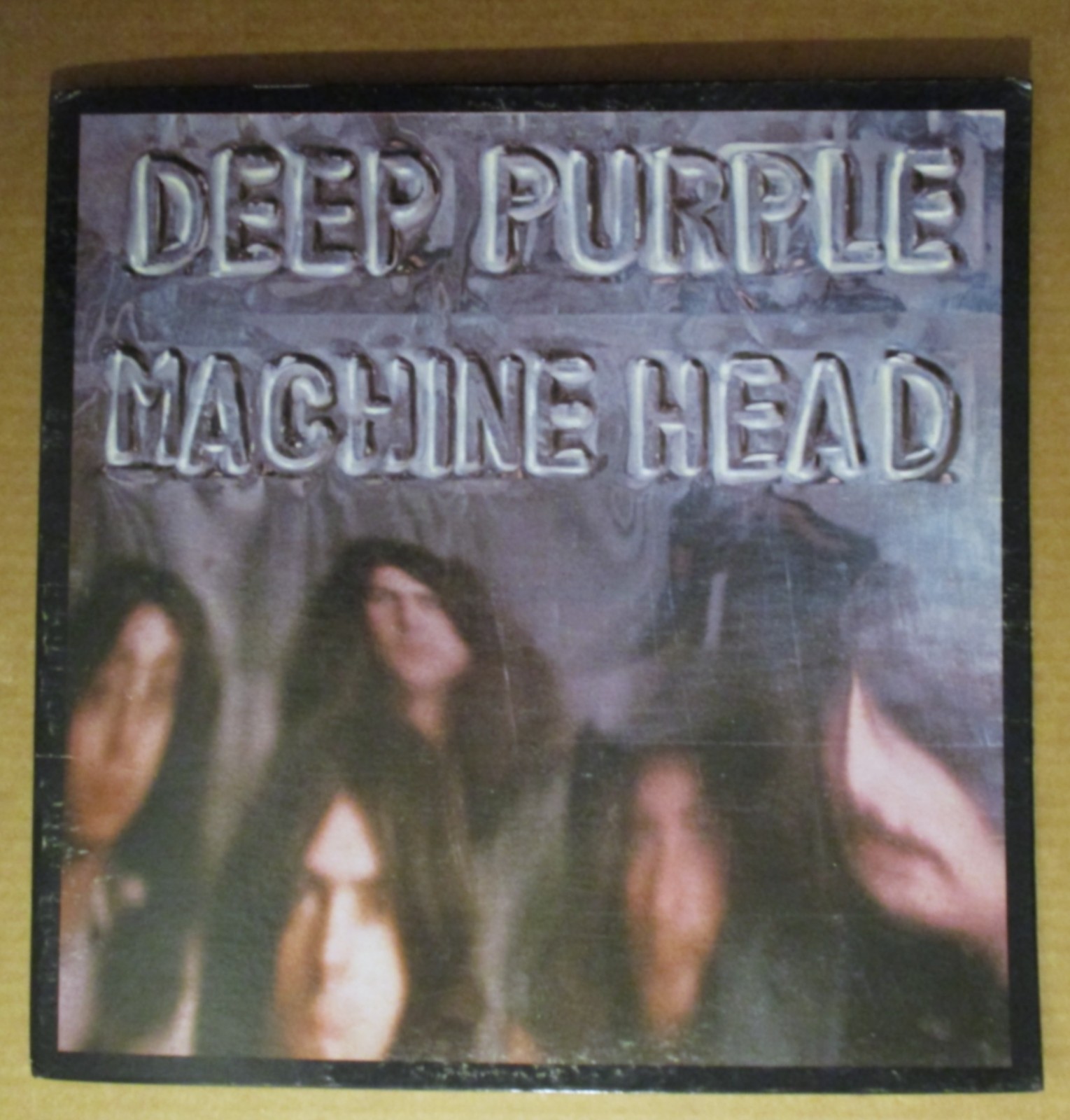
The iconic cover shot was created by stamping metal printing type into a sheet of polished steel metal, spelling out the band's name and album title.
The stamped, shiny metal sheet was then propped up and used like a slightly distorted mirror, to photograph the band's image reflected in it. A cool effect, and truly heavy metal.
On the earliest covers, like this one, you can still clearly see photographer Shepard Sherbell's arm and camera hood on the right, under the 'EA' of 'Head'. This was touched up slightly on subsequent covers to hide him a bit better, but he's still there if you look closely.
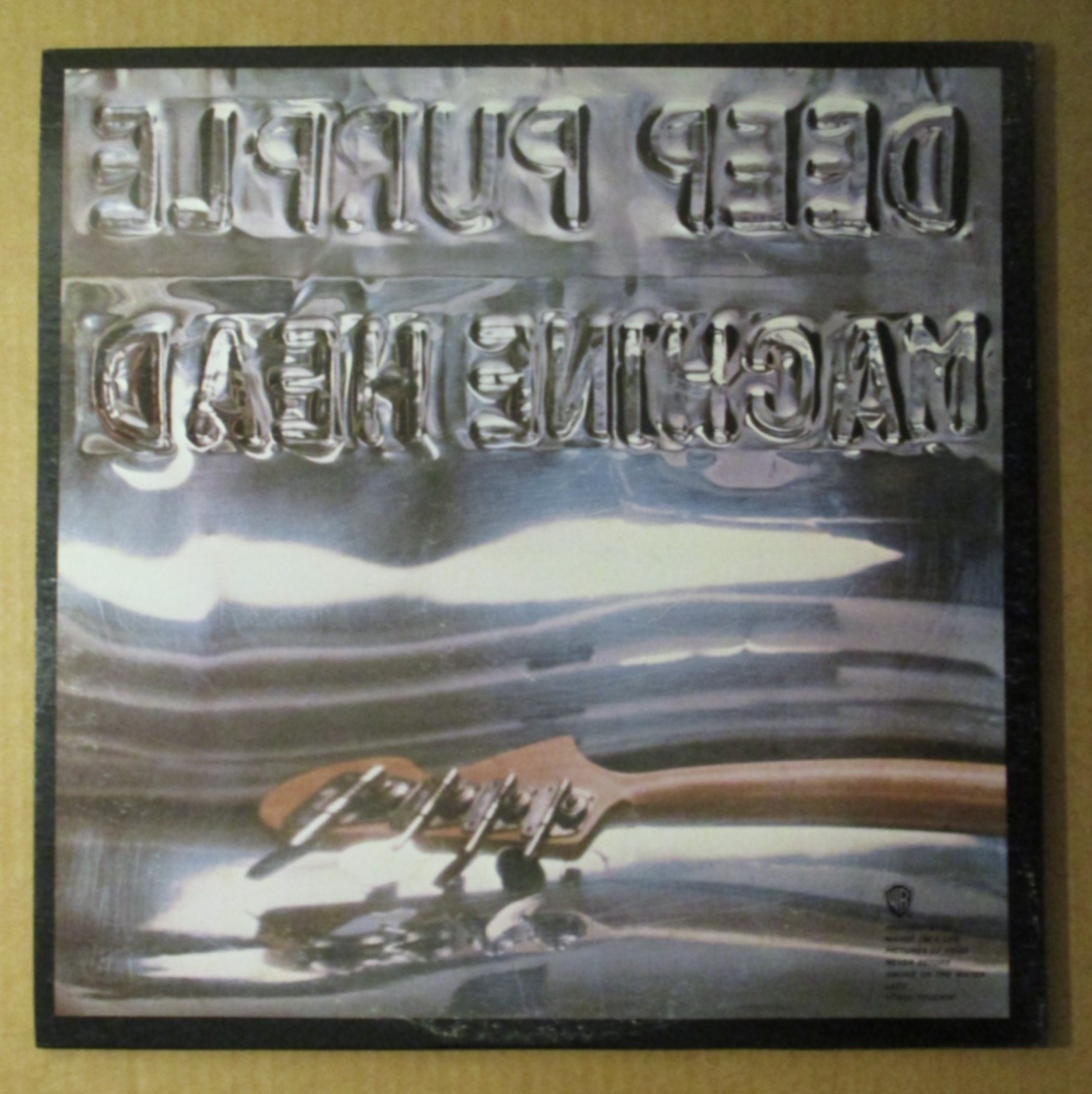
The back cover shows the reverse side of the same stamped sheet of steel, with the band's name and album title in reverse, again used as a mirror, but now the reflected image shows the 'Machine Head', the headstock and tuning knobs, of Roger Glover's Rickenbacker bass, with some added airbrushed coloring.
A very cool album jacket and one of the most recognizable album covers in rock music. ~~~~~~~~~~~~~~~~~~~~~~~~~~~
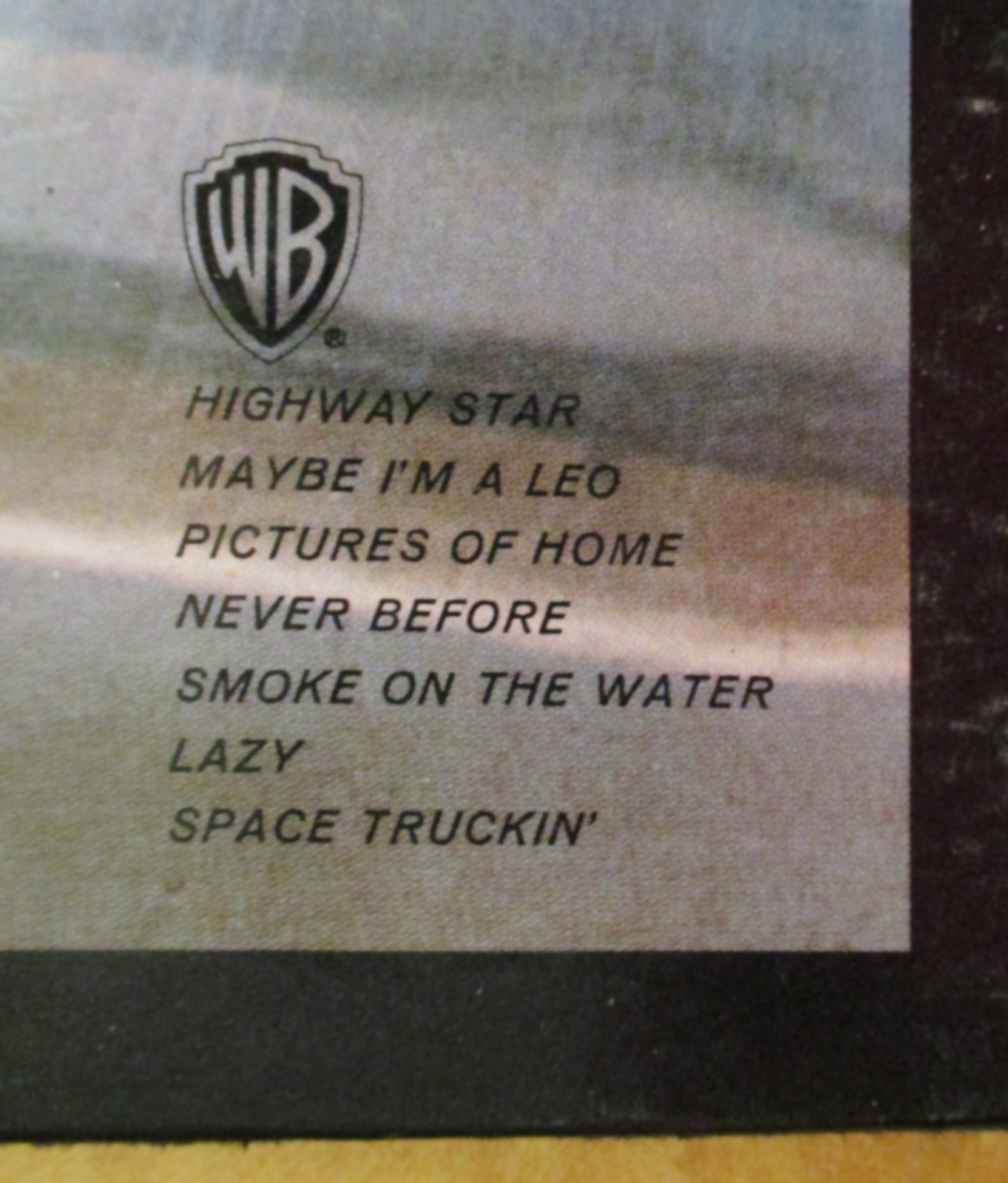
The 7 terrific songs on this classic album include:
Highway Star Maybe I’m a Leo Pictures of Home Never Before Smoke On the Water Lazy Space Truckin’ ~~~~~~
This album kicks off with the powerful, adrenalized rocker 'Highway Star', an older song, and one of the first chosen for this new album.
A classic album opener and the ultimate, behind the wheel, driving song.
The song was born near the start of that summer's 'Fireball' tour when a curious journalist traveling with the band on the tour bus to a show in Portsmouth asked Ritchie Blackmore how the group wrote and composed their songs.
Rock legend says that Blackmore just picked up his guitar and replied with the iconic chords and rhythm, while vocalist Ian Gillan, sitting nearby, ad-libbed some simple words and lyrics to it, based on the traditional rock song subject matter of cars and girls. A hard rock 'classic' was born right there, in the moment, on the tour bus.
When the band arrived at the Portsmouth concert hall, they worked out the rest of the new song's parts during soundcheck, and played it in the set that very night. It's been a Deep Purple concert staple ever since.
'Highway Star' epitomizes all of Deep Purple's intensity and versatility. It comes rocking right out of the gate with every member of the band firing on all cylinders. The song opens with some loud, fuzzy, badass basslines by Roger before Ritchie Blackmore and organist Jon Lord take off on one of the greatest soloing duels ever laid down on vinyl. It's like a speeding musical 'car race' between 2 stars, and masters of their instruments, and neither wants to lose.
Each of their respective solos is excellent. Jon Lord's Hammond organ solo is fantastic but then Ritchie Blackmore’s overdriven electric guitar solo is double-tracked, trying to show who's boss. They then also solo in unison, which is amazing to hear.
Ian Paice and Roger Glover keep the pulsating rhythm 'driving' along, pardon the pun. Jon and Ritchie are the highlights of this song, but Ian's drumming adds the grit, texture, and 'glue' to this song with his rock-solid, hard-hitting drumming, precise cymbal strikes, perfect fills, and powerful runs around the drum kit.
Vocalist Ian Gillan is also in top form and shines on 'Highway Star', crooning and exploding with amazing power, dynamics and range, demonstrating why he was one of the finest rock singers of his generation. When he screams that nobody’s gonna take his car, you really feel and believe him.
'Highway Star' is classic Deep Purple; fast and intricate, with fantastic solos, powerful vocals. and thunderous drumming. This one song would go on to influence hard rock and heavy metal for decades to come.
After you hear this great opening track, you realize that the rest of this album is going to be fantastic, and a rock masterpiece. ~~~~
After that thunderous, powerful opener, 'Maybe I’m a Leo' is a fantastic blues-rock number featuring Ian Paice and Roger Glover holding down a more relaxed, comfortable pace and groove.
Although all the songs on 'Machine Head' are officially and democratically credited to all five band members, this one was written mostly by bassist Roger Glover.
It's a riff-driven tune with a deliberately slow but powerful, earthshaking, drum beat by Ian Paice, giving a nod to Joh Bonham of Led Zeppelin.
Jon Lord’s organ is right in your face and Ritchie Blackmore’s solo sounds as if he's right there in the room. A great solid song, a cool riff, quite enjoyable, and quite unlike anything from the previous two Deep Purple albums.
'Maybe I'm a Leo' is a slinky bluesy number that remained a Deep Purple concert staple for years. ~~~~~~~~
'Pictures of Home' is a great song, classic Deep Purple, the most “heavy metal” of all the songs on this album, and really showcases the band's individual talents.
It's punchy, driving rhythm starts off with Ian Paice’s pounding drums before Jon Lord's distinct, distorted Hammond organ and Ritchie Blackmore's soaring guitar take over.
This song has a great magical mix of excellent riffs against a strong driving rhythm, all highlighted by Paice's excellent percussion runs and fills.
It contains a great guitar solo by Ritchie, and Roger Glover’s loud, thunderous, fuzzed-out bass solo in the middle section also stands out. A nice little moment of proto-metal magic.
Ian Gillan’s sweeping, Robert Plant influenced, vocals, screams and lyrics describe the “eagles and snow” of the Swiss countryside outside the hotel where they recorded this classic album.
This song also has a very cool, surprising false ending. Just when you think it’s over, it comes back for a few more moments. Awesome.
Despite the other 'classic' songs on this album, this is my favorite tune and possibly the best song of the album. It contains everything you'd expect from vintage Deep Purple.
Side one concludes with 'Never Before', a pretty standard hard rock song, which has a funky intro that breaks into a pure, riff-driven, bluesy rock number with some great wide-panned stereo keyboard soloing by Jon Lord. Ian Gillan's vocals are excellent.
Punchy, funky and rocking, 'Never Before' presents Purple at their melodic best, but gets paled by the other 'classic' songs on this album, and many feel it's the weakest song on a super strong album.
'Never Before' was predicted early on to be the record's hit and was released weeks ahead of the record as the first single from the album, with the non-LP track 'When A Blind Man Cries' as the B-side. It’s a short, simple, sweet song, and radio friendly, but not nearly as powerful or memorable as the other great album tracks and it bombed as the lead-off single.
Many felt that the B-side, 'When A Blind Man Cries', although unlike any other Deep Purple song, had some terrific, understated and reflective playing by Blackmore, and was the better song.
'When a Blind Man Cries' was re-released as the B-side to a later version of the "Smoke on the Water" single, and is oddly included as part of the original album on some of the later re-issues of 'Machine Head', despite not occurring on original pressings. ~~~~
'Lazy' was one of the first songs selected for the new album, a straight ahead, bluesy, boogie rock tune that was actually written during rehearsals for the 'Fireball' tour and was developed and road tested during soundchecks and performances on that recent tour.
'Lazy' is the longest and most jam-oriented song on the album, characterized by great guitar work and keyboards.
The song starts with a long dramatic Hammond organ instrumental, reminiscent of the psychedelic Deep Purple sounds of the late 1960s, before finally breaking out into a very upbeat, sprawling, spacious and warm bluesy riff, with Jon Lord and Ritchie Blackmore playing off each other, complete with boogie-bass by Glover. Gillan adds a terrific harmonica solo between the verses.
Blackmore and Lord have their own lead sections during the jam. Ritchie Blackmore's awesome soloing delivers a nice amplifier tone bathed in a bit of reverb and the different tones of Lord’s organ are incredible.
The vocals in 'Lazy' are up front. The lyrics are rather simple, but very cool for the time: "Lazy, you just stay in bed / Lazy, you just stay in bed / You don't want no money / You don't want no bread."
'Lazy' was Deep Purple's jam song, which they typically opened up and greatly expanded upon when playing live, leading to some amazing solos and concert highlights.
Side two of 'Machine Head' opens with the iconic track 'Smoke on the Water', one of the most popular songs by the band. Another excellent song on this classic album.
This song contains what is unquestionably one of the most famous rock-guitar riffs of all time. THE riff, and the mother of all guitar riffs, never to be topped nor equaled by anybody.
The song's loud, thunderous, fuzzy, opening power riffs, played by Roger Glover on his Rickenbacker Bass define the song, but Ritchie Blackmore dominates the song, turning in some of his best playing.
Blackmore has claimed that his iconic G-minor riff and melody of 'Smoke on the Water', played with amazing tone fom his Fender Stratocaster, was inspired by Beethoven and is basically an inversion of part of a phrase from Beethoven’s famous 5th Symphony.
The song intro builds with each member coming in at separate times before breaking into a driving groove with the classic riff being doubled on Blackmore's Fender guitar and Jon Lord's Hammond B3 organ.
Due to the power of the main riff, Ian Paice's excellent drumming and the rest of Roger's amazing bass playing in this song often gets overlooked, but all the band members are excellent throughout this whole song.
'Smoke on the Water' is the odd, unlikely, but true story of this terrific album's creation, and inspired by real-life events that happened in Montreux
The band already had the basic music for the song laid down, an instrumental piece that Ritchie Blackmore had written around a riff he had, called 'Title #1', but after the unusual events in Montreux that December, the band wrote the lyrics telling their amazing story.
The songs lyrics literally just chronicle the story of the concert and fire that destroyed the Montreux Casino on December 4, 1971 and the subsequent hassles and travails the band went through while making 'Machine Head'.
The lyrics pay homage to Frank Zappa, 'some stupid with a flare gun", and 'Funky Claude', who was Claude Nobs, director of the Montreux Jazz Festival, who initially invited the band to come to Montreux to record, and was essential in helping some of the audience, as well as the band, escape the devastating fire. Critically, Claude also saved the 'Machine Head' project by helping the band find a new place to record their album after the fire.
The image of smoke from the casino fire drifting and spreading across Lake Geneva that cold winter night, as the band watched from a nearby bar, inspired bassist Roger Glover to think of the phrase 'Smoke on the Water' that became the song's title.
Apparently, at first, the band didn't think much of the song after they wrote it, thinking it was a mere throwaway, a 'novelty' song just telling their story, but it quickly took on a life of it's own, becoming a major hit and the high-water mark of Deep Purple's long-running career.
The song is well-structured, witty, insanely catchy, and although it's rather simple musically, it's devastatingly heavy and powerful as hell. It was immediately loved by the long-haired, denim-wearing, heavy rockers of the world. The album sold incredibly well and the song became a mainstay of classic rock radio, making Deep Purple famous.
'Smoke on The Water', despite it's popularity, wasn't released as a single until 18 months later, in 1973, which helped promote initial sales of the album here in the States, and around the world.
If you visit Montreux today, there is still a beautiful sculpture down along the lake shore that has the band’s name, song title, and the song's famous riff, written out in musical notation, that commemorates the tragic event and the band's iconic musical tribute.
This amazing album closes with the fantastic 'Space Truckin', which, like most songs on this album, has a terrific, live, spontaneous, in-the-moment feel.
The music is intense, powerful and driving, filled with frantic riffing, great catchy hooks, Ritchie Blackmore's tremendous stinging guitar work, Jon Lord's spectacular melodic organ, and Ian Gillan's great vocals, but it is Ian Paice who outshines everyone else with his top-notch drumming throughout this song.
He unleashes a percussive potpourri of amazing improvisation, powerful drum rolls, and catchy precise fills that propel this upbeat rocking song along down the tracks and gives it a real edge.
'Space Truckin' is a simple yet very powerful song, a real gem that has aged well thru the years, and one of the best songs of Deep Purple's entire career.
The song simply fades out at the end, giving the impression that the jam went on indefinitely, and leaving the listener begging for more of this great album as it closes out. A perfect ending and a fitting conclusion to one of the essential hard rock albums of all time. ~~~~~~~~~~~~~~~~~~~~~~~~~~~~~~~~~~~~~~~
Blues rock, British rock, Hard rock, heavy metal, call it what you want, 'Machine Head' is an absolute classic. One of the best albums ever made, full of fantastic songs with awesome solos and cool riffs.
One of the best 'benchmark' albums in Rock history, and also one of the most influential ones. It belongs in every classic rock, 70's rock, or hard rock/metal rock vinyl collection.
'Machine Head' has been reissued many times over the years, but the original mix rocked and kicked ass. It's sonically amazing and reveals the band's original vibe and intent. Nothing beats having an original first pressing 'greenie' in your vinyl collection, cut all-analog from Martin Birch's fresh 16-track master tapes and mastered and plated at Artisan Sound studios. ~~~~~~~~~~~~~~~~~~~~~~~~~~~~~~~~~~~~~
CONDITION: I tried to show good hi-resolution photos of the cover, labels and vinyl in my pictures.
I purchased this copy back in the early 70's, 50 years ago, on one of my regular vinyl digs in those days, and have taken great care of it since.
VINYL: The vinyl still looks very nice, clean and shiny. There is some mild evidence of play, some hairlines and paper scuffs, but no significant flaws. No serious scuffs, palpable scratches, or dings. It's been played a few times over the years, but always well taken care of. It still looks great. I'll call it at least VG+.
The Deadwax has the simple early etched matrix numbers, with the '1-A' first pressing suffix and the Artisan mastering mark. I believe these were pressed by Columbia but I see no indication of which pressing plant.
See the full Matrix numbers above.
I tried to show some close-up pictures of the vinyl to show how good it still looks. Still very clean despite a few hairlines and I'm sure you'll be happy with it.
I haven't messed with it or cleaned it, other than my trusty 'DiscWasher' brush, in 50 years, since Nixon was in office. It has some light 'dust' and paper specks and could use a good deep cleaning to make it even better looking and better sounding than it already is. I'll leave that up to the winning bidder.
LABELS: This is pressed with the 'classic' early green Warner Brothers labels. An original 'greenie'.
This First Pressing has the early Green Warner Brothers labels with 'shield' logo at the top and the large 'stereo' at the bottom.
The labels are clean and bright. No marks or damage. The spindle holes are still sharp and clean, suggesting minimal playing and my careful handling over the years.
INNER SLEEVES: This early pressing also comes with it's original 1972 Warmer/Reprise 'Loss Leaders' inner sleeves showing the first 6 albums and their content in that series, which started in 1969. The most recent release shown is 'Looney Tunes'. None of the later releases are shown yet, dating this sleeve from 1972. Very cool to read and see the music and artists that Warner/Reprise were promoting at the time.
JACKET: As you can see from my pictures, this still looks fantastic for a 50+ year old copy.
Usually these Deep Purple 'Machine Head' jackets show significant wear, damage and ringwear. Most had a rough life, but this copy still looks terrific.
These albums were typically played to death under unusual, sub-optimal 'party' conditions, so clean jackets and vinyl are quite rare. I took care of my records, even 50 years ago, and this one survived quite well. It's a beauty!
The artwork is bold and bright, the colors just Pop and the corners are relatively sharp. No seams splits and the spine is straight.
The surface of the jacket is still fantastic. No marks, names, writing, scratches, dents or stains. Some very mild early ringwear at the bottom center, and some mild wear along the left side, but not bad. A nice survivor.
The inner gatefold is clean, bright and white, with an intact seam. These are typically found with marks, scuffs, beer & bong water damage, and seam stains from 'substances' on the inside, but this copy looks clean and fantastic. It shows over 50 great pictures from their early days in Montreaux, which are very cool and show what it was like.
This record has been sleeved and stored properly for Decades, and, as you can see from my pictures, it's still quite nice for an early first pressing 'greenie' from 1972.
The fact that this amazing album came out over 50 years ago just boggles my mind. Amazing how many great heavy rock and heavy metal albums have come out since this album helped open the doors. If you like 70's rock music, 70's heavy rock, and collect records, you really need this absolutely essential album in your collection.
Add this classic, First Pressing, green label copy of 'Machine Head' to your collection today.
~~~~~~ ** NOTE: I'm selling this rare 'Collector' record "AS IS" and "NO RETURN". It's rare and as described and I'm sure you'll be very happy with it.
~~~~~~~~~~~~~~~ I’m recently retired and downsizing and letting go some gems and rarities from nearly 45 years of vinyl record collecting. Check out the many other fantastic 45s and 33s coming soon to my page!
All records have been carefully evaluated and graded by me. I visually inspect all records under bright light, personally gently clean them with a soft cloth and then, if unsure, play them on a modern high-end turntable to get a true picture of condition.
Please look at all the high-resolution pictures I added. They are all my own and are of the actual record being sold. The pictures are part of the description and can show small details, label variations, and condition better than I can put into words.
My grading is fair and honest. I have had over 3,600 happy and satisfied EBay customers over the years, with 100% positive feedback, and I have been buying/selling on EBay for well over 25 years, so please bid with confidence!
I'm a 0ne-man operation, this is a hobby, not my job. I do this for fun. I do this because I love music, love collecting vinyl and want others to share in that same experience. I take my time listening, researching, grading, listing and packaging. I will NOT sell any record that I personally would not want in my collection.
As you well know, packing and shipping rare records requires special care and attention, therefore, shipping cost within the lower 48 states is $5.00 on this item. If you would like insurance, or anything faster than Media/Economy Mail, please let me know and I can arrange it for you. I’ll work with you to make sure you’re happy!
I will gladly combine multiple records, or other items on my page, and make the shipping much less for you. I don’t inflate the shipping costs; they are what they are. I strive to keep them as low as possible. See my feedback for comments on my quality packing and shipping.
All items are packaged with sturdy cardboard mailers and appropriate padding. I take pride in my packaging and shipping and package all my records as if I were sending them to myself. I refuse to use cheap flimsy packaging material when sending my vinyl. I treat them as if they were my own and mail them the same way.
All orders are processed and shipped within 2 business days of receipt. We package and ship our vinyl records with the greatest care, using proper packaging to ensure that your rare and collectible vinyl records arrive in pristine condition.
Payments can be made by any of the multiple options that Ebay offers.
I will be happy to exchange feedback with anyone I complete a transaction with.
THANK YOU for looking and reading if you got this far. I know I rambled on a bit, but can't help it. I have a passion for records and music, especially classic 70's rock like Deep Purple.
I hope this listing was entertaining and informative. -- JOHN
price rating