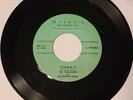
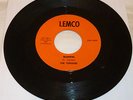
GRAHAM NASH "Songs For Beginners" Rare DJ MONO COPY 1971 WHITE LABEL PROMO CSNY
$
63


Favourite Auctions
To save auctions to your favourites, please login
If you don't have an account, please register
Description
THIS IS A 7-DAY AUCTION. The auction is for ONE album containing ONE vinyl record.
Songs for Beginners is Graham Nash's first solo album, released in May 1971, and one of four high-profile albums released by each partner ofCrosby, Stills, Nash & Young in the wake of their chart-topping Déjà Vu album of 1970. It peaked at #15 on the Billboard Top Pop Albums chart, and the single "Chicago" made it to #35 on the Billboard Hot 100.
[edit]Nash brought in an impressive group of guests to assist in the recording, including David Crosby, Jerry Garcia, Phil Lesh, Dave Mason, David Lindley,Rita Coolidge and Neil Young (under his pseudonym Joe Yankee). The album featured the traits that Nash had come to be known for: a good sense of pop song construction, expressions of emotional sincerity, and fervent political activism. The Top 40 track, "Chicago," concerned both the 1968 Democratic National Convention and the infamous trial of the Chicago Eight, articulating the outrage Nash felt concerning those proceedings. The topicality which suffuses the album would always remain central to Nash's work: of the quartet, he and Crosby most directly professed sentiments aligned with those common to the Woodstock Nation. This similarity undoubtedly formed part of the foundation for their long-standing partnership even outside the parent group.
COVER: VG./RECORD: NM-, shines!
See following for guide to grading explanation.
Record Grading 101: Understanding The Goldmine Grading Guide
Posted in Collector Resources, Record Grading / June 22, 2010VERY GOOD PLUS (VG+)
A good description of a VG+ record is “except for a couple minor things, this would be Near Mint.” Most collectors, especially those who want to play their records, will be happy with a VG+ record, especially if it toward the high end of the grade (sometimes called VG++ or E+).
VG+ records may show some slight signs of wear, including light scuffs or very light scratches that do not affect the listening experience. Slight warps that do not affect the sound are OK. Minor signs of handling are OK, too, such as telltale marks around the center hole, but repeated playing has not misshapen the hole. There may be some very light ring wear or discoloration, but it should be barely noticeable.
VG+ covers should have only minor wear. A VG+ cover might have some very minor seam wear or a split (less than one inch long) at the bottom, the most vulnerable location. Also, a VG+ cover may have some defacing, such as a cut-out marking. Covers with cut-out markings can never be considered Near Mint.
Very Good (VG)
Many of the imperfections found on a VG+ record are more obvious on a VG record. That said, VG records — which usually sell for no more than 25 percent of a NM record — are among the biggest bargains in record collecting, because most of the “big money” goes for more perfect copies. For many listeners, a VG record or sleeve will be worth the money.
VG records have more obvious flaws than their counterparts in better shape. They lack most of the original gloss found on factory-fresh records. Groove wear is evident on sight, as are light scratches deep enough to feel with a fingernail. When played, a VG record has surface noise, and some scratches may be audible, especially in soft passages and during a song’s intro and ending. But the noise will not overpower the music otherwise.
Minor writing, tape or a sticker can detract from the label. Many collectors who have jukeboxes will use VG records in them and not think twice. They remain a fine listening experience, just not the same as if it were in better shape.
VG covers will have many signs of human handling. Ring wear in the middle or along the edges of the cover where the edge of a record would reside, is obvious, though not overwhelming. Some more creases might be visible. Seam splitting will be more obvious; it may appear on all three sides, though it won’t be obvious upon looking. Someone might have written or it or stamped a price tag on it, too.
Good (G),
Good Plus (G+)
or Very Good Minus (VG–)
These records go for 10 to 15 percent of the Near Mint value, if you are lucky.
Good does not mean bad! The record still plays through without skipping, so it can serve as filler until something better comes along. But it has significant surface noise and groove wear, and the label is worn, with significant ring wear, heavy writing, or obvious damage caused by someone trying to remove tape or stickers and failing miserably. A Good to VG– cover has ring wear to the point of distraction, has seam splits obvious on sight and may have even heavier writing, such as, for example, huge radio station letters written across the front to deter theft.
If the item is common, it’s probably better to pass it up. But if you’ve been seeking it for a long time, get it cheap and look to upgrade.
POOR (P)
and Fair (F)
Poor (P) and Fair (F) records go for 0 to 5 percent of the Near Mint value, if they go at all. More likely, they end up going in the trash. Records are cracked, impossibly warped, or skip and/or repeat when an attempt is made to play them. Covers are so heavily damaged that you almost want to cry.
Only the most outrageously rare items ever sell for more than a few cents in this condition — again, if they sell at all.
VISUALLY GRADED, NOT PLAY GRADED.
YES, WE SHIP TO JAPAN/BRAZIL/CANADA/ISRAEL/AUSTRALIA!
Shipping and handling fees are non-refundable.
price rating