GRATEFUL DEAD 'TERRAPIN STATION' CANADIAN FIRST PRESSING 1977 'POGO' & 'KENDUN'
$
27


Favourite Auctions
To save auctions to your favourites, please login
If you don't have an account, please register
Description
GRATEFUL DEAD 'TERRAPIN STATION' CANADIAN FIRST PRESSING 1977 'POGO' & 'KENDUN'
GRATEFUL DEAD "TERRAPIN STATION" FIRST PRESSING ~ RARE CANADIAN PRESSING w/ EXCELLENT SOUND LABEL: ARISTA – AL 7001 7001 LABEL CATALOG NUMBER: AL 7001 SA / AL 7001 SB RELEASED: JULY 27, 1977 RECORD COMPANY: CAPITOL RECORDS ~ EMI OF CANADA LTD.(Capitol Target Logo '◎' in Matrix) PRODUCER: KEITH OLSON ~ POGOLOGO PRODUCTIONS ('♡POGO' IN MATRIX) RECORDED/MIXED: SOUND CITY STUDIOS VAN NUYS,CA NOV 1976 - MAY 1977 ADDITIONAL RECORDING: AUTOMATED SOUND, AIR, TRIDENT & ABBEY ROAD STUDIOS LACQUERS/MASTERING: KENDUN RECORDERS ('KENDUN III' IN MATRIX) PRESSING: FIRST CANADIAN PRESSING ~ CAPITOL-EMI OF CANADA COVER ART: KELLEY/MOUSE STUDIOS
MATRIX (SIDE A): AL-7001- ① ARISTA L.A. Kendun III.b ♡POGO ◎ "WHERE DO YOU KEEP YOUR STEREO, JER?" scratched out. MATRIX (SIDE B): AL-7001 - SB - RE-1 DJ Kendun III-a ◎
CONDITION: VINYL: VG++ JACKET: VG++ ('CUT OUT' BB HOLE)
~~~~~~~~~~~~~~~~~~~~~~~~~~~~~~~~~~ I've been going thru my massive vinyl record collection these past few weeks and pulling out some LPs that I thought that someone else would want for their collection. I've been collecting records for over 45 years and it's time to pass some of them on to the next generation of collectors.
This week on EBay I am offering up this rare original 1977 Canadian First Pressing copy of 'Terrapin Station' by the Grateful Dead.
This is the rare, and best sounding, all analog Canadian version, from 1977, pressed by Capitol/EMI in Canada and has both Keith Olsen's original 'POGO' mix, but also the fantastic 'Kendun' mastering.
This album has been re-released, and remastered over the years, but as a Deadhead and Grateful Dead vinyl collector, this is the copy you want. An original pressing from an excellent pressing plant, the best mix, and the best mastering engineer. A clean, complete, and fantastic condition copy.
Grateful Dead records took a beating and were played at parties and under 'strange' conditions. These pressings are quite rare and becoming much harder to find in clean condition.
This is a Canadian First Pressing from the summer of 1977.
This copy also comes with the original grey inner sleeve with production credits, song listing and cool artwork.
~~~~~~~~~~~~~~~~~~~~~~ I was a big DeadHead back in the 70's and after hearing the songs on this album performed live on tour, I set out to find the best copy of this record I could find. There was no Discogs or Internet back then and the only way to find out about pressings was thru the record shops and Goldmine magazine. Luckily I lived just outside of Manhattan back then and asked around the local Greenwich Village shops what they thought the best pressing was.
Several folks mentioned the Canadian Pressing, which had better mastering and a better pressing than the common American ones, so I dug around and found one.
This rare Canadian pressing has the original Keith Olsen 'Pogo' mix and was Mastered by Rick Collins at Kendun Recorders and has the best combination of sound, production and pressing that was available back in 1979 when I purchased it.
Back then, this album had not sold as well as Arista as the band had hoped, and many copies were destined for the 'cut-out' bins.
This copy was one of them. Fantastic condition, but this copy has the 'cut-out' BB hole punched thru the bottom right corner. The shop I purchased this at 'touched up' the rim of the BB hole with marker, hoping nobody would notice. I didn't until I got it home. Not a big deal, but should be pointed out. It's there, but it looks fantastic.
Anyhow, this Canadian First Pressing comes complete with the grey inner sleeve, which also has the BB hole, and is different than the American version.
This Canadian copy has "Mastered by Rick Collins at Kendun Recorders" printed on the inner sleeve and no mention of USA.
This Canadian First Pressing is clearly marked made in Canada and has the early Arista Catalog Number "7001." It's marked "Litho in Canada" on the Spine.
This is the early 'Black' Arista label, which also has Canadian text around the rim. The labels are different than the US version and side B does NOT have the Heading "Terrapin Station Part 1", just the 7 song titles.
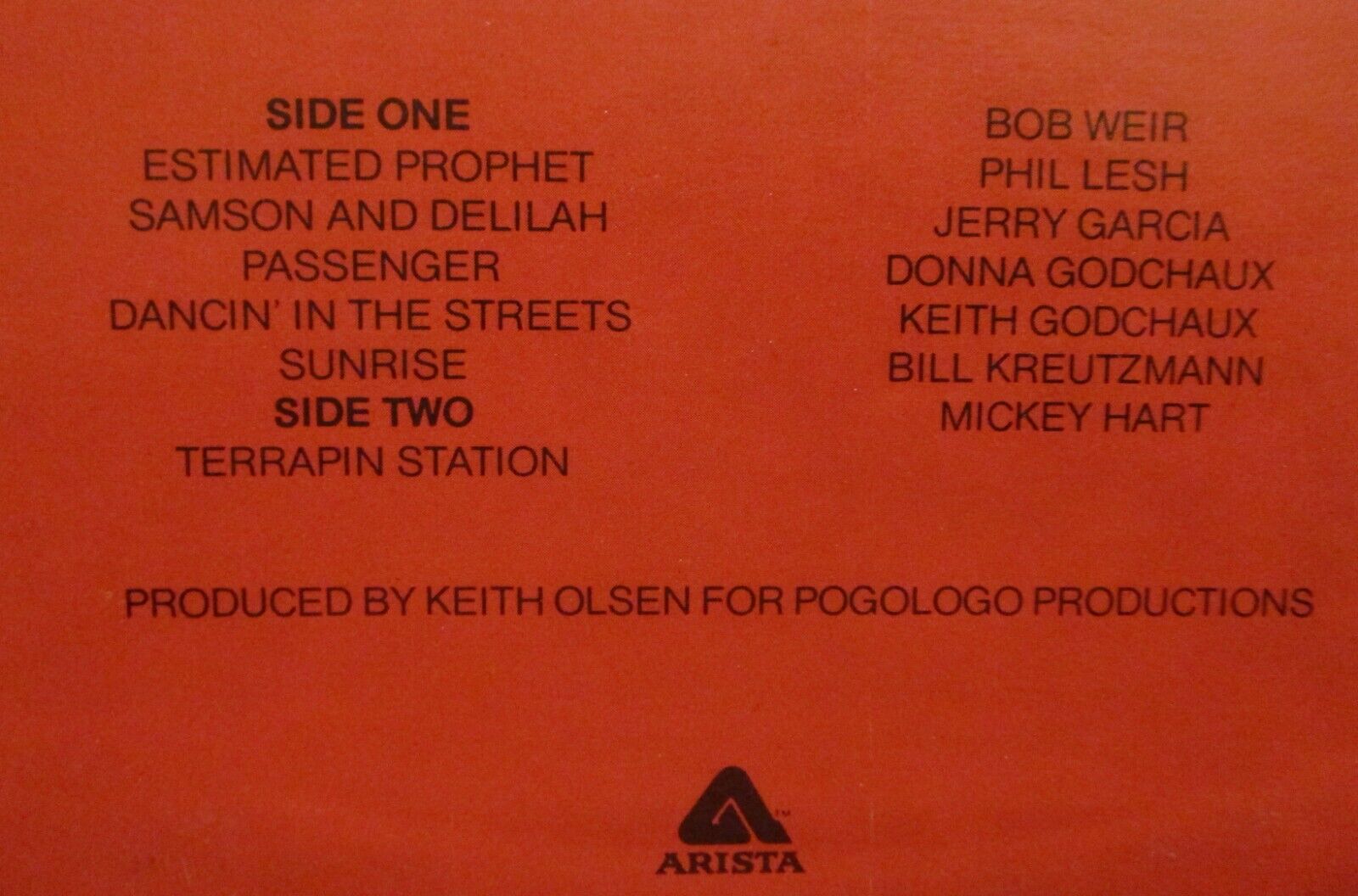
The album's song order was obviously in flux when this album was released. The labels have the correct song titles and playing order, but the Jacket and the Inner Sleeve have a different song order listed.
This early jacket also just lists one song on side two: "Terrapin Station" without any breakdown of the individual songs. The inner sleeve list all 7 tracks on side two.
This early inner sleeve also lists the recording credits as "Additional Recording at Automated Sound Studios, New York City, Air London, Trident, Abbey Road, London, England".
It's a fantastic pressing and one of my best sounding Grateful Dead records. A must have for a dead fan or/and audiophile.
The Grateful Dead at this period was made up of Jerry Garcia, Bob Weir, Mickey Hart, Phil Lesh, Bill Kreutzmann, and Keith & Donna Godchaux.
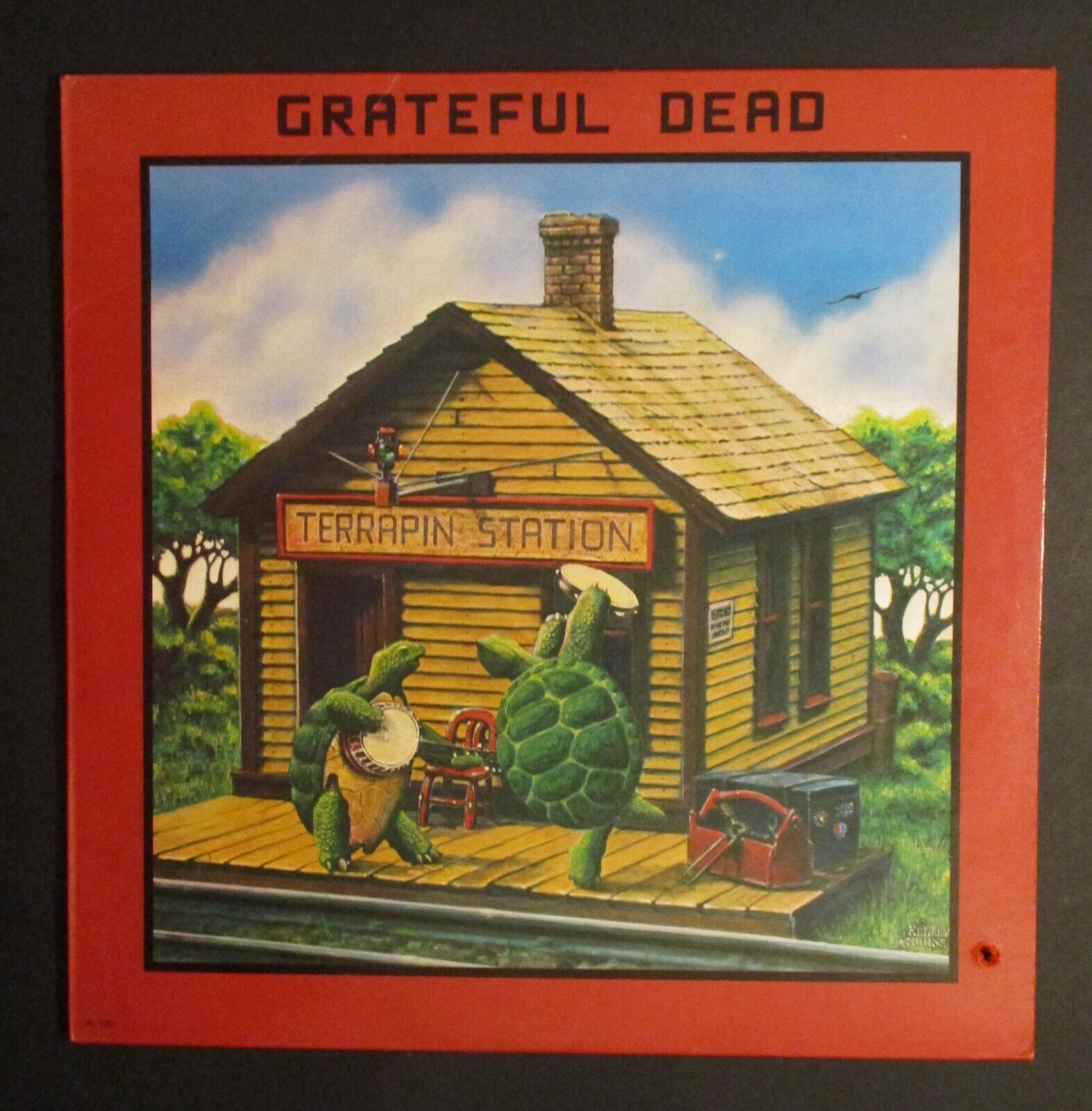
~~~~~~~ The cool cover art was designed and drawn by Alton Kelley at his Mouse Studios in San Francisco. Kelley was well known for his Psychedelic Poster art and Album covers, and he had worked with the Dead often, back in the 60s.
The pair of dancing terrapin turtles in front of the 'Station' is kinda cool. I guess it was Kelley's take on the title 'Terrapin Station'.
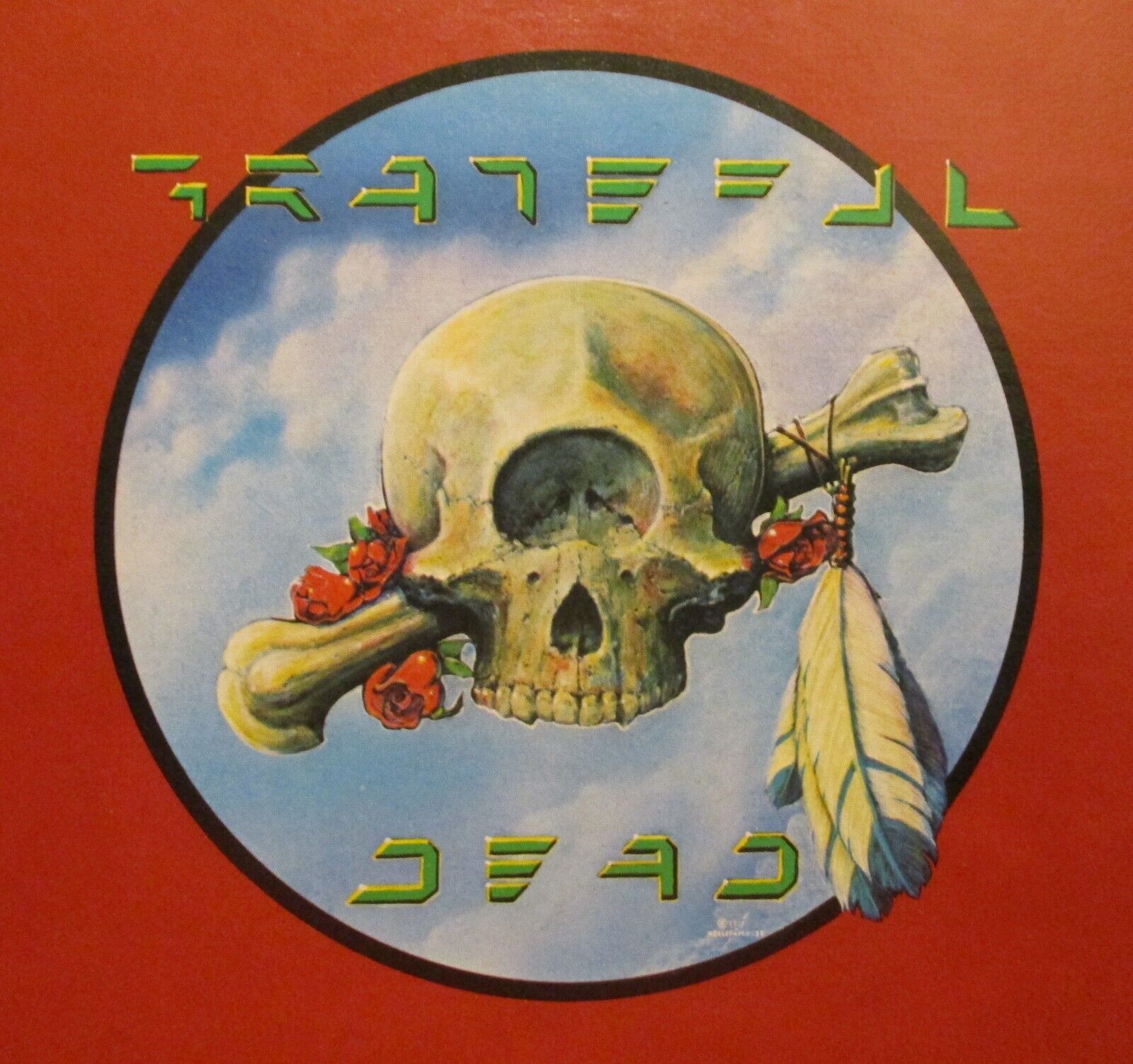
The back cover features the first appearance of the stylized, one-eyed skull with a leg bone, feathers and roses, in keeping with the 'Skull & Roses' imagery that had evolved around the Dead. The inner sleeve has the same image in black & white.
~~~~~~~~~~~~~~~~~~~~~~~~~~~~~~~~~~~~~~~~~~~~~~~ SOUND: This Canadian First Pressing was pressed by Capitol/EMI and sounds much better than the American First Press version, which itself is a fantastic, near audiophile pressing.
It reveals just how deeply layered, dynamic and intense the Dead's music is. The instruments are well separated and the vocals are crisp & clear; Jerry and Bob's voices are clear and up front, with no distortion or sibilance. Donna's voice, which is not every Deadhead's cup of tea, is also fantastic.
The drumming, percussion, and cymbals are crisp. Bill Kreutzman had a lot of hands-on influence recording this.
There's a nice sense of space, depth and balance. Very dynamic as well. Nothing ever gets buried in the soundstage despite all of Keith Olsen's tinkering and overdubbing.
This record is produced and mastered with perfection! The Keith Olsen production with the Kendun mastering is the best way to experience this record.
A very detailed, rich, warm, intimate, vibrant and enjoyable listen. Crisp, clear and all analog.
One of the best sounding releases from The Grateful Dead and one of the best sounding records pressed in the late 70s.
~~~~~~~~~~~~~~~~~~~~~~~~~~~~~~~~~~~~~~~~~~~~~~~~~~~~~~~~ THE MAKING OF 'TERRAPIN STATION'
In 1974, the Grateful Dead decided to take a break from live touring and relax and chill for a while. The band was in limbo, didn't want to tour, and eventually hooked up again in the studio to make their 1975 album 'Blues for Allah' released on their own record label.
Refreshed, recharged, with Mickey Hart back on board, and under new management, in the Summer of 1976 they hit the road again and resumed touring and writing new music.
New songs like "Estimated Prophet”, “Samson & Delilah”, “Passenger”, “Dancin’ in the Streets” and "Terrapin Station" started appearing regularly in setlists.
The band was 'hot' and by the spring of 1977 they were playing some of the best performances of their long career. Check out the 5/8/77 Cornell show or any of the 26 shows on the spring '77 East Coast Tour for some of the best live Dead you'll ever hear. Many of those shows were recorded by Betty Cantor-Jackson and are easily found.
The archival concert release 'Dick's Picks, Vol. 3' is also a great example of the band playing most of the tracks from 'Terrapin', several months before the album's release.
The band had renewed energy, new material, a stronger fan base, and it was time for another album. Their own record label wasn't doing well financially, so the band signed with Clive Davis' new label Arista Records.
Davis had always wanted to work with the Dead, but wanted to do it his way. He thought they had great commercial potential, but needed to focus their loose, raw, sound to match the popular commercial sound at the time.
Clive Davis agreed to sign the band and finance their next record, with one condition. They had to let an outside producer work with them to focus their sound, something they hadn't done in nearly a decade, since 1968's 'Anthem of the Sun'.
By 1977, the fiercely independent Grateful Dead agreed to give up complete internal control, make a radical turn towards a more conventional sound. and agreed to work with producer Keith Olsen.
Olsen was a former '60s garage rock band musician, owner of his own recording studio, and had produced other Bay Area bands such as the Sons of Champlin and Santana.
The band temporarily moved to Los Angeles, since Olsen preferred to work at his own studio, Sound City in Van Nuys, where he had recently achieved great success producing Fleetwood Mac's 1975 comeback album.
Olsen has said that Clive Davis told him "I need a commercial record out of them", so they set to work. Olsen had a very hands-on approach, influencing song choice, arrangements and sequencing.
This caused some friction during the recording sessions and Olsen has said that he had to literally lock the band in the recording studio to keep them all present, focused and contained, and to keep all the band's "friends" and "salesmen" from drifting in and out.
The new album 'Terrapin Station' was recorded at Sound City Studios, from late November '76 to May 1977. Olsen made a concerted effort to deliver an album which would break through commercially.
"Terrapin Station" was one of the Dead's best studio albums. The newfound tightness and professionalism in their playing live translated directly to the studio. The new songs were fantastic, and lyrically, both Garcia-Hunter and Weir-Barlow wrote some of their most poetic and complex lyrics and melodies.
Overall, the band was enthused and inspired to be in the studio and made a great album, a very solid effort.
Then....Keith Olsen got busy with post-production work.
Unrequested by the band, and without their knowledge, Olsen then remixed, changed up, and overdubbed most of the tracks. He multi-tracked some of the vocals, and edited out some of the band's playing.
He took the tapes to London and added strings, horns and choirs to the title track, the 16-minute Terrapin Suite, without telling anyone in the band.
Final overdubs and further 'tweaking' was done at Automated Sound Studios in New York City.
The final result was very different than what the Grateful Dead laid down in the studio. The songs were the same, just highly produced and polished.
Bob Weir was very upset, claiming he didn't know there was going to be anything added to the band's master tapes.
Clive Davis then made a deal with Weir and offered to record his second solo album, 'Heaven Help the Fool', for Arista if he let Olsen and Davis release the album the way it was.
Jerry was upset as well, calling the final mix, “the Grateful Dead in a dress.”
The album was released in July 1977 to a mixed reception.
It was a fantastic new Graeful Dead album, full of fantastic new songs, but polarized and upset fans due to it's more slick sound and production. Many felt it took away from the Dead's spontaneity and “organic” folksy Americana sound. Since when does the Grateful Dead need strings and an orchestra to get its point across?
The album really is fantastic, it was just a shock to their longtime fans when released. An excellent Dead album, just 'different'.
Once the shock wore off, fans realized that it was a great album and contained great songs. With the tincture of time, it has become one of their best albums, and many fan's favorite.
The band was eager to get back on the road to promote the album, but just after the album's release, Mickey Hart was injured in a car accident, preventing the band from touring to support the album. The band was back in limbo again.
Weir started work on 'Heaven Help the Fool' with Keith Olsen, Jerry did promotional work for the recently released "The Grateful Dead Movie" and his "Cats Under the Stars" album. The rest of the band basically chilled before touring resumed in the Fall.
~~~~~~~~~~~ Two singles were released from the album. The first single "Dancin' in the Streets" is a Gratful Dead collectible as it features a unique mix with a horn section, something Olsen wanted to add to other songs on the album, but was over-ruled.
The 2nd single was "Passenger". Both singles were backed with an edit of "Terrapin Station"
~~~~~~~~~~~~~~~~~~~~~~~~~~~~~~~~~~~~~~~~~~~~~~~ The highlight of "Terrapin Station", and the reason it belongs in any Grateful Dead, or even Progressive Rock collection, is side 2 of the album.
The entirety of side two is dedicated to the sixteen and a half minute, seven part “Terrapin Station” suite.
This is one of the Dead's best songs; a fantastic, multi-part, endlessly enchanting and fascinating suite, written by Jerry Garcia and lyricist Robert Hunter. It's a Masterpiece and a perfect example of the band doing what it does best.
On the album 'Terrapin Station' is split into 7 parts: Lady With A Fan; Terrapin Station; Terrapin; Terrapin Transit; At A Siding; Terrapin Flyer and Refrain.
The first part, “Lady with a Fan”, was based on a traditional English folk song about seduction and foolish bravery. Jerry sings great and there are some fantastic, harmonized guitar leads.
The next three “Terrapin” sections are more upbeat, melodic, dynamic, and climatic. They roll along effortlessly.
During “Terrapin Transit” the song breaks out into a slightly psychedelic motif with bass, synths, and Mickey Hart's fantastic percussion all swirling together into a great, almost Prog Rock sound.
“Terrapin Flyer” adds Keith Olsen's rich orchestral production over the great percussion, and "Refrain” adds an opera-like chorus to bring the crazy, adventurous suite to it's end.
Parts of the Terrapin Suite contain performances by The Martyn Ford Orchestra and The English Chorale, both arranged by Paul Buckmaster.
This was all overdubbed in England by Keith Olsen, without the band's knowledge or consent, but it all actually works, creating a fantastic, sprawling exercise in symphonic prog-rock. A masterpiece.
It's something that the band never did before, never repeated, and it completely broke away from the band's usual sound and style, but it's great!
It's quite an original piece and represents the band's chemistry at its peak, doing what they do best. A triumph of both music and words, and one of the band's shining moments. It really deserves to be heard in its full presentation, on a crisp, clean, all analog vinyl pressing like this one.
This suite was actually only Part 1 of a two part composition, the second of which was never recorded or performed by the Grateful Dead. In concert, the band would usually just perform a shortened, condensed version of the tune.
'Terrapin Station' was first performed by the Dead in February 1977 and they have performed it over 300 times since.
~~~~~~~~~~~~~~~~~ The creation and writing of the song is well-known in Grateful Dead lore.
Lyricist Robert Hunter says that he wrote the lyrics for 'Terrapin' in a single sitting, during a rare Bay Area lightning storm. It just came to him all at once.
On the very same day, in the same lightning storm, guitarist Jerry Garcia was driving across the Richmond–San Rafael Bridge, and had a 'flash' of inspiration for a unique melodic guitar line. He quickly turned his car around and hurried home to get it down on paper before it escaped him.
Hunter said "When we met the next day, I showed him the words and he said, 'I've got the music!' The next night, they went in the studio and laid down a demo. "We got it right...everything else snapped together like puzzle pieces" and the Terrapin Suite was born, like a lightning strike.
Lyricist Robert Hunter later claimed "Terrapin...the first night it was played, took me about as close as I ever expect to get to feeling certain we were doing what we were put here to do".
Side One of the album is fantastic as well.
This great album begins with the classic opening "thwomp" of one of it's best tracks, “Estimated Prophet”, written and sung by guitarist Bobby with lyrics by his buddy, poet John Perry Barlow.
It grabs your interest right away with it's funky groove and infectious odd beat.
Instead of a straight ahead 4/4 dance beat, it's written in septuple time. Drummer Bill Kreutzmann worked with Weir to create the song in a 14/8 time signature. Very odd, very 'Dead'.
It has a real 70's Frisco, Fillmore district, street-hip feel, great melodies, and excellent riffs.
Barlow's lyrics describe a lost, optimistic, prophet-like character seeking enlightenment, but only finding California, and it's propensity for many false Prophets.
Donna Jean helps out on vocals and her voice is interestingly multi-tracked, just for those Deadheads that can't get enough of her singing.
Keith Olsen overdubbed some jazzy Lyricon/Sax leads by session player Tom Scott to spice up the song’s arrangement.
The band play as a tight, smooth unit, and capture the vibe of the song perfectly.
“Dancin’ in the Streets”, a song from the early days of the band, is updated and polished by Olsen into a new arrangement, with an almost funk/disco feel.
The Martha and the Vandella's hit is 'updated' with commercial production to give it a contemporary feel, but it still sounds like the Grateful Dead, with great drumming and some excellent funk-influenced guitar lines.
"Passenger", at the time, was an odd unique track for the Dead. Few of their songs were as straightforward, hard rocking, hard charging and slick as this great song. Unusual for them at the time, but it has since become a Grateful Dead classic.
This was written by Bassist Phil Lesh, who was inspired by Fleetwood Mac's "Station Man", which Olsen played for the band early on as an example of his production skills and style. The similarities are eerie.
Phil being Phil, he took some musical cues from the Fleetwood Mac song, but funked it up, and added some Zen-like lyrics written by the ordained Buddhist monk Peter Zimels.
This is a good example of how tight and together the band was in the studio. The singing is great, Bobby and Donna Jean Godchaux actually harmonize well for once, and everyone seems to be playing and singing in unison.
“Passenger” is an upbeat, slick, pop/funk rocker. Rightly chosen by Arista as one of the singles from the album.
Weir's "Samson & Delilah" has become an Iconic Grateful Dead classic, mostly due to it's stretched-out live performances.
On this album, Reverend Gary Davis's traditional Gospel song gets a new, thunderous, fresh arrangement with powerful twin drumming and Bobby's great, soulful, fire-spitting vocals.
It starts out with some excellent, crisp, oddly timed drums before settling down into a fine groove, with Phil's bass pushing the song forward. Jerry Garcia adds an excellent, perky guitar solo.
This song was Bobby's nod to his old friend, Reverend Gary, who Bob actually knew well and studied guitar with at Davis' Queens NYC home, back in the early 70's when the band was working on the 'American Beauty' and 'Workingman's' albums.
The first side of this classic album concludes with “Sunrise”, a folk ballad written and sung by Donna Jean. It was her first (last?) singing-songwriting effort for the Grateful Dead.
The song is a heartfelt tribute to the band's then recently deceased road manager, Rex Jackson, for whom the Grateful Dead's charitable 'Rex Foundation' was later named.
Keith Olsen had a thing for female singers, especially after recently producing Stevie Nicks and Christine McVie, and convinced the Dead to let Donna have the spotlight for one track. He added some strings and light orchestration in post-production and most people feel it's the album's undisputed dud. Fortunately it's tucked in at the end of side One.
It's unfortunate that Donna Jean gets dissed for her voice and role in the band. 'Sunrise' is actually a beautiful song and this version is quite nice.
~~~~~~~~~~~~~~~~~~~~~~~~~~~~~~~~~~~~~~~~~~~ Yes, 'Terrapin Station' contained more radio-friendly material, but many of it's songs have become fan favorites and songs like "Terrapin Station", "Estimated Prophet" and "Samson and Delilah" have stayed in the Dead's concert rotation for many years, up to the end. Donna Godchaux performed "Sunrise" regularly at shows during her stay with the band.
The Grateful Dead followed this album with the simlarly commercial, polished, classic 'Shakedown Street', produced by Lowell George, in 1978 before abandoning that style and reinventing themselves again in 1980, going back to the Acoustic/Electric Americana style that made them so popular in the early 70s.
In 2004, the 'Terrapin Station' album was expanded and remastered for the 'Beyond Description' box set.
An audiophile version of the record was released by Analog Productions, but many fans feel that original 1977 pressings, like this one, sound just as good, if not better.
~~~~~~~~~~~~~~~~~~~~~~~~~~~~~~~~~~~~~~~~~~~~~~~~ CONDITION: I tried to show good hi-resolution photos of the cover, labels and vinyl in my pictures.
I purchased this copy back in the late 70's, nearly 50 years ago, and have taken great care of it since.
VINYL: The vinyl looks excellent. Clean and bright. Maybe a tiny hairline, but No serious scuffs, palpable scratches, or dings. It looks fantastic and I'm sure you'll be very happy with it.
The Deadwax has all the First Pressing marks, as well as the 'Pogo' and 'Kendun' markings. It also has the famous message to Jerry, but it is scratched out on this Canadian pressing. See the full Matrix above.
I tried to show some close-up pictures of the vinyl to show how good it looks. I'm sure you'll be pleased with it.
I haven't messed with it or cleaned it, other than my trusty 'DiscWasher' brush, in nearly 50 years, since Jimmy Carter was in office. It could use a good deep cleaning to make it even bettter looking and better sounding than it already is.
LABELS: This is pressed with the black and blue early Canadian Arista labels. The labels are clean and bright. No marks or damage. The spindle holes are still relatively sharp and clean, suggesting minimal playing and my careful handling over the years.
JACKET: As you can see from my pictures, this still looks very nice for a 50 year old OG copy. This thick, rust-orange jacket is notorious for showing ringwear, dirt, scuffs and damage, but this copy is still quite nice.
No ringwear, clean & bright, square, no seam splits, straight spine. A beautiful suvivor.
Note that this has the BB hole punched thru in the bottom right corner. The back cover hs some mild 'scratches' around the hole, but not bad. (see pics). The exposed cardboard around the 'rim' of the BB hole was touched up with matching orange marker by the shop owner where I purchased this. It looks fine and probably better than the original 'rough' hole. (see detail pics)
The artwork is bold and bright, the corners are very mildly 'bumped' but still sharp, and the original gloss is still present.
Overall, I'll call the whole record a strong VG++ to keep everyone happy, but it's a beauty and very clean.
This record has been in an inner poly-lined sleeve for decades and sleeved & stored properly for years, and is still quite nice for an original pressing.
You can see from my pictures it's quite nice, all original, and a real gem. I'm sure you'll love it.
~~~~~~~~~~~~ ** NOTE: I'm selling this rare 'Collector' record "AS IS" and "NO RETURN". It's rare and as described and I'm sure you'll be very happy with it.
~~~~~~~~~~~~~~~ I’m recently retired and downsizing and letting go some gems and rarities from nearly 45 years of vinyl record collecting. Check out the many other fantastic 45s and 33s coming soon to my page!
All records have been carefully evaluated and graded by me. I visually inspect all records under bright light, personally gently clean them with a soft cloth and then, if unsure, play them on a modern high-end turntable to get a true picture of condition. Please look at all the high-resolution pictures I added. They are all my own and are of the actual record being sold. The pictures are part of the description and can show small details, label variations, and condition better than I can put into words.
My grading is fair and honest. I have had over 3,400 happy and satisfied EBay customers over the years, with 100% positive feedback, and I have been buying/selling on EBay for well over 25 years, so please bid with confidence!
I'm a 0ne-man operation, this is a hobby, not my job. I do this for fun. I do this because I love music, love collecting vinyl and want others to share in that same experience. I take my time listening, researching, grading, listing and packaging. I will NOT sell any record that I personally would not want in my collection.
As you well know, packing and shipping rare records requires special care and attention, therefore, shipping cost within the lower 48 states is $5.00 on this item. If you would like insurance, or anything faster than Media/Economy Mail, please let me know and I can arrange it for you. I’ll work with you to make sure you’re happy!
I will gladly combine multiple records, or other items on my page, and make the shipping much less for you. I don’t inflate the shipping costs; they are what they are. I strive to keep them as low as possible. See my feedback for comments on my quality packing and shipping.
All items are packaged with sturdy cardboard mailers and appropriate padding. I take pride in my packaging and shipping and package all my records as if I were sending them to myself. I refuse to use cheap flimsy packaging material when sending my vinyl. I treat them as if they were my own and mail them the same way.
All orders are processed and shipped within 2 business days of receipt. We package and ship our vinyl records with the greatest care, using proper packaging to ensure that your rare and collectible vinyl records arrive in pristine condition.
Payments can be made by any of the multiple options that Ebay offers.
I will be happy to exchange feedback with anyone I complete a transaction with.
HAPPY HOLIDAYS TO YOU AND YOURS AND WE WISH YOU MUCH PEACE AND PROSPERITY IN THE YEAR TO COME!!
THANK YOU for looking and reading if you got this far. -- JOHN
price rating