Grateful Dead Hour # 17 - Vinyl LP From 12/26/88 - LIKE NEW
$
125


Favourite Auctions
To save auctions to your favourites, please login
If you don't have an account, please register
Description
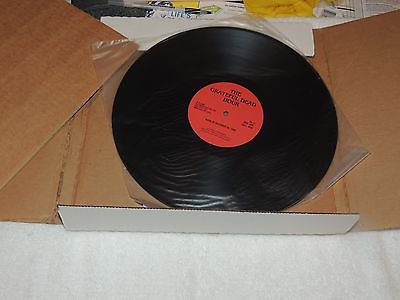
Grateful Dead Hour # 17 - Vinyl LP From 12/26/88 - LIKE NEW! ULTRA RARE!
I know what you're thinking.. you're reading this and saying... show number 17?? From 1988?? On Vinyl???? Yes!!!
This is EARLY Grateful Dead Hour. Show #17!!!! Before being put out on cassette, and eventually CD, the shows were pressed to Vinyl LP for distribution.
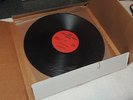
Check this one!!! This is the vinyl album, cut sheet with information from the label, and what is on the show... and check out whose copy of the album this is... no this wasn't shipped to just any radio station for airing. This was shipped to Mr. David Gans himself to host the show with!! AMAZING!!! AND RARE!!! This is a piece of Grateful Dead history!!
Awesome, the Vinyl Master for the Grateful Dead Hour, # 17. This is like new! Right from the source.. it gets NO BETTER than this!
Grateful Dead Hour no. 17
Week of December 26, 1988
Featuring excerpts from the Grateful Dead's second set July 26,
1987 at the Big A (Anaheim Stadium), not far from Disneyland and Leo
Fender's house. The Dead played a set with Bob Dylan that night, and
there's a live album from that tour due out very early in 1989.
Part 1 26:28
If I had the world to give...One pane
of glass...Blue suede shoes...A ruffled dress, a necklace made of
gold...all the French perfume you'd care to smell...Ribbons, ribbons,
ribbons...Bucket hanging clear to Hell...A broken angel...Just a box
of rain...I'll take a melody...Just a plaintive little tune...Ten
gold dollars...Money money, money money money...A thousand dollars,
please...A dime for a cup of coffee... Little Ben clock...An electric
guitar...Something like a bird... Burgundy wine...Couple shots of
whiskey...Couple more shots of whiskey...Couple more shots of
whiskey...Just a cup of cold coffee... Pile of smokin' leather...A
leaf of all colors...And very few rules to guide...A land that's free
for you and me...You know the one thing we need is a left-hand
monkeywrench...You know I'm ready to give everything for anything I
take...There is nothing like a Grateful Dead concert!
<applause>
Shakedown Street 7/26/87 Anaheim Stadium
Notes from the Rosetta Stone (first section) - Peter Apfelbaum and
the Hieroglyphics Ensemble with Don Cherry 10/14/88 Palace of Fine
Arts Theatre, SF
China Doll - Grateful Dead from the Mars Hotel
Part 2 25:59
Terrapin->
percussion 7/26/87 Anaheim Stadium
Throwing Stones 7/26/87
Not Fade Away - The Rolling Stones
Peter Apfelbaum and Hieroglyphics Ensemble was Phil Lesh's choice
to open the show on New Year's Eve this year. It's a 15-piece band
from Berkeley, using some "World Beat" dance rhythms for composition
and improvisation in a big-band context. I think this band should
appeal equally to the dancers and the serious listeners in the
Grateful Dead audience. The following is an excerpt from an interview
with Apfelbaum on the December 1988 instalment of Rex Radio, hosted
by Phil Lesh.
Lesh: [Recalling a newspaper article in which] you were extolling
the virtues of Reggae and African rhythms as opposed to swing
rhythms... You were saying that most jazz composers only rely on
swing rhythms, and that Reggae and African are a whole new untapped
resource, in a way. And to my ears you've taken those rhythms and
developed them considerably - especially overlaying more than one at
one time.
Apfelbaum: That is a product of our continuing investigation of
the roots of what we call jazz. In the process of investigating that
root we realized that the basis of swing and the basis of the rhythms
that make up what we call jazz come from Africa - specifically, from
West Africa. There've been numerous attempts in this century to
combine African rhythms with American jazz. Dizzy Gillespie was
somebody who did that by way of Afro-Cuban music; Ellington did it,
and more recently the Art Ensemble of Chicago, Sun Ra... There was an
outgrowth of awareness in the sixties that contributed to the overall
awareness of African music, and it became an element that is more and
more used in composition. What we're doing is taking modern dance
forms and using them as a basis for composition and improvisation,
much in the way that Ellington did, and people of his time that were
orchestrating for a large ensemble.
price rating