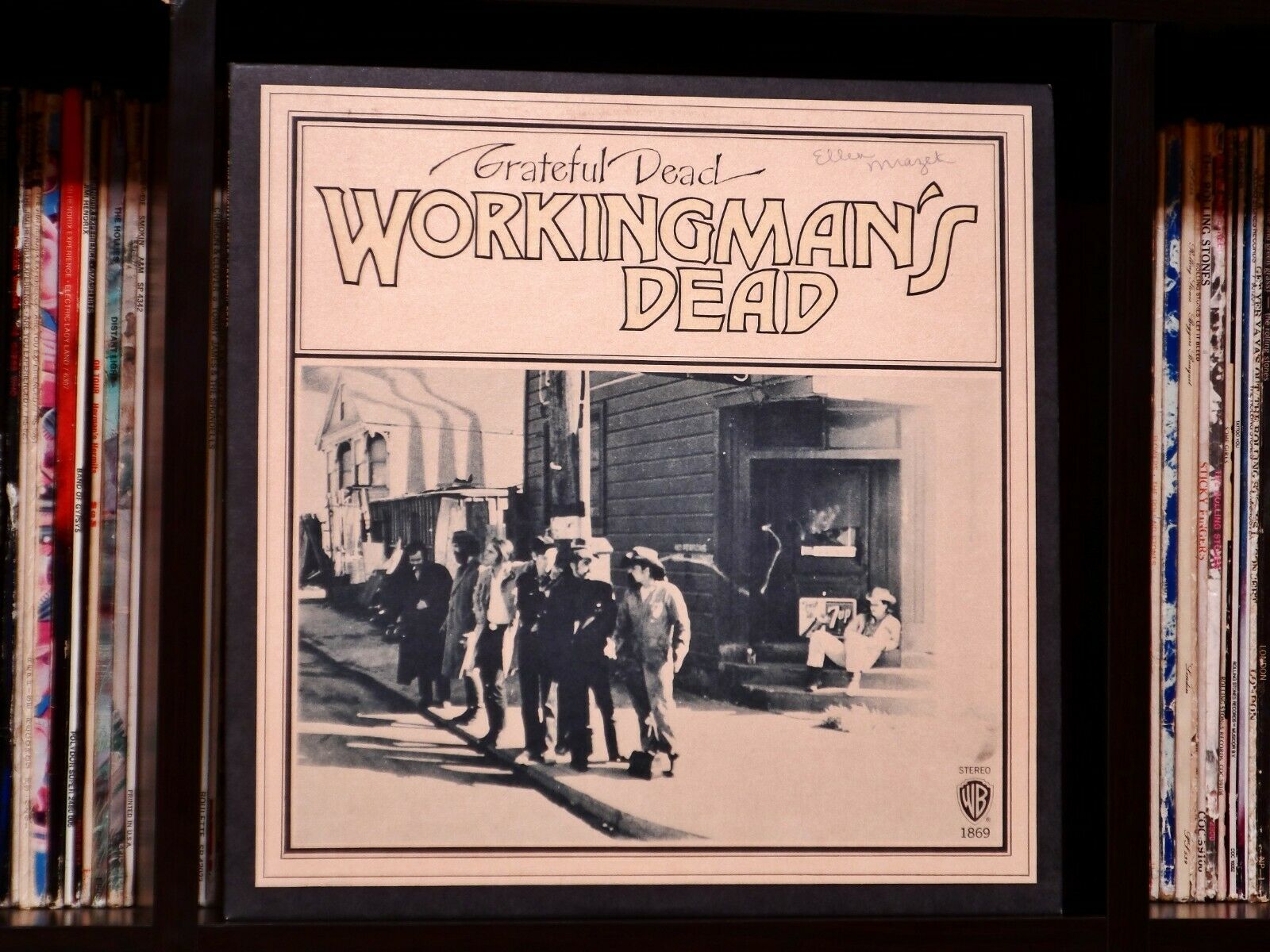
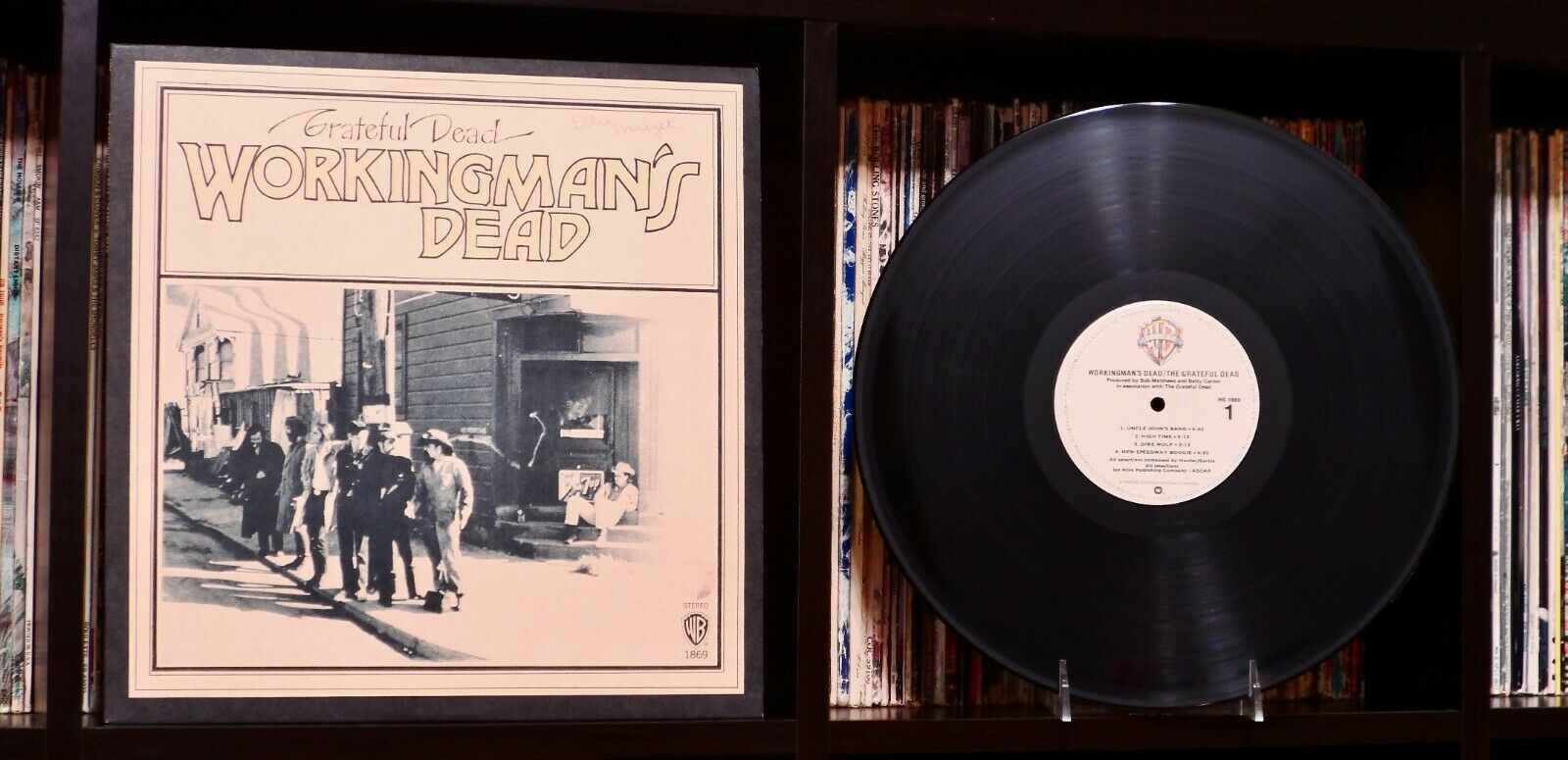
Grateful Dead ? Workingman's Dead ? Rare Near Mint Warner Bros Records Vinyl LP
$
50


Favourite Auctions
To save auctions to your favourites, please login
If you don't have an account, please register
Description
Welcome to Classic Cadillac Records! My goal is to provide each and every customer with the best possible buying experience, no matter the size of the order. Unlike most sellers, I advertise all my items clearly and in as much detail as possible, without shouting at you in all caps. I take multiple high quality pictures and never use stock photos, so you know exactly what you’re buying. I take great pride in my work and go the extra mile, which can clearly be seen in my listings compared to other sellers that put minimal effort into theirs. I visually grade all my records as accurately as possible and will never grade anything above Near Mint unless it’s still sealed. Please note that a visual grade can differ from a play grade, and am happy to spot check a record upon request. All orders are shipped within 1 business day (usually sooner) and packed with extra care to ensure fast, safe arrival. I combine shipping on multiple orders to save you money and gladly ship worldwide. Please look closely at all pictures, read all relevant details and ask any questions you may have before buying. I offer a full 30-day return policy on everything I sell, so buy with confidence! And most importantly, thanks for looking!
Jump to navigationJump to search
Workingman's Dead Studio album by Grateful Dead Released June 14, 1970 Recorded February 1970 Studio Pacific High Recording, San Francisco Genre- Folk rock
- country rock
- Bob Matthews
- Betty Cantor
- Grateful Dead
(1969) Workingman's Dead
(1970) Vintage Dead
(1970) Professional ratings Review scores Source Rating Allmusic American Songwriter Christgau's Record Guide A Rolling Stone Encyclopedia of Popular Music
Workingman's Dead is the fourth Grateful Dead studio album. It was recorded in February 1970 and originally released on June 14, 1970. The album and its studio follow-up, American Beauty, were recorded back-to-back using a similar style, eschewing the psychedelic experimentation of previous albums in favor of Jerry Garcia and Robert Hunter's Americana-styled songcraft.
In 2003, the album was ranked number 262 on Rolling Stone magazine's list of the 500 greatest albums of all time, and 264 in a 2012 revised list. It was voted number 371 in Colin Larkin's All Time Top 1000 Albums.
Recording
The band again recorded at Pacific High Recording Studio in San Francisco, spending just nine days there. After the protracted sessions required for the previous two studio albums, Garcia suggested "Let's do it all in three weeks and get it the hell out of the way". Besides trying to avoid the debt that had accumulated while recording Aoxomoxoa, the band was dealing with the stress of a recent drug bust in New Orleans – which could have resulted in jail time. Additionally, they returned from a tour to find their soon-to-be-fired manager, Lenny Hart (father of drummer Mickey Hart), refusing to show the books to anyone else in the organization. "In midst of all this adverse stuff that was happening ... [recording the album] was definitely an upper," said Garcia in an interview.
Lyricist Robert Hunter had joined the band on the road for the first time, resulting in a period of faster song development. Unlike the psychedelic, electrified music for which the band had become known, the new songs took a new direction, reviving their folk-band roots. Bassist Phil Lesh stated "The song lyrics reflected an 'old, weird' America that perhaps never was ... The almost miraculous appearance of these new songs would also generate a massive paradigm shift in our group mind: from the mind-munching frenzy of a seven-headed fire-breathing dragon to the warmth and serenity of a choir of chanting cherubim. Even the album cover reflects this new direction: The cover for Aoxomoxoa is colorful and psychedelic, and that of Workingman’s Dead is monochromatic and sepia."
Workingman's Dead and American Beauty, the companion album that followed months later, were, according to drummer Bill Kreutzmann, both influenced by the Bakersfield sound. He explained "We tried to be like a Bakersfield band – but one that still sounded like we were from 300 miles north of that town ... we held to our psychedelic roots. Workingman's Dead was all about discovering the song ... American Beauty became all about having the harmonies to do that".
"This was, sort of, stepping out of our spacesuit and coming down to Earth and putting on a pair of Osh Kosh and digging the furrows ... we would have to bring the music in, to support the texts: Hunter's Holy Grail"- Mickey Hart
While on tour in Boulder, Colorado, the previous year, Garcia had purchased a steel guitar and was now keen to use it on the new batch of songs. Lesh explained, "Just as with any other instrument he picked up, he made it sing. The main impetus for this development was the nature of the new songs Hunter and Jerry had been writing; many of them had a decidedly country flavor ('Dire Wolf,' 'Friend of the Devil,' 'High Time,' 'Casey Jones,' 'Ripple'), and Jerry began using the new axe on these as they were slotted into the set lists. Bobby [Weir] also began bringing in covers of his favorite country tunes and some originals in that vein, so we were starting to see a trend developing. Personally, I was thrilled that the band could make such a complete musical about-face while still maintaining the flat-out weirdness that I’d come to know and love."
Songs such as "Uncle John's Band", "High Time", and "Cumberland Blues" were brought to life with soaring harmonies and layered vocal textures that had not previously been a part of the band's sound. According to the 1992 Dead oral history, Aces Back to Back, in the summer of 1968, Stephen Stills vacationed at Mickey Hart's ranch in Novato. "Stills lived with me for three months around the time of CSN's first record," recalls Hart, "and he and David Crosby really turned Jerry and Bobby onto the voice as the holy instrument. You know, 'Hey, is this what a voice can do?' That turned us away from pure improvisation and more toward songs."
Garcia commented that much of the sound of the album comes both from his pairing with Hunter, as well as the band's friendship with Crosby, Stills and Nash (renamed Crosby, Stills, Nash & Young with the addition of Canadian singer-songwriter Neil Young): "Hearing those guys sing and how nice they sounded together, we thought, 'We can try that. Let's work on it a little'."
Release
The album title came about when Jerry Garcia commented to lyricist Robert Hunter that the album was "turning into the 'workingman's Dead' version of the band". Having both worked on all of the album's songs and gone out on the road with the band, Hunter appears as a seventh member on the front cover photograph.
Warner Bros. released "Uncle John's Band" (backed with "New Speedway Boogie") as a single to promote the album. It received limited airplay, even though it was edited to a radio-friendly three-minute length and the lyric "goddamn" removed.
Readers of Rolling Stone voted Workingman's Dead the best album of 1970, followed by Crosby, Stills, Nash and Young's Déjà Vu and Van Morrison's Moondance.
The album was remastered and expanded in 2001 as part of The Golden Road (1965–1973) 12-CD box set. This version, given separate release in 2003, includes eight bonus tracks. A DVD-Audio version was also released in 2001, without the bonus material. In 2014 it was issued as a two-LP set, mastered at 45 rpm by Mobile Fidelity Sound Lab.
Track listing
All songs written by Jerry Garcia and Robert Hunter, except where noted.
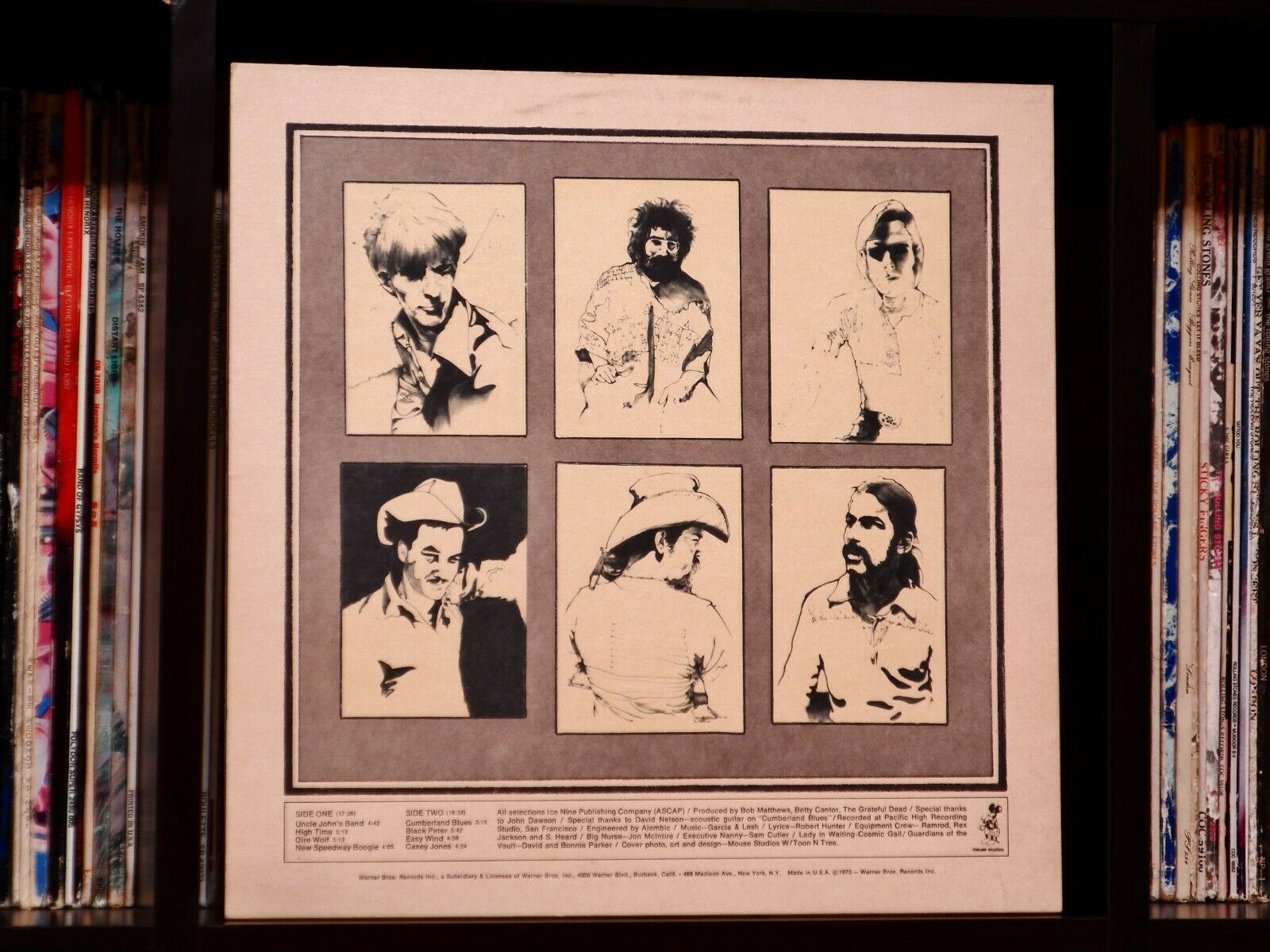
Side one No. Title Length 1. "Uncle John's Band" 4:42 2. "High Time" 5:12 3. "Dire Wolf" 3:11 4. "New Speedway Boogie" 4:01 Side two No. Title Length 1. "Cumberland Blues" (Garcia, Phil Lesh, Hunter) 3:14 2. "Black Peter" 5:41 3. "Easy Wind" (Hunter) 4:57 4. "Casey Jones" 4:24- Sides one and two were combined as tracks 1–8 on CD reissues.
price rating




![Jack Johnson - Brushfire Fairytales [Vinyl New]](https://www.popsike.org/php/thumbnail.php?url=https://www.popsike.pics/pix/20160608/361588841254.jpg)