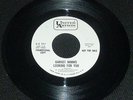
HISTORICAL 11 Acetate Records Louis Persinger THE TOWN HALL NEW YORK Violin
$
341


Favourite Auctions
To save auctions to your favourites, please login
If you don't have an account, please register
Description
crecords store
HISTORICAL 11 Acetate Records Louis Persinger THE TOWN HALL NEW YORK Violin
Description
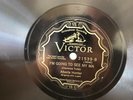
AMAZING item. THE TOWN HALL NEW YORK 1940's maybe early 50's Louis Persinger Violin Concert. Persinger had so many famous students, including Isaac Stern who made his debut at the Town Hall. There are Quartet and Duet Pieces and he could very well be playing with several of his famous students but I could not find any information about this performance. I belive one piece that is played is Mozart's Divertimento, the labels are marked sonata, Divert, adagio, variation, rondo, 4tet duet ect. All 11 records are in a album marked "the town hall'. This was from a collection of items that belonged to Mr Persinger that were sold at auction. I listened to a little of each one, they should be cleaned and there are a couple of minor scratches. There is no announcing, you can hear them tuning, playing and then applause, at one point you can hear some conversation in the audience. No one has probably listened to this performance since it was recorded! This is one of two final listings of the historical recordings of Persinger that I have and probably the most special, A classical treasure. Louis Persinger (11 February 1887 – 31 December 1966) was an American violinist and pianist.
Persinger trained at the Leipzig Conservatory where he studied with Hans Becker, before finishing with Eugène Ysaÿe in Brussels and studying with Jacques Thibaud in France for two summers. He served as leader of the Berlin Philharmonic orchestra and the Royal Opera Orchestra in Brussels before being appointed leader and assistant conductor of the San Francisco Symphony Orchestra in 1915 and succeeding Leopold Auer at the Juilliard School in New York in 1930.
He was best known as the teacher of great violinists Yehudi Menuhin, Ruggiero Ricci, Isaac Stern, Camilla Wicks, Almita Vamos, Fredell Lack, Guila Bustabo, Arnold Eidus, Donald Erickson, Zvi Zeitlin, Leonard Posner and Louise Behrend. He was also Ricci's piano accompanist for many recitals and recordings, and Menuhin's for his first few recordings. The Town Hall is a performance space, located at 123 West 43rd Street, between Sixth Avenue and Broadway, in New York City. It opened on January 12, 1921, and seats approximately 1,500 people.
In the 1930s the first public-affairs media programming originated here with the "America's Town Meeting of the Air" radio programs. In recognition of this the National Park Service placed the building on the National Register of Historic Places in 2012,[3] and designated it a National Historic Landmark in 2013. The Town Hall was built by The League for Political Education, whose fight for passage of the Nineteenth Amendment to the United States Constitution led them to commission the building of a meeting space where people of every rank and station could be educated on the important issues of the day. The space, which became The Town Hall, was designed by the renowned architectural firm of McKim, Mead & White, to reflect the democratic principles of the League. To this end, box seats were not included in the theater's design, and every effort was made to ensure that there were no seats with an obstructed view. This design principle gave birth to The Town Hall's long-standing mantra: "Not a bad seat in the house."
It has not only become a meeting place for educational programs, gatherings of activists, and host for controversial speakers (such as the American advocate of birth control, Margaret Sanger, who was arrested and carried off The Town Hall stage on November 13, 1921, for attempting to speak to a mixed-sex audience aboutcontraception), but as one of New York City's premiere performance spaces for music, dance, and other performing arts. While the lecture series and courses on political and non-political subjects sponsored by the League continued to be held there, The Town Hall quickly established a reputation as an arts center during the first fifteen years of its existence.
It has also had a long association with the promotion of poetry in the United States, which predates Edna St. Vincent Millay's public poetry reading debut at the Hall in 1928. The Hall has retained a close association with poets and poetry that continues to this day.
America's Town Meeting of the Air
America's Town Meeting of the Air was a radio program produced at the Hall for over twenty years, beginning in 1935. America's Town Meeting of the Air was the brain-child of George V. Denny, Jr., then the associate director of the Hall. Envisioned as a means of expanding the audience — first nationally, then internationally — for the programs held at the Hall which promoted the free exchange of ideas, the format of America's Town Meeting of the Air was a conversation between four speakers on a predetermined question. The series was launched on the NBC Blue Network on Memorial Day 1935; the topic of discussion the coexistence of communism, fascism, socialism and democracy. The Town Meeting of the Air was a successful program due to its dynamic format, audience participation, its focus on subjects relevant to the world events of the day, and its ability to attract a wide range of experts and well-known personalities as participants. Although it began broadcasting on a single station with approximately 500,000 listeners, within three years, the Town Meeting of the Air was carried by 78 stations and boasted 2.5 million listeners. The Town Meeting successfully toured the United States as well as twelve cities on three continents. It won numerous awards, including the prestigious Peabody Award in 1943 and 1945.
Recordings of America's Town Meeting of the Air, from 1935 to 1952, are preserved at the United States' National Archives' Donated Historical Materials collection, the catalog number of which is "DM.13".
The organizational records (archives) of Town Hall, Inc. and America's Town Meeting of the Air, 1895–1955, are held by the Manuscripts and Archives Division of The New York Public Library.
Musical performances
The outstanding acoustic properties of Town Hall for musical performance — which some performers claim rival those of Carnegie Hall — were discovered during the first musical event held at the venue: a recital by Spanish violinist Juan Manén on February 12, 1921. Later in 1921, German composer Richard Strauss gave a series of concerts that cemented the Hall's reputation as an ideal space for musical performances. Aside from the acoustics, the sight lines and remarkable intimacy of the auditorium has made it a popular venue for both new and experienced artists, whatever the instrument, repertoire, or style of the performer. During the 1920s and 1930s, The Town Hall quickly gained a reputation amongst performers and audiences as "the place" for a performer to make a New York debut.
In 1928, The Hall began producing regular musical concert series, and over the next few seasons, The Town Hall Endowment Series featured artists including Sergei Rachmaninoff, Ignacy Jan Paderewski, Lily Pons, Feodor Chaliapin, Yehudi Menuhin, and many more legends of the classical Western repertoire.
Marian Anderson, considered one of the greatest contraltos ever born in the United States, made her New York debut at the Hall on December 30, 1935, after she had been denied an opportunity at an operatic career elsewhere due to discrimination against African-Americans.
A notable chamber music world premiere took place at the Town Hall on January 20, 1941, when the Kolisch Quartet gave the first performance of Béla Bartók's String Quartet No. 6.[5]
Important jazz concert appearances at The Town Hall include the June 22, 1945 concert — featuring Dizzy Gillespie, on trumpet; Charlie Parker, on alto saxophone; Don Byas, on tenor saxophone; Al Haig, on piano; Curley Russell, on bass, and Max Roach, on drums (with "Big" Sid Catlett substituting for Roach on a few titles) — which provided the public with its first mainstream exposure to the quickly evolving style of jazz that came to be popularly known as bebop. This concert serves as an unmistakable sign of how progressive The Town Hall's jazz programming has been since the venue's inception; prior to appearing in concert at the Hall, Gillespie and Parker had released only one 78-RPM release, and only Gillespie — due to his high-profile associations with Cab Calloway, Earl Hines, and Billy Eckstine — enjoyed mainstream name-recognition. (In June 2005, the Uptown Jazz label released a CD containing seven sonically restored performances transcribed from acetates made at the concert, which was originally supposed to be a double-bill, with Coleman Hawkins as the headliner, but Hawkins never showed up for his half of the gig.) The Town Hall also hosted the 1946 concert that led to the re-invigoration of Louis Armstrong's career, and which led to the formation of Louis Armstrong and His All Stars, the small traditional jazz combo that Armstrong led for the last quarter-century of his life.
The Hall's rich tradition of jazz programming is continued today with the Not Just Jazz series of concerts, which not only features jazz, but also poetry, film and dance. Past participants in the Not Just Jazz series include: The Art Ensemble of Chicago, the Lounge Lizards, Cassandra Wilson, Meredith Monk, and Allen Ginsberg.
On May 15, 1958, Town Hall hosted the 25th Year Retrospective Concert of the music of John Cage. This performance was recorded by Columbia Records producer George Avakian, and the resulting 3-LP set was instrumental in making Cage's music known to many listeners, and in increasing Cage's notoriety among the listening public.
One unique aspect of The Hall is its Morning Performances, which are offered free of charge to public school students in grades 3 to 8, during the day. It also features programming in alliance with Theatreworks USA as part of itsArts in Education program.
When on tour, the radio show A Prairie Home Companion is often broadcast live from Town Hall in its New York appearances.
In September, 2009, singer Whitney Houston chose the Town Hall to be the venue for her first interview in seven years, appearing on Oprah Winfrey's season premiere. When asked by Winfrey why she chose the Town Hall, Whitney said it holds a special place in her heart because it's where she performed for the first time at the age of 14.
Important: wait for an invoice to pay if you purchase multiple items, I will combine shipment. I try my best to be fair with my shipping charges, they are based on the shipping fees billed when I ship through ebay with tracking. Please pay within 3 days unless you have contacted me prior to bidding. Thanks!
price rating