HOLLIES Here I Go Again 1ST LP PROMO STEREO Beatles
$
71


Favourite Auctions
To save auctions to your favourites, please login
If you don't have an account, please register
Description
Though the Mono white label album of "Here I Go Again" seems to have always been around,
this Promo STEREO LP is the only one I have ever come across. It was in 1966, when The Beatles
began singing more serious music, that The Hollies first became big in the USA by singing
catchy and silly pop tunes with their wonderful harmonies.
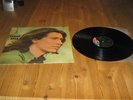
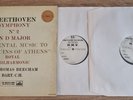
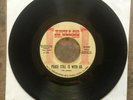
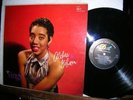
This is a 1964 WHITE LABEL AUDITION STEREO PROMO album by The Hollies titled "HERE I GO AGAIN" on the Imperial Record label. This is their first LP release and it is extremely difficult to find as a white label stereo promo. The cover has a nice front, top and bottom seams and spine. No Tape. The back has "I Wish To Be With The Hollies...I Love Them" written on it in crayon (obviously, by some young fan) so it grades at VG. The record has five needle scratches on one side only that causes ticks as it plays. So, for me, it was not fun to listen to. The group's rendition of "It's only Make Believe" is pretty sophomoric. Overall, the black vinyl appears in excellent shape (except for the scratches) i.e. the vinyl is not covered with surface scratches and there is plenty of shiny, glossy undisturbed vinyl on the record. This album was released before the group had any American hit singles. Please see four pictures below! White areas on the cover and record are caused from my camera flash.
BRIEF INFO ON THE HOLLIES
Allan Clarke (lead singer) and Graham Nash (vocals, guitar) had been friends since childhood in Manchester, and formed the nucleus of the Hollies in the early '60s with bassist Eric Haydock. In early 1963, EMI producer Ron Richards signed the group after seeing them at the famous Cavern Club in Liverpool. Guitarist Vic Steele left before the first session, to be replaced by 17-year-old Tony Hicks. Drummer Don Rathbone only lasted for a couple of singles before being replaced by Bobby Elliott, who had played with Hicks in his pre-Hollies group, the Dolphins. The lineup changes were most fortuitous: Hicks contributed a lot to the group with his ringing guitar work and songwriting, and Elliott was one of the very finest drummers in all of pop/rock.Although their first singles were R&B covers, the Hollies were no match for the Rolling Stones (or for that matter the Beatles) in this department, and were much more at home with pop/rock material that provided a sympathetic complement to their glittering harmonies. They ran off an awesome series of hits in the U.K. in the '60s, making the Top 20 almost 20 times.
Some of their best mid-'60s singles, like "Here I Go Again," "We're Through," and the British number one "I'm Alive," passed virtually unnoticed in the United States, where they couldn't make the Top 40 until early 1966, "Look Through Any Window" did the trick. In 1966, Eric Haydock left the group under cloudy circumstances, replaced by Bernie Calvert.The Hollies really didn't break in America in a big way until "Bus Stop" (1966), their first Stateside Top Tenner; "On a Carousel," "Carrie Ann," and "Stop Stop Stop" were also big hits. Here the Hollies were providing something of a satisfying option for pop-oriented listeners that found the increasingly experimental outings of groups like the Beatles and Kinks too difficult to follow. At the same time, the production and harmonies were sophisticated enough to maintain a broader audience than more teen- and bubblegum-oriented British Invasion acts like Herman's Hermits. Their albums showed a more serious and ambitious side, particularly on the part of Graham Nash, without ever escaping the truth that their forte was well-executed pop/rock, not serious statements.Nash, however, itched to make an impression as a more serious artist, particularly on the "King Midas in Reverse" single (1967). Its relatively modest commercial success didn't augur well for his influence over the band's direction, and their next 45s were solidly in the more tried-and-true romantic tradition. By 1968, though, Nash really felt constrained by the band's commercial orientation, and by the end of the year he was gone, left for the States to help found Crosby, Stills, & Nash. His departure really marked the end of the group's peak era.
In 1969, the band tried to have their cake and eat it too by doing a whole album of Hollie-ized Dylan songs, which was received poorly by some critics, although it was a decent seller in Britain. Nash was replaced by Terry Sylvester (formerly of Liverpool bands the Escorts and Swinging Blue Jeans), and the hit streak continued for a while. "He Ain't Heavy, He's My Brother," in fact, was one of their biggest international singles. But the group was really reaching a cul de sac; they'd managed a remarkably long run at the top considering that they hadn't changed their formula much since the mid-'60s, adding enough sophistication to the lyrics and arrangements to avoid sounding markedly dated. It was apparent they really weren't capable of producing long-playing works striking enough to appeal to the album audience, though, and their singles, though still hits on occasion, weren't as memorable as their best '60s work.A modest slide in the early '70s was arrested by "Long Cool Woman in a Black Dress," a Creedence Clearwater Revival-type rocker that made number two in the States in 1972. The timing wasn't ideal; by the time it became a smash, Clarke, who had sung lead on the single, had left to go solo, to be replaced by Swedish vocalist Mikael Rikfors. Clarke re-joined in mid-1973, and the group had one last international monster, "The Air That I Breathe," which made number six in the U.S. in 1974. The group went on to record a string of further albums in the second half of the 1970's.
price rating