JAPANISCHE 12´LP-ANGEL 1-513-STEREO (MFSL) " HERBERT VON KARAJAN ",bitte lesen
€
63
$
73


€ 63
Sold For
Feb 28, 2016
Sold Date
Feb 18, 2016
Start Date
11
Number Of Bids
Germany
Country Of Seller
eBay
Auctioned at
Favourite Auctions
To save auctions to your favourites, please login
If you don't have an account, please register
Description
- Angebot : " Eine " ORIGINAL LIMITIERTE JAPANISCHE 12´ LP - ANGEL MFSL ( MOBILE FIDELITY SOUND LAB ) 1 - 513 - STEREO mit den phantastischen
- " BERLINER PHILHARMONIKERN " unter dem exellenten Dirigenten " HERBERT VON KARAJAN ", komplett mit Cover & Beilagen von 1978 !
- ----------------------------------------------------------------------------------------------------------------------------------------------------------------------------------------------------------------------------------------------------------
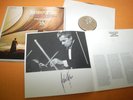
- Zustand : Original 12´ LP und Cover sowie Beilagen in neuwertigen Zustand ( M- / M- ) - ( 38 Jahre alt ) - ( Empfehlung für Mintsammler ).
- Mängel - Platte : Die 12´ LP befindet sich in einem tadellosen Zustand, praktisch wie neu - ( Original 12´ LP )
- Mängel - Cover - Beilagen : Auch praktisch keine Mängel, alles in Top Zustand ( Original Cover und Beilagen ).
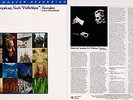
- Beilagen : Eine 4 seitige aufklappbare Hinweis - Beilage in Cover Größe mit bebilderter Auflistung aller bis Dato auf dem Markt befindlichen Japanischen 12´
- MFSL - LP´s und Band - Kassetten. Unter anderen sind auch die 12´ " Beatles " LP´s " Revolver " und " The Magical Mystery Tour " sowie 12´ " Pink Floyd "
- LP " The Dark Side Of The Moon " abgebildet. Auf der Rückseite ist die Herstellung dieser hochwertigen Tonträger beschrieben worden und auch die Pflege.
- Als zweites ein Fragebogen in dem man Fragen mit Antworten des Herstellers ankreuzen kann, in Din a 4 Größe mit Rücksende - Abschnitt. Als drittes ein
- Hinweis - Blatt über die sogenannte " Geo - Disc " ( eine spezielle Plattenteller - Auflage die man beim abspielen dieser hochwertigen 12´ MFSL - LP´s als
- Unterlage zu Hilfe nehmen kann und dann genau den Abtast - Arm des Plattenspielers einstellen kann ( Antiskating - Gewichtung des Ton - Arms während
- der Abspielung der 12´ LP ) sodaß die Abtastnadel in der Rille optimall abtastet ohne zu stark an sie seitliche Wandung der Rille zu stoßen. Als viertes ein
- Zertifikat mit Limited Garantie auf gelben Papier auch mit Rücksende - Abschnitt falls man irgendwelche Reklamationen hat ( Siehe Angebotsbilder ).
- Tonträger - Format : 12´ LP ( Langspielplatte - 30 cm ) mit 2 Titel.
- Symphonie - Orchester : " BERLINER PHILHARMONIKER " ( Sagenhaftes Deutsches Symphonie - Orchester ).
- Dirigent : " HERBERT VON KARAJAN " ( Einer der weltbesten Klassik - Dirigenten aller Zeiten ).
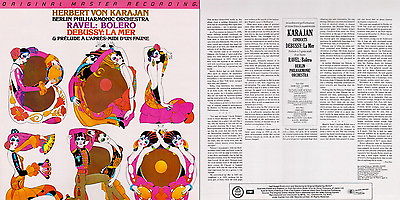
- LP - Bezeichnung : " RAVEL : BOLERO / DEBUSSY : LA MER ( PRELUDE A L´APRES - MIDI D´UN FAUNE " ! - ( Incandescent Performances Of Three French Masterworks ) !
- Aufgenommen in : Berlin ( Deutschland ) - ( Master Recording der EMI ).
- Erschienen : 1978 ( auf normalen schwarzen Venyl ).
- Land : Japan ( Nippon )
- Matriz - Nummer : A. Seite : MFSL - I - 513 - B. - A S 1/2 ORTOFON ( geritzt ) H 112 * * ( gestanzt ) / B. Seite : MFSL - I - 513 - A 4 ( geritzt ) H 161 * * JG/2 ( gestanzt ).
- Genre : Klassik ( Symphonie ).
- Abspielgeschwindigkeit : 33 U/pM.
- Angebotsbild : Zeigt Original Scans der Cover Vorder und Rückseite der Beilagen beidseitig sowie der Label.
- Besonderheit : Die 12´ LP ist im " MFSL ( Mobile Fidelity Sound Lab ) " im Half - Speed Verfahren auf hochwertigeren Venyl
- von Original Master Recording Bändern produziert worden und ist bis heute das beste was es auf diesem Gebiet Weltweit gibt.
- Beschreibung : Hier eine sehr interessante Original Japanische 12´ LP - Angel MFSL 1 - 513 - Stereo, mit den alles überragenden " Berliner Philharmoniker " unter
- dem genialen Salzburger Dirigenten " Herbert von Karajan ", mit dem " Bolero " von " Ravel " und der Symphonie von " Debussy - La Mer " aufgenommen in der
- Deutschen Klassik Hauptstadt " Berlin ", die 1978 in Japan auf den Markt kam. Diese außergewöhnliche Japanische 12´ LP in dem traumhaften neuwertigen Zustand,
- dürfte für einen Klassik - Anhänger das " Non Plus Ultra " sein, da es zu damaliger Zeit bis heute nichts besseres auf Venyl zu erwerben gab. Die Wiedergabe auf
- einer guten Anlage ist absolut überragend und dürfte bis heute unerreicht sein ( Audioophile Top - Qualität ). Auch die Aufmachung der 12´ LP ( Label ) sowie des
- Cover´s mit einer sehr informativen Beschreibung dieses Werkes in Englisch sowie die Beilagen dürfte als einmalig anzusehen sein, sodaß man mit diesem Angebot
- mit Sicherheit seine helle Freude haben wird !
- -------------------------------------------------------------------------------------------------------------------------------------------------------------------------------------------------------------------------------------------------------------------------------------------
- Titel : 12´ LP ( MFSL ) - Angel 1 - 513 - STEREO - " Berliner Philharmoniker " unter Dirigent : " Herbert von Karajan "
- Ravel : Bolero & Debussy - La Mer " - Japan - 1978 ( Incandescent Performances Of Three French Masterworks ) !
- Seite 1 :
- 1. " DEBUSSY : LA MER " ( 25´26 )
- a. DE L´AUBE A` MIDI SUR LA MER ( FROM DAWN TO NOON ON THE SEA ) - ( BAND ONE 9´13 )
- b. JEUX DE VAGUES ( PLAYS OF THE WAVES ) - ( BAND TWO 7´10 )
- c. DIALOGUE DU VENT ET DE LA MER ( DIALOGUE OF THE WIND AND THE SEA ) - ( BAND THREE 9´03 )
- Seite 2 :
- 1. " DEBUSSY : PRELUDE A L´APRES - MIDI D´UN FAUNE " ( BAND ONE 18´21 ) - KARL - HEINZ ZÖLLER - ( SOLO - FLUTE )
- a. " RAVEL : BOLERO " ( BAND TWO 16´09 )
- Orchester : " BERLINER PHILHARMONIKER " ( Deutsches Symphonie - Orchester von Weltruf ).
- Dirigent : " HERBERT VON KARAJAN " ( Genialer Österreichischer Klassik - Dirigent aus Salzburg ).
- Producer : Michel Glotz
- Engineer : Wolfgang Gühlich
- Art Direction : Marvin Schwartz
- Cover Illustration : Dick Ellescas
- Library of Congress Catalog Card Nos. 78 - 750530 and 78 - 750031 apply to this Recording.
- -------------------------------------------------------------------------------------------------------------------------------------------------------------------------------------------------------------------------------------------------------------------------------------------
- Text : Cover Rückseite in Englisch über " Berliner Philharmoniker " und " Herbert von Karajan " sowie dieses Japanische 12´ LP - Album !
- THE RICHLY EVOCATIVE works in this 12´ Album share a striking distinction. All three had an electrifying effect upon their early audiences - not to mention upon countless
- audiences which followed. At a Paris Concert on January 19, 1908, which Debussy himself conducted, La Mer produced both wild yells of approval from those in favor and
- hisses and cat - calls from anti - Debussyites. The noisy disorder turned into a brawl that lasted the better part of an hour, and made the next editions of all the Paris Papers.
- The reaction came as no surprise to Debussy. His " Prelude a l' apres - midi d'un jaune " had been similarly greeted at its first performance in 1894. Hoots and boos from one
- segment of the audience vied with tumultuous applause from an other, and Debussy's reputation was made. Ravel's Bolero had no such divisive effect upon its hearer's.
- Its implacably kinetic music evoked a seismic reaction everywhere it was introduced. Audiences from Paris to New York stood, stamped their feet, and cheered. Today,
- long familiarity has subdued somewhat the powderkeg potentialities of all three works. Yet their powers are no less potent. In a stunning rendition, they still can make the
- heartbeat quicken and the mind pulse with a rapidly - shifting fantasy of colorful images. The evidence is all here in these recordings of magical, masterful performances
- by Herbert von Karajan and the Berlin Philharmonie Orchestra. " You may not know ",' Claude Debussy wrote to Andre Messager in 1903, " that was destined for a sailor's
- life and that it was only the hazards of fate that led me in another direction. But have always held a passionate love for the sea. You will say that the ocean does not exactly
- wash the Burgundian hillsides, and my sea - scapes might be Studio landscapes. Yet have an endless store of memories, and to my mind, they are worth more than the reality,
- whose beauty often deadens thought ! Debussy's acquaintance with the Mediterranean dated from childhood, when he went to live with his aunt in Cannes, and it was there,
- incidentally, that he had his first piano lessons, from the Italian teacher Jean Cerutti. As an adult, Debussy made the usual holiday visits to the seaside and twice crossed the
- Channel to England and back. Such was the sum of his maritime experience, but for a genius, it was enough. He commenced La Mer in 1903 and completed it in 1905, working
- for the most part in Paris. Only the final pages were written at the seaside, at the fashionable English resort of Eastbourne. Those years were a time of personal stress when
- Debussy may have needed just such an escape as contemplation of the sea could provide. In 1904, he left his wife Lily for the more worldly and gifted Emma Bardac. The dis -
- traught Lily responded by shooting herseif. Though she lived, her despairing act set much of Paris against Debussy. Part of the hostility La Mer encountered in its initial perfor -
- mances was inspired by its revolutionary form. Part, admittedly, was caused by the pious indignation the public feit for the successful composer who had abandoned his non
- descript wife. The public ultimately wearies of its own hypocrisies. Thus the composer soon lived down the prejudice, and so did the composition. Who can resist the sea ?
- And there it is, mystically recreated in a symphonic work more evocative of its subject, perhaps, than any other emulation in the entire world of art. To attempt to explicate La
- Mer in prose has proved a task both staggering and self - defeating. The great effectiveness of the work is that it is never a mere visual seascape. Its appeal is to instinctive,
- in ward perceptions inherited, it may be, from those primordial ancestors of man which crawled out of the great waters onto land. The splendor of the sea and its joys are
- there, as well as suggestions of its mysteries and terrors. But that is what La Mer means to one listener. Another beauty of the work is that it is sufficiently inexplicit that
- each auditor is at liberty to apprehend in it his own personal perceptions of the sea, and, for the length of the performance and sometimes beyond, to become lost in be -
- witched contemplation of them. Debussy's Prelude a l'apres - midi d'un faune came along in 1894 as one of those revolutionary works that violate previous concepts to
- render its art form forever changed. That Debussy should have authored such a classic, and gone on to compose the original masterworks which followed his the kind
- of biological woncerment gives all parents legitimate hope their offspring may gain Immortality. No one amongst Debussy's ancestors had betrayed a hlnc of musical A
- chance acquaintance, one Madame Maute who had studied piano with Chopin, helped young C.auc.e - Achille enter the Paris Conservatory at the age of ten. Debussy
- spent eleven years there, evidencing striking musical gifts but antagonizing bis Professors by audaciously disputing their time - honored laws of Composition. Debussy
- was 32 when bis talent suddenly crystalized with Prelude to the Afternoon of a Faun. The work, inspired by Mallarme's eclogue L'Apres - midi d'un faune, elevated De -
- bussy to a position of world renown he was ever afterward to sustain. In neither Mallarme nor Debussy is there attempt at concrete narrative. In the heat and silence of
- a summer's afternoon, the faun seems to awaken out of a dream, still thinking langorously of the lovely nymphs envisioned during his slumbers. Then, either in his imagi -
- nings or in fact, he pursues them. Ultimately he falls again into a sleeping, dreaming contemplation more seductive and beguiling than the reality. Nothing like the Debussy
- Prelude had existed before its time. Themes are announced and then, undeveloped, blend into other themes or vanish. Tonal ambiguity is maintained throughout, harmonies
- are, fluid, there are no exact repetitions nor conventional variations of whole phrases. And yet the work coheres, the listener emerges from a performance with a satisfied
- sense of a unity that could hardly be more perfect, and a feeling of enchantment at the musk's shimmering iridescence. Maurice Ravel's startling Bolero was a product of his
- 52nd year. Dancer Ida Rubinstein had asked the composer to write a ballet for her. The two initially agreed that Ravel would adapt sections of Albeniz* Iberia but the rights
- to this music had already been granted to someone else. Ravel then set about creating an original composition. His score was completed in October of 1928. The work was
- choreographed by Bronislau Nijinska, and the premiere performance took place at the Paris Opera - Comique on November 22. Bolero was an instantaneous Sensation. The
- Ballet's setting was an Andalusian inn. A huge oak table dominated center stage. Sprawled' about on chairs and on the iloor were dancers costumed as male sies. Into their
- midst, garbed in vivid gypsy apparel, danced Ida Rubinstein. She moved languidly at first, but as the music became more intense, she mounted the table and swayed and gy -
- rated with greater and greater abandon. Her castanets, her flashing shawl, the insistent rhythm of the music aroused the men. One by one they gathered around the table and
- as Mme. Rubinstein's dance grew more impassioned, the male gypsies too began to dance, until at length the tavern exploded into a Goyaesque scene of orgiastic motion, sound,
- and color. Performed in a concert hall without benefit of dancers, Bolero lost none of its impact. Ravels central purpose in the music is to build within the listener an unrelenting
- tension. He repeats the melody again and again without Variation. The rhythm too is implacable. Only the orchestral voicings change as the volume builds, inexorably. Solo flute,
- solo clarinet, solo bassoon, E flat clarinet, oboe d'amore, muted trampet, tenor and soprano Saxophone, and then combinations of Instruments, state the tune. Hue is layered upon
- hue, texture upon texture, ever again repeating the melody and ever maintaining the insistent rhythm. At length, trombone, bowed strings, high woodwind and brass build the tonal
- volume to a towering pitch of sound. Suddenly there occurs a totally unwarned shift to E major. This key is held for eight measures followed by an equally abrupt return to C. Rau -
- cous trombones lead a crushingly dissonant glissando into final massive explosion of the C major chord. Bolero obviously owes its distinctiveness to a device, but a device exe -
- cuted so consummately in musical terms that the work has won universal admiration. Ravel return to C. Raucous trombones lead a crushingly dissonant glissando into final massive
- explosion of the C major chord. Bolero obviously owes its distinctiveness to a device, but a device executed so consummately in musical terms that the work has won universal
- admiration. Ravel reportedly had thought Bolero would enjoy only a brief vogue. Instead it has achieved a lasting popularity that exceeds that of anything else he wrote.
- Rory Guy
- ---------------------------------------------------------------------------------------------------------------------------------------------------------------------------------------------------------------------------------------------------------------------------------------------
- Companion 12' MFSL Albums on Angel :
- 12´ LP - Angel 36 884 - Stereo - Japan
- TCHAIKOVSKY : SYMPHONY NO. 4 IN F MINOR, OP. 36.
- Herbert von Karajan conducting the Berlin Philharmonie Orchestra.
- 12' LP - Angel - 36 885 - Stereo - Japan
- TCHAIKOVSKY : SYMPHONY NO. 5 E MINOR, OP. 64.
- Herbert von Karajan conducting the Berlin Philharmonie Orchestra.
- HERBERT VON KARAJAN Chef des Berliner Philharmonischen Orchesters und der Wiener Philharmoniker, Musikalischer Leiter der Wiener Staatsoper und der
- Salzburger Festspiele, Dirigent der Mailänder Scala, Regisseur, Schallplattenproduzent - in die Einmaligkeit solcher Spitzenstellungen hat sich kaum jemals ein Musiker
- hinaufgearbeitet. Herbert von Karajan, 1908 in Salzburg geboren begann seinen Weg in UIm, setzte ihn in Aachen ( als jüngster Generalmusikdirektor ) fort und erreichte
- bereits 1947 Berlin !
- -------------------------------------------------------------------------------------------------------------------------------------------------------------------------------------------------------------------------------------------------------------------------------------------
- Manufactured and distributed by : MFSL . Inc. Chatsworth California 91 311 under License from Capitol Records Inc. - USA
- P - 1978 ( The Gramophone Company Ltd. )
- -------------------------------------------------------------------------------------------------------------------------------------------------------------------------------------------------------------------------------------------------------------------------------------------
- Versand : Porto und Verpackung - Deutschland : mit dem " Hermes - Versand " versichert als Päckchen 4,50 Euro - Europa : per Post unversichert als Brief 7,50 Euro
- Welt : je nach Postgebühren in das jeweilige Land - Versicherte Versendung : auf Anfrage per e.mail ( bei teuren Platten ) - Kombiversand
- innerhalb eines Monats auf e.mail Anfrage des Interessenten möglich, dabei können sich die Versandkosten verändern, bitte beachten !
- Auch bitte die Zustellzeit der Post, bis zu 4 Wochen in sehr weit gelegene Länder, beachten.
- Kein Pay Pal / No Pay Pal
- Bezahlung : Innerhalb von Deutschland und Europa bitte nur Banküberweisung, ist bei jeder europäischen Bank mit " IBAN " und " BIC " kostenlos !
- Weltweit mit allen bekannten Kreditkarten. Akzeptiere nur Zahlungen in " Euro " vor allem aus dem Ausland, bitte beachten !
- Bitte keine Schecks, da diese bei der Einlösung zu teuer sind ( Scheckgebühren ) !
- Benachrichtigung : Melde mich nach Auktionsende per e.mail bei dem Käufer mit allen weiteren Angaben, um den Kauf ordnungsgemäß abzuschließen.
- Nach Zahlungseingang versende ich nochmals eine e.mail an den Käufer mit Zahlungeingang - Bestätigung und das die oder der Artikel auf dem Weg sind.
- Bei Unzufriedenheit oder Reklamation, die beim Verkauf von gebrauchten Tonträgern oder anderen Sachen auch mal auftreten können, bitte ich den Käufer
- vor Abgabe der Bewertung per e.mail mit mir in Verbindung zu treten, es gibt immer eine Lösung zur Zufriedenheit beider Seiten.
- Bemerkung : Für diesem Privatverkauf gilt das europäische Handelsrecht ! Da es ein Privatverkauf ist, kann ich leider kein Rückgaberecht einräumen !
price rating