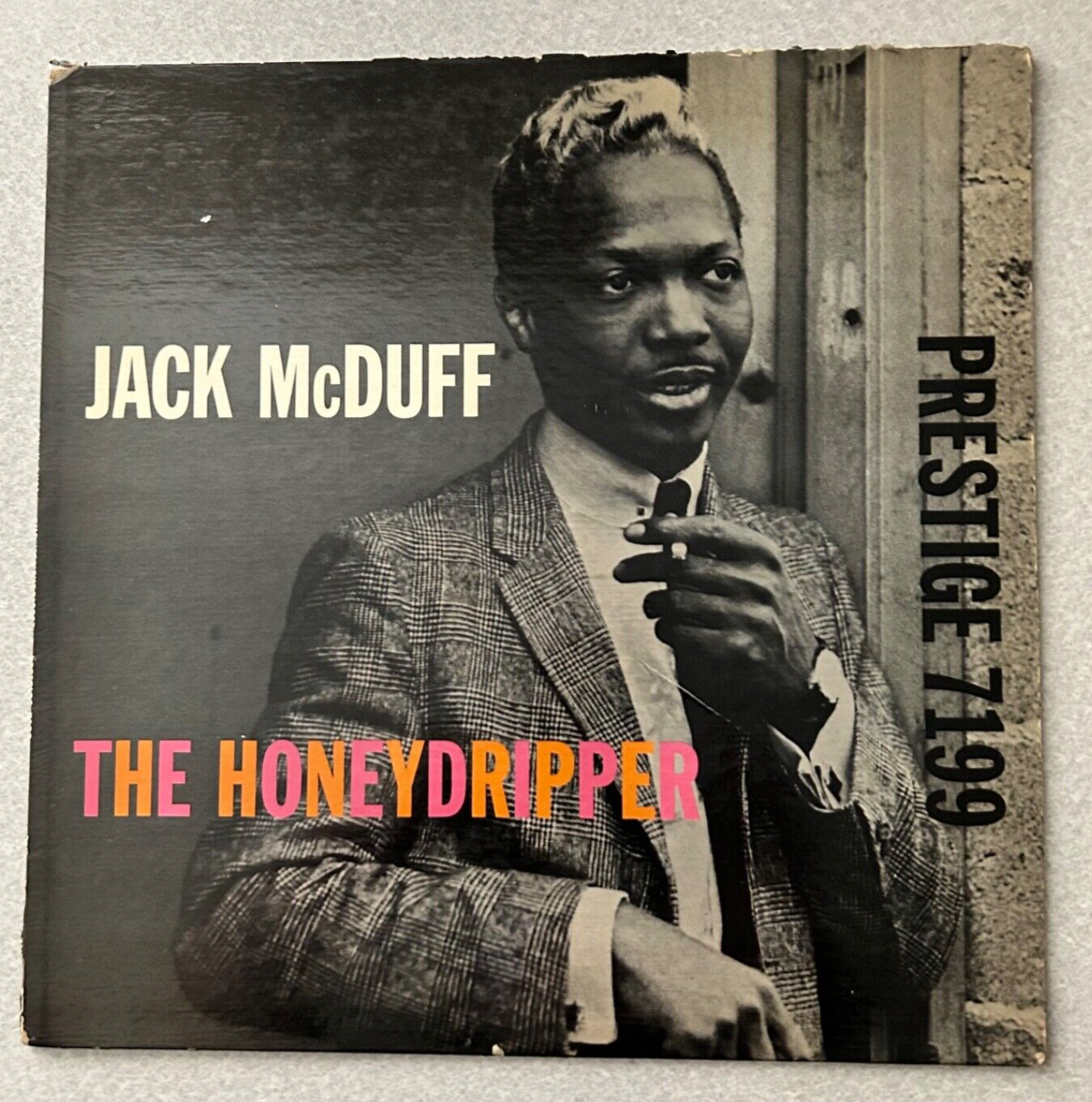
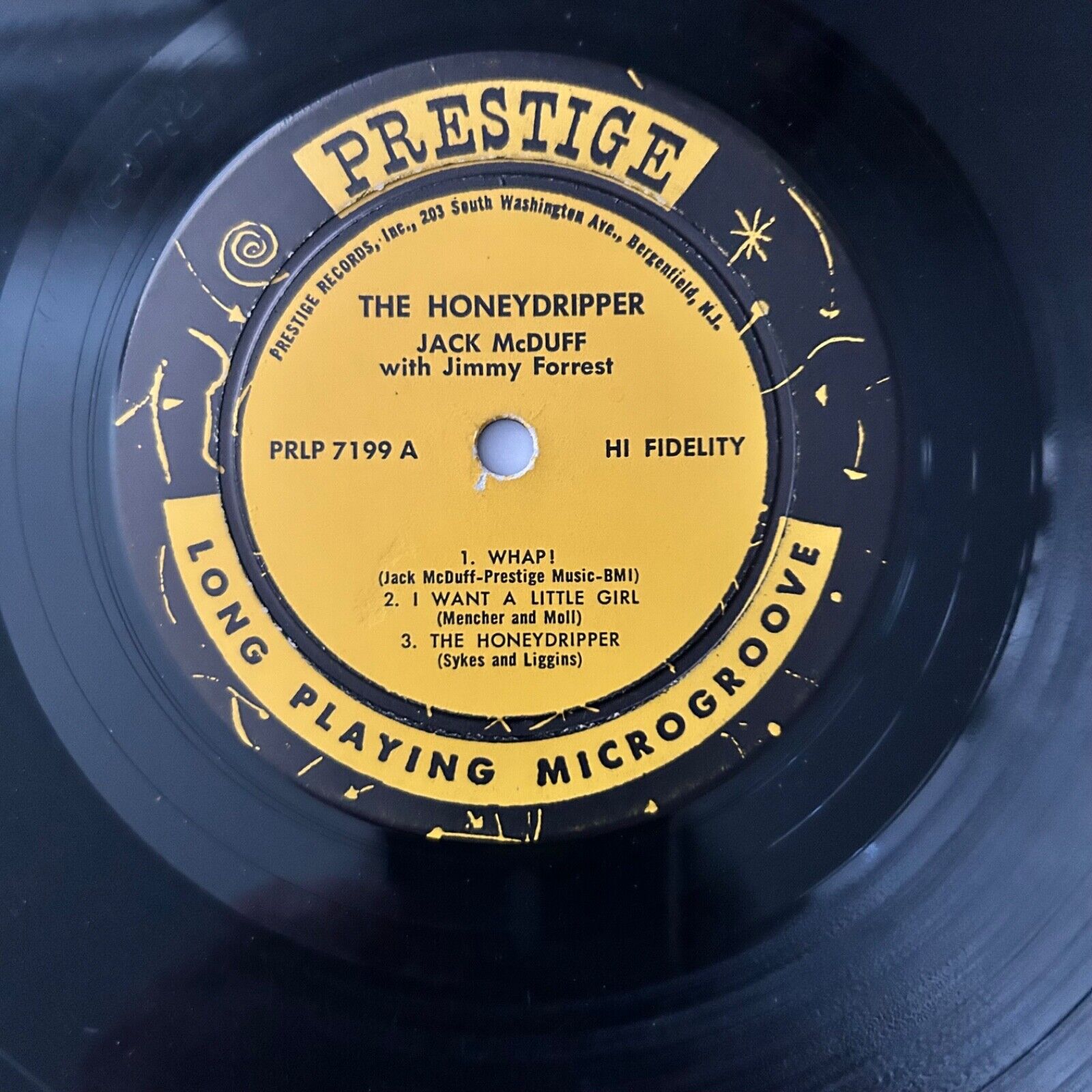
Jack McDuff The Honeydripper LP Grant Green Jimmy Forest Prestige 7199 RVG M 1st
$
26



Favourite Auctions
To save auctions to your favourites, please login
If you don't have an account, please register
Description
Jack McDuff The Honeydripper LP Grant Green Jimmy Forest Prestige 7199 Rudy Van Gelder Mono 1st Press Grant Green Kills it
The Honeydripper is the third album by American organist Jack McDuff, recorded in 1961 and released on the Prestige label. Guitarist Grant Green, who previously recorded with Sam Lazar, is part of the line-up, as well as saxophonist Jimmy Forrest & Rudy Van Gelder Recorded in Englewood Cliffs, NJ; February 3, 1961
Jack McDuff's hard swinging 1961 album The Honeydripper was overseen by Rudy Van Gelder himself, adding to the Concord/Prestige catalog the same treatment Van Gelder had done for Blue Note. The date featured the big tenor Jimmy Forrest, drummer Ben Dixon, and Grant Green on guitar in his recording debut. Green not only held his own with McDuff on the title track, "Dink's Blues," and "Blues and Tonic," but he plays gorgeous fills and chord voicings in Henry Mancini's "I Want a Little Girl." Green was always more than a sideman as this date attests, and though he was part of the rhythm section, his playing is a standout on this date. McDuff was already in full possession of his voice as an organist, and his hard bop leanings began to subside here as he embraced a more soulful approach, no doubt informed by the effect Jimmy Smith was having on jazz with his crossover. This is an excellent date and should be picked up by anyone interested in McDuff as a great place to start, or for any serious collector because of the gorgeous sound of the remaster itself
Eugene McDuffy (September 17, 1926 – January 23, 2001), known professionally as "Brother" Jack McDuff or "Captain" Jack McDuff, was an American jazz organist and organ trio bandleader who was most prominent during the hard bop and soul jazz era of the 1960s, often performing with an organ trio. He is also credited with giving guitarist George Benson his first break.
Grant Green (June 6, 1935 – January 31, 1979) was an American jazz guitarist and composer.Recording prolifically for Blue Note Records as both leader and sideman, Green performed in the hard bop, soul jazz, bebop, and Latin-tinged idioms throughout his career. Critic Michael Erlewine wrote, "A severely underrated player during his lifetime, Grant Green is one of the great unsung heroes of jazz guitar ... Green's playing is immediately recognizable – perhaps more than any other guitarist." Critic Dave Hunter described his sound as "lithe, loose, slightly bluesy and righteously groovy".
He often performed in an organ trio, a small group featuring a Hammond organ and drummer. Apart from fellow guitarist Charlie Christian, Green's primary influences were saxophonists, particularly Charlie Parker, and his approach was almost exclusively linear rather than chordal. He rarely played rhythm guitar except as a sideman on albums led by other musicians.
The simplicity and immediacy of Green's playing, which tended to avoid chromaticism, derived from his early work playing rhythm and blues and, although he achieved a synthesis of this style with bop, he was a skilled blues and funk guitarist and returned to this style in his later career.
James Robert Forrest Jr. (January 24, 1920 – August 26, 1980) was an American jazz musician who played tenor saxophone throughout his career.Forrest is known for his first solo recording of "Night Train". It reached No. 1 on the Billboard R&B chart in March 1952, and stayed at the top for seven weeks. "Hey Mrs. Jones" (No. 3 R&B) and "Bolo Blues" were his other hits. All were made for United Records, for which he recorded between 1951 and 1953; he recorded frequently as both a sideman and a bandleader
price rating