Jan & Dean Related Records & Two Picture Sleeves
$
194


Favourite Auctions
To save auctions to your favourites, please login
If you don't have an account, please register
Description
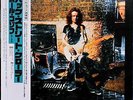
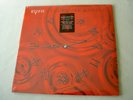
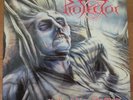
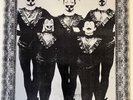
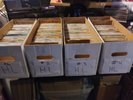
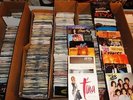
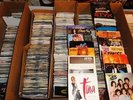
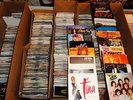
This set contains a couple of the harder to find Jan & Dean related releases.
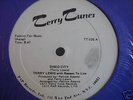
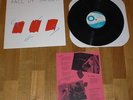
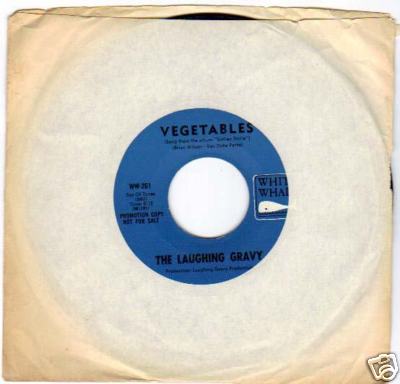
- Vegetables by The Laughing Gravy - Promo White Whale Label WW261- Near Mint
- Only a Baby b/w Love & Hate by Jan & Dean - Drill Hole Warner Bros 7151- VG+
- It's as Easy as 1,2,3 by Jill Gibson - White Label Promo Imperial 66068 - Near Mint
- Come Let Yourself Go by The Matadors - White Label Promo Colpix CP741 - VG+
- Little Queenie by Jan Berry - White Label Promo A&M 1957S - Near Mint
- Dead Man's Curve b/w New Girl by Jan & Dean - Picture Sleeve Only - VG
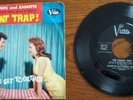
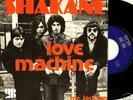
- Vegetables b/w Jenny Lee by Jan & Dean - Picture Sleeve & Record UA 50859 - VG+
All items conservatively visually graded.
For the protection of the buyer and seller I only ship priority amil with insurance and delivery confirmation. Total shipping usually runs around $6.90. Please view my other auctions and good luck!
Jill Gibson (born June 18, 1942, Los Angeles, California) is an American singer, songwriter and artist. She is mostly known for having once briefly been a member of the famous 1960s rock group The Mamas & the Papas.
Jill Gibson was studying at University High School in Los Angeles, California when she met Jan Berry of Jan & Dean fame in 1959. The two became an item for the next seven years. Together, Gibson and Berry wrote over a dozen songs and through Berry, Gibson began to get more involved with the music scene. Eventually she began composing songs with other known songwriters such as Don Altfeld, George Tipton and Roger Christian, a Los Angeles based radio disc jockey who also wrote with Brian Wilson of The Beach Boys.
In 1962 Jan Berry decided to create a female answer to Jan & Dean called Judy & Jill, featuring Jill Gibson with Dean Torrence's girlfriend Judy Lovejoy. Demo recordings such as "Come On Baby" (written by Gibson & Lovejoy), "Eleventh Minute" (written by Gibson & Altfeld), "Just For Tonight", and "Baby What's It Gonna Be" were cut and produced by Berry for Liberty Records. Gibson performed most of the leads on these unreleased demos. However, nothing really happened with the Judy & Jill recordings, and Gibson soon was providing background vocals on several Jan & Dean album cuts. During this same time Gibson was studying visual arts at the University of California at Los Angeles.
In 1963, Gibson appeared on the Jan & Dean track "Surf Route 101", and a year later she performed backing harmony on a song she wrote with Don and Horace Altfeld called "When It's Over" for a Jan & Dean album. She then recorded two vocal duets with Berry that she had written with Don Altfeld that year, "It's As Easy As 1,2,3" and "A Surfer's Dream". Both of these tracks appeared as album cuts on two different Jan & Dean albums, released in 1964.
Jill Gibson released her first solo recording in 1964, a single of a cover version of her own song "It's As Easy As 1,2,3" which was backed with "Jilly's Flip Side", written by P.F. Sloan and issued on Imperial Records. Both tracks were produced and arranged by Jan Berry. Gibson also sang backup on the Jan & Dean hit, "Ride The Wild Surf".
In July 1965, a hit song Jill had co-written with Berry and Roger Christian called, "You Really Know How To Hurt A Guy", peaked at #27 for Jan & Dean on the Billboard singles chart.
By the time Jill sang vocals on the last studio album recording of Jan & Dean's, recorded in early 1966 called Jan & Dean Meet Batman, Gibson and Berry's personal relationship was coming to an end. When the album was released in March 1966, the pair had already gone their separate ways but still remained friends. Shortly after the break up, Jan Berry was involved in a serious motor vehicle accident on April 12, 1966, which he survived. During Berry's long difficult road toward recovery, he was often visited by Jill Gibson while he was in the hospital. Afterwards Jill began dating Lou Adler, whom she had known since 1959 when he was the executive producer and manager of Jan Berry and Dean Torrence. Adler had recently separated from his wife actress and singer Shelley Fabares.
"Eleventh Minute" was briefly released in 1997 as the B-side of a 45rpm record on the Maltshop Records label. The licensed recording was soon withdrawn from sale (300 of the 500 red vinyl copies subsequently destroyed) due to questionable ownership of copyright and mechanical rights, as well as numerous label innacuracies - most notably the performing artists are identified on the label of Maltshop 2 as "Jody & Jill". To make matters even more confusing, the A-side recording "Come On Baby" is not the ballad demo offered to Liberty Records but an up-tempo surf rocker by an unknown male singer and band.
[edit] The Mamas & the Papas
It was through Adler that Gibson met the rock group The Mamas & the Papas, a highly successful band Adler produced in the late 1960s. Occasionally, Jill would visit Lou in the studio while he was producing his 'magic' with the band, who had just begun work on a new album. Gibson found herself in the right place at the right time when the leader of the group, John Phillips, fired his wife, Michelle Gilliam, from the band on Saturday, June 4, 1966, for having had an affair with Mamas & Papas member Denny Doherty. Within days, Jill had been asked to join The Mamas & the Papas as their newest member "Mama Jill". Shortly after joining the band, The Mamas & the Papas, along with Lou Adler, left for Europe for several weeks to begin working together.
Arriving in London, England, Jill, Cass, John, Denny, and Lou rented the top half of a large house in Berkeley Square to work in (the downstairs part was rented to Mick Jagger and model Chrissie Shrimpton). Over the next three weeks, Gibson rehearsed non stop with the group in London for the recording of the band's upcoming second album and for a few live shows. While in England, the band had a series of business meetings, but still made time to party with John Lennon, Paul McCartney, Keith Richards, Brian Jones, and Mick Jagger at Dolly's (the private London rock club that catered to the stars). Upon returning to the United States, the group, their manager Bobby Roberts, their attorney Abe Somer, and their label Dunhill Records officially fired Mama Michelle on Tuesday, June 28, 1966, and hired Mama Jill two weeks later.
Michelle had already recorded half of the second album with the group in April, 1966, including the singles "I Saw Her Again" and "Words of Love." In July and part of August 1966, Jill, Cass Elliot, Denny Doherty, John Phillips and Lou Adler worked on additional material for the band's second LP at Western Studios in Los Angeles, California with Bones Howe as the engineer. "I Saw Her Again" was released as the first single in early July and would peak at #5 on the Billboard singles chart on July 30, 1966, while Jill was a member of the band. Four tracks were re-recorded (they had been previously recorded with Michelle before she was fired) to include Jill's vocals. It was decided the album would be called Crashon Screamon All Fall Down and was scheduled for an August release. The American record buying public had already ordered more than half a million advance copies of this album before it came out, and it was said to have been the most eagerly awaited record of that year.
Prior to Michelle's firing, the band had been photographed for the cover of their second LP inside the window frame of an abandoned house in the desert. This was soon rectified by their label Dunhill Records who asked the original photographer Guy Webster, to photograph Jill alone in the exact same pose as Michelle had been in, and then to superimpose Jill's image over Michelle's. The record label was not satisfied with the finished product and therefore ordered an entire new album cover to be shot by Webster. Guy then shot a splendid new cover with Jill, John, Denny, and Cass outside in a field of grass against a white picket fence. (This image can be seen on the official website of Cass Elliot). The label was pleased with this new album cover and it was used as promotion for the upcoming new LP inside of the music trade papers, as well as on large billboards across the country.
A promotional campaign to introduce Jill Gibson as the newest Mama soon followed with articles in such publications as Newsweek magazine who did an article on the group called "Under the Lemon Trees", where they referred to Jill as "skeletal, modish, blonde and beautiful". Another article called "New Mama is definitely Jill" was published in Melody Maker followed by a cover story on Jill that was featured in KYA BEAT with the headline reading "Brand New Mama".
The Mamas & the Papas hit the road for a five-city concert tour in July beginning in Dallas, Texas (the Dallas show was supposed to be on June 18 but was postponed until July 1) and ending in San Francisco, California. Other dates included Forest Hills, New York; Denver, Colorado; and Phoenix, Arizona. Simon & Garfunkel opened for the band on some of these dates. Things according to Jill had gone smoothly as if the fans had accepted her. She was comfortable performing on stage with the group and enjoyed singing all of the songs in the band's forty-minute set. But according to John, the chemistry within the group was not there with Jill. He decided in late August 1966, it would be best that Jill be let go and that Michelle be reinstated, even though Phillips would admit that Gibson had sung well and had done a very good job.
[edit] Mama Jill exits
According to Gibson, fans did not scream out for Mama Michelle during every live concert she did with the group; it occurred only once, according to Gibson, at a show in Forest Hills, New York, when a male fan shouted out, "Where's Michelle?"[citation needed] But in the book "Go Where You Wanna Go" fan Sandy Grainger said an audible gasp erupted from the crowd when Gibson was introduced in Dallas, TX, with shouts of "Where's Michelle?".
Jill Gibson later said she felt both betrayed by John Phillips and relieved to be free of all the chaos that seemed to follow this supergroup.[citation needed] The band and their label Dunhill Records gave Jill an undisclosed lump sum for her two-month stint as Mama Jill. The album the group had recorded with Gibson was then pulled by the label to accommodate Michelle's return.[citation needed] No copies of the album featuring Jill were ever released to the public; the only copies circulating were promotional copies sent to radio stations across the United States. These promo copies are the Crashon Screamon All Fall Down cover with the white picket fence picture of the band, and are valuable collectibles today.[citation needed]
With Mama Michelle back in the mix, two extra tracks were cut for the second album. The LP was soon re-named simply as The Mamas & the Papas and it hit the stores in September 1966, with Michelle's image on the cover. Jill Gibson claims that her vocals are featured on the entire album except for two tracks that feature Michelle's voice, but Producer Lou Adler said in the book "Go Where You Wanna Go" that Michelle re-recorded Gibson's vocals. The LP got gold and peaked at No. 4 on the Billboard album charts without Jill receiving a gold copy herself. A second single, "Words of Love," was released from the LP and it too hit the Billboard top five chart in late 1966, pushing the album into platinum status.
After having been ejected from The Mamas & the Papas, Gibson wrote the songs "I've Got A Feeling For Love" and "How Can I Be Down" with producer Gary Zekley for the psychedelic band The Yellow Balloon; Gibson did background vocals for the band's one eponymous. She also co-produced with Don Altfeld a cover version of the Bo Diddley song "Who Do You Love" for the blues-rock group The Woolies. Around this same time Gibson returned to photography, which she had begun to take seriously back in 1965 when she met photojournalist Ralph Gibson (no relation). During this same period, Gibson studied with Edmund Teske, a photographer working with the technique of solarization.
In June 1967 Gibson attended the first ever Monterey International Pop Festival with Lou Adler, where she was an invited member of the press. Over this three-day period in sunny Monterey, California, which later became historical, she photographed nearly every act on the bill, and her photographs of celebrities such as Jimi Hendrix, Janis Joplin, Jefferson Airplane, the Mamas & Papas, and Brian Jones have been published around the world.[citation needed] Gibson can be seen twice in the film version of this festival, Monterey Pop, by D.A. Pennebaker.
WHITE WHALE WW261 - VEGETABLES / SNOW FLAKES ON LAUGHING GRAVY'S WHISKERS - LAUGHING GRAVY - 11/1967
This record was released as by the Laughing Gravy who were really Dean Torrence, Brian Wilson, and American Spring. Laughing Gravy was the name of Laurel & Hardy's dog in Hal Roach's two-reeler titled "The Chimp", released on 4/4/1931. This record was released with three different label designs and color shades.
A.) DJ copies only have dark blue label with no concentric circles on the label and released as by THE Laughing Gravy. Has "Vegetables" on both sides and has "LG + BW" in plastic which obviously stands for Laughing Gravy (Dean) and Brian Wilson.
B.) Regular copies - light blue label - no concentric circles and released as by Laughing Gravy. B-side is instrumental. No etchings.
C.) Regular copies - light blue label - with concentric circles and released as by THE Laughing Gravy. Word "whiskers" on B-side is misspelled as "wiskers. No etchings
price rating