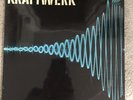
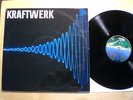
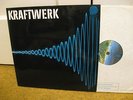
KRAFTWERK SELF TITLED UK IMPORT on VERTIGO SPACESHIP 2xLP RARE SUPERB
$
50


Favourite Auctions
To save auctions to your favourites, please login
If you don't have an account, please register
Description
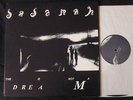
Here is a SUPERB NEAR MINT MINUS! copy of the DOUBLE! SELF TITLED LP from KRAFTWERK. It is an UK import pressing on the VERTIGO label, catalog #6641 077 in STEREO sound. This LP was originally released in 1971/72. The vinyls are in NEAR MINT! Condition, shiny, black and should have superb playback! The original thin cardboard GATEFOLD! cover is in NEAR MINT MINUS condition with some light creases, light edge and corner wear and some writing inside gatefold. It is a NEAR MINT MINUS! copy of this LP for you to own. It is an opportunity to purchase this LP in this excellent condition. It’s a true gem for the AVANT-GARDE / KRAUT ROCK collector!! Email me with any questions and be sure to look at the pic’s. I DO NOT ACCEPT BIDS FROM OR MAIL TO SOUTH AMERICA, SOUTH AFRICA, ITALY & OTHER COUNTRIES. IF YOU ARE NOT FROM THE USA CONTACT ME BEFORE BIDDING! International bidders can email me for shipping rates. Thanks for Looking & Good Luck!
Music Review from AllMusic.com by Ned Raggett
(Kraftwerk 1) What might have been simply seen as an agreeable enough debut album has since become something of a notorious legend because Kraftwerk, or more accurately the core Hütter/Schneider duo at the heart of the band, simply refuses to acknowledge its existence any more. What's clearly missing from Kraftwerk is the predominance of clipped keyboard melodies that later versions of the band would make their own. Instead, Kraftwerk is an exploratory art rock album with psych roots first and foremost, with Conny Plank's brilliant co-production and engineering skills as important as the band performances. Still, Hütter and Schneider play organ and "electric percussion" -- Hütter's work on the former can especially be appreciated with the extended opening drone moan of the all-over-the-place "Stratovarius," combined with Schneider's eerie violin work. But it's a different kind of combination and exploration, with the key pop sugar (and vocal work) of later years absent in favor of sudden jump cuts of musique concrète noise and circular jamming as prone to sprawl as it is to tight focus. Having never been given an authorized CD re-release, and long since out of print on vinyl, Kraftwerk only came to wider notice again in 1993 as part of the bootleg series that also resulted in the appearance of the early Neu! albums. The connection is important, given that Neu!'s Klaus Dinger is one of the two drummers; the roots of the motorik trance and tripped-out ambient wash of the later band can clearly be heard throughout. "Ruckzuck," with its repetitive flute mantra from Schneider and the initial groove suddenly turned into a stuttering, nervous freakout, is merely one demonstration, as is the steady rise-and-fall of feedback and flute at the end of "Megaherz." As a smart reference, there's an actual picture of a "kraftwerk" -- a power station -- in the gatefold art.
(Kraftwerk 2) Like its predecessor (similarly designed right down to the traffic cone cover, though green instead of red), Kraftwerk 2 has never been properly re-released, giving it the same lost-classic aura as the first album, or at least lost, period. Thankfully, bootleg reissues in 1993 restored it to wider public listening; even more so than Kraftwerk 1, its lack of official reappearance is a mystery, in that the band is clearly well on its way to the later Kraftwerk sound of fame. Stripped down to the Hütter/Schneider duo for this release, and again working with Conrad Plank as coproducer and engineer (this album alone demonstrates his ability to create performances combining technological precision and warmth), Kraftwerk here start exploring the possibilities of keyboards and electronic percussion in detail. Given that the band's drummers were gone, such a shift was already in the wind, but it's the enthusiastic grappling with drum machines and their possibilities that makes Kraftwerk 2 noteworthy. The nearly side-long effort "KlingKlang," which would later give the name to the band's studio and which predicts later lengthy efforts like "Autobahn," shows how the duo is still working toward its future styles. Steady beats are sometimes sped up and slowed down; more freeform performances on flute, violin, and keyboard remain present (rather than honing in on a core melody); and again, no vocals yet grace the recordings. On the second side, the more rock-oriented origins of the group still cling on, mostly without any percussion whatsoever: the distorted solo guitar start of "Strom," the guitar/bass duets of "Spule 4" (queasy) and "Wellenlänge" (quite beautiful and very indicative of many '90s space rock efforts). Ultimately as with Kraftwerk 1, Kraftwerk 2 isn't the "classic" sound of the band, but it's astonishingly worthy on its own, well worth seeking out.
price rating