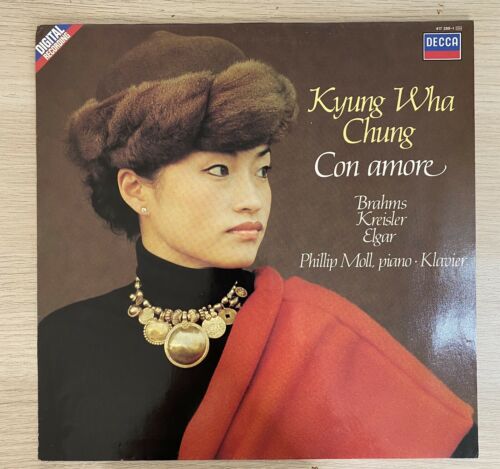
Kyung Wha Chung Con Amore Vinyl - 417 289-1
£
172
$
228

Favourite Auctions
To save auctions to your favourites, please login
If you don't have an account, please register
Description
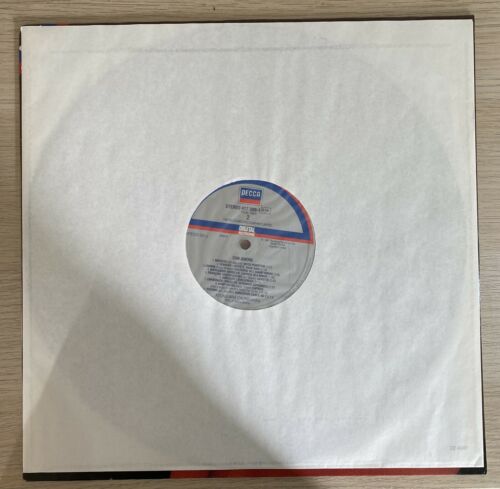
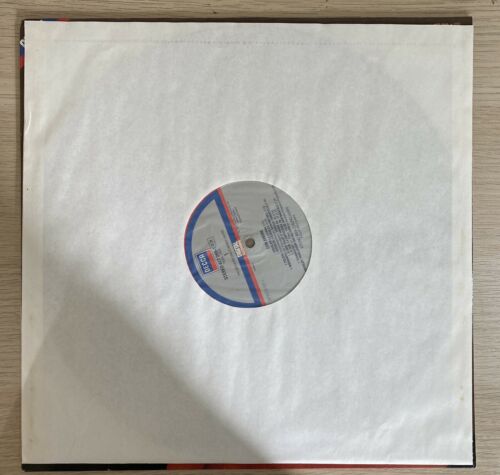
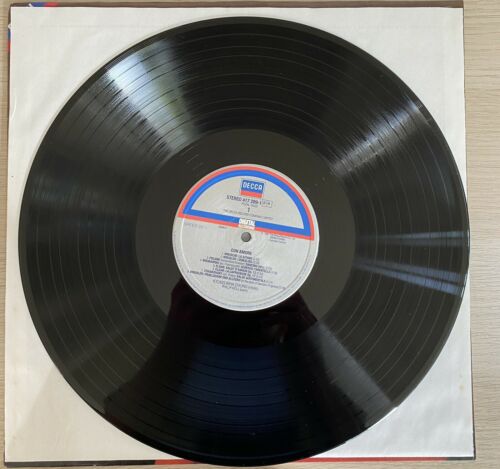
Kyung Wha Chung Con Amore Vinyl - 417 289-1.
Record, innver sleeve all appear to be in very good condition, although no formal grading is given.
Side 1: Fritz Kreisler (1875-1962) 1. La Gitana (2.55) 2. Liebesleid (3.28) Ede Poldini (1869-1957) /Fritz Kreisler 3. Dancing Doll (2.20) Henri Wieniawski (1835-1880) ed. Zino Francescatti 4. Scherzo-Tarantella, op.16 (4.36) Edward Elgar (1857-1934) 5. Salut d'amour, op.12 (2.54) 6. La Capricieuse, op.17 (4.23) Pyotr Ilyich Tchaikovsky (1840-1893) /Michael Press 7. Valse sentimentale, op.51 no.6 (2.24) Fritz Kreisler Praeludium und Allegro (in the style of Gaetano Pugnani) (5.39)
Side 2 Ottokar Novacek (1866-1900) ed. Josef Gingold 1. Moto perpetuo (2.57) Claude Debussy (1862-1918) / Jascha Heifetz 2. Beau soir (2.19) Frederic Chopin (1810-1849) /Nathan Milstein 3. Nocturne in C sharp minor (3.46) Henri Wieniawski/Fritz Kreisler 4. Caprice in A minor (1.36) Francois-Joseph Gossec (1734-1829) / Fritz Meyer 5. Gavotte (2.43) Fritz Kreisler 6. Liebesfreud (3.11) Cecile Chaminade (1857-1944) /Fritz Keisler 7. Serenade espagnole (2.30) Camille Saint-Saens (1835-1921) /Eugene Ysaye 8. Caprice (after Etude en forme de valse, op.52 no.6 (8.16) Johannes Brahms (1833-1897) / Joseph Joachim 9. Hungarian Dance No.1 (3.13)
Kyung Wha Chung's first musical memory is of standing before a microphone in the radio station in Seoul, South Korea, and being asked to sing. At 3 she was far too young to know what was happening, but she realised it was important, and obediently she sang one or two of the many songs she already knew. Her mother says that Kyung Wha has never been so nervous in her life - but this was the first public performance by a master musician.
At that time Kyung Wha had never heard any classical music, but it was only a little later, when she started piano lesson, that such music entered her life. At first she found it boring as she did not enjoy the piano, finding difficulty in co-ordinating the hands. But when, at 7, she was given a violin to play, things changed completely. The love affair was instant. As she explains, she never felt any awkwardness with something you hold so close to the body.
Her progress was phenomenal, far quicker than that of her elder brother and sister, who were also learning the violin. Her sister, Myung Wha Chung, quickly gave it up, but she in turn had her love affair when she started to learn the cello. Nowadays Kyung Wha, Myung Wha, and their pianist/conductor brother Myung Whun, play together regularly, and are currently making a series of recordings for DECCA.
When Kyung Wha was 9, the Chung children gave their first family concert in Seoul, playing chamber music in a variety of groupings. Around the same time she herself started to play concertos, winning many prizes. Though she was a lively child within the family, she was painfully shy - or so she claims - when meeting strangers. Indeed, it as partly to give the children confidence that her parents had been so keen on the whole family performing on stage. So successful was her parents' policy that not only did her violin playing develop spectacularly, but she also felt that the platform was where she really belonged, always feeling totally at home there, able to communicate with the world in a way she never could (at least as a child) elsewhere.
From Korea, at the age of 12, she went to study in New York with the great teacher, Ivan Galamian, and at just 19 she won the Leventritt Award (the top American violin prize), sharing it with her fellow Galamian pupil, Pinchas Zuckerman.
She quickly became one of the most characterful and best-loved violinists in the world. The total involvement she conveys comes not just from the actual notes but from her physical stance, revealing her love of the music and of the violin in every movement of muscle. Yet today, even when faced with her most spectacular recording of showpiece concertos, she will deny that she is a virtuoso. What she means is that technique is merely incidental to her communication through music. This dislike of showing-off for its own sake accounts for her reluctance to concentrate on 'firework' pieces in this selection, preferring instead pieces she loves for other reasons.
Ivan Galamian tried to dissuade Kyung Wha from thinking of marriage, remembering so many brilliant women violinists whose careers were thus diverted or frustrated. As it happened, Kyung Wha was well into her thirties before she married, and she and her British businessman husband decided at once to start a family. This did indeed prevent her from playing on the international circuit for longer than she expected, but now she realises what a bonus it has been, not just for her personal life but in deepening her music-making. She mentions one important change in her day-to-day life: where before she would never allow anyone to touch her precious violin, let alone carry it, it is now her precious son, Frederick, whome she carries, and the nanny who has charge of the violin. Edward Greenfield
price rating


![Deerhoof - Mountain Moves [New Vinyl LP]](https://www.popsike.org/php/thumbnail.php?url=https://www.popsike.pics/pix/20170907/372068849542.jpg)