Manfred Mann My Little Red Book of Winners 1965 Original 1st press Mono VG++ M-
$
63


Favourite Auctions
To save auctions to your favourites, please login
If you don't have an account, please register
Description
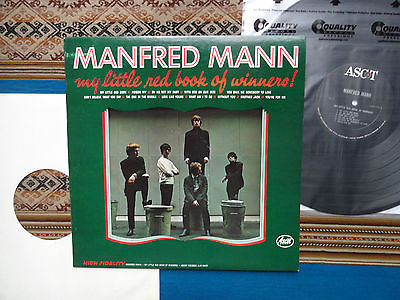
Manfred Mann ~ My Little Red Book of Winners!
1965 Original 1st pressing.
Ascot Records - AM 13021 Mono
Vinyl is and looks VG++ to Mint-.: faint and minor inner-sleeve-type inaudible marks. Vinyl plays VG++ to Mint-, mostly Mint-: very minor, faint background-wear and faintly audible minor ticks and clicks might be heard between tracks and during a few, quiet passages.
Matrix side 1: ALM-13021A-1A
Matrix side 2: ALM-13021B-1A
Cover is VG+ to VG++: marker on back upper-right, minor cover-wear, small, minor corner-bends and wear, edge-wear.
Labels are VG++: faint and minor marks.
The original paper inner-sleeve has intact seams.
Out of print
An R&B band that only played pop to get on the charts, Manfred Mann ranked among the most adept British Invasion acts in both styles. The fact that their range encompassed jazz as well as rhythm & blues, coupled with some elements of their appearance and presentation -- co-founder/keyboardist Manfred Mann's bearded, bespectacled presence -- also made the Manfreds more of a thinking person's band than a cute, cuddly, outfit like the Beatles, or sexual provocateurs in the manner of the Rolling Stones. Yet, their approach to R&B was as valid as that of the Stones, equally compelling and often more sophisticated. They charted an impressive number of singles from 1964 through 1969, and developed a large, loyal international fandom that lingers to this day.
South African-born keyboardist Manfred Mann, born Manfred Lubowitz in Johannesburg in 1940, was originally an aspiring jazz player. He performed at dances and local coffee bars in Johannesburg as a teenager, and studied classical music at Witwatersrand University, also playing with Hugh Masekela in a local band. His influences included John Coltrane, Miles Davis, Cannonball Adderley, Ornette Coleman, Bill Evans, and Dave Brubeck. He felt that his musical growth would be stymied by further work in South Africa, however, and decided to move to England in 1961, making his living as a jazz pianist and teacher, and writing articles under the name Manfred Manne, the surname derived from drummer Shelly Manne -- he later dropped the "e" and used "Manfred Mann" as his performing name.
Mann's preference for jazz quickly ran headlong into the growing public taste for rhythm and blues that began sweeping through younger audiences in England during the early '60s. In the course of his playing at the Butlins resort in Clacton during 1962, Mann met percussionist Mike Hugg, and the two soon began playing together in a band that included Graham Bond. Hugg and Mann eventually formed their own band, the Mann Hugg Blues Brothers, which grew into a septet, including two saxmen and a trumpet player. They were successful on the London club scene, playing venues such as the Marquee and other top music spots. The band's membership also grew to include guitarist, flautist, and saxmanMike Vickers
.-allmusic
PACKAGED FOR SAFE SHIPPING - USPS TRACKING NUMBER
Thank you and have the best day ever
price rating