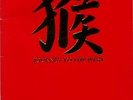
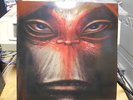
Monkey: Journey To The West: 'Deluxe' Box Set double LP With Booklet And Poster
£
25
$
33


Favourite Auctions
To save auctions to your favourites, please login
If you don't have an account, please register
Description
Journey to the West is the soundtrack to the stage musical Monkey: Journey to the West and is composed by English musician Damon Albarn (of Blur and Gorillaz fame) with the UK Chinese Ensemble, the soundtrack itself is only based upon, but not a direct recording of the musical. The album was released as a download, CD, and double vinyl LP in the United Kingdom on 18 August 2008 by XL Recordings. In the United States, the album was released a day later as a download, while a CD was released on 23 September 2008.
This 'deluxe' box set, with poster and programme has remained Unplayed and boxed not only in its decorative box but has remained in its plastic covering and its original packaging.
Pictures will display content and following is item description;
Damon Albarn made a point in an interview with Gorillaz-Unofficial that the Monkey project was supposed to be "Gorillaz, really. But we can’t call it that for legal reasons".Speaking of his decision to compose music for an opera, Albarn noted that, "This is composition, not songwriting, of course, I was apprehensive at first. But people who come from my normal discipline don't tend to go far enough. We want to bring more flavour to people's lives. And demystify opera to a degree, destroy its elitist angle. Then for people who do like opera, open them up to new forms of music, too. We want to bring a big cornerstone of Chinese culture and present it to the West. If we can do that, then we've succeeded."
Chen Shi-Zheng, the man responsible for creating and conceiving the stage adaptation of Monkey: Journey to the West, explained that he "was looking for someone young and smart to work with. I didn't want to give Damon or Jamie too specific a brief because what was important in this project was that it was their sensibility we wanted. What Damon and I did agree on straightaway was that we didn't want pastiche Chinese music and on the last trip we made he found something he could latch on to."
Chen took Albarn and Hewlett to China up to five times, Hewlett claimed that "we spent three years working on the opera, we totally immersed ourselves in Chinese culture." 18 months after starting work on the project, Albarn produced his first piece called "Heavenly Peach Banquet" which was a take on the style of music performed by female C-pop acts. Talking about the piece, Chen said that "I find it very humorous, Hong Kong pop is so pretty and naïve. This is Damon pretending to be naïve and you are laughing at him. Messy is a bad word, but he took a melody, messed it around and put noises into it, twisted and processed the sound so that none of it is as it seems."
Before writing any music, Albarn first chose to visit China several times, mainly to seek advice from musicians, "As a Western musician, I knew I'd have to find a way of dabbling in the Chinese idiom without it coming out sounding like Chopsticks. I met a lot of musicians and I also tried to capture any sound that was interesting, from traffic to elevators. There were many days when I got up at half four in the morning just to record the sound of an elevator. You put it all together and somehow something comes out."
In order to compose the music, Albarn made a habit of strictly using the Chinese pentatonic scale with the aid of a system he used consisting of five- and seven-pointed stars which he stuck to his soundboard and that he would rotate (supposedly at random) to produce unexpected combinations of notes. The decision to use this method came about after Albarn had been analysing the five-point communist star, "I was reading about Chinese music and I discovered a strong cosmic and numerical relationship to it. It's very old music, some of it dating back 2,000 years. The number five is very, very important. I was really motoring when I understood that. I visualised this star on the stage and it beginning to rotate and I started getting excited about that and 'how can I make that star rotate musically?'"
Talking about the sound that he was aiming for, Albarn stated that, "it's very much a modern piece, it's not trying to evoke the time of legend at all. It's very much in sort of downtown Beijing, Shanghai or Tokyo. It's very much the modern Asia: slightly kooky, very colourful, quite sexy, but still a quite sinister place."
Albarn's orchestra included Chinese instruments such as the pipa (sometimes called the Chinese lute) and the Ondes Martenot, which is an early electronic musical instrument invented in 1928. In addition to the large variety of instruments used, Albarn, with the help of his collaborators, managed to invent his own instrument which he named the "klaxophone", which features car-horns attached to a musical keyboard, and was purpose-built for the production by artist Gavin Turk with the intention to reproduce the sounds of China's roads.
Backing up his decision to release the production's musical score, Albarn explained that "I wanted to put the album out so that there is a record, literally, of how I think of it in my head, but the music should stand alone because none of it was composed as an accompaniment to action. I wasn't going to start making music that drives the narrative, because that's just naff; it becomes like film music or cartoon music. 'Now they're running.' You can't really work like that. I just wrote an awful lot of music and slowly kind of put it together."
The album features a track which shares its name with the national anthem of the People's Republic of China, March of the Volunteers, the piece is in fact an alternative, upbeat version of the anthem. The Japanese edition of the album features two bonus tracks, one of which is titled "Journey to Beijing" which was used by the BBC alongside Hewlett's animation as a promotional link for its Olympics coverage.
Two special editions box sets of the album were released. The "Deluxe" box set contains a 68-page booklet as well as a poster. It was originally limited to 2500 copies but has been repressed since then. The "Art" box set contains six exclusive tracks ("5 Point Star", "Living Sea Introduction", "The Dragon Queen", "Buddha's Palm", "Monk's Funeral" and "Volcano"). It was priced at £255 and was limited to 2000 copies. It also features an 80-page hardback book and four art prints (one of which was signed by Jamie Hewlett). Additionally the first 500 orders also received a special Monkey Om Box which plays pieces of music composed by Damon Albarn.
price rating


![Massive Attack - Mezzanine [Vinyl New]](https://www.popsike.org/php/thumbnail.php?url=https://www.popsike.pics/pix/20160413/361533972219.jpg)