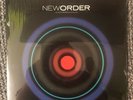
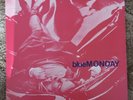
New Order Blue Monday Rare 1983 Factory Records Original 12" Vinyl Single
$
100



Favourite Auctions
To save auctions to your favourites, please login
If you don't have an account, please register
Description
Welcome to Classic Cadillac Records! I visually grade all my records as accurately as possible and will never grade anything above Near Mint unless it's still sealed. Please note that a visual grade can differ from a play grade, and am happy to spot check a record upon request. All orders are shipped within 1 business day (usually sooner) and packed with extra care to ensure fast, safe arrival. Please look closely at all pictures, read all relevant details and ask any questions you may have before buying. I offer a full 30-day return policy on everything I sell, so buy with confidence! 20% restocking fee charged on items returned for reasons other than it not working properly. Thanks for looking!
"Blue Monday" Original die-cut sleeve Single by New Order from the album Power, Corruption & Lies B-side
- "The Beach" (12-inch version)
- "Thieves Like Us" (7-inch version)
- Euro disco
- synth-pop
- alternative dance
- hi-NRG
4:09 (7-inch version) Label Factory (12-inch version)
Tonpress (7-inch version) Songwriter(s)
- Gillian Gilbert
- Peter Hook
- Stephen Morris
- Bernard Sumner
(1982) "Blue Monday"
(1983) "Confusion"
(1983)
"Blue Monday" is a song by the British rock band New Order. It was released as a 12-inch single on 7 March 1983 through Factory Records. It appears on certain cassette and CD versions of New Order's second studio album, Power, Corruption & Lies (1983). The track was written and produced by Gillian Gilbert, Peter Hook, Stephen Morris and Bernard Sumner.
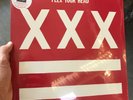
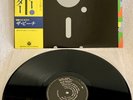
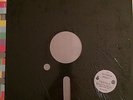
"Blue Monday" is a synth-pop and alternative dance song that drew inspirations from many works of other artists. The 12-inch single was backed with a primarily instrumental version of the song entitled "The Beach" on the B-side. The single's unique packaging was designed by Peter Saville and Brett Wickens. It features a die-cut sleeve designed to resemble a 5+1⁄4-inch floppy disk. The cover features no words, but instead has code in the form of coloured blocks that contains the artist, song and label information.
The original single made the top 10 in many countries. It reached number nine on the UK Singles Chart and spent 38 weeks in the top 75. It spent 186 weeks on the UK Independent Singles Chart, effectively selling for four years until the release of the Substance 1987 compilation on which it featured. The UK Indie Chart run was second only to "Love Will Tear Us Apart" by Joy Division, which clocked 195 weeks (their runs overlapped). In New Zealand, it peaked at number 2 and spent 74 weeks (spread across three calendar years) in the top 50. The 1988 remix reached number 3 on the British chart and number 4 on the Australian chart, and it topped the dance chart in the United States.
"Blue Monday" is the best-selling 12-inch single of all time. In the United Kingdom, it has sold 1.16 million copies in all formats, including the 1988 and 1995 re-releases. Sales of the original 1983 12-inch release account for the bulk of the total, at over 700,000 copies. It was remixed by the band twice, in 1988 and 1995. The 1988 remix reached number 1 in New Zealand and the top 10 in other countries. The song has been covered by bands including Orgy, Flunk, 808 State, the Enemy and Health. In 2021, Rolling Stone included it at number 235 on its list of the "500 Greatest Songs of All Time".
Background and writing
New Order was formed in 1980 by the former members of Joy Division, which split after the death of their singer, Ian Curtis. They later recruited Gillian Gilbert as keyboardist and second guitarist, and began to explore new musical technology such as synthesisers.
An Oberheim DMX drum machine was used to create the rhythm and synchronise the sequences.New Order wrote "Blue Monday" in their rehearsal room in Cheetham Hill, Manchester. The synth bassline was performed on a Moog Source and sequenced on a sequencer built by the singer, Bernard Sumner. A Oberheim DMX drum machine was used for rhythm. The kick drum was recorded playing through a studio monitor to capture the room's natural reverb. New Order bought an early sampler, the Emulator 1, and sampled choir sounds from Kraftwerk's "Uranium". Sumner and the drummer, Stephen Morris, learnt how to use the sampler by spending hours recording their flatulence.
New Order worked before the advent of MIDI, and so enlisted the engineer Martin Usher to design a circuit to synchronise the synthesisers and drum machine. Usher introduced them to the DMX drum machine, which had outputs that could be sent to the other instruments. The sequence was programmed using binary code. Gilbert wrote the sequence out by hand on a long roll of paper, and accidentally added an extra rest, throwing the sequence slightly out of time; the band liked the effect and kept it in the song. New Order also reused some elements from their 1982 composition "Video 5 8 6".
The bassist, Peter Hook, cited Kraftwerk, Giorgio Moroder and Sparks as influences, and said the song was "stolen" from the Donna Summer song "Our Love". Sumner said parts were taken from "Dirty Talk" by Klein + MBO and "You Make Me Feel (Mighty Real)" by Sylvester. Gilbert said Hook's bassline came from a film soundtrack by Ennio Morricone, a theme from For a Few Dollars More (1965).
Composition
"Blue Monday" has been labelled a "synth-pop classic" and described as cementing the group's movement from post-punk to alternative dance. It has been noted as an example of the hi-NRG style of club music, and the 2004 edition of The Rolling Stone Album Guide called it "the ultimate in flawlessly programmed, LSD-driven, push-button dance-pop".
The song begins with a semiquaver kick drum, followed by a sequenced melody. The verse features a throbbing synth bassline, bass guitar and deadpan lyrics.
"Blue Monday" does not feature a standard verse-chorus structure. After a lengthy introduction, the first and second verses are contiguous and are separated from the third verse only by a brief series of sound effects. A short breakdown follows the third verse, which leads to an extended outro.
"Blue Monday" was described by the BBC Radio 2 "Sold on Song" feature as "a crucial link between Seventies disco and the dance/house boom that took off at the end of the Eighties." Synth-pop had been a major force in British popular music for several years, but "Blue Monday", with encouragement by the band's manager Rob Gretton, was a dance record that also exhibited influences from the New York club scene.
Packaging
The 1983 edition artwork is designed to resemble a 5+1⁄4 inch floppy disk. The sleeve does not display either the group name or song title in plain English anywhere; the only text on the sleeve is "FAC SEVENTY THREE" on the spine. Instead the legend "FAC 73 BLUE MONDAY AND THE BEACH NEW ORDER" is represented in code by a series of coloured blocks. The key enabling this to be deciphered was printed on the back sleeve of the album, Power, Corruption & Lies. "Blue Monday" and Power, Corruption & Lies are two of four Factory releases from this time period to employ the colour code, the others being "Confusion" by New Order and From the Hip by Section 25.
The single's original sleeve, created by Factory designer Peter Saville and Brett Wickens, was die-cut with a silver inner sleeve. It cost so much to produce that Factory Records actually lost money on each copy sold. Matthew Robertson's Factory Records: The Complete Graphic Album notes that "[d]ue to the use of die-cutting and specified colours, the production cost of this sleeve was so high that the single sold at a loss." Tony Wilson noted that it lost 5p per sleeve "due to our strange accounting system"; Saville noted that nobody expected "Blue Monday" to be a commercially successful record at all, so nobody expected the cost to be an issue." In Shadowplayers: The Rise and Fall of Factory Records, Saville states "I am so bored with this story. We didn't even know how many of these expensive covers were ever made anyway."
Robertson also noted that "later reissues had subtle changes to limit the cost" (the diecut areas being replaced with printed silver ink). Saville commented in 2013 that the printers "banged out a cheaper version. I don't know how many thousands were sold [the original] way, or whether Factory were charged the full price for something they didn't get, which would be very Factory." Peter Saville Associates charged Factory £538.20 for the sleeve design. The artwork was so late that Saville sent it straight to the printer, unreviewed by either the band or the label. The 1988 and 1995 versions were packaged in conventional sleeves.
Music videos
A music video for a shortened version of the original was created in 1983, featuring military clips with false colour, simple computer-generated graphics such as colour blocks and geometric lines, digitised video of band members at very low resolution and framerate, a brief amount of footage taken from Close Encounters of the Third Kind, and a short appearance of the video game Zaxxon. The colour blocks were created using Peter Saville's colour-coded alphabet.
The music video for "Blue Monday '88" appears on the Substance video collection (released as a companion to the album of the same name). The video features sketches by photographer William Wegman and his Weimaraner dog named Fay Ray doing balancing acts intercut with hand-drawn animation by Robert Breer. The band members are shown standing around doing various tasks, such as walking a wooden plank over a floor that is painted blue, holding wire-mesh constructed art and milk crates over their faces, being hit by tennis balls, and standing still while they flip through various flip books (tying into the hand-drawn animation sequences).
In September 2012, New Order headlined a festival at Portmeirion in North Wales and festival organisers recruited the support of the local Brythoniaid Male Voice Choir to produce a cover version and accompanying video
Legacy
In 2022, "Blue Monday" was included in the list "The story of NME in 70 (mostly) seminal songs", at number 21. Mark Beaumont wrote that with this song, "Britain's formative alternative dance culture found its way" in the mainstream and "stayed there until the acid house explosion obliterated clubland". In 2021, Rolling Stone included it at number 235 on its list of the "500 Greatest Songs of All Time". It has been covered by bands including Orgy, Flunk, 808 State, the Enemy and Health.
Releases
"Blue Monday" has been a hit several times in the UK. In 1983, it charted twice, initially reaching number 12, then re-entering the chart later in the year and climbing to number 9, helped by the fact that neither side of the single (the B-side "The Beach" was an instrumental re-working of "Blue Monday", whose lyrics include the line "I thought I told you to leave me when I walked down to the beach") was featured on the UK version of the group's subsequent album, Power, Corruption & Lies. Despite selling well it was not eligible for an official gold disc because Factory Records was not a member of the British Phonographic Industry association. According to the Official Charts Company, its total sales stand at 1.16 million in the United Kingdom alone, and "Blue Monday" came 69th in the all-time UK best-selling singles chart published in November 2012. As of March 2023 total consumed units across all formats have reached 2 million units sold in United Kingdom.
New Order appeared on the BBC's Top of the Pops, on 31 March 1983, to promote the song. New Order insisted on performing "Blue Monday" live. The performance was dogged by technical problems, and was unrepresentative of the recording. In the words of Morris, "Blue Monday was never the easiest song to perform, anyway, and everything went wrong. The synthesisers went awry. It sounded awful."
Track listing
All tracks written by Gillian Gilbert, Peter Hook, Stephen Morris and Bernard Sumner.
Blue Monday
No. Title Length 1. "Blue Monday" 7:29 2. "The Beach" 7:19price rating