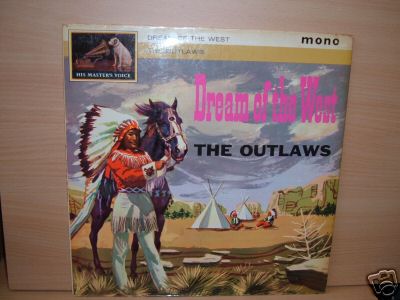
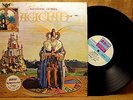
THE OUTLAWS
DREAM OF THE WEST
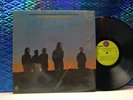
THE 1961 LP ON HMV CLP 1489
LAMINATED FLIPBACK ERNEST J DAY SLEEVE
MAUVE LABEL
ORIGINAL HMV INNER SLEEVE
This is an INCREDIBLY rare 1961 MONO pressing!!! IT IS VIRTUALLY IMPOSSIBLE HARD TO FIND ORIGINAL PRESSINGS OF THIS LP!!!! MEGA THICK VINYL!!!!!
Joe Meek was Britain's first independent record producer, and one of the first in the world to receive recognition as such. Before Joe struck out on his own against the ridiculous constraints of the British recording industry of the time, there were hardly any true independent record producers, with their own studios, writers, artists signed directly to themselves, publicity control and so on. Even Phil Spector hired space and time in major recording studios and employed freelance session musicians; Norman Petty was possibly the only comparable producer with any kind of fame. Previously, there were a few scattered indies in the US, such as Benny Bell in the 1940's, but nobody who really made much of a mark on the history of the music business. Joe Meek was born Robert Joe Meek in Newent, Gloucestershire, England on April 5th 1929. A quiet, creative child, he already knew by the time he was eight or nine that he wanted to do something with sound and electronics. Despite a serious childhood accident, in which Joe almost destroyed his hands while innocently playing with some dangerous chemicals discarded after wartime operations - they exploded, leaving him with third degree chemical burns - he experimented continually with anything he could find laying around. Before he was ten, he had discovered that yelling close to the pick up of a gramophone during the run off grooves produced a faintly audible recording there, and around the same time he constructed a short wave radio out of junked parts. He made his first recording in his early teens - an acetate of brother Eric's girlfriend singing a currently popular dance tune. By the time he was 14, he had built a television set from scratch; the only problem was that the stations weren't broadcasting as far West as Newent, but at least they were ready for it when it did! After doing his National Service as a radar technician, Joe moved to London in the mid-1950's. At first he took odd jobs at TV repair shops, but very shortly found his way to being a junior engineer for studios such as IBC and a travelling chief technician on location with popular entertainment shows such as "People Are Funny". In 1956 IBC big shot Denis Preston offered him the opportunity to work at a new studio at Lansdowne House in Holland Park. Joe made many recordings there with British jazz legends such as Chris Barber, Acker Bilk and Humphrey Lyttleton, and even designed the mixing desk in the control room. Despite his junior status, Joe had far more influence than might be expected, and in fact did a lot of what is better described as production on records he was only credited as engineer for. His inventiveness and brilliance notwithstanding, he was constrained by the industry set up - controls were to be pre-set and not touched, engineers were to wear white coats - except on Saturdays, when they might wear a sports jacket if they preferred - and was making a few enemies of other engineers and producers, who were reduced to sitting around idle while the performers and musicians requested Joe for their sessions. By the late 1950's, Joe had already accumulated a great deal of recording equipment of his own and, in his tiny three room ground floor apartment not far from Lansdowne, was providing rehearsal space for well known artists, recording songs of his own and working with other then-unknown artists who he would meet at local concerts or even busking along the Underground railway system. He would give anyone an opportunity that he felt showed some promise; and said promise might not even be great musical talent. Joe had an uncanny knack of spotting "image" a mile off and later on was to turn a few incredible tricks with young singers who had little more than a great appearance to commend them. In 1959 he embarked on his most ambitious project to date, a concept recording of how he thought life on the moon might be, the images being conjured up with sound instead of pictures. Limited only by his equipment, he nevertheless created what is probably the first full stereo concept album, and while some of the sounds are no doubt not what he heard in his mind, a few of the tracks do impart some quite startling visual images. With young trad jazzers Chris & The Students Around the turn of the decade, he began work on what was to become his home and studio until his death in 1967. He rented a three-floor apartment above a small leather goods shop in North London's Holloway Road, and drafted in carpenter friend and singer Dave Adams (half of the boy-girl duo Joy & Dave) as construction manager. Within a few months, 304 Holloway Road, London N7 was the home of RGM Sound Ltd. For the first six months of the company's existence, Joe had his own record company, Triumph records, in partnership with one Major Banks of Saga Records, but the difficulties of making Banks release what Joe considered adequate money for equipment or publicity proved too much. Their first major hit, "Angela Jones" by Michael Cox, stalled at the starting gate because the pressing company couldn't manufacture enough records to keep up with demand on the budget they had, and by July 1960, he had ditched Triumph to become Britain's first true independent producer, at the ripe old age of 31. In a huge flash of foresight, and to Major Bank's abject horror when he found out, Joe had signed all Triumph's new artists to a private contract with himself, instead of to Triumph, and not only did Triumph/Saga lose the country's most in-demand young techie, it lost all its decent pop artists at the same time. With John Leyton and "Johnny Remember me" whizzkid arranger Charles Blackwell. Geoff Goddard is presumably off somewhere writing more hit records. In 1961, Joe hit No. 1 all over Europe for the first time with a song called "Johnny Remember Me", composed by a promising young writer named Geoff Goddard, a classically trained pianist whom Joe had originally intended to market as a performer. The song was an echo-drenched tragedy featuring a young lover lamenting his dead love, and was sung by John Leyton, a pretty young actor who really had no intention of becoming a singer. His acting manager, Robert Stigwood, had approached Joe when one of Leyton's TV roles required him to play the part of a singer. Stigwood presumably knew of Meek's reputation for turning out high-quality material very quickly, and as they had something like a week to write and record a completely new and original song, Meek and Goddard got the job. "Johnny Remember Me" was featured three times during the course of the TV show and record shops were instantly deluged with orders for a record that hadn't even existed a week previously. This time, they selected a pressing plant, which could keep up with demand, and Joe - and John Leyton - had an unexpected monster on their hands. "Johnny Remember Me" sounded like nothing that had come before, and even today stands up as an exceptional record - there really hasn't been anything like it since. Although Joe never managed to repeat the trick with John Leyton, Leyton nonetheless had a couple more hits and several chart records before departing for Hollywood to become a respectably well known lead and character actor. Meek’s next extended streak of instrumental writing was done for The Outlaws, whose nine singles contain at least a dozen pieces he either wrote or co-wrote. Their LP, “A Dream Of The West,” is completely composed by Meek (in his not-so-secret “Robert Duke” identity). Songwriting credits on Outlaws’ recordings have been disputed by various band members. Certain songs are unmistakably Meek’s work; others could well be group jams that Meek usurped. “Spring Is Near” is a fine example of Meek’s melodic approach. It opens with a cliched four-bar strain that automatically says “‘50s rock-ballad.” The resultant melody, though simple and straightforward, is built on surprisingly complex material, suggesting a much more sophisticated chord structure of major sevenths, minor sixths and ninths, and suspended minor fourths. The tune succeeds by layering these exotic notes over a very basic (and common) late ‘50s chord progression. Compared to its “New World” twin, “Valley Of The Saroos,” “Spring Is Near” bears evidence of a thoughtful revision. It’s now more fluid and reflective, with a plaintive tone not found in the original. The recording is too brief, and the tune desperately wants a second strain, but the short melody line is moving and haunting. It’s doubtful Meek had any thoughts about major sevenths or major ninths as he hummed the tune into a tape recorder. If Meek had been music-literate, he might have felt confined to notes found in the simple chords. Because he basically free-associated his melodies, he wasn’t weighed down by rules of what’s “right” and “wrong” in music. He just went with what sounded good to himself. It’s surprising that his musicians didn’t change the chord structures to accommodate these unusual notes. If they did, though, the unique effect of these pieces might have been lost. “Dream Of The West,” released in late 1961, stands as Meek’s finest album project. Clocking in at less than 27 minutes, the LP hurtles through a dozen tunes--- three familiar from “New World,” with two others recycled as single tracks. This is Meek’s most consistent piece of work---- played with spirit by the group and produced with unusual clarity and restraint. This appears to have been another pet project of Meek’s. His liner notes, which include attempts at poetry and unashamed mawkish sentiment, are genuinely touching in spots, and reflect his sincere interest in the recording. “Dream Of The West” opens the album in memorable form. Sounding much like the old hillbilly tune “Hambone,” “Dream” is formula Meek at its best: a simple, repetitious but very effective melody, played at an ideally laconic tempo, and given variety by clever changes in key. Its clear, wide-open melody line, decorated by minor seventh chords, evokes images of the romanticized American west; you has only to close your eyes and imagine a wide screen, Technicolor image of James Stewart or Randolph Scott riding the range. Meek drolly acknowledges, in the LP liner notes, that this was the only West he would ever know, aside from “...the horses that ride through Hyde Park and the West End of London.” Dopson and Blackburn claim that “The Outlaws” was based on “The Bublight,” but a back to back listening shows no valid comparison to the “New World” tune. Both melodies share a jaunty attitude, and both quickly jam themselves in the listener’s mental repeat-mode mechanism. “The Bublight,” due in part to its tremulous production, is the more dignified of the two melodies. “The Outlaws” treads the most common Meek melodic path, jerking up and down the scale, within a limited range of notes, including his typical use of major sevenths forced onto plain major chords. A nod is given to Buddy Holly’s sound with the “Peggy Sue”-ish chordal introductions to each verse. “Husky Team” is one of Meek’s best instrumentals. Based on “New World”’s “Orbit Around The Moon,” The Outlaws’ version has a raw, powerful mood. Its furious galloping rhythm, a harder-edged version of “Telstar”’s tempo, lends a bracing air to a brash, minor-keyed melody. Its first section is based on a common ‘60s chord sequence; you’ve also heard it in Del Shannon’s “Runaway” and “California Dreamin’” by The Mama’s and The Papas. The second strain rides a minor-flavoured “circle of fifths,” changing keys with each measure of music. A dramatic resolution slides back into the first strain, with vicious variations on its descending melody. “Husky Team” gives the listener an exhilarating sense of speed and motion, soaked with frozen-tundra atmosphere. The Saints’ 1963 version, which is better-known, has a slicker arrangement, including changes in key, moving the melody upward. The tune itself is more filled out. Instead of isolated phrases of music, as in both “Orbit” and The Outlaws’ version, the main melody line is a seamless conduit, creating a more propulsive and completely different mood of excitement, It’s fascinating to compare these three renditions, in which a compelling tune is refined to the point of perfection. The Outlaws’ version is the most affecting. Its bleak, dark atmosphere has no equal in Meek’s legacy of recordings. “Smoke Signals” begins and ends with muted, brittle guitar chords, played in the style of George Tomsco, lead guitarist for The Fireballs. Its melody, similar to “Spring Is Near”, calls upon the common Meek formula of insistently repeated notes, with many major sevenths. Its brief second section, built on a series of relative minor chords, is plaintive and very attractive. A vocal chorus joins the group on the last go-round of the main melody. “Smoke Signals” succeeds despite its obvious similarity to several other Meek melodies. “Homeward Bound” opens with atmospheric rolling drums and banjo. Its melody, an unlikely blend of rustic old-time and faux-calypso, nonetheless has an authentic hillbilly feeling. It could be transferred to a Depression-era fiddle band recording, with only slight changes in the chord structure. “Western Sunset” gives a sparse melody a sparse setting. With a few well-chosen notes, insistently repeated, the tune quietly incites an emotional response from the listener, evoking a cinema-vision of majestic, sweeping landscape. A slightly sophisticated chord progression adds welcome colour to the melody. The meditative mood of “Western Sunset” anticipates Meek’s later “Hymn For Teenagers.” “Tune for Short Cowboys” is a very faithful remake of “New World”’s “Entry Of The Globots.” It follows the same arrangement, with manic, military-style percussion leading into an amusingly high-spirited tune. Gone, thank God, are those annoying Chip ‘n’ Dale voices from the original. This second try manages to be comical without exaggerated effects, and brings the album to a rousing close. Meek’s next extended streak of instrumental writing was done for The Outlaws, whose nine singles contain at least a dozen pieces he either wrote or co-wrote. Their LP, “A Dream Of The West,” is completely composed by Meek (in his not-so-secret “Robert Duke” identity). Songwriting credits on Outlaws’ recordings have been disputed by various band members. Certain songs are unmistakably Meek’s work; others could well be group jams that Meek usurped. Many of them, starting with “Swingin’ Low,” have short, repetitious melodic lines, with frequent shifts in key and playful variations to keep them bouncing along. The various Outlaw-musicians elaborate freely on Meek’s basic tunes. Their witty interpolations brighten such recordings as “Ambush,” “Ku-Pow” and “Crazy Drums,” which rely on novelty sound effects and production gimmicks in lieu of strong, recognizable tunes. Others, such as “Spring Is Near,” “Valley Of The Sioux,” “Indian Brave,” “Last Stage West” and “Return Of The Outlaws” are lyrical, affecting melodies, full of invention despite their apparent simplicity. Meek rarely strayed from tried-and-true chord progressions, but his melodies ventured into more sophisticated realms. “Spring Is Near” is a fine example of Meek’s melodic approach. It opens with a cliched four-bar strain that automatically says “‘50s rock-ballad.” The resultant melody, though simple and straightforward, is built on surprisingly complex material, suggesting a much more sophisticated chord structure of major sevenths, minor sixths and ninths, and suspended minor fourths. The tune succeeds by layering these exotic notes over a very basic (and common) late ‘50s chord progression. Compared to its “New World” twin, “Valley Of The Saroos,” “Spring Is Near” bears evidence of a thoughtful revision. It’s now more fluid and reflective, with a plaintive tone not found in the original. The recording is too brief, and the tune desperately wants a second strain, but the short melody line is moving and haunting. It’s doubtful Meek had any thoughts about major sevenths or major ninths as he hummed the tune into a tape recorder. If Meek had been music-literate, he might have felt confined to notes found in the simple chords. Because he basically free-associated his melodies, he wasn’t weighed down by rules of what’s “right” and “wrong” in music. He just went with what sounded good to himself. It’s surprising that his musicians didn’t change the chord structures to accommodate these unusual notes. If they did, though, the unique effect of these pieces might have been lost. “Dream Of The West,” released in late 1961, stands as Meek’s finest album project. The LP hurtles through a dozen tunes--- three familiar from “New World,” with two others recycled as single tracks. This is Meek’s most consistent piece of work---- played with spirit by the group and produced with unusual clarity and restraint. This appears to have been another pet project of Meek’s. His liner notes, which include attempts at poetry and unashamed mawkish sentiment, are genuinely touching in spots, and reflect his sincere interest in the recording. “Dream Of The West” opens the album in memorable form. Sounding much like the old hillbilly tune “Hambone,” “Dream” is formula Meek at its best: a simple, repetitious but very effective melody, played at an ideally laconic tempo, and given variety by clever changes in key. Its clear, wide-open melody line, decorated by minor seventh chords, evokes images of the romanticized American west; you has only to close your eyes and imagine a wide screen, Technicolor image of James Stewart or Randolph Scott riding the range. Meek drolly acknowledges, in the LP liner notes, that this was the only West he would ever know, aside from “...the horses that ride through Hyde Park and the West End of London.” Dopson and Blackburn claim that “The Outlaws” was based on “The Bublight,” but a back to back listening shows no valid comparison to the “New World” tune. Both melodies share a jaunty attitude, and both quickly jam themselves in the listener’s mental repeat-mode mechanism. “The Bublight,” due in part to its tremulous production, is the more dignified of the two melodies. “The Outlaws” treads the most common Meek melodic path, jerking up and down the scale, within a limited range of notes, including his typical use of major sevenths forced onto plain major chords. A nod is given to Buddy Holly’s sound with the “Peggy Sue”-ish chordal introductions to each verse. “Husky Team” is one of Meek’s best instrumentals. Based on “New World”’s “Orbit Around The Moon,” The Outlaws’ version has a raw, powerful mood. Its furious galloping rhythm, a harder-edged version of “Telstar”’s tempo, lends a bracing air to a brash, minor-keyed melody. Its first section is based on a common ‘60s chord sequence; you’ve also heard it in Del Shannon’s “Runaway” and “California Dreamin’” by The Mama’s and The Papas. The second strain rides a minor-flavoured “circle of fifths,” changing keys with each measure of music. A dramatic resolution slides back into the first strain, with vicious variations on its descending melody. “Husky Team” gives the listener an exhilarating sense of speed and motion, soaked with frozen-tundra atmosphere. The Saints’ 1963 version, which is better-known, has a slicker arrangement, including changes in key, moving the melody upward. The tune itself is more filled out. Instead of isolated phrases of music, as in both “Orbit” and The Outlaws’ version, the main melody line is a seamless conduit, creating a more propulsive and completely different mood of excitement, It’s fascinating to compare these three renditions, in which a compelling tune is refined to the point of perfection. The Outlaws’ version is the most affecting. Its bleak, dark atmosphere has no equal in Meek’s legacy of recordings. “Smoke Signals” begins and ends with muted, brittle guitar chords, played in the style of George Tomsco, lead guitarist for The Fireballs. Its melody, similar to “Spring Is Near”, calls upon the common Meek formula of insistently repeated notes, with many major sevenths. Its brief second section, built on a series of relative minor chords, is plaintive and very attractive. A vocal chorus joins the group on the last go-round of the main melody. “Smoke Signals” succeeds despite its obvious similarity to several other Meek melodies. “Homeward Bound” opens with atmospheric rolling drums and banjo. Its melody, an unlikely blend of rustic old-time and faux-calypso, nonetheless has an authentic hillbilly feeling. It could be transferred to a Depression-era fiddle band recording, with only slight changes in the chord structure. “Western Sunset” gives a sparse melody a sparse setting. With a few well-chosen notes, insistently repeated, the tune quietly incites an emotional response from the listener, evoking a cinema-vision of majestic, sweeping landscape. A slightly sophisticated chord progression adds welcome colour to the melody. The meditative mood of “Western Sunset” anticipates Meek’s later “Hymn For Teenagers.” “Tune for Short Cowboys” is a very faithful remake of “New World”’s “Entry Of The Globots.” It follows the same arrangement, with manic, military-style percussion leading into an amusingly high-spirited tune. Gone, thank God, are those annoying Chip ‘n’ Dale voices from the original. This second try manages to be comical without exaggerated effects, and brings the album to a rousing close.
The THICK CARDBOARD SLEEVE itself has NO writing NO Tears NO marks and NO writing on it either front or back.
The spine is STRAIGHT and TRUE with the printing having NO RUBBING or DETERIORATION!!! There is NO ringwear at all either front back !!!!. REMARKABLE!!! This is one of the best condition sleeves that I have ever seen!!!!
There are spindle marks(of course) but the MAUVE TEXTURED LABELS are a joy to behold and in themselves quite RARE.
This makes this a very desirable record indeed!!!!
This is a ERNEST J DAY FLAPBACK LAMINATED SLEEVE. This alone makes this an UNUSUAL sleeve!!!!
The record plays with NO sticks NO jumps!!! A little backgrond noise but essentially none and it DOES NOT detract from this MEGA RARE RECORD AT ALL!!!!. AND IT'S IN THE DESIRABLE MONO FORMAT!!!!
The spine is STRAIGHT and TRUE with NO wear to the lettering AT ALL!!! The opening razor sharp with NO feathering AT ALL!!! The cover must rate as at least EXCELLENT ++ !!!
DON'T MISS OUT ON THIS ONE!!!!
YOU WILL NOT BE DISAPPOINTED!!!!
THIS IS A RARE RECORD!!!!
I ACCEPT UK CHEQUES,POSTAL ORDERS,PAYPAL AND U.S. CHECKS MADE OUT IN POUNDS STERLING. POSTAGE AND PACKAGING IN THE UK WILL BE £2.50. £4.50 TO EUROPE AND £6.00 TO NORTH AMERICA AND THE FAR EAST. ELSEWHERE I CAN NOTIFY.
GOOD LUCK