PAUL REVERE& RAIDERS debut LP, BRUCE JOHNSTON WLPromo
$
71


Favourite Auctions
To save auctions to your favourites, please login
If you don't have an account, please register
Description
PLEASE TAKE A LOOK AT MY OTHER eBAY AUCTION AND STORES LISTINGS - ALWAYS EXPECT THE UNEXPECTED
PLEASE CHECK OUT MY 1960s ALBUMS NEW THIS WEEK
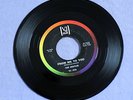
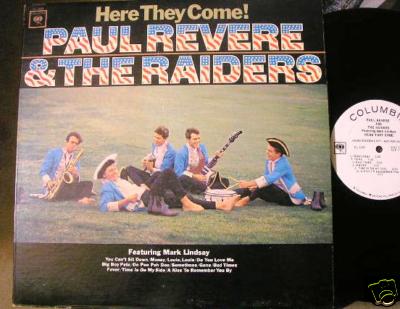
Paul Revere & the Raiders"Here They Come" in mono on Columbia CL 2307. Production credited to Bruce Johnston instead of Terry Melcher. Bass credited to Mike "Doc" Holiday instead of Phil "Fang" Volk. I swear these are different mixes - several years back I listened to the 2 versions back to back and could hear the difference in the mix. Even if I'm wrong, this stands up as a major 60's rarity on it's own. The brilliant white and black promotional labels use the old "2 eye" logo and do not state either "Guaranteed High Fidelity" or "360 Sound" at the bottom. Original first pressing, not a reissue, of course..
Record Grade: Strong Mint-, an 8.5 on a 1-10 scale
Cover Grade: Mint-
Labels: White and black
About the Artist:
by Bruce Eder No other rock & roll band has experienced the rollercoaster ups and downs in reputation that Paul Revere & the Raiders have known across 40 years in music. One of the most popular and entertaining groups of the 1960s, they enjoyed 10 years of serious chart action, and during their three biggest years (1966-69) got as much radio play as any group of that decade, sold records in numbers second only to the Beatles and the Rolling Stones, and received nearly as much coverage in the music press of the period (which included a lot of teen fan magazines) as the Beatles or the Rolling Stones. Yet when most histories of rock started getting written, Paul Revere & the Raiders were scarcely mentioned — at best, they were usually a footnote to the boom years of the late '60s. By the late '70s, years past their last hit, they were playing lounges with a stage act that was just as steeped in comedy as it was centered on music, and in the 1980s they became a campy oldies act. By then, however, their songs had started acquiring a new luster and credibility. "Steppin' Out," "Just Like Me," "Hungry," "Him or Me-What's It Gonna Be" and "Kicks," in particular, were seen by oldies programmers and compilers as bold, unpretentious pieces of '60s rock & roll with a defiant, punk edge, and a couple — "Sometimes" and "Ups and Downs" — actually entered the repertory of outfits like the Flamin' Groovies and, from there, become part of the musical vocabulary of the so-called "Paisley Underground" psychedelic revival during the 1980s. The band's roots go back to the late '50s, although musically they can trace their inspiration to the mid-'40s. Paul Revere was born on Jan. 7, 1938 in Harvard, Nebraska, but was raised in Boise, Idaho. He learned to play the piano and fell under the influence of boogie-woogie during the late '40s — he also developed a keen appreciation of the work of Spike Jones & His City Slickers. Revere was still in his teens, a high-school dropout, trained barber, and restauranteur when rock & roll took over the airwaves and the charts, and it was the early hits of Jerry Lee Lewis, in particular, that became the catalyst that pushed him to join a band. He did just that in 1957, at age 19. Next aboard was 16-year-old Mark Lindsay (b. Mar. 9, 1942), who heard Revere's group play, asked to sing with them, and ended up replacing the band's vocalist. Their group, which became known as the Downbeats, was one of the few, if not the only resident rock & roll band in Idaho, and were popular at local dances. They cut a demo that got them to Gardena Records in Los Angeles, where the company's owner, John Guss, was interested in issuing a record on them — but only if they changed their name. Paul Revere's given name was such a natural as a gimmick, that Guss urged them to use it. Their debut single, "Beatnick Sticks," was somewhere midway between Spike Jones's general output and Kim Fowley's "Nutrocker" (recorded by B. Bumble & the Stingers), a parody of "Chopsticks" that rocked like a Jerry Lee Lewis number. It never charted but got some airplay and interest locally. The follow-up single, "Paul Revere's Ride," again elicited local interest but little enthusiasm elsewhere. Their third single, the instrumental "Like Long Hair" (co-authored by Kim Fowley), however, made the Top 40 in the spring of 1961. Somewhere midway between Rachmaninoff and Jerry Lee Lewis, the record was fast and hard-hitting as well as very catchy, and it showed off the early '60s Paul Revere & the Raiders. That line-up, in addition to Revere and Lindsay, included Bill Hibbert on bass, Jerry Labrum on drums, Richard White and Robert White on guitars. The group's national exposure stalled at that point when Revere was drafted. As the son of a pacifist Mennonite family, however, he was granted Conscientious Objector status and spent his alternative service as a cook at a mental hospital in Oregon. The band continued playing concerts for a short time at the outset of his service, with Leon Russell filling in for Revere at the ivories, touring as "Paul Revere's Raiders" in the wake of the success of "Like Long Hair," but by the summer of 1961 this early version of the group had broken up. In late 1962, Lindsay rejoined Revere in a new incarnation of Paul Revere & the Raiders. Now based in Portland, OR, and with deejay Roger Hart managing and promoting the new band, they took off once again, bigger than ever locally despite not having had a hit record. The early reformed band — which included Charlie Coe, Pierre Oulette, and Steve West on guitars, and Ross Alamang on bass — soon added Mike Smith, who switched from guitar to drums and stayed with the band for the next six years. Guitarist Drake Levin, of the Sir Winston Trio (who also worked as the Surfers), came aboard in a slightly more stripped down Raiders line-up after an offer of an audition by Revere; bassist and fellow Sir Douglas alumnus Mike "Doc" Holiday followed his lead and also joined in 1963. By the middle of that year, the group was one of the major music attractions in the Pacific Northwest, but had been unable to chart a record since the spring of 1961. They were a formidable outfit, drawing on the best of R&B as their inspiration. One could hear influences ranging from James Brown and King Curtis to Piano Red in their sound, and also the blues of Jimmy Reed and B.B. King, as well as classical and jazz, all rolled into a coherent whole that was irresistable as dance music. There were lots of white bands like that — in the Pacific Northwest alone, the group was in fierce competition with bands like the Kingsmen and the Wailers, to name but two of their major rivals; Los Angeles had the Standells, and on the East Coast, groups like the Unbeatables, fronted by future Rascals guitarist Gene Cornish played around New York, and further south Bill Deal and the Rhondels carved a niche for themselves in Virginia and North Carolina. What made Paul Revere & the Raiders stand out from the competition was their stage act, which featured astonishing antics by the band: Leaps, dives, and other acrobatics, reminiscent of Bill Haley & His Comets at their wildest (who, in turn, had borrowed a lot of their routine from the Treniers), along with lots of comedy, as well as Revere even setting his piano (a cheap throwaway model brought on for the finale) on fire. Years before the Who, the Move, and Jimi Hendrix attracted audiences with that sort of destruction, Revere was doing the same thing, and also anticipated Keith Emerson's organ pyrotechnics with the Nice. The group was soon earning as much money as it was possible to make concertizing in Oregon. What they needed was a record that would break them nationally. It was Roger Hart who suggested that the group cut a single of one of its most popular concert numbers, a rendition of Richard Berry's song "Louie, Louie," that he thought he could place with a label, or at least sell at the band's shows and issue locally. Mark Lindsay had first heard the song done by the Kingsmen at one of their shows, and Revere and the Raiders learned it from a borrowed copy of the original. In contrast to the version that the Kingsmen made famous with its heavy organ, bass, and drum sound, Lindsay's tenor-sax dominated the Raiders' version. At the suggestion of a local sales representative, an acetate of the song was sent to Columbia Records, which had virtually no presence in rock & roll. Amazingly to all concerned, Columbia signed the band. "Louie, Louie" was put out by Columbia late that spring. Unfortunately, the Kingsmen's version of "Louie Louie" was released first on the New York-based Wand label, and topped the charts on its way to immortality. aul Revere and the Raiders lost the race over the song, but had a contract, renewable annually by the company, with what was then the largest pop music label in the United States. The group's next three singles were regional hits, scoring in the Pacific Northwest. By all rights, the band should have been on borrowed time just then, as an American outfit trying to compete in a marketplace that, since February of 1964, had been dominated by acts from England. They were at a disadvantage, but not a crippling one, because they had their live audience to sustain them while they went about cutting a single every few months. Columbia assigned the group one of the few producers at the label who was suited to working with rock & roll. Terry Melcher was the son of Doris Day, one the label's top singing stars of the 1940s and '50s, and he was also one of a handful of producers at Columbia who didn't hate rock & roll with a passion. Most of them did, but Melcher had actually played rock & roll professionally as part of Bruce & Terry, a surf-music duo with Bruce Johnston, a fellow producer (and later a member of the Beach Boys). Under the direction of Melcher and, to a lesser degree, Johnston, the group cut a series of singles on Columbia, and a debut LP that was half-studio and half-live, called Here We Come, cut in the fall of 1964 and issued eight months later. None of these attracted much attention, but the group simply kept on working. In January of 1965, Holiday exited the Raiders, and at Levin's urging, they asked his former Sir Winston Trio/Surfers bandmate Phil Volk (often known as "Fang") to join on bass. Then, in the summer of 1965, the band hit upon a new, winning musical formula under Melcher's guidance. Recognizing that the music world had changed radically from what it was when "Louie, Louie" had been released, Melcher pushed the group to update their sound. He got them to create music that was a mix of fast-paced, guitar-and-vocal dominated Beach Boys-style rock & roll, and also the more intense and intimidating brand of R&B produced by the Rolling Stones. It wasn't that far of a stretch, especially to reach toward what the Stones were doing. The band had toured with them in the fall of 1964, and both groups were heavily R&B-oriented. It was just a matter of finding a song that gave them a correct angle of approach. That song was "Steppin' Out," a Revere-Lindsay original that was released during the summer of 1965. It became the group's first nationally charted single in four years. Based on lyrics that Lindsay had written when he was 16, "Steppin' Out" also marked a distinctly new musical phase in the group's music. They would never entirely lose their R&B sound, but the group did become more sophisticated starting with "Steppin' Out. Instead of trying to sound black, they suddenly sounded punk — like cool (yet frustrated) suburban white teenagers, which was the audience they were aiming for. The sax wasn't heard too much anymore, and there was less lead guitar than rhythm — though that was sharply played — and suddenly Revere wasn't playing piano, but a Vox organ; his boogie-woogie piano was replaced by heavy organ chords behind the rhythm guitar and bass, all to startling effect. They suddenly sounded louder and more intense backing Mark Lindsay, whose performance was suddenly more personal and charismatic. In one fell swoop, Paul Revere & the Raiders had come up with their own unique variation on the rhythm-guitar dominated sounds of the British invasion. "Steppin' Out" could have been the Standells or even Bill Deal and the Rhondels, but for the presence of Mark Lindsay. He was a powerful singer with a personality that surged out from the speakers, whether it was projecting lust, anger, or resentment, and he didn't sound like a teenager. Rather, he sounded the way every frustrated male teen of 14 thru 17 pictured himself looking and acting at the age of 21, free and ready to say what he felt like and make it stick, whether it was to girls on their mind or authority figures in their face. Steppin' Out's release coincided with another, even more vital event in the band's history. The previous fall, while sharing a bill with the Rolling Stones, the group was spotted by Dick Clark, who was starting to put together a new afternoon music program, a 1960s successor to American Bandstand — the latter was still on the air, but was wilting somewhat in ratings and influence in the face of programs like Shindig and Hullaballoo. He needed a house-band for the new program and, after seeing the antics of Revere and company on stage, knew he had a group that could not only make decent records but also do funny things while miming to them, and could play any current rock & roll hits. His original plan had been to use Revere and company as the resident band and, once the show was a hit, replace them with a major band. He never replaced them. "Steppin' Out" was released at the same time that Where the Action Is, as the show was named, went on the air, on June 27, 1965. It quickly shot into the top 50 and became the group's first serious hit, and once it was clear just what Paul Revere & the Raiders were capable of doing musically and visually, neither party ever looked back, recognizing that they were good for each other. Clark and the band renegotiated, and they spent the next two years getting network television exposure every afternoon for their songs, off of whatever new album they had out. Ahead of "Steppin' Out," the band had gone through a period of visual metamorphosis, adding Revolutionary War-style outfits to their look. That began on a whim and became a concerted effort to look as different and distinctive as possible from the competition. In a period when most American bands were either cowering in the shadow of the British invasion, or casting out for new, hybrid sounds like folk-rock, Paul Revere & the Raiders stood out for playing straight ahead rock & roll and having fun doing it. Their name and their look added an element of topical fun to rock & roll, almost a humorous response to the British invasion, and their new sound was different from any of the home-grown competition. Clark's television show gave them entre to the homes of tens of millions of American teenagers every afternoon — the only other group that ever had it remotely so good was the Monkees, who were actor-musicians hired to portray members of a rock & roll group on television, and who didn't get on the air until a year later, and that was only once a week. The latter part of 1965 saw the group move to Los Angeles as its new home base. Where the Action Is became a major part of their activities, and was shot in different locales around the country, and they finished work on their second album. Just Like Us, released on January 3, 1966, was a landmark record, filled with great songs and even better performances. Like the debut album of the Rascals, or the Shadows of Knight's second album, it stands as a monument to a moment in American music when a hard, lean, punkish R&B-inspired sound took root. They were rewarded, as well — spurred by the presence of the Top 20 hit "Just Like Me," Just Like Us earned a Gold Record award for sales, granted a year after its release. Perhaps the cover of "Satisfaction" didn't add anything to the Rolling Stones' original, but it was a pretty hard and impressive performance, and damn courageous of Lindsay, Revere and company. Among the teenagers of the period, they were even known, informally, as "America's Rolling Stones." The group also learned quickly from the recording of Just Like Us just how far they could go in the studio. Their earlier records had essentially been cut live in the studio, the band members playing their basic instruments, but under Melcher's guidance, they soon found their musical range extended vastly. Their sound blossomed in much the same way that the Beatles' music had when they got accustomed to working in the studio, and it opened a golden, glowing cooperative era in the band's history. By the time of their next album, Midnight Ride, released three months later, and its follow-up, Spirit of '67, issued at the end of November of 1966, the group members were playing multiple instruments — Lindsay was playing three kinds of sax on the same track — and everyone in the group was singing. Spirit of '67 was virtually the Raiders' answer to the Beatles' Revolver album, complete with some very lightly and tastefully orchestrated music, proto-psychedelic tracks, and other musical developments of that year. Those albums went gold, lofted high and long into the charts by the hit singles "Kicks" — a great song that managed to be cool and anti-drug — "Hungry," "Good Thing," and "Him or Me-What's It Gonna Be," which were all Top 10 hits in 1966 and 1967. The classic Raiders line-up was broken up in the spring of 1966 when Drake Levin was drafted. He joined the National Guard, which took him out of the touring version of the group, though he was able to record with them. To replace him, the group recruited Jim Valley (often referred to as "Harpo"), late of Don and the Goodtimes, who'd been a fan of the Raiders from their days in Oregon. These line-up changes were not as important as the changes that took place in the studio. Increasingly, Mark Lindsay and Terry Melcher took responsibility for (and control of) what songs the group recorded, and how their records sounded. Additionally, the band played a decreasing role on their actual records — in a sense, Paul Revere & the Raiders became victims of their own success, and early beneficiaries of the revolution that swept over Columbia Records in 1966 when the new, rock-oriented regime under Clive Davis took over. Their records were making money, the label was willing to devote more studio time to those recordings, and with access to players like Ry Cooder, Jerry Cole, and Van Dyke Parks, among other ace studio musicians, all the band had to do was record the rhythm tracks on a lot of their records, beginning in 1967. Their fortunes also took a downturn when Where the Action Is went off the air in the spring of 1967. Although Dick Clark would put them into a new Saturday afternnoon musical showcase called Happening '68, the group never got back the audience it had enjoyed. By 1967, their comedic antics and Revolutionary War uniforms also seemed dated. "Good Thing" was the last single on which the classic line-up played together, and it was a graceful way to bow out, reaching the top five. Gradually, the group's sound had changed as Melcher and Lindsay tried to keep up with the shifting shape of music and the taste of the public around them. Levin, Volk, and Smith decided to exit in late 1967 — they went off to found the group Brotherhood, while Lindsay and Revere put together a new line-up around guitarist Freddy Weller, bassist Charlie Coe, who'd played with the early Raiders, and drummer Joe Correro, Jr.. Coe later left and was replaced by bassist-guitarist Keith Allison, whom the group had known during their work on Where the Action Is. By 1968, the Raiders were looking for a new sound. Goin' to Memphis was one answer, virtually a Mark Lindsay solo album cut without the rest of the band with a group of soul and country players at Chips Moman's Memphis studio. It was a great showcase for the singer, if not a high chart entry. Terry Melcher had already given up his producer's spot with the group by then, leaving Lindsay in effective control of the group's recordings. In addition to trying to figure out what would sell for the group, he developed aspirations as a solo singer, enjoying a huge MOR hit with "Arizona." Somehow, the group kept its edge, creating very catchy and serviceable pop-rock on albums like Hard 'N Heavy (With Marshmallow) and singles such as "Mr. Sun, Mr. Moon" and "Let Me" — "Mr. Sun, Mr. Moon," in particular, sounds like a heavy version of the Archies or the Ohio Express, and that is no criticism from this quarter; records like that were part of what made being in one's early and middle teens a great deal of fun in those days, and the group tried to keep the fun in its sound, whatever that sound was. The problem was that by 1970, it was far more important for a top-flight band to produce solid albums — and solid albums, in 1970, meant music with a serious purpose, not just a dozen songs that were good to dance to — than catchy singles. In a quest to shed their mid-'60s image, the group gave up the "Paul Revere" gimmick that had identified them since the late '50s, switching to the name "The Raiders." Gone were the Revolutionary War costumes as well, and suddenly the Raiders tried to sound serious, heavy, and very modern. The result was the Collage album, a serious rock record that never found an audience, being too intense for older fans and not persuasive to potential new listeners. The next single followed the same pattern, and its success shocked everyone. The Raiders took a John D. Loudermilk song called "Indian Reservation (The Lament of the Cherokee Reservation Indian)," which had previously been a British hit for singer Dan Fardon, to number one, the first chart-topper of the group's entire career. A serious yet stomping piece of rock & roll, it boded well at the time for the group's future. The Indian Reservation album duly followed, and a second single, "Birds of a Feather," got to the Top 30. The group was continuing to make good music — "Country Wine" was an enormously appealing single with a great beat, and none of the Raiders' work during this period was deficient as pop-rock. The problem was that they just couldn't sustain the momentum, or capture the public's imagination sufficiently to maintain the sales of their records. Lindsay's own solo career had taken off with the single "Arizona," and it was increasingly clear that he had considerable interests beyond the band, though he never wavered from performing with them, but the confusion on the part of the public didn't help the band. The decline in the group's audience after "Birds of a Feather" led to several important changes that split the two group leaders. For starters, as it did with other successful singles acts such as the Hollies, Columbia lost interest in the Raiders when it became plain that even with a hit single behind them, the group was no longer selling LPs in serious numbers and likely never would — in an era dominated by LP sales, the effort required to launch even a number one single, assuming the group ever yielded anything that could get there again, seemed better put into other projects. Somewhat ironically, history has rendered "Indian Reservation" as the least significant of the group's hits. It comes off as a piece of early-'70s, heart-on-the-sleeve topical ersatz, while their middle- and late-'60s singles have a credibility that has only increased over the decades, even propelling Paul Revere & the Raiders to perhaps the greatest honor in their history: Two spots on Rhino Records' 1998 four-CD Nuggets boxed set. By 1975, Lindsay had ended his 12-year partnership with Revere, owing to the latter's insistence that the current version of the group place more emphasis on comedy and entertainment. Since then, Lindsay and Revere have pursued separate careers, neither remotely as popular as they were together in the mid-'60s, but each still busy, and Lindsay has even played and sung with the classic Raiders line-up of Levin, Volk, and Smith. Both Lindsay and Revere have periodically recorded, the latter mostly remakes of classic hits. Lindsay also has a fascinating website, steeped in the history of the band, while the current Paul Revere & the Raiders, led by the 60-year-old-plus Paul Revere, is a working comedy-music act — dressed once again in the Revolutionary War outfits — on the oldies circuit and maintains a website devoted to the group's early history and its current activities. Meanwhile, as a final irony in the group's rollercoaster history, Sundazed Records has accorded the group's classic '60s albums and singles a level of respect and care in its CD reissues that exceeds anything that the owners of the Beatles or the Rolling Stones' recordings of the same era have ever attempted.
All of my records are shipped in sturdy cardboard LP or 45 rpm mailers with appropriate padding (heavy cardboard fillers or bubble wrap or "peanuts" or some combination thereof". With the exception of sealed LP's, all LP's are removed from their outer sleeves to prevent seam splitting. Upon request, I will give your sealed LP's the same treatment. (once an LP is shipped sealed, it cannot be returned once opened).
All records are carefully graded. In an attempt to give customers an accurate impression of condition rather than adhere to somewhat arbitrary criteria, I give an "overall presentation" grade, supplemented when necessary with additional remarks. Please refer to my grading system below for a more detailed explanation.
MY GRADING SYSTEMS: I’ve been told that I grade conservatively. My NM (near mint) is my highest grade for opened records (which would also include unplayed records). It’s a 9 or 10 on a 1-10 scale. M- would be equivalent to an 8; VG++ to a 7; VG+ to a 6; VG to a 5; VG- to a 4; G to a 3; F to a 2 and P to a 1. The same scale applies when I grade covers (jackets). Significant defects are specifically noted and taken into consideration in the grade.
GRADING DESCRIPTIONS
RECORDS:
- GRADING Grading is based on the following criteria
- Sealed = store stock new
- Near Mint = like new or near new with only one or two small insignificant defects, a 9 or better on a 1-10 scale
- Mint- = extremely nice. Would be Near Mint, except for a couple of light hairlines or scuffs, which do not affect play
- VG++ = still a very nice record with all or nearly all of its original gloss but may have a few more light, surface marks, hairlines, needle tracks or the like which should not materially effect play
- VG+ = a nice, but used record that may have a series of light scuffs or scratches. It probably plays with a few pops, but has no serious problems.
- VG = a well-used record that still should sound OK when played, but may have moderate surface noise, pops, etc.
- VG- = a very well-worn record that plays through without skipping, but will do until a better copy comes along.
- Good = not actually good at all but probably will play through but with much in the way of surface noise, pops, crackles, etc. Still, will have no cracks, chips or the like
- Fair = you’re getting this record just to own but not to play
- Poor = the sky’s the limit, generally I will discard a record this bad (and sell the cover, jacket or sleeve alone) unless the label holds some particular interest
VISUAL GRADING: All records are visually graded only unless I state that they are play-graded. Some major labels were pressed on better quality vinyl and will sound better than a record which visually appears the same on "budget" labels which were pressed on lower quality vinyl. Recording techniques also varied. The sound on live albums may be far inferior to studio recordings. There may also be defects in the pressing which are invisible. The point is that an album on a high quality label that was visually graded VG+ may sound better than an album on a budget label that was visually graded Mint- or even Near Mint. Please refer to my return policy, below. But please don’t be shocked if a record visually graded Near Mint doesn’t sound state of the art. If I base my grade on a PLAY GRADE, I will state this specifically in my grading section.
COVERS: There are really too many possible defects regarding covers to be as specific in my definitions as I had been with my record grades. But please keep in mind these general grading guidelines:
- I will give greater weight to the condition of the front cover than back cover when assigning an overall grade
- No cover with a cut out hole or saw mark will be graded Near Mint even if it is still in factory shrink and there is no other wear
- I will not reduce the grade of a cover for stickers which are glued to the jacket by the record company (eg. Contains the hit song Expressway to Your Heart); but will reduce the grade for stickers glued on the cover by stores, previous owners, etc.
- If I write that a cover has a bb hole, I’m talking about a small cut out hole
- A saw mark is a narrow cut in the perimeter of the cover, could be anywhere and vary in length from 1/2” to 2” at the most.
- The overall grade takes into consideration any stated defects. For example, if I grade a cover VG+ and then state it has 6” top and bottom seam splits - I’ve already reduced the grade because of the seam splits. If the seams weren’t split, the cover would be graded higher such as VG++ or Mint-.
Shipping Costs: NEW SHIPPING RATES AS OF JUNE 30, 2008.
The buyer pays for shipping. The cost for priority mail in the United States is $8.00 . For media rate postage within the U.S. the cost will be $4.75. The cost for shipping each additional album is $2.00. Double albums count as two.The cost for shipping a 7” record via 1st class is $3.75 and the cost for shipping a compact disc via 1st class is $4.00.
Save money when I mail 2 or more records in the same package.
Insurance is optional for purchases of $10.00 or more shipped within the U.S.but it is highly recommended for “high ticket” purchases. Insurance is available only on purchases of over $50.00. The cost for insurance is $1.60 for up to $50; $2.60 for up to $100; $3.60 for up to $200 and $1.10 additional for each additional $100 of insurance. Rates are quoted in my winning bid notices.
The shipping charges for box sets, multi-record sets and other items of non-standard size and weight will be quoted.
International Shipments: Overseas customers are welcome to bid. Postage WORLDWIDE (except Canada) for First-Class International is $14.00 for a one-record album. 7“ records (45's) are $6.50 for First-Class International anywhere in the world. CANADA- Postage for First-Class International for a one-record album is $7.50 and for a 45 r.p.m. record is $4.50. Surface mail is no longer available for overseas. Express Mail International and Priority Mail International is available - rates are substantially higher and will be quoted for each purchase if buyer requests this service. Express mail international is recommended for high end purchases because this service assigns a tracking number to the shipment. Save on shipping cost per record when I mail two or more records in one package.
SHIPPING - "HIGH END PURCHASES" - PLEASE READ CAREFULLY -
As I'll be listing and shipping many highly collectible and valuable albums in the coming months, standard shipping rates do not apply to expensive purchases. This is both for your benefit and mine. Here are the changes and additions:- All shipments within the U.S. over $500 must be insured (under $500, insurance is still optional).
- All shipments of records totalling over $400 sent OVERSEAS will be mailed EXPRESS MAIL INTERNATIONAL (which provides a tracking number); while the postage costs will be substantially higher, this should ensure safe delivery of these valuable items
- All packages where the purchase exceeds $1,000 will be double boxed. This applies to both domestic and foreign shipments. Shipments within the U.S. may be sent either via priority mail or media rate - the choice is up to the buyer. All overseas shipments must be sent via airmail.
- The postage charges for these "high end" shipments will be the actual cost plus an approximate 15% mark-up to cover the cost of packing supplies and handling.
Sorry, but I do not give refunds for items damaged or lost in the mail - U.S. buyers have the option of obtaining insurance for purchases over $10.
Please check out my other eBay auctions and stores listings.
. I’ve been listing all types of records - mostly LP’s - including 50’s and 60’s rock ‘n’ roll, country, folk jazz, blues, personalities, new wave and punk, surf, psych, spoken word, comedy, etc., etc....... I try to list unusual, unique or obscure records, not the ones that you see all the time. While a majority of my listings are albums, you’ll often find a nice selection of 45’s, EP’s or picture sleeves...and an occasional 78 or two.My return policy: . You may return an item if it's not in the conditon described. You may not return items if you decide you don't like the music. I will return the base price of the item unless I make an error in shipment such as sending you the wrong record or cd. In that case, you will be reimbursed for the cost of the item and shipping both ways. In addition, the item must be returned in its original condition , i.e. the way it was shipped when it left my hands. While a very high percentage of my records arrive safe and sound (I use professional mailers and a filler or two, more for 78’s), they occasionally are damaged in transit. If that happens, I won’t accept the return of the record or other item - that’s why you have the option of obtaining insurance for purchases $10 or more.
Sealed Records: After a sealed record is paid for, I will gladly open it before mailing to make sure that the record is new & unplayed. If the record is not, I will give a full refund. Even though it is easy to spot most resealed records from the 50's and 60's [I will mention that in the desription if it looks like a possibility], not all records from the 70's & 80's are quite as obvious. Please ask for any details about the seal of a particular record & I will be happy to answer.
My Feedback Policy: I'll be glad to return positive feedback if you would be so kind to leave me same.
Any other questions? About anything? Please e-mail me at ibuyvinyl@nc.rr.com .
price rating