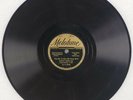
PREWAR BLUES 78 POOR JIM Squeaky Work Bench Blues Blue and Worried Woman PERFECT
$
1,550


Favourite Auctions
To save auctions to your favourites, please login
If you don't have an account, please register
Description
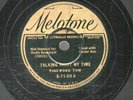
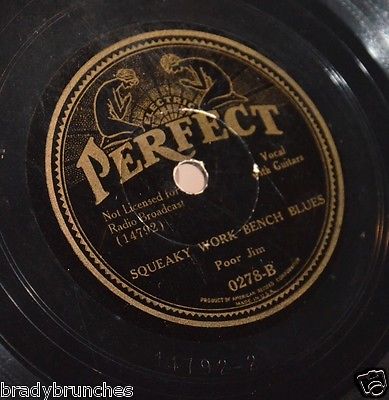
Prewar blues 78 holy grail - POOR JIM (a/k/a blues mandolin player Yank Rachell)on PERFECT 0278-A/0278-B, label printed "Not Licensed for Radio Broadcast", labels are clean. Record is gorgeous, VERY light signs of handling with just a few paper scuffs. See photos. Original Perfect sleeve included as seen in photo, with wear.
This record is guaranteed 100% authentic.
Shipping:
Record will be fully insured and packed appropriately. INTERNATIONAL BUYERS must pay for Priority Shipping via USPS plus full insurance.
PLEASE NOTE WE DO NOT ALTER CUSTOMERS' INFORMATION AND FULL VALUE IS ALWAYS DECLARED ON THE CUSTOMS FORMS. Some background on the dime store labels (//www.bluesworld.c0m/ARC.pdf):
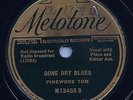
When the new numbering system introduced by ARC late 1935, the dime store labels had been active in the record business for quite some time. The labels we name the dime store labels are Banner, Melotone, Oriole, Perfect and Romeo. At the time we are considering, all of these labels had exactly the same catalogue number system. Let’s take as an example Robert Johnson’s famous „Come On In My Kitchen“. The record was released on Vocalion 03563, but it was also released on the dime store labels. In discographies you will see it listed as ARC 7-07-57. ARC is short for American Record Company - the owner of Vocalion and the dime store labels at the time. Most discographical books assume that this record was released on all of the dime store labels i.e. Melotone 7-07-57, Perfect 7-07-57 etc, but indeed that was not so.
The American Record Corporation was a United States based record company. It resulted from the merger in July 1929 of Regal Records, Cameo Records, Banner Records, the American branch of Pathé Records and the Scranton Button Company, the parent company of Emerson Records.
Louis G. Sylvester, who had been the former head of the Scranton Button Company, became president of the new company located at 1776 Broadway in Manhattan, New York City. In October 1929, Herbert Yates, head of Consolidated Film Company, took control of ARC. In the following years, the company was a major player in a depressed record industry, buying failing labels at bargain prices to exploit their catalogues.
210 blues and gospel records were released from September 1935 until the end in April 1938. Average number of records each month 6.5
Most released records in July 1937:
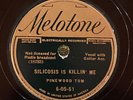
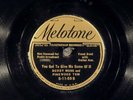
In September 1935 the ARC special number system began. The first blues record - a Walter Roland record - was released with catalogue number 350912. In October the first blues record (a Buddy Moss record) was numbered 35-10-15, but in November the system found its final form as e.g. 5-11-58 (also a Buddy Moss record). The first digit denotes the year (1935), the next block denotes the month of the release and the last block denotes the serial number of the country, blues or gospel records released in the month. If a certain record has the serial number 58 it was the 8th release in that month. Race and country records started their serial numbering at 51, so the first country or race record released in December 1935 would carry a number like 5- 12-51 (it is in fact a blues record by Pinewood Tom). The popular material released on the dime store labels had serial numbers beginning with 01. The catalogue number system lasted until April 1938 when production of the dime store labels was abandoned. Throughout the entire period the records sold at 25 cents.
Melotone and Perfect were the major labels among the dime store labels. Both had retail distribution and Melotone was also a juke box label. Romeo was manufactured to be sold exclusively at the S. H. Kress & Co. department store chain. The Oriole label was sold exclusively at the McCrory chain of stores. Banner was a common label in the 1920’s but at the time we are considering, it seems to have been issuing only popular records. So far we have never seen any of the ARC blues and gospel records from September 1935 and onwards released on Banner, but we have seen popular Banner records from November 1936, so they may still have been in business in early 1937. Banner records sold at S. S. Kresge’s chain stores.
When the dime store labels were abandoned in April 1938 many of the best selling artists had their records reissued on Vocalion. Big Bill, Blind Boy Fuller, Mitchell’s Christian Singers and several others were giving 1935-36 catalog numbers reusing Vocalion catalog numbers by popular artists adding 0 to the catalog number as was common practice for race and hillbilly material.
price rating