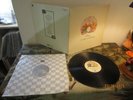
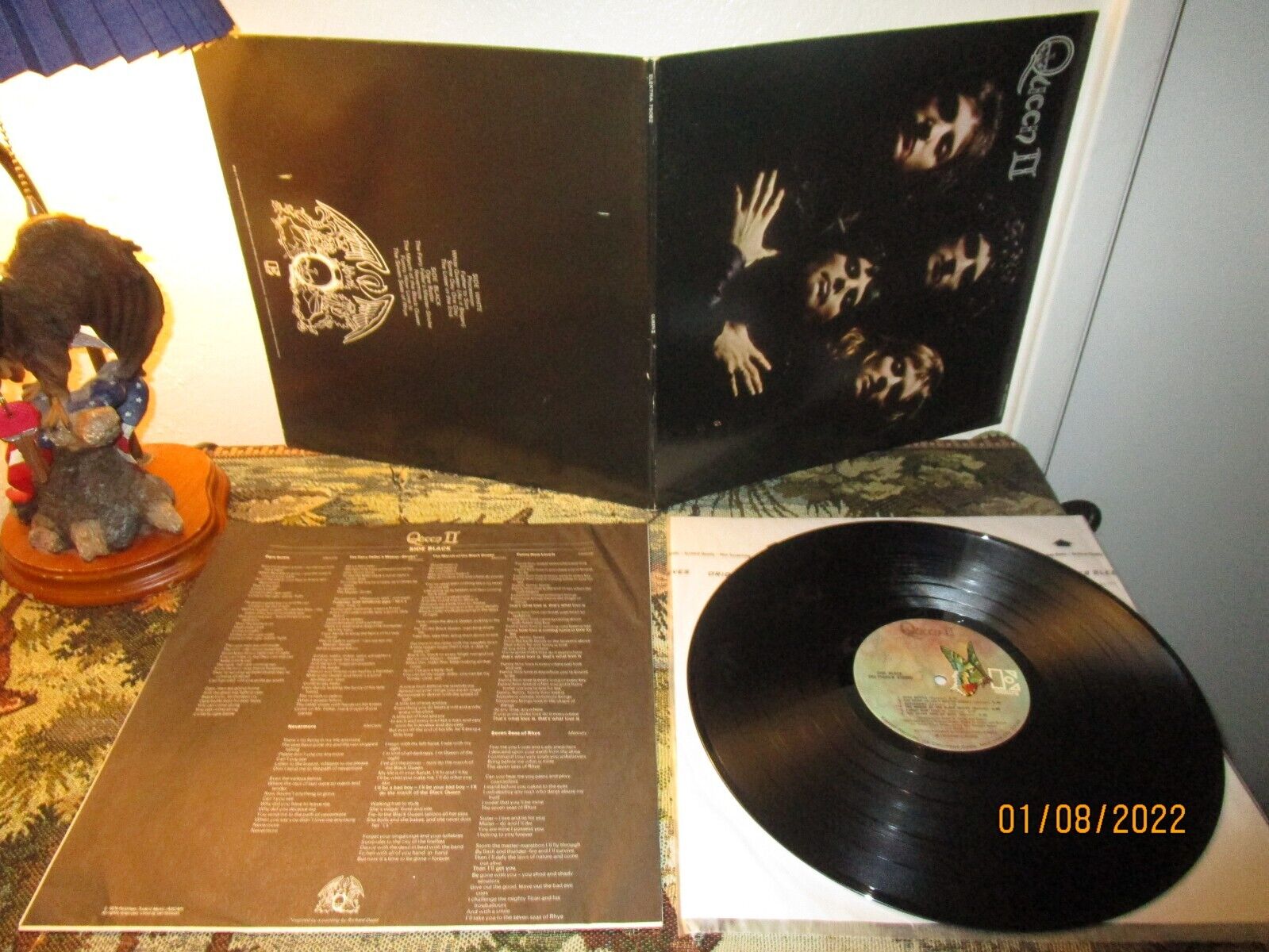
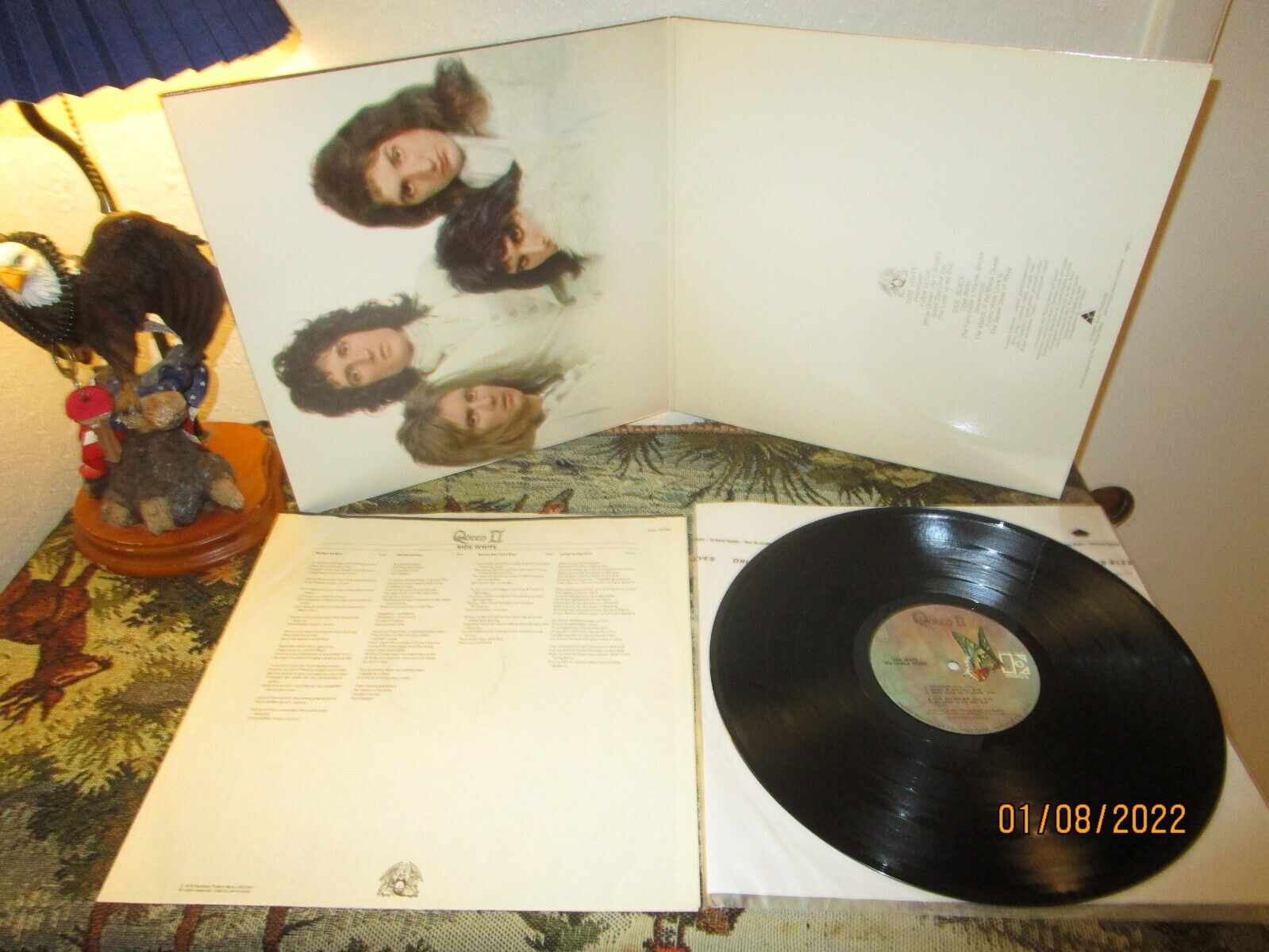
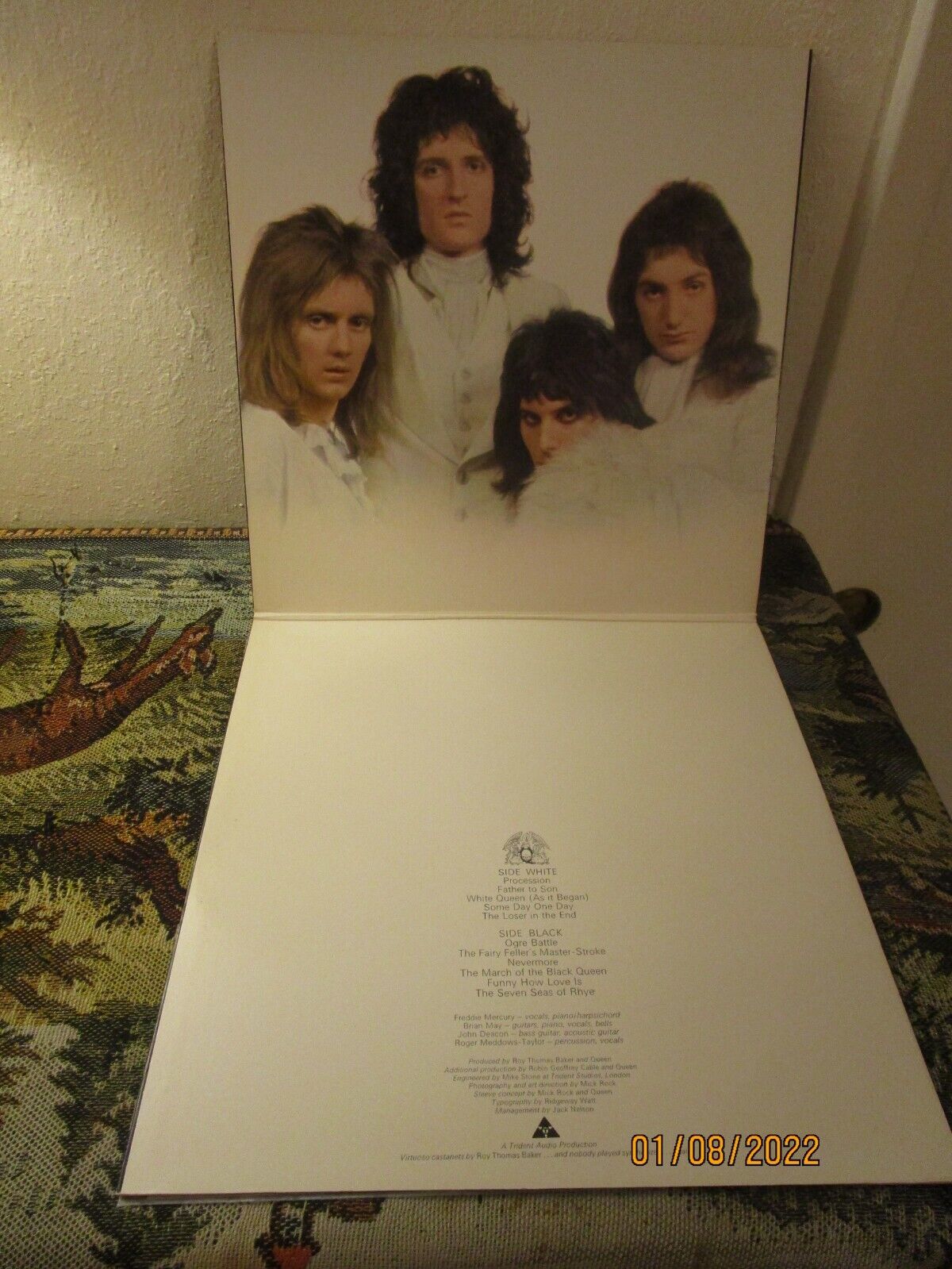
Queen - ll - LP vg+/vg+ ex cleaned & tested gatefold
$
25
Favourite Auctions
To save auctions to your favourites, please login
If you don't have an account, please register
Description
Please read my Conditions!
My only method of cleaning is a soft brush and cloth and some Audio Advisor product. That requires to listening to the LP with my turntable & needle... (Which cost more money these days) and collecting the dust from the grooves. If a stubborn noise erupts, I will then look under a light and microscope. It is quite time consuming. So, I may miss a thing or two sometimes on my listings, like overlook a defect or to over grade; but it is not intentional! I will always be here to help resolve the issue! I am a one man show, while taking care of an elder... That being said... Please play record a few times if I mentioned I have cleaned it and do not use another product until u do so! The enzymes work at eating the debris and play gets better, each time, usually much better If after a few plays you could try cleaning again with your product if stubborn static persists... All I ask is my buyers realize these points and be rest assured I offer a refund policy, but I would prefer you email me so we can work something out first, I may have a backup copy... I have been collecting records since my 20's... It has been a passion and a part-time hobby, I hope you love and enjoy music as much as I do, and selling is another way to get to know other people with a like-minded interest as I. I offer a refund policy, so please give me the opportunity to make good if there is a problem with a transaction. I reserve the right to cancel a transaction after the sale If I find a missed defect on your behalf. Feel free to compare prices elsewhere you will find I am very reasonable. Don't waste your time if the seller does not listen to the lp's, I have return 100's because of defects. Also please be aware I am A human being, and I do make mistakes! So be gentle and straight forward if you are having any issues, I do not like having debates, I would rather listen to my music! Happy Hunting!
My Shipping rates:
1-2 Lp's: $4.25 3 Lp's: $4.50 4-5 Lp's: $5.00 6 Lp's $5.50 7-9 Lp's $6.00
1968–1971: Foundations
Queen in 1970. Left to right; Mike Grose, Roger Taylor, Freddie Mercury, Brian MayThe founder members of Queen met in West London during the late 1960s. Guitarist Brian May had built his own guitar with his father in 1963 and formed the group 1984 (named after Orwell's novel) the following year with singer Tim Staffell. May left the group in early 1968 to focus on his degree in Physics and Infrared Astronomy at Imperial College and find a group that could write original material. He formed the group Smile with Staffell (now playing bass) and keyboardist Chris Smith. To complete the line-up, May placed an advertisement on a college notice board for a "Mitch Mitchell/Ginger Baker type" drummer; Roger Taylor, a young dental student, auditioned and got the job. Smith left the group in early 1969, immediately before a gig at the Royal Albert Hall with Free and the Bonzo Dog Doo-Dah Band.
While attending Ealing Art College in west London, Staffell became friends with fellow student Freddie Bulsara, who was from Zanzibar and of Indian Parsi descent. Bulsara had studied fashion design for a year before switching to graphic art and design, and soon became a keen fan of Smile. He asked if he could join the group as lead singer, but May felt Staffell would not give up that role. He also ran a stall in Kensington Market with Taylor.
PRS for Music heritage award commemorating Queen's first performance, Prince Consort Road, LondonIn 1970, Staffell quit Smile, feeling his interests in soul and R&B clashed with the group's hard rock sound and being fed up with the lack of success. He formed the group Humpy Bong with former Bee Gees drummer Colin Petersen. The remaining members accepted Bulsara as lead singer, and recruited Taylor's friend Mike Grose as bassist. The four played their first gig at a fundraising event in Truro on 27 June 1970. Bulsara suggested the group should be renamed to "Queen". The others were uncertain at first, but he said, "it's wonderful, dear, people will love it". At the same time, he decided to change his surname to Mercury, inspired by the line "Mother Mercury, look what they've done to me" in the song "My Fairy King". The group played their first London gig on 18 July. The early set consisted of material that would later appear on the first two albums, along with various rock and roll covers, such as Cliff Richard and the Shadows' "Please Don't Tease". They attracted the attention of producer John Anthony, who was interested in the group's sound but thought they had the wrong bass player. After three live gigs, Mike Grose decided not to continue with the band and was replaced by Barry Mitchell (ex-Crushed Butler) on bass guitar. Mitchell played thirteen gigs with Queen between August 1970 to January 1971. In turn, Barry Mitchell left in January 1971 and was replaced by Doug Bogie for two live gigs.
1971–1974: Queen and Queen II
In February 1971, John Deacon joined Queen. In addition to being a seasoned bassist, his quiet demeanor complemented the band, and he was skilled in electronics. On 2 July, Queen played their first show with the classic line-up of Mercury, May, Taylor and Deacon at a Surrey college outside London. May called Terry Yeadon, an engineer at Pye Studios where Smile had recorded, to see if he knew anywhere where Queen could go. Yeadon had since moved to De Lane Lea Studios' new premises in Wembley, and they needed a group to test out the equipment and recording rooms. He tried asking the Kinks but couldn't get hold of them. Therefore, he told Queen they could record some demos in exchange for the studio's acoustic tests.[19] They recorded five of their own songs, "Liar", "Keep Yourself Alive", "Great King Rat", "The Night Comes Down" and "Jesus". During the recording, John Anthony visited the band with Roy Thomas Baker. The latter thought "Keep Yourself Alive" would be a hit and started trying to interest record companies.
Queen guitar (right, next to a Rolling Stones guitar) at the Cavern Club in Liverpool, marking a 31 October 1970 Queen concert at the venuePromoter Ken Testi managed to interest Charisma Records who offered Queen an advance of around £25,000, but the group turned them down as they realized the label would promote Genesis as a priority. Testi then entered discussions with Trident Studios' Norman Sheffield, who offered the band a management deal under Neptune Productions, a subsidiary of Trident, to manage the band and enable them to use their facilities, whilst the management searched for a deal. This suited both parties, as Trident were expanding into management, and under the deal, Queen were able to make use of the hi-tech recording facilities used by signed musicians. Taylor later described these early off-peak studio hours as "gold dust".
Queen began 1972 with a gig at Bedford College, London where only six people turned up. After a few more shows, they stopped live performances for eight months to work on the album with Anthony and Baker. During the sessions at Trident, they saw David Bowie with the Spiders from Mars live and realized they needed to make an impact with the album, otherwise they would be left behind. The album was a mix of heavy metal and progressive rock. The group were unhappy with the re-recording of "The Night Comes Down", so the finished album uses the De Lane Lea demo. Another track, "Mad the Swine" was dropped from the running order after the band and Baker could not agree on a mix. Mike Stone created the final mix for "Keep Yourself Alive", and he would go on to work on several other Queen albums. In order to attract record company interest, Trident booked a "showcase" gig on 6 November at The Pheasantry, followed by a show at the Marquee Club on 20 December.
Queen promoted the unreleased album in February 1973 on BBC Radio 1, still unsigned. The following month, Trident managed to strike a deal with EMI Records. "Keep Yourself Alive" was released as a single on 6 July, with the album Queen appearing a week later. The front cover showed a shot of Mercury live on stage taken by Taylor's friend Douglass Puddifoot. Deacon was credited as "Deacon John" while Taylor used his full name, Roger Meddows-Taylor. The album was received well by critics; Gordon Fletcher of Rolling Stone called it "superb", and Chicago's Daily Herald called it an "above-average debut". However, it drew little mainstream attention, and "Keep Yourself Alive" sold poorly. Retrospectively, it is cited as the album's highlight, and in 2008 Rolling Stone ranked it 31st in the "100 Greatest Guitar Songs of All Time", describing it as "an entire album's worth of riffs crammed into a single song". The album was certified gold in the UK and the US.
The group began to record their second album, Queen II in August 1973. Now able to use regular studio time, they decided to make full use of the facilities available. May created a multi-layer guitar introduction "Procession", while Mercury wrote "The Fairy Feller's Master Stroke" based on the painting of the same name by Richard Dadd. The group spent the remainder of the year touring the UK, supporting Mott the Hoople, and began to attract an audience. The tour ended with two shows at the Hammersmith Odeon on 14 December, playing to 7,000 people.
In January 1974, Queen played the Sunbury Pop Festival in Australia, where they were jeered and taunted by the audience. Before leaving, Mercury announced, "when we come back to Australia, Queen will be the biggest band in the world!" Queen II was released in March, and features Mick Rock's iconic Dietrich-inspired image of the band on the cover. This image would later be used as the basis for "Bohemian Rhapsody" music video production. The album reached number five on the British album chart and became the first Queen album to chart in the UK. The Mercury-written lead single "Seven Seas of Rhye" reached number 10 in the UK, giving the band their first hit. The album featured a 'layered' sound which would become their signature, and features long complex instrumental passages, fantasy-themed lyrics, and instrumental virtuosity. Aside from its only single, the album also included the song "The March of the Black Queen", a six-minute epic which lacks a chorus. The Daily Vault described the number as "menacing". Critical reaction was mixed; the Winnipeg Free Press, while praising the band's debut album, described Queen II as an "over-produced monstrosity". AllMusic has described the album as a Favorite among the band's hardcore fans, and it is the first of three Queen albums to feature in the book 1001 Albums You Must Hear Before You Die. The group ended their early 1974 UK tour with a show at the Rainbow Theatre on 31 March. Mercury chose to a wear a Zandra Rhodes-designed tunic for the gig, changing into a slashed black top midway through the show.
Thx u wiki~
Jacket ~ vg+ Record ~ vg+ ~ ex
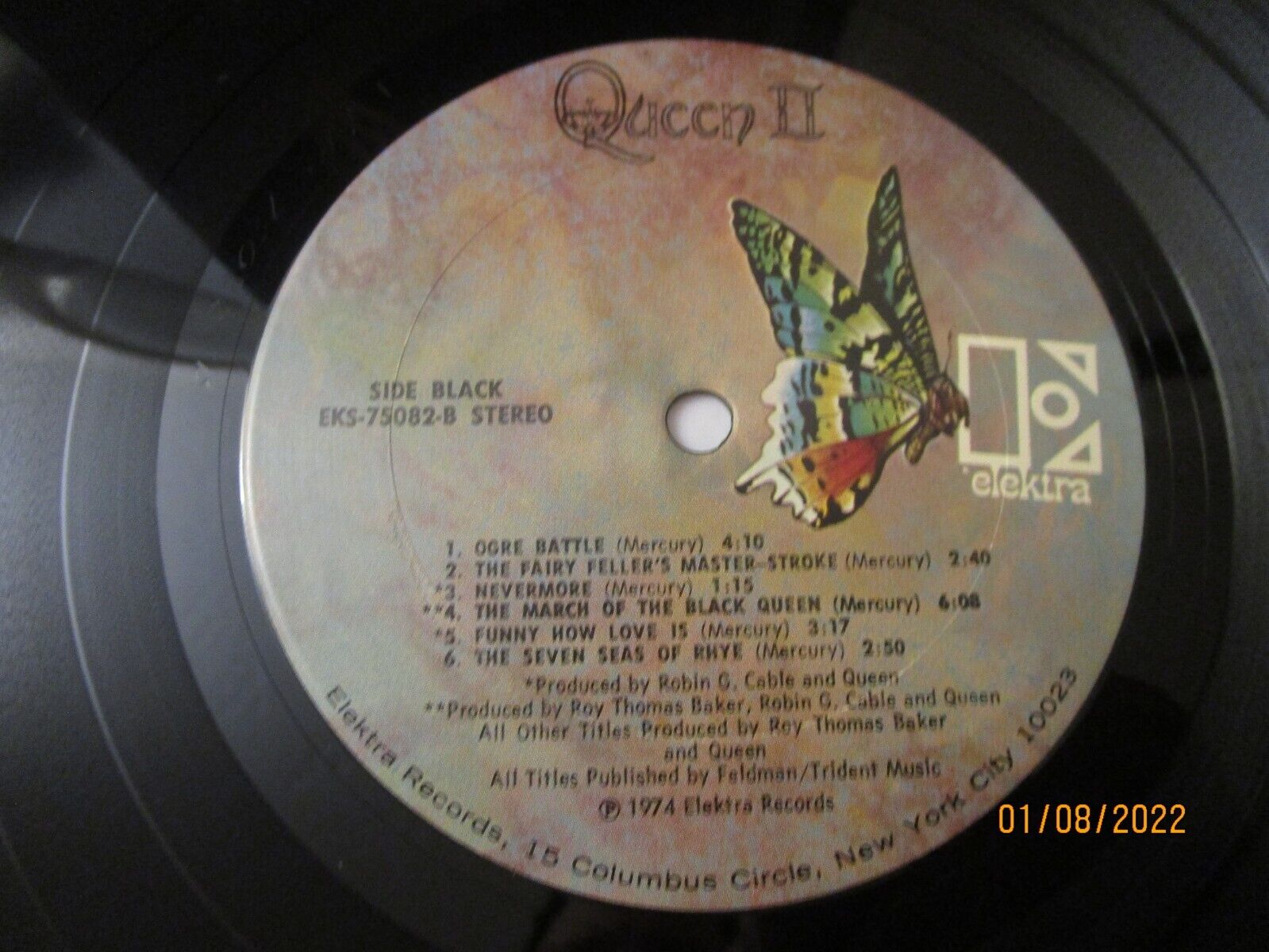
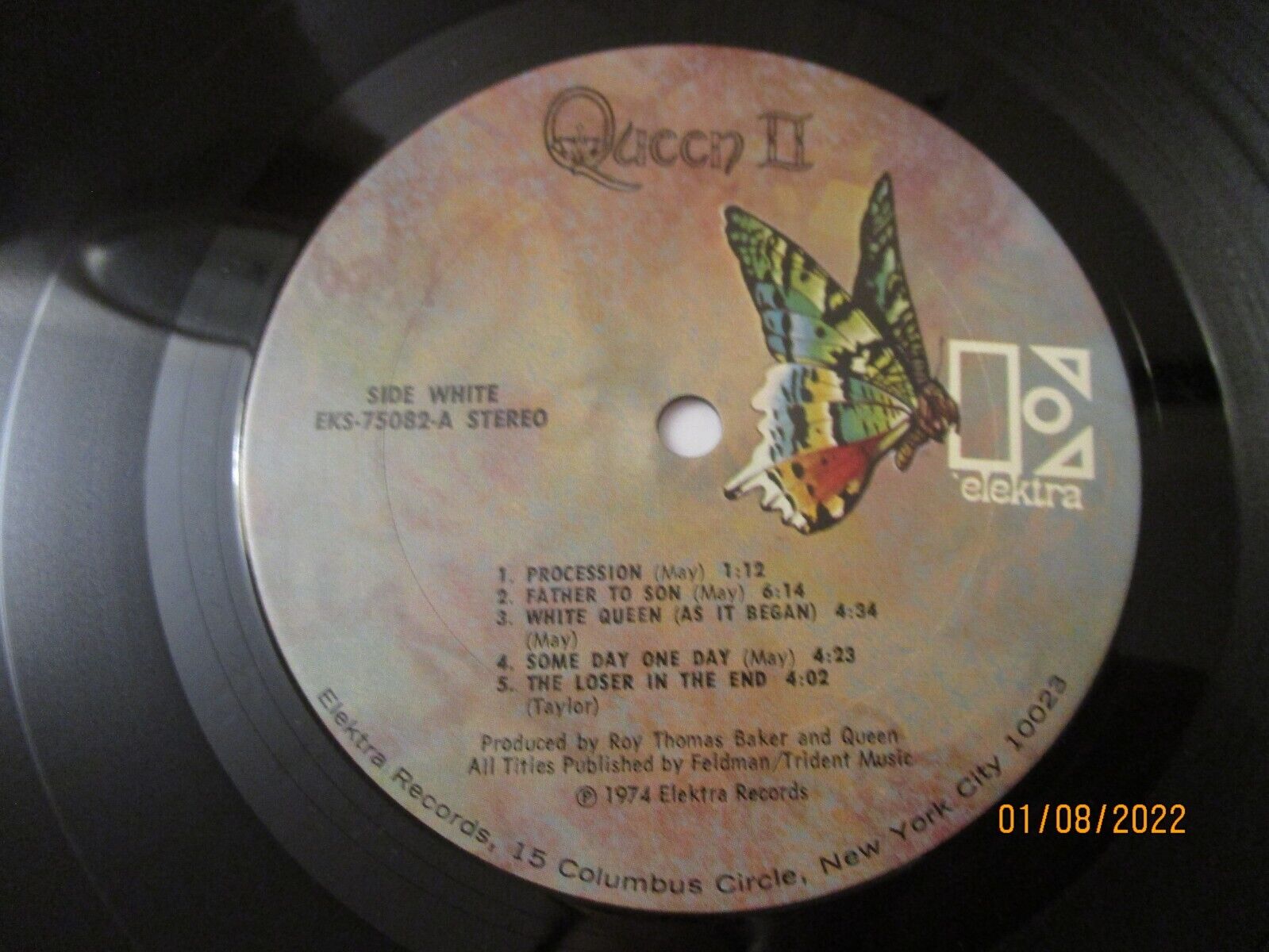
Side White Procession 1:14 Father To Son 6:14 White Queen (As It Began) 4:34 Some Day One Day 4:23 The Loser In The End 4:02 Side Black Ogre Battle 4:09 The Fairy Feller's Master-Stroke 2:41 Nevermore 1:19 The March Of The Black Queen 6:33 Funny How Love Is 2:50 Seven Seas Of Rhye 2:49
price rating