RaRe Afro Latin Folk EDUARDO MATEO La Mosca M- LP
$
50


$ 50
Sold For
Jan 4, 2006
Sold Date
Dec 28, 2005
Start Date
1
Number Of Bids
Uruguay
Country Of Seller
eBay
Sold at
Favourite Auctions
To save auctions to your favourites, please login
If you don't have an account, please register
Description
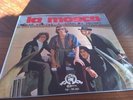
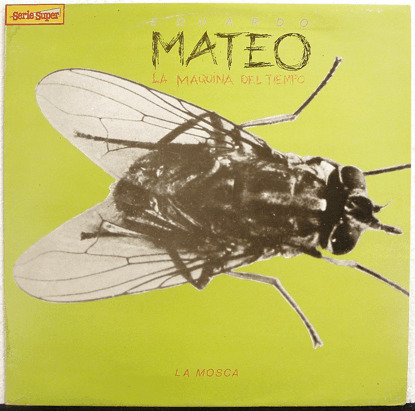
Eduardo Mateo La Maquina del Tiempo – La Mosca / Orfeo 91032-1 / 1989 /
The last jobs of this Uruguayan music icon. This is a complex conceptual work that gathers the most different elements you can imagine, latin folk psych melted with electronic music & mystic lyrics, really brilliant, weird & eclectic. On and on just another slice of Mateo’s incredible talent.
Jacket is nice excellent, no writings or splits, just minimal signs of wear, record company sticker Serie Super on front top left portion. Disc is M- Few pressed at the time & hard to see nowadays.
Personnel: Alberto Magnone (keyboards) / Popo Romano (bass) / Andres Recagno & Mariana Ingold (backing vocals) //
Eduardo Mateo has probably been the most radical influence & a turning point in the Uruguay contemporaneous popular music. He began back in the late 50's playing the cavaquinho covering Os Demonios da Garoa's songs together with some other guys from his neighbourhood. Upon the bossa nova's arrival Mateo was definitively fascinated by Joao Gilberto and the simple complexity of
When the "beat revolution" hit the planet he began playing with a band called Los Malditos that would later evolved into the legendary El Kinto Grupo in collaboration with Ruben Rada. Though there was a remarkable Beatles' influence they never left aside his own local roots melting beat with bossa nova local rhythms like candombe.
By the end of the 60's Mateo was avid for new musical experiences and began searching into ethnic music going from the hindu raga to african tribal sounds. At this time he was not only a skilled guitar player but a really innovative percussionist, he even created a unique rhythm he named "Toco" in collaboration with Chichito Cabral (El Kinto / Totem). All of this definitively shaped what would later become his unmistakable style .
Early 70's found him going through a deep emotional instability period that would accompany him the rest of his life, different personal circumstances plus the heavy use of drugs. His first solo lp "Mateo Solo Bien Se Lame" finally came in 1972, thanks to the patience, love & support of sound enginneer Carlos Piriz and jazzman & studio owner Fernando Gelbard among others.
This record,perhaps his widest known as it was released both in Uruguay & Argentina, is just a small sample of that to come.
In 1973 the military dictatorship assaulted the country, most of the musicians emigrated but Mateo had no chances to do so. During this dark period he reaches his zenith as composer & arranger.
In his second album Mateo y Trasante (1976) he goes even further in his sounds explorations of different percussion variations & guitar techniques, evolving into a more complex music, even his voice suffered a relevant mutation, many people thought those were the results of a deep mental illness. Thus many of his old fans and fellow musicians could not really connect with his new musical personality and this work went unnoticed. According to his biographer Guilherme de Alencar Pinto only around 343 copies were sold but this record is now considered a relevant piece of art and a true sample of his genius.
By the end of the 70's Mateo was actually a bum, going in and out of jail and mental institutions all the time. Even this infortunate situation, the lack of support and the general indifference of critics, musicians and public did not prevent him from keeping on composing.Ironically it is in this period that goes from 1976 up to 1984 when he writes most of the songs that will be included in what many consider as his masterpiece, "Cuerpo y Alma" (Body & Soul), songs like Hombre de Bienes, Lo Dedo Negro (dedicated to Rada), the complex Casa Grande with stunning keyboards job by Hugo Fattoruso & the sublime El Airero (with music & vocals
By the time this work saw the light Mateo & his music had slowly began to receive the attention that deserved, even though the record sold only 398 copies, 294 cassettes & 104 lp's (¿¡!?).
Mateo passed away in 1990 leaving us an extremely rich music legacy, maybe misunderstood or underated. It's possible that his music never fitted any standards but fact is that once you take a walk on Mateo's musical universe you're likely to come back again & again
, 0 FEEDBACK BIDDERS SHOULD CONTACT US BEFORE BIDDING
price rating