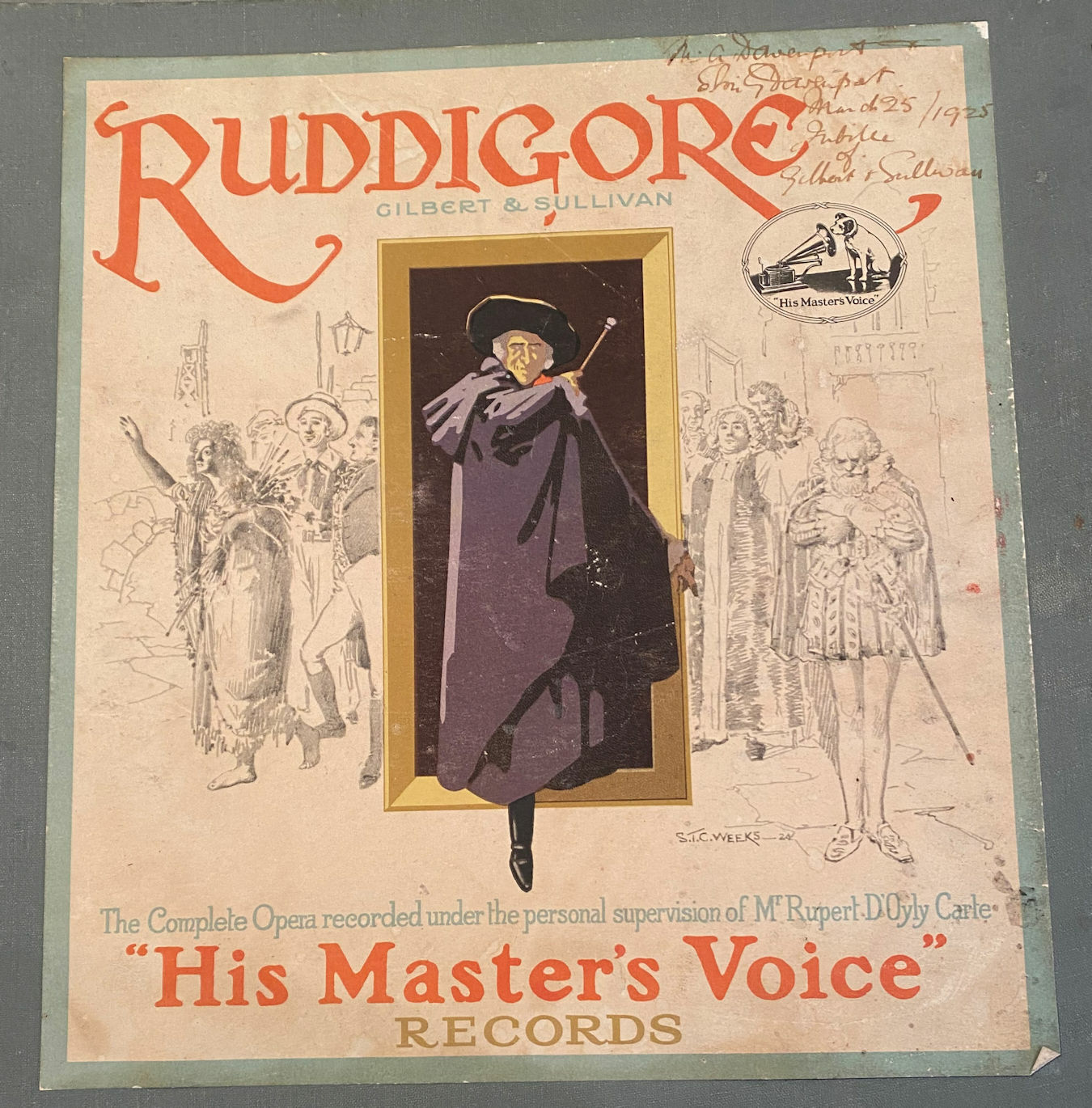
Ruddigore Gilbert & Sullivan, Complete, 9 x 78 rpm Rupert D'Oyly Carte 1924 orig
£
55
$
73
Favourite Auctions
To save auctions to your favourites, please login
If you don't have an account, please register
Description
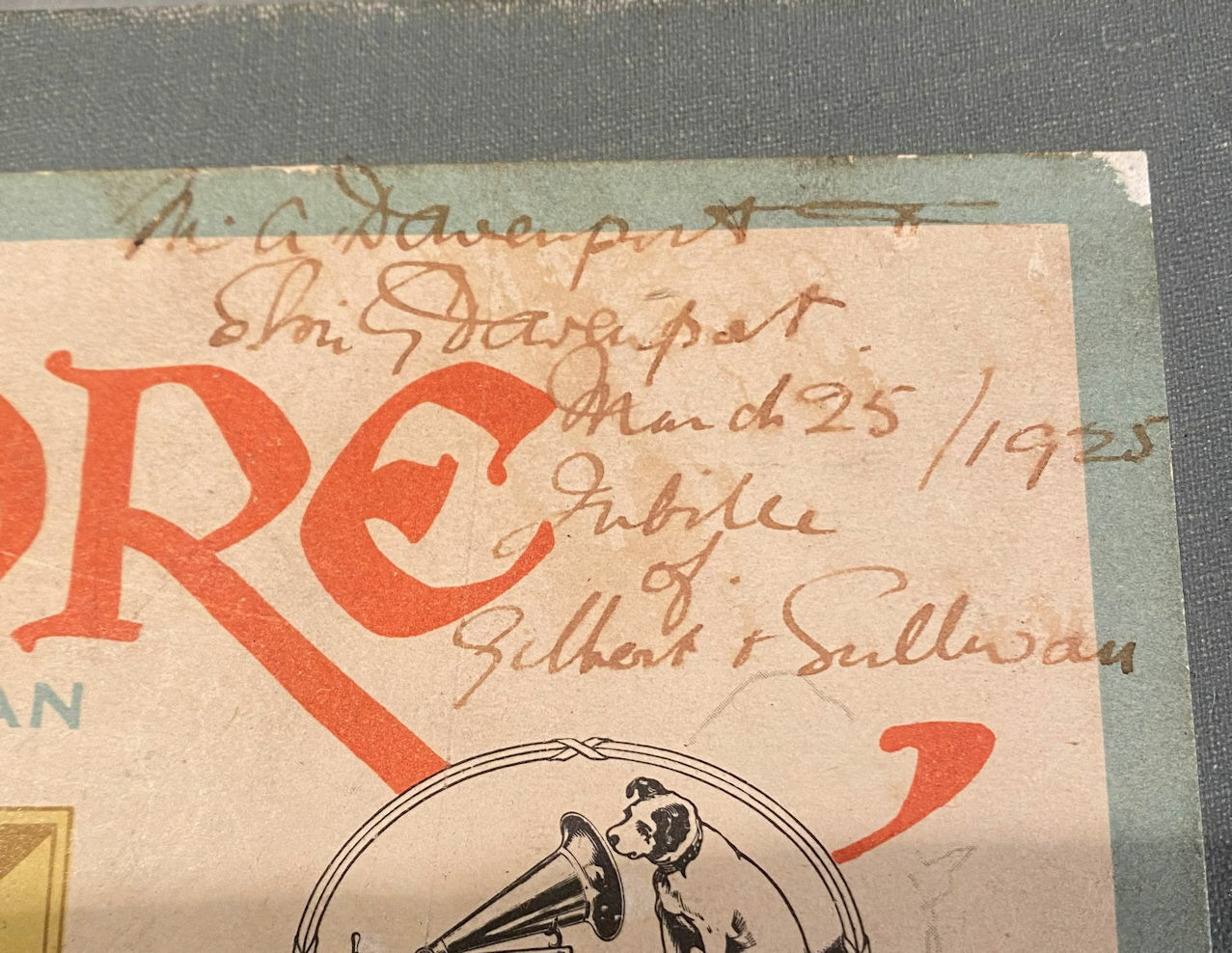
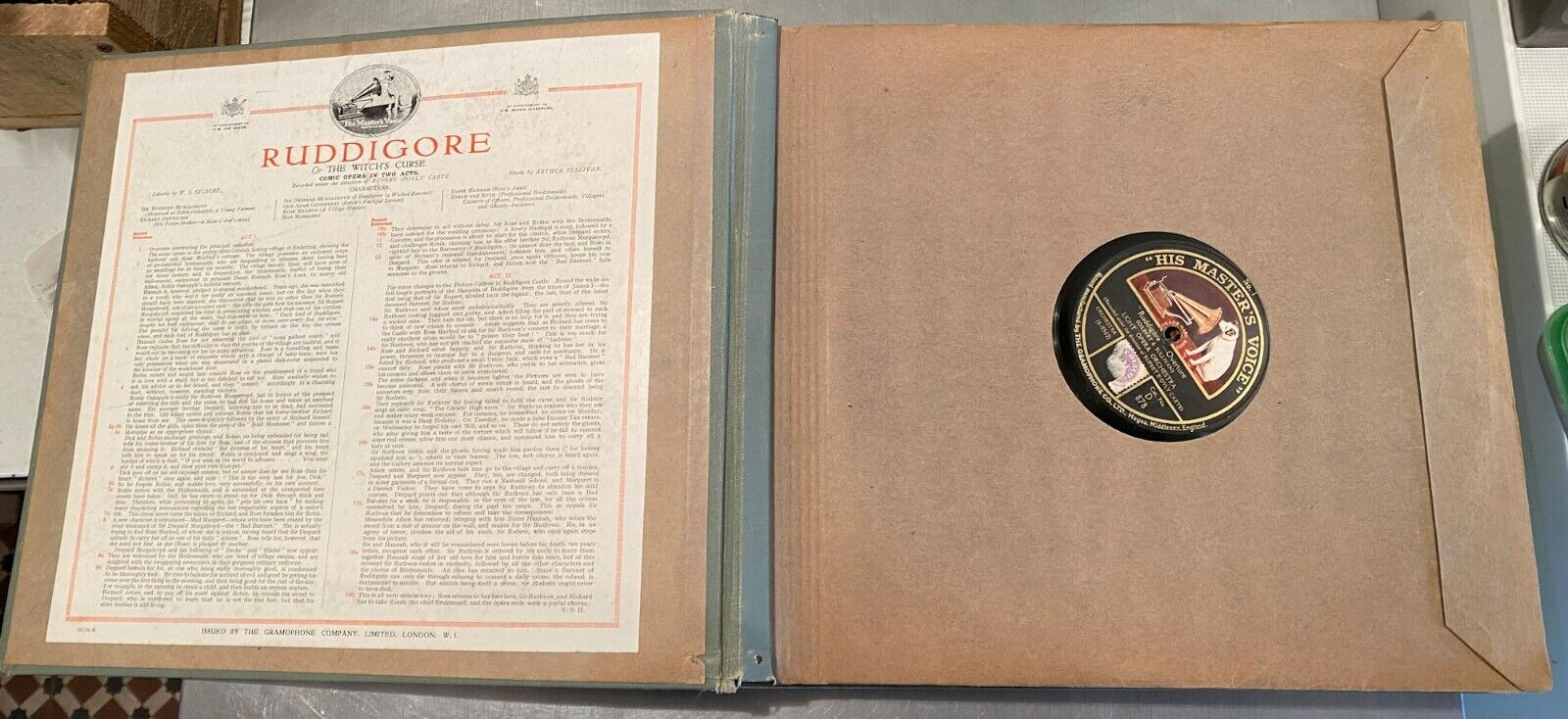
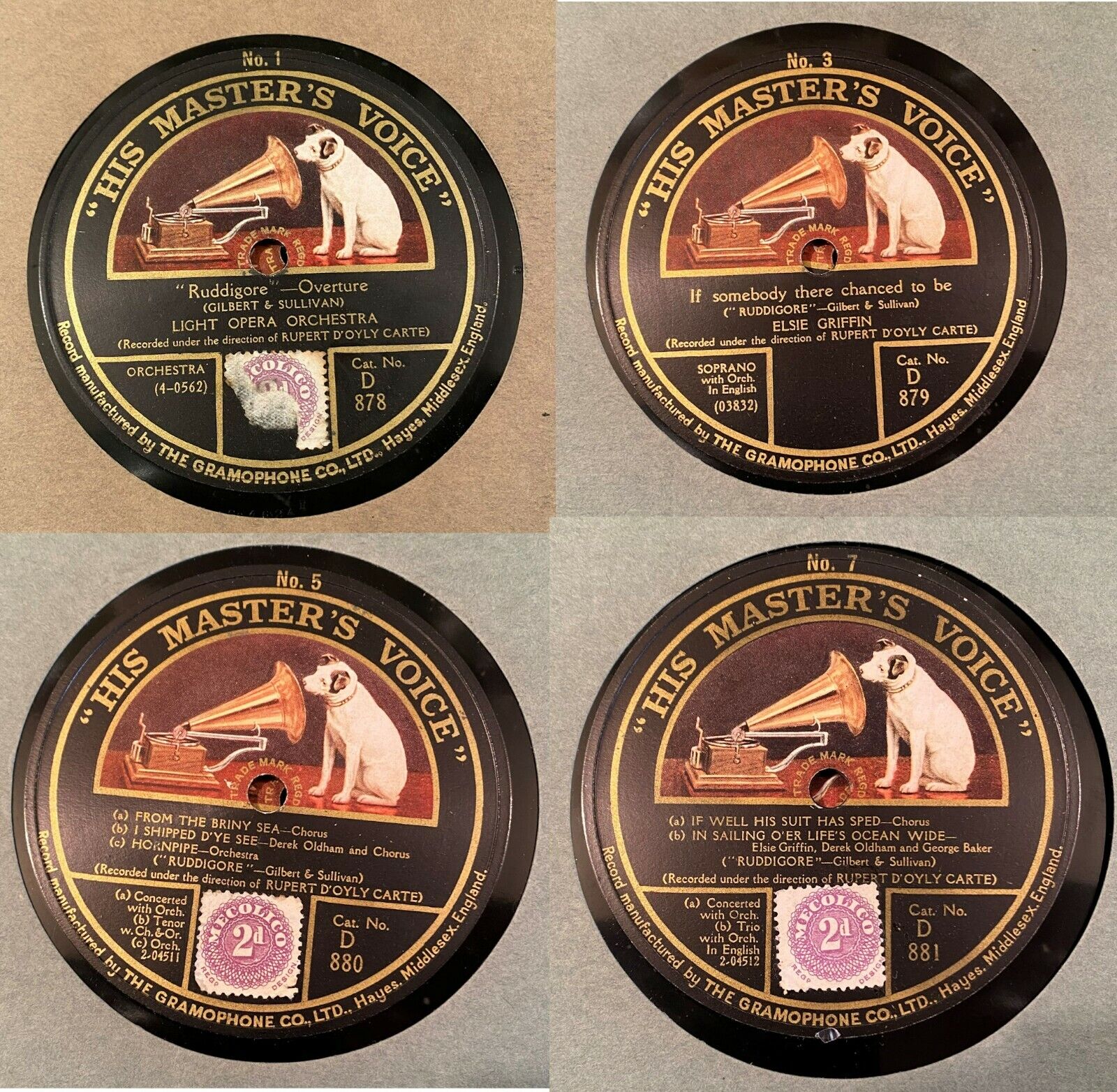
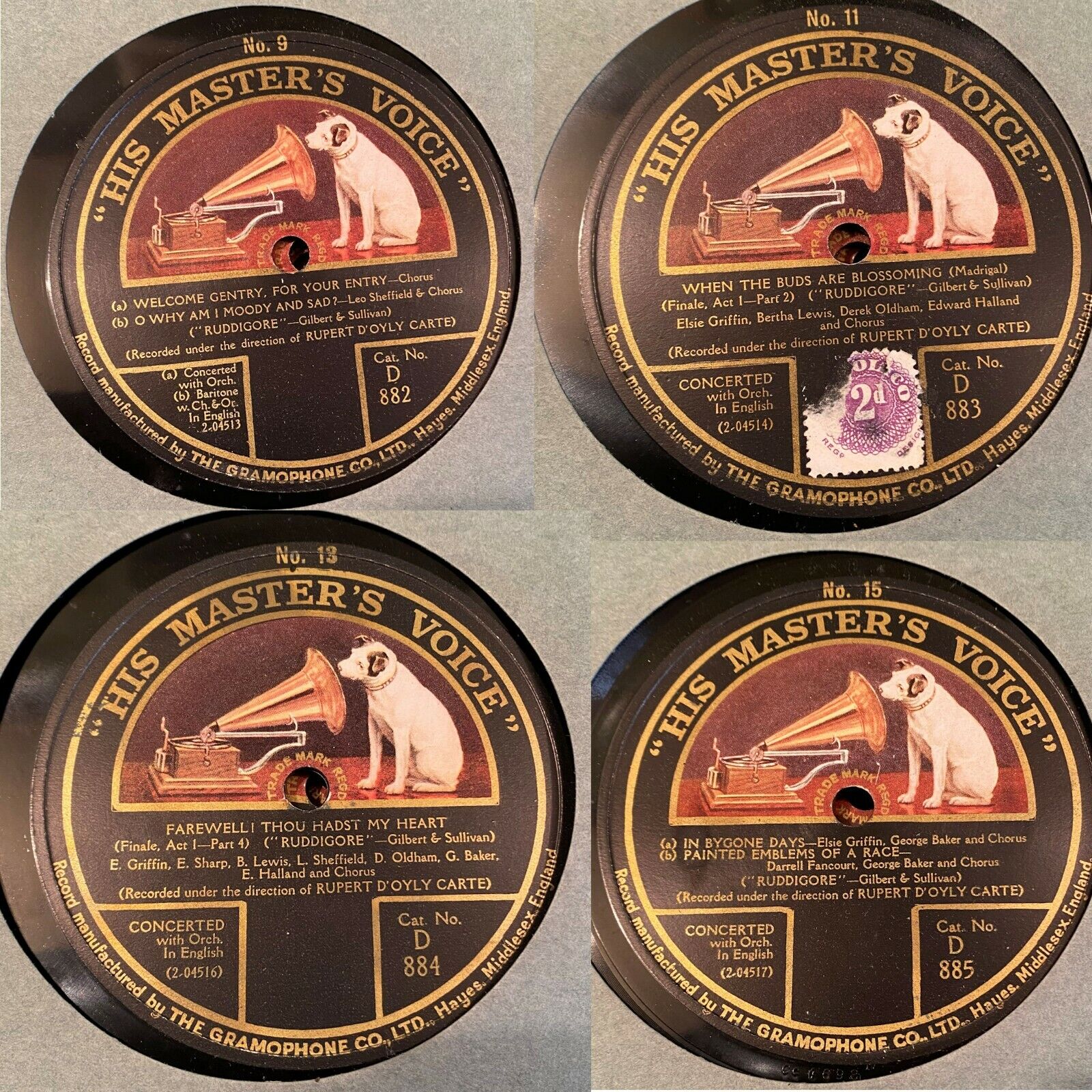
This is a copy of the original 1924 recording in its original box cardboard cover with sleeve notes. All the records have been looked after carefully and the inner sleeves for each record are in excellent condition. Thought to be one of the most important recordings of this work, and contains sections different to later recordings.
The records are already in a solid box set and will be shipped with further protective bubblewrap and a firm cardboard box to protect the shellac records.
Review Notes:
Ruddigore and The Grand Duke. Both completed their original runs and were never revived in Gilbert's or Sullivan's lifetimes. In 1920, however, Rupert D'Oyly Carte decided the time was finally right for a revival of Ruddigore. The notion of "bloody gore" and ghosts who come back to life was too shocking for prudish Victorian audiences, but Rupert judged (correctly) that twentieth century audiences would appreciate the opera's many strengths.
In the wake of the first-night failure, Gilbert and Sullivan had revised their opera heavily, shortening the second act and toning down most of the references to revived ghosts. Rupert D'Oyly Carte felt that further changes were needed, and he authorized his musical directors of the time, Harry Norris and Geoffrey Toye, to make whatever revisions they thought necessary to render the work stageworthy. Perhaps the most inspired revision was Toye's new overture, replacing Hamilton Clarke's original that was arguably the weakest of those Sullivan delegated to assistants. Less sensible was the replacement of the original Act II finale with a simple reprise of "Oh, happy the lily." The excision of Robin's "Henceforth all the crimes" and the Act II melodrama also apparently date from this round of revisions.
Since Ruddigore had been entirely out of the repertory since 1887, the audiences of the 1920 revival saw what was, to all intents and purposes, essentially a brand new opera. The work met with enormous success and was seldom out of the repertory thereafter. This recording, made just a few years after the revival and with several of the same singers, captures much of its excitement. Unlike most of the other operas, no Ruddigore performing tradition survived the nineteenth century. The tradition we know today is the one most of these singers helped to create.
In this recording, Oldham, Sheffield, Fancourt and Lewis recreate their roles from the 1920 revival. Elsie Griffin did not create Rose for the revival but was with the Company at the time. Eileen Sharp joined the Company a year later. Henry Lytton, who played Robin in the revival, was evidently judged too old to record the part, and so was replaced by George Baker, who was a fixture on most of these early recordings. Edward Halland, who played Old Adam, was not with D'Oyly Carte but sang chorus and small parts on several of the early sets.
The "improvements" to the score that debuted in the 1920 revival have been much criticized, but this recording shows that they didn't happen all at once. Several instrumental passages are heard here in different versions than heard in later years, leading one to conclude that nips and tucks in the score continued for years afterwards. The set includes "The battle's roar is over," although contemporary reviews reveal that it was omitted in stage performances of the time.
price rating