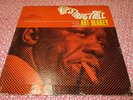
SANTANA / McLAUGHLIN - LOVE DEVOTION SURRENDER LP 1973
€
30
$
34


Favourite Auctions
To save auctions to your favourites, please login
If you don't have an account, please register
Description
endrucomics store
PREMESSA: LA SUPERIORITA' DELLA MUSICA SU VINILE E' ANCOR OGGI SANCITA, NOTORIA ED EVIDENTE. NON TANTO DA UN PUNTO DI VISTA DI RESA, QUALITA' E PULIZIA DEL SUONO, TANTOMENO DA QUELLO DEL RIMPIANTO RETROSPETTIVO E NOSTALGICO , MA SOPRATTUTTO DA QUELLO PIU' PALPABILE ED INOPPUGNABILE DELL' ESSENZA, DELL' ANIMA E DELLA SUBLIMAZIONE CREATIVA. IL DISCO IN VINILE HA PULSAZIONE ARTISTICA, PASSIONE ARMONICA E SPLENDORE GRAFICO , E' PIACEVOLE DA OSSERVARE E DA TENERE IN MANO, RISPLENDE, PROFUMA E VIBRA DI VITA, DI EMOZIONE E DI SENSIBILITA'. E' TUTTO QUELLO CHE NON E' E NON POTRA' MAI ESSERE IL CD, CHE AL CONTRARIO E' SOLO UN OGGETTO MERAMENTE COMMERCIALE, POVERO, ARIDO, CINICO, STERILE ED ORWELLIANO, UNA DEGENERAZIONE INDUSTRIALE SCHIZOFRENICA E NECROFILA, LA DESOLANTE SOLUZIONE FINALE DELL' AVIDITA' DEL MERCATO E DELL' ARROGANZA DEI DISCOGRAFICI .
MAHAVISHNU JOHN Mc LAUGHLIN CARLOS SANTANA
love devotion surrender
Disco LP 33 giri , 1973, columbia C 32034, usa/canada, first press
ECCELLENTI CONDIZIONI, vinyl NM , cover NM.
Love Devotion Surrender is an album, released in 1973, by guitarists Carlos Santana and John McLaughlin, with the backing of their respective bands (at that time Santana and The Mahavishnu Orchestra). Both men were disciples of the guru Sri Chinmoy. The album was created as a tribute to free jazz pioneer John Coltrane. In addition, it contains two McLaughlin songs, but none by Santana.
- Etichetta: Columbia
- Catalogo: C 32034
- Data di pubblicazione: 1973
- Matrici : P AL 32034-1EG IT / P BL 32034-1G
- Supporto:vinile 33 giri
- Tipo audio: stereo
- Dimensioni: 30 cm.
- Facciate: 2
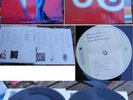
- Gatefold / copertina apribile, red-orange label, white paper inner sleeve
Perhaps, in 1973, this smacked too much of corporateness and possibly it carried a whiff of pretension as well — suddenly, hit records weren't enough for the upstart Carlos Santana and he had to start hanging out with gurus and noodling at the altar of Coltrane? It probably didn't help matters that Santana and McLaughlin picked what were arguably the deceased jazz master's two most famous originals as their covers; I mean, how could anyone hope to say something with "A Love Supreme" that Coltrane hadn't already said more powerfully and eloquently? The version on this album admittedly has little of the depth and spirituality that charged the Coltrane original, but Santana and McLaughlin do transform it into one heck of a fusion workout. "Naima" is spared direct comparisons to the definitive performance on Giant Steps, as it is radically (and successfully) reimagined here as a brief duet for acoustic guitars.
The other three tracks consist of the McLaughlin-penned "The Life Divine" and "Meditation," as well as a Pharaoh Sanders-influenced rendition of the traditional "Let Us Go Into The House Of the Lord." "The Life Divine" is the only hiccup on the album, in my opinion, as I think that it is weakened by being too obvious an attempt to copy "A Love Supreme" — all the way down to the mantric chanting of the title. Nevertheless, there are some noteworthy individual passages in it. "Let Us Go Into The House Of The Lord" is the best piece on the album, in my opinion. The performance is inspired by the Pharaoh Sanders version of the song, but Santana and McLaughlin take it to incredible heights of guitar-shredding ecstasy. John McLaughlin's "Meditation" — a short, pretty piece for acoustic guitar and piano — ends the album on a serene note.
For an album that falls short of its goal, Love Devotion Surrender is quite good, in my opinion. It's patchy in terms of delivering on the great emotional and spiritual weight that the trappings of the project imply, but it works superlatively as a fusion album of dueling guitars. I find that Santana and McLaughlin are usually easy to distinguish in the mix (given their different playing styles) and listening to each one respond to the fretwork of the other is part of the album's appeal. No small amount of credit should be given to Larry Young, whose presence on the organ anchors the three long pieces and is an excellent complement to the two stars. I'm not nearly as versed in the styles of the individual drummers, though, and with four of them listed in the credits, I can't say that I ever know who is doing what (too bad, because I'd love to know which parts are handled by Jan Hammer). All in all, a strongly recommended album for fusion enthusiasts.
inner gatefold back coverL'uscita di questo disco all'epoca passò in sordina. Probabilmente molti interpetrarono questa uscita come un preciso disegno commerciale da parte della casa discografica.
Ma per chi ha avuto occasione di ascoltare l'album avrà avuto modo di pensare: ne venissero di accordi commerciali con un risultato simile!
Il marchio che contraddistingue il disco è "ode alla chitarra elettrica", e in questo caso ne rappresenta uno dei migliori mai suonati nella storia del rock.
E' l'incontro tra due chitarre. Due chitarre che, si trovano, iniziano il dialogo, c'è una scoperta l'uno dell'altro, poi pian piano si sfiorano, si studiano e comincia un'amicizia. L'uno entra nel mondo dell'altro, per McLauglin si aprono spazi dolci e rarefatti, per Santana vertiginose velocità espressive.
Le due tecniche chitarristiche, sebbene molto diverse, concorrono a creare una miscela di suoni molto particolare, pressoché unica per quel periodo.
Ai virtuosismi del primo si contrappone il fraseggio del secondo, In tutto il disco si respira una profonda aria di spiritualità (soprattutto nelle mirabili pagine coltraniane, come è ovvio).
All’interno dell’album compaiono 5 tracce, di cui due sono tratte da lavori di John Coltrane (A Love supreme e Naima), due composte da McLaughlin (The Life Divine e Meditation) ed un altro è un arrangiamento di Santana-McLaughlin di un inno religioso tradizionale afro-americano, Let Us Go Into The House Of The Lord.
A Love Supreme inizia con un’intro a folle velocità di Carlos Santana. Poi il suo vorticare cessa e partono basso e percussioni. L’organo di Yasin/Young si fonde a meraviglia con le dinamiche del gruppo dettando il tema della melodia. Le improvvisazioni chitarristiche di Santana e McLaughlin si contrappongono, una sul canale destro, l’altra sul canale sinistro (impazzivo ascoltarla con lo stereo del Rider Digest, da pochi anni c'era la stereofonia!), non una sfida, ma un botta e risposta come durante una funzione religiosa, poi partono i cori, che, pervasi dallo spirito, ripetono incessantemente “a love supreme”. È evidente fin da questo primo brano come l’influenza della spiritualità sia coltraniana sia del guru di McLaughlin e Santana, Sri Chinmoy, pervada in lungo ed in largo questo disco. Eccezionale.
Naima si apre con un’introduzione virtuosistica della chitarra (acustica) di McLaughlin, a cui dopo un po’ fa eco quella (sempre acustica) di Santana in accompagnamento. Un brano reso in modo molto intimistico e sicuramente adatto ad una composizione che Coltrane dedicò alla moglie mussulmana e che della cultura islamica risente molto quanto ad atmosfera musicale. Splendido.
The Life Divine è caratterizzata da una lunga intro che lentamente cresce d’intensità sonora e porta alla ribalta prima il rullio di una batteria e poi i suoni delle altre batterie, le percussioni e la chitarra di Santana. Il tema è dettato dalla chitarra di McLaughlin, cui si frappongono i cori dei musicisti. L'improvvisazione della chitarra di John e in antitesi quella di Carlos, creano un vortice di suoni. Ripartono i cori, accompagnati dalle chitarre e dalla ritmica, poi di nuovo improvvisazione di una delle chitarre, con il basso che, al contempo con il solo della chitarra, creano un altro vortice e per la terza volta partono i cori. Veramente curata e suggestiva l’evoluzione ciclica di questo brano. Ottimo
Let Us Go Into The House Of The Lord è il brano più lungo dell’album, ben 15 minuti e 43 secondi. Un canto tradizionale riarrangiato dai due chitarristi. Intro di chitarra con sottofondo di batteria ed organo. Grande padronanza tecnica di Santana, anche McLaughlin sfoggia una straordinaria bravura tecnica creando intriganti vortici di note. Entrambe le chitarre sono protagoniste in questo brano, entrambe magistralmente coadiuvate, sia nella proposizione del tema dell’inno sia nell’improvvisazione. Un ottimo arrangiamento per un canto tradizionale particolarmente suggestivo.
Meditation, altra composizione di McLaughlin, è caratterizzata dal piano dell’autore, cui si accompagna in sottofondo la chitarra di Santana. Il tema è prima esposto dal piano, poi dalla chitarra. Un’altra esecuzione intimistica e poetica: una vera e propria meditazione orientale in musica. Bella.
Tracklisting :
- "A Love Supreme" (John Coltrane) – 7:48
- "Naima" (John Coltrane) – 3:09
- "The Life Divine" (John McLaughlin) – 9:30
- "Let us Go Into the House of the Lord" (Traditional) – 15:45
- "Meditation" (John McLaughlin) – 2:45
Personnel
- Mahavishnu John McLaughlin: Guitars, piano.
- Carlos Santana: Guitars.
- Doug Rauch: Bass guitar.
- Mahalakshami Eve McLaughlin: Piano.
- Khalid Yasin: Piano, organ.
- Mingo Lewis: Piano, keyboards.
- Billy Cobham: Drums and percussion.
- Don Alias: Drums and percussion.
- Jan Hammer: Drums and percussion.
- Mike Shrieve: Drums and percussion.
- Armando Peraza: Congas, percussion, vocals.
A hopelessly misunderstood record in its time by Santana fans — they were still reeling from the radical direction shift toward jazz on Caravanserai and praying it was an aberration — it was greeted by Santana devotees with hostility, contrasted with kindness from major-league critics like Robert Palmer. To hear this recording in the context of not only Carlos Santana's development as a guitarist, but as the logical extension of the music of John Coltrane and Miles Davis influencing rock musicians — McLaughlin, of course, was a former Davis sideman — this extension makes perfect sense in the post-Sonic Youth, post-rock era. With the exception of Coltrane's "Naima" and McLaughlin's "Meditation," this album consists of merely three extended guitar jams played on the spiritual ecstasy tip — both men were devotees of guru Shri Chinmoy at the time. The assembled band included members of Santana's band and the Mahavishnu Orchestra in Michael Shrieve, Billy Cobham, Doug Rauch, Armando Peraza, Jan Hammer (playing drums!), and Don Alias. But it is the presence of the revolutionary jazz organist Larry Young — a colleague of McLaughlin's in Tony Williams' Lifetime band — that makes the entire project gel. He stands as the great communicator harmonically between the two very different guitarists whose ideas contrasted enough to complement one another in the context of Young's aggressive approach to keep the entire proceeding in the air. In the acknowledgement section of Coltrane's "A Love Supreme," which opens the album, Young creates a channel between Santana's riotous, transcendent, melodic runs and McLaughlin's rapid-fire machine-gun riffing. Young' double-handed striated chord voicings offered enough for both men to chew on, leaving free-ranging territory for percussive effects to drive the tracks from underneath. Check "Let Us Go Into the House of the Lord," which was musically inspired by Bobby Womack's "Breezing" and dynamically foreshadowed by Pharoah Sanders' read of it, or the insanely knotty yet intervallically transcendent "The Life Divine," for the manner in which Young's organ actually speaks both languages simultaneously. Young is the person who makes the room for the deep spirituality inherent in these sessions to be grasped for what it is: the interplay of two men who were not merely paying tribute to Coltrane, but trying to take his ideas about going beyond the realm of Western music to communicate with the language of the heart as it united with the cosmos. After three decades, Love Devotion Surrender still sounds completely radical and stunningly, movingly beautiful.
Carlos Santana
Carlos Augusto Alves Santana (Autlán de Navarro, Jalisco, 20 luglio 1947) è un chitarrista messicano, tra i musicisti di maggior successo nella storia del rock.
Ha cominciato a riscuotere consensi tra gli anni settanta ed ottanta, con il suo gruppo Santana Blues Band. Già allora mescolava vari generi, quali salsa, rock classico, blues e fusion. Lì come oggi Santana usava in modo estensivo i suoi assoli di chitarra, e si avvaleva anche di strumenti più tradizionali del suo paese. In seguito ha continuato a sperimentare questa formula, tra alterne fortune.
Nel corso degli anni novanta Santana rischiò il declino, scongiurato nel 1999 dall'album Supernatural. Grazie a questo lavoro, il miglior successo della sua carriera, ha fatto conoscere la sua filosofia musicale alle nuove generazioni.
Ha venduto più di 80 milioni di dischi, ed è anche considerato tra i migliori chitarristi rock esistenti.
John McLaughlin
John McLaughlin anche noto come Mahavishnu John McLaughlin (Doncaster, 4 gennaio 1942) è un chitarrista britannico.
John McLaughlin 2008
È considerato uno tra i maggiori chitarristi viventi. Dotato di ottima tecnica, si è spesso contraddistinto per sperimentazioni musicali influenzate dalle musiche di origine orientale e dallo stile fusion, ma anche per aver sviluppato negli anni un modo di suonare con un proprio stile molto singolare.
Un libro pubblicato recentemente Power, Passion and Beauty: The Story of the Legendary Mahavishnu Orchestra racconta la sua vita e quella relativa al gruppo Mahavishnu Orchestra In esso c'è un passaggio in cui si capisce la devozione che fin da giovane aveva per la musica.
« Mia madre dovette sequestrarmi la chitarra per mesi perché stavo tutto il giorno a suonarla e andavo avanti nonostante mi sanguinassero le dita. »
Inizia a suonare la chitarra all'età di undici anni attirato dallo swing e dal blues, ma fu anche il flamenco ad attirarlo per la sua immediatezza. Dopo le prime esperienze in sala di registrazione negli anni settanta, è a New York dove partecipa alle sessioni di In a Silent Way e Bitches Brew di Miles Davis.
Miles Davis (come viene riferito nel libro sopraccitato) aveva però notato che McLaughlin e Cobham erano maturi e pronti per iniziare il loro successo individuale:
« Hey John è ora che cominci a pensare al tuo gruppo »
Dal 1971 al 1973 suona con la sua band in cui è presente il potente ed innovativo batterista Billy Cobham, la Mahavishnu Orchestra, per poi riformarla nel biennio 1974/1975 con la collaborazione del violinista Jean-Luc Ponty. In questo periodo vengono creati i capolavori Inner Mounting Flame e Birds of Fire ed è anche da ricordare l'album Between Nothingness and Eternity.Nel 1974 fondò inoltre la band di World music Shakti.
Ha collaborato con importanti figure della musica mondiale, tra le quali il sassofonista Bill Evans, che partecipò ad una terza riunione della Mahavishnu Orchestra negli anni ottanta.
Tra i suoi album più conosciuti sono da citare Extrapolation, My Goals Beyond, disco acustico con influenze indiane, Handful of Beauty, con gli Shakti, uno dei primi esempi di World Music, il live Friday night in San Francisco, registrato con i chitarristi Paco de Lucia e Al Di Meola nel 1981, e Love devotion surrender in coppia con Carlos Santana, pubblicato nel 1973, che contiene un'interessante rivisitazione di A love supreme di John Coltrane.
price rating