SONIC YOUTH Goo Deluxe vinyl box RAYMOND PETTIBON Byron Coley
$
34


Favourite Auctions
To save auctions to your favourites, please login
If you don't have an account, please register
Description
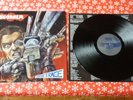
Super nice presentation of the sound of summer 1989... Note, the original lp is on three (3) sides instead of the original two and sounds A LOT better as a result. Demos + bonus tracks are all worth hearing. Records, box and full size book are all in excellent condition, minor shipping/manufacturing marks on the inner sleeve.
***
This would be album number six (depending on your counting method) by the Greatest American Rock Band of the last 25 years. This particular edition is a super-deluxe two-disc reissue of the album. whether you're a fan of the original version or a curious newcomer, this is definitely the version to get, unless you have budgetary concerns, in which case the original will do just fine. Still, my motto is: "if you're going to go for it, go all the way!" I realize that's a moronic cliche, but in a country in which morons like Kevin Federline are more famous than Sonic Youth, sometimes it's rewarding to dumb down. I'll save the lecture about the ethical implications stemming from this for later. Now's the time for "Goo."
"Goo" found the band at the apex of their "pop culture can be fun" phase from the late 80's/early 90's, when they started dressing more fashionably (well, at least Kim Gordon did) and started storming MTV and the then-burgeoning alt-rock radio format. It's also no coincidence that "Goo" was also the band's official major label debut ("Daydream Nation," which was released by the indie Enigma, had major label distribution). Thus begun their long association with DGC, an album that at one point was rumored to be called, um, a slang term also known as a "Lewinsky." The music was also getting slightly poppier as well. Of course, for Sonic Youth, "pop" meant taking a standard verse-chorus-verse structure and slathering it with their trademark oddly-tuned and feedback-spewing guitars. They also embraced pop-cultural themes, or at least those that resonated with them. The album's lead single, "Kool Thing" reflected Kim's post-feminist fascination with the male bravado of hip-hop. LL Kool J is referenced ("Kool thing/walking like a panther") and Public Enemy's Chuck D does a calculatedly brief guest vocal. Then there's "Tunic (Song For Karen)," about the late pop idol Karen Carpenter, who died from complications from anorexia. Rather than being a snide hipster mock-fest, it's sympathetic to her life and situation. Later on, the band would record a cover of "Superstar" that was surprisingly restrained and touching (alas, it's not included here, but you can find it, along with videos for every "Goo" song, on the DVD collection "Corporate Ghost," which makes a fine companion to this release). Elsewhere, you'll find "Dirty Boots," one of Thurston's most accesible rockers, and the classic Hollywood inspired throwaway "Mildred Pierce" (the video for which features A-list director Sofia Coppola years before her big breakthrough). Lee Ranaldo's "Mote" is surely one of his best songs, and was to be the only one of his tracks to make the finished album.
Which is part of the reason disc two is so essential. Here you'll find an unfinished Ranaldo track, as well as "I Know There's An Answer," a shockingly reverent Beach Boys cover. Most important of all, however, is the original 8-track demos the band recorded for "Goo." What you have here is essentially an alternate version of the entire album in a much more raw, and rowdier, form. Although the songs are mostly the same as the ones on the final product, these live-in-the-studio takes ooze more feedback and grit, and the vocals are more tossed-off and almost buried in the mix. This, my friends, is the real "dirty." To be honest, and speaking as a huge slobbering Sonic Youth junkie, I kind of prefer this version, which in sound quality also compares with what I consider the band's best work, "Sister."
***
‘Goo’ est le premier album de Sonic Youth pour une major mais également, et surtout, le premier album faisant suite au génial et séminal ‘Daydream Nation’. Plus qu’une hypothétique compromission commerciale, le véritable problème est de pouvoir rebondir après un tel chef d’œuvre. Les new-yorkais s’en acquittent plus qu’honorablement, délivrant une nouvelle collection de classiques soniques globalement à la hauteur des espérances. La tonalité et les riffs sont sans doute plus ancrés dans le rock que précédemment et les structures sont dans une moindre mesure plus traditionnelles que sur Daydream Nation, ce qui contribue à faire de Goo un disque plus accessible et un peu moins radical. Les guitares sont bien évidemment toujours l’essentiel ici, et sont au fidèles au poste, pervertissant le rock avec enthousiasme (‘Dirty Boots’, ‘Kool Thing’, ‘Mary Christ’, ‘Mote’) ou se découvrant des vertus presque atmosphériques et planantes à coups d’accords répétitifs et d’arpèges audacieux sur une bonne moitié du disque (‘Disappearer’, ‘Tunic’, ‘Cinderella’s Big Score’), le dernier morceau synthétisant le tout de manière jouissive (‘Titanium Expose’).
Souvent mal-aimé par les fins connaisseurs du groupe, ‘Goo’ pâtit en effet un peu de sa sonorité, qui rogne un peu sur le tranchant des guitares et tend à étouffer la puissance du groupe, en ne rendant pas totalement justice à la qualité des compositions. Même si c’est probablement involontaire, cela contribue à donner une identité sonore au disque.
Quoi qu’il en soit l’album est une pierre angulaire de la discographie des américains, ouvrant une nouvelle ère féconde dans leur créativité, et ne saurait être ignoré par quiconque s’intéresse au rock indépendant et expérimental. Indispensable évidemment.
***
Lange haben Sonic Youth gebraucht, um auf ein Album wie "Goo" hinzuarbeiten und um die Ernte ihrer künstlerisch bedeutenden Arbeit einzufahren. Die Jahre zuvor waren von musikalischer Selbstfindung und Destruktivität, aber auch von Innovation, sowie einflussreichen und inspirierenden Begegnungen mit anderen Künstlern geprägt. Album für Album hatten Sonic Youth Grenzen ausgelotet und gegen die musikalische Stagnation in der Rockmusik angekämpft. Ihr letzter Independent-Release "Daydream Nation" von 1988 war der Höhe- und Wendepunkt dieser "Sturm und Drang"-Phase. Ab diesem Album war die Musik von Sonic Youth strukturierter, detailverliebter, spannungsreicher und zum Teil auch zugänglicher aufgebaut. "Goo" dagegen war und ist immer noch das heimliche Popalbum von Sonic Youth. Und das bessere "Nevermind" sowieso. Die Band zeigte auf diesem Album, dass sie zu jeder Zeit zu allem fähig ist. Selten boten Sonic Youth eine derart unberechenbare, eiskalte und abgezockte Leistung, wie auf ihrem Major-Debüt. Unter der Oberfläche zeitlos schöner Popmelodien wie in "Mote" oder "Disappearer" sägten und quietschen die Gitarren von Moore und Ronaldo wie Baggerschaufeln auf Beton. Meisterhaft und kompromisslos bauen sie Schicht für Schicht in "Mildred Pearce", "Cindarellas Big Score" und "Scooter + Jinx" eine Wand aus Gitarren auf, nur um sie Sekunden später wieder einstürzen zu lassen. Fein, differenziert und um Nuancen erweitert stellt "Goo" das klanglich reinste Werk von Sonic Youth dar. Es brachte alle Tugenden, wie auch schon sein Vorgänger, auf einen Nenner und funktioniert als Gesamtkunstwerk genauso gut wie als lose Hitsammlung. Abgerundet wird das Ganze durch Gastauftritte von Chuck D in "Kool Thing" und J. Mascis in "My Friend Goo".
price rating