STEVE REICH SHANDAR LP TERRY RILEY-LA MONTE YOUNG-NWW
£
27
$
35


Favourite Auctions
To save auctions to your favourites, please login
If you don't have an account, please register
Description
STEVE REICH
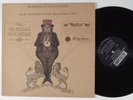
FOUR ORGANS / PHASE PATTERNS LP
Shandar
Rare 70's original on the legendary Shandar of Steve Reich early minimalist masterpieces "Four Organs" & "Phase Patterns" with Philip Glass & Jon Gibson.
Some info on the release: Very rare original issue, released in France back in 1970. Released by the legendary Shandar label (Terry Riley, La Monte Young, Pandit Pran Nath, Cecil Taylor, Albert Ayler, Charlemagne Palestine, Karlheinz Stockhausen, etc.) This was the first ever performance of Four Organs at the Guggenheim Museum, New York. Performers include the composer himself, Philip Glass, Jon Gibson, Steve Chambers and Art Murphy .
Stephen Michael “Steve” Reich is an American composer who pioneered the style of minimalist music. His innovations include using tape loops to create phasing patterns (examples are his early compositions, "It's Gonna Rain" and "Come Out"), and the use of simple, audible processes to explore musical concepts (for instance, "Pendulum Music" and "Four Organs"). These compositions, marked by their use of repetitive figures, slow harmonic rhythm and canons, have significantly influenced contemporary music, especially in the US. Reich's work took on a darker character in the 1980s with the introduction of historical themes as well as themes from his Jewish heritage, notably the Grammy Award-winning Different Trains. Reich worked with the California Tape Music Centre along with Pauline Oliveros, Ramon Sender, Morton Subotnick, and Terry Riley. He was involved with the premiere of Riley's In C and suggested the use of the eighth note pulse, which is now standard in performance of the piece.
Reich's style of composition has influenced many other composers and musical groups, including John Adams, the progressive rock band King Crimson, the new-age guitarist Michael Hedges, the art-pop and electronic musician Brian Eno, the experimental art/music group The Residents, the composers associated with the Bang on a Can festival (including David Lang, Michael Gordon, and Julia Wolfe, and numerous indie rock musicians including songwriter Sufjan Stevens and instrumental ensembles Tortoise, The Mercury Program (themselves influenced by Tortoise), So Many Dynamos, Do Make Say Think and A Silver Mt. Zion. Godspeed You! Black Emperor composed a song, unreleased, entitled "Steve Reich". Close to the aesthetics of Louis Andriessen, Karel Goeyvaerts, Michael Nyman, Gavin Bryars, Steve Martland, Henryk Górecki, Arvo Pärt, and John Tavener, Tom Johnson, La Monte Young, Tony Conrad, Charlemagne Palestine, Angus Maclise, Phill Niblock.
Four Organs is a work for four electronic organs and maraca, composed by Steve Reich in January 1970. The four organs, harmonically expound a dominant eleventh chord (E-D-E-F#-G#-A-B), dissecting the chord by playing parts of it sequentially while the chord slowly increases in duration from a single 1/8 note at the beginning to 200 beats at the end. The process of increased augmentation is accomplished first by causing notes to sustain after the chord, and then notes start anticipating the chord. As the piece progresses, this "deconstruction" of the chord emphasizes certain harmonies. At the climax of the work, each tone sounds almost in sequence. A continuous maraca beat serves as a rhythmic framework. Reich describes the piece as "the longest V-I cadence in the history of Western Music" the v (B-D-F#) and I (E-G#-B) chords being contained within the one chord: "You'll find the chord in Debussy and Thelonious Monk - the tonic on top and the dominant on the bottom." He has cited the music of Perotin and other twelfth and thirteenth century composers as suggesting the technique of note augmentation used in Four Organs.
For performances of the piece, Reich recommended using electronic organs with as plain and simple a timbre as possible, without vibrato, to avoid the sound of the instrument itself distracting from the harmonic and rhythmic aspects of the piece. Reich himself employed four Farfisa "mini compact" models. Four Organs was first performed in May 1970 at the Guggenheim Museum in New York City. It was received well at the premier, and performances later that year in the United States and Europe received respectful, and in some cases enthusiastic, responses. Subsequent audiences were not always as polite. October 1971 performances by Reich and members of the Boston Symphony (at Symphony Hall in Boston) received a combination of "loud cheers, loud boos, and whistles." A 1973 performance of Four Organs at Carnegie Hall in New York City nearly caused a riot, with "yells for the music to stop, mixed with applause to hasten the end of the piece. One of the performers, Michael Tilson Thomas, recalls: "One woman walked down the aisle and repeatedly banged her head on the front of the stage, wailing 'Stop, stop, I confess.'"
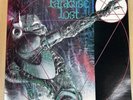
Condition: Vinyl lies in excellent condition, looks very clean and plays nicely all along, a very clear listen, while there is a tear on one of the labels (not sure if this affects the grading of the vinyl and how much for you), while cover lies in very good+ condition with some yellowing and a sticker + writing at the bottom left (see picture).
Tracklist
A Four Organs 15:35 Maracas - Jon GibsonOrgan - Art Murphy, Philip Glass, Steve Chambers, Steve Reich B Phase Patterns 16:35 Organ - Art Murphy, Jon Gibson Steve Chambers, Steve Reich
SHIPPING & PAYMENT
Shipping: Shipping for this LP is 4.50 gbp airmail in Europe / 6 gbp for the rest of the world
Registered mail: +3 gbp
Insurance: optional
Combined shipping: BIG discounts
Payment: Paypal
Packaging: I am a collector too and i know
price rating