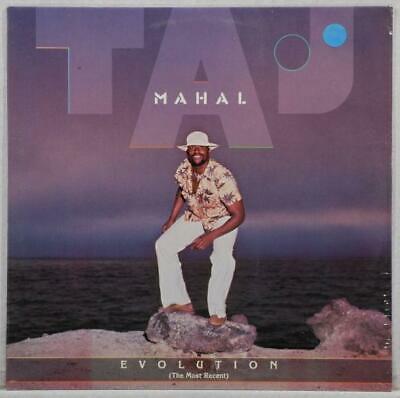
Sealed LP: Taj Mahal: Evolution (The Most Recent)
$
20


$ 20
Sold For
Feb 5, 2020
Sold Date
Nov 25, 2019
Start Date
1
Number Of Bids
USA
Country Of Seller
eBay
Sold at
Favourite Auctions
To save auctions to your favourites, please login
If you don't have an account, please register
Description
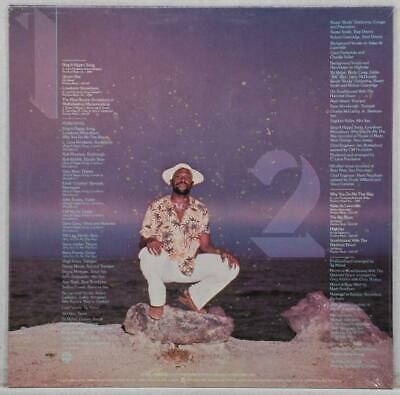
Taj Mahal: Evolution (The Most Recent)
FACTORY SEALED LP
Format: Sealed LPCountry: U.S.A. Record Company & Release Number: Warner Bros.: BSK 394
Original release date: 1977
Bar Code: NONE Condition of the cover: Mint
Condition of the record: Sealed - Assumed Mint Shipping Weight: 1 pounds, 1 ounces
My inventory number: 209545 Notes: - - -
Please contact me if you have any difficulty viewing the photos.
Songs
- Why You Do Me This Way
- Salsa de Laventille
- Big Blues
- Highnite
- Southbound With the Hammer Down
- Sing a Happy Song
- Queen Bee
- Low Down Show Down
- Most Recent Evolution of Muthafusticus Modernisticus
Credits
- Denny Marouse: Trombone
- McDonald: Performer
- Larry McDonald: Percussion, Keyboards, Conga
- Denny Moore: Trumpet
- Dennis Morouse: Sax (Tenor)
- Cliff Morris: Guitar
- Gary Mure: Drums
- Mark Needham: Engineer
- Leon Pendarvis: Arranger, Producer, Keyboards
- Alan Raph: Trombone
- Rich: Performer
- Billy Rich: Bass
- Claudia Siefer: Vocals, Vocals (Background)
- Kester Smith: Percussion, Drums
- John Zangrando: Saxophone, Sax (Alto)
- Kwasi Dzidzornu: Percussion, Conga
- Eddie Rich: Bass
- Robert Greedidge: Drums (Steel)
- Stephen Keller: Sax (Alto)
- Danny Moore: Trumpet
- Zane Woodworth: Trumpet
- Jim Bonnefond: Engineer
- Willis: Performer
- Steve Jordan: Drums
- Dave Carey: Marimba, Vibraphone
- Smith: Performer
- Joshie Armstead: Vocals, Vocals (Background)
- Bob Babbitt: Bass
- Billy Barnes: Vocals, Vocals (Background)
- Errol Bennett: Percussion
- David Carey: Percussion
- Cosie Costa: Performer
- Rudy Costa: Flute, Sax (Alto), Kalimba, Wind, Sax (Soprano)
- Rocky Dzidzornu: Percussion
- Barry Finnerty: Guitar
- Carole Fredericks: Vocals, Vocals (Background)
- Janice Gadsden: Vocals, Vocals (Background)
- Wayne Garfield: Vocals
- Robert Greenidge: Drums, Vocals
- Virgil Jones: Trumpet
- Will Lee: Bass
- Mark Isham: Trumpet
- John Tropea: Guitar
- Rob Mounsey: Keyboards
- Seldon Powell: Saxophone, Sax (Baritone)
- Taj Mahal: Banjo, Guitar, Producer, Main Performer, Vocals, Harmonica, Arranger, Mandolin
Album Review
- Contrary to the intimations of the title, Evolution (The Most Recent) was a predictable continuation of the pleasing but sleepy groove that Mahal had fallen into by the mid-197s, heavy on the Caribbean accents. The use of an almost disco-ish backing on "Sing a Happy Song" put him close to the sound coming out of Miami studios in the 1970s, though that's not a form for which he was well suited. Mahal made a diverse record, true. There was a venture into something approaching straight soul on "Lowdown Showdown," and "The Most Recent (Evolution) of Muthafusticus Modernusticus," in addition to giving space for lengthy jazzy brass solos, was a pretty solid bid for the record title least likely to be announced in full by an FM DJ in 1978. For all his flirtations with Caribbean rhythms, the songs that put those in the background and let his blues and R&B inclinations come to the fore were superior. He does quite a credible Howlin' Wolf imitation on "The Big Blues," while "Southbound with the Hammer Down" is a pretty reasonable facsimile of Dr. John. Mahal would have been wiser to sound like himself, though, and by this time his best qualities seemed in danger of drowning in a Caribbean sunset. ~ Richie Unterberger, All Music Guide
Biography
Taj Mahal biography by Steve Huey, All Music Guide
- One of the most prominent figures in late 20th century blues, singer/multi-instrumentalist Taj Mahal played an enormous role in revitalizing and preserving traditional acoustic blues. Not content to stay within that realm, Mahal soon broadened his approach, taking a musicologist's interest in a multitude of folk and roots music from around the world -- reggae and other Caribbean folk, jazz, gospel, R&B, zydeco, various West African styles, Latin, even Hawaiian. The African-derived heritage of most of those forms allowed Mahal to explore his own ethnicity from a global perspective and to present the blues as part of a wider musical context. Yet while he dabbled in many different genres, he never strayed too far from his laid-back country blues foundation. Blues purists naturally didn't have much use for Mahal's music and according to some of his other detractors, his multi-ethnic fusions sometimes came off as indulgent, or overly self-conscious and academic. Still, Mahal's concept seemed somewhat vindicated in the '90s, when a cadre of young bluesmen began to follow his lead -- both acoustic revivalists (Keb' Mo', Guy Davis) and eclectic bohemians (Corey Harris, Alvin Youngblood Hart).
- Taj Mahal was born Henry St. Clair Fredericks in New York on May 17, 1942. His parents -- his father a jazz pianist/composer/arranger of Jamaican descent, his mother a schoolteacher from South Carolina who sang gospel -- moved to Springfield, MA, when he was quite young and while growing up there, he often listened to music from around the world on his father's short-wave radio. He particularly loved the blues -- both acoustic and electric -- and early rock & rollers like Chuck Berry and Bo Diddley. While studying agriculture and animal husbandry at the University of Massachusetts, he adopted the musical alias Taj Mahal (an idea that came to him in a dream) and formed Taj Mahal & the Elektras, which played around the area during the early '60s. After graduating, Mahal moved to Los Angeles in 1964 and, after making his name on the local folk-blues scene, formed the Rising Sons with guitarist Ry Cooder. The group signed to Columbia and released one single, but the label didn't quite know what to make of their forward-looking blend of Americana, which anticipated a number of roots rock fusions that would take shape in the next few years; as such, the album they recorded sat on the shelves, unreleased until 1992.
- Frustrated, Mahal left the group and wound up staying with Columbia as a solo artist. His self-titled debut was released in early 1968 and its stripped-down approach to vintage blues sounds made it unlike virtually anything else on the blues scene at the time. It came to be regarded as a classic of the '60s blues revival, as did its follow-up, Natch'l Blues. The half-electric, half-acoustic double-LP set Giant Step followed in 1969 and taken together, those three records built Mahal's reputation as an authentic yet unique modern-day bluesman, gaining wide exposure and leading to collaborations or tours with a wide variety of prominent rockers and bluesmen. During the early '70s, Mahal's musical adventurousness began to take hold; 1971's Happy Just to Be Like I Am heralded his fascination with Caribbean rhythms and the following year's double-live set, The Real Thing, added a New Orleans-flavored tuba section to several tunes. In 1973, Mahal branched out into movie soundtrack work with his compositions for Sounder and the following year he recorded his most reggae-heavy outing, Mo' Roots.
- Mahal continued to record for Columbia through 1976, upon which point he switched to Warner Bros.; he recorded three albums for that label, all in 1977 (including a soundtrack for the film Brothers). Changing musical climates, however, were decreasing interest in Mahal's work and he spent much of the '80s off record, eventually moving to Hawaii to immerse himself in another musical tradition. Mahal returned in 1987 with Taj, an album issued by Gramavision that explored this new interest; the following year, he inaugurated a string of successful, well-received children's albums with Shake Sugaree. The next few years brought a variety of side projects, including a musical score for the lost Langston Hughes/Zora Neale Hurston play Mule Bone that earned Mahal a Grammy nomination in 1991. The same year marked Mahal's full-fledged return to regular recording and touring, kicked off with the first of a series of well-received albums on the Private Music label, Like Never Before. Follow-ups, such as Dancing the Blues (1993) and Phantom Blues (1996), drifted into more rock, pop, and R&B-flavored territory; in 1997, Mahal won a Grammy for Señor Blues. Meanwhile, he undertook a number of small-label side projects that constituted some of his most ambitious forays into world music. 1995's Mumtaz Mahal teamed him with classical Indian musicians; 1998's Sacred Island was recorded with his new Hula Blues Band, exploring Hawaiian music in greater depth; 1999's Kulanjan was a duo performance with Malian kora player Toumani Diabate. Maestro appeared in 2008 from Heads Up Records.
- This record came from a record store called "Phantasmagoria" which was located in Allentown, Pennsylvania. Phantasmagoria went out of business in 1978. I purchased most of their unsold inventory some years later when I owned "Music Madness" - a new & used record store in Catasauqua.
- Phantasmagoria used round colored stickers to indicate the price of the albums. They had a sign on the wall with the color sticker combinations for the customers to use so they knew the price of the albums. Most of the albums still have these stickers on them, and in some rare cases, the stickers are written on. Some of the records have prices on them. This is the price you would have paid for the record in 1978 if you would have bought it at Phantasmagoria. Please don't confuse these prices with their current value.
- All sealed albums are being sold as collector's items and cannot be returned due to manufacturer's defects. It may be almost impossible to replace many of the sealed albums that I am selling.
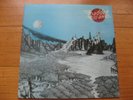
- All pictures are of the exact item being sold.
- I always leave feedback before your item ships. Please consider leaving feedback for me after you have had a chance to inspect and enjoy your purchase.
- Please avoid questions on the last day of the auction. I might not have enough time to give you an answer before the auction ends.
- All album reviews, credits and artist biographies are from All Music Guide. If you haven't been to their web site, you have to check it out. It's one of the most comprehensive music references on the internet. In some cases, credits may include reissue (CD) information. Obviously any credits referenced to CDs do not apply to this album release.
Shipping and pick-up
Shipping is calculated by the weight of your package. I do not charge a handling fee.All uninsured and underinsured shipments are the responsibility of the buyer.
Your item(s) will be shipped within 1business day after I receive your cleared payment.
If you have any special shipping requirements (extra padding, oversized boxes, etc., you must let me know BEFORE making your payment. The pre-calculated cost of your shipping is based my standard packaging (new boxes, padded envelopes, etc.).
DOMESTIC
- Pick-up is fine with me, but be prepared to pay by cash. E-mail me to setup a time that is convenient for the both of us.
INTERNATIONAL
- If you purchase multiple items, please wait until after all the auctions end for me to send an invoice.
- The buyer is responsible for all customs regulations and fees in their own country. I will value all items at $5 each on the Customs Form. Please let me know if you want the actual winning bid price listed on the Customs Form.
- If the total weight of your package is 4 pounds or more, it is required to shipped by International Priority Mail.
I collect Grand Funk Railroad's music and memorabilia. If you think you might have something to trade for this item, let me know well before the auction ends. I normally do not end an auction early, but I will make an exception if we can work out some sort of trade for something that I can add to my Grand Funk collection.
If you also collect Grand Funk, let me know if you have anything that you might want to sell or trade. I am always looking to add something new to my collection.
price rating