THE PIPERS CLUB DUBLIN HAWK RECORDS HALP 153 1976 VERY RARE IRISH FOLK VINYL LP
£
21
$
28


Favourite Auctions
To save auctions to your favourites, please login
If you don't have an account, please register
Description
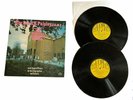
The Pipers Club, Dublin
Hawk Records, Ireland, 1976, Halp 153
Very Rare
Musicians:
Deidre Hodge Concertina Gabriel McKeown Pipes Peter Mckenna Pipes Sean Montgomery Fiddle Brid and Mary McElvaney Fiddles
Roma Casey Fiddle Edel Mcweeney Fiddles Mary Corcoran Piano Aiden McBride Drums
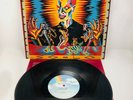
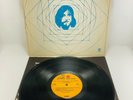
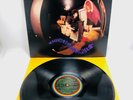
Vinyl is a very strong VG and plays to Excellent grade
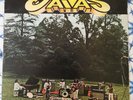
Sleeve has age wear and a few scuffs to front as you can see from photo's but is still very much intact
Back sleeve is Ex-
Track List
The Salamanca/Patsy Touhy Masorka/The Pinch of Snuff Sixpenny More/The Gander at The Pratie Hole Bean A Ti/The Oak Tree
The Baker/Tom Billy's The Humours of Ballyloughlin /Lady Ann mcGregory The Cat/Maggie Pickens Corney's Coming
Jennie's Wedding/Ros Cathan na Mumhan Apples in Winter/A Trip to Athlone/Ackows The Brona Slide/Donal O'Conners/Makunas Slides
The Crooked road The Road to Kilcracken/The Tinkers Wife Breton March/Foxhunters The Maid On the Cherry Tree/Bucks of Oranmore
History of Dublin Pipers Club
Dublin, a city of rapid growth and immigration, was the place in which much of this cultural revival was stirred. Writing on the history of The Dublin Pipers’ Club,
Mick O’Connor writes:Irish music, and particularly piping, has always survived and flourished well in inner-city Dublin...It is through the Pipers’ Club that the development
of Irish music in Dublin can best be traced too over the entire twentieth century(1999: 110, 111)
O’Connor acknowledges the links between the Pipers’ Club and various groups including the Gaelic League and the Irish Volunteers and the profound effect of
politics on musical activities at the start of the twentieth century. O’Connor places thedate of revival of the Pipers Club as 1936 and notes that “Cumann na Píobairí was
key to the setting up of ‘Cumann Ceoltóirí na hÉireann’ in 1951, then CCÉ” (1999:
The development of Irish music in Dublin can be traced mainly through the fortunes of the Dublin Pipers’ Club from the period 1900 to the present day.
The Club became defunct on a number of occasions. Gratten Flood stated that after an existence of six years (1906) the Club got into financial difficulties
and in 1911 was in a moribund condition. The last entry signed in the second minute book of the Dublin Pipers’ Club dated the 14th of October, 1913 is a
request from Padraig Pearse via Eamonn Ceannt for pipers to play at a feis in aid of St. Endas.
THE TROUBLES
From the period between the last entry in the minute book 15 January 1914 and a letter dated 2 November 1921 re-convening the Pipers’ Club in 1921, we have
no documentary evidence of the Club’s existence. We know that the Cork Pipers’ Club went into a similar decline with the outbreak of World War I. It revived
temporarily but continued to decline during the War of Independence and the Civil War that followed. Breandan Breathnach stated that the Pipers’ Club was
reformed in Thomas Street in 1919 but was put out of existence by the activities of the Black and Tans who raided the Dublin Pipers’ Club on one occasion.
Organisations and bands associated with Irish activities were frequently the target of the Black and Tans. The Fintan Lalor Pipe Band, and the Cork Pipers’
Club were raided and William Keane, the Limerick piper had his house burned by the Black and Tans. It is reasonable to assume that the Club was defunct
from 1915 to the revival in 1921.
1916
In an article, “The Origin of Ceili Bands”, Leo Rowsome stated that after the 1916 insurrection, the Pipers’ Club continued to meet at his father’s house in Harold’s
Cross. The continuity of the Pipers’ Club was broken. A letter from the Hon. Secs. of the Irish Union Pipers’ Club, in November 1921, announced the resumption of
its activity at 132 Thomas Street and exhorted its members to support them. The letter was signed by Chas. J.B. Kenny and John Fleming (Honorary Secretaries).
There is further evidence to support this: a copy of a printed letterhead of the Irish Union Pipers’ Club with an illustrated letterpress block of William Rowsome
(Leo’s father) has survived. A roll book of this period 1921-22, with a list of members, also survived and is deposited in the National Library. A son of one of the
members, Frank Rogan informed the writer that the revitalised Club went out of existence after a year or two. This is borne out by dates on the roll book.
THE CIVIL WAR
Leo Rowsome stated that the Civil War put an end to all music gatherings and he missed the friendly sessions of the Pipers’ Club. The Civil War also disrupted the
Oireachtas and subsequently, no instrumental competitions were held in 1922. In 1923, there were a very limited number of events. In 1924 the Oireachtas was held
in Cork with very disappointing entries. There were no entries in the uilleann piper or pipe learner competitions. According to accounts, most people felt that there
was no longer a need for the Gaelic League or specialist music organisations, that the country was in safe hands and our culture would receive due recognition from
a native government. The first flush of enthusiasm from the cultural revival had run its course. It had in fact started to decline after a peak in 1905, reaching a low in
1915 and revived again in the years leading to the War of Independence. These ups and downs were reflected in the numbers of entries in the musical competitions
held by the Oireachtas. An tOireachtas was discontinued after 1924 and it was not held again until 1939 when it was re-established in the Mansion House, Dublin with
over 200 competitors who entered songs, plays, poems and music pieces.
From 1925 to 1936 the Pipers’ Club in Dublin ceased to exist. the music continued to survive in the homes of the following musicians: William Rowsome and John Brogan
(both pipe makers living in Harold’s Cross), John Potts of The Coombe, and James Ennis of Finglas
SCHOOLHOUSE LANE
Leo Rowsome was instrumental in reviving the Pipers’ Club at this period. He got together a few enthusiasts and the Club was revived in Schoolhouse Lane off Molesworth
Street. In an article “The Origins of our Ceilidhe Bands”, Leo Rowsome stated that after a performance in the Siamsa Mor in the Phoenix Park in 1936, Leo canvassed his
pupils (thirty pipers) with a view to reviving the Pipers’ club. This initiative was well received, thereon they immediately arranged a meeting and subsequently Leo was elected
chairman. In an article by Liam Rowsome (Leo’s son) in Treoir reprinted from The Irish Press, he states that Cumann na bPiobairi was founded in 1936. Pipers Jack Wade and
Tommy Reck were prominent members of the Club at that period.
14 THOMAS STREET
In 1946 the Pipers’ Club moved to Arus Ceannt, 14 Thomas Street, the headquarters of the 4th Batallion Old IRA. Some of the members of the 4th Batallion sent their children
to the Club to learn traditional music. Betty Nevin was one of this group and became a proficient piper. The Club began to thrive from then on, mainly due to the prudent
management of Jim Seery and Paddy McElvaney. Andy Conroy brought Johnny Doran to the Club at this time and Paddy McElvaney recalled great piping sessions with Johnny
and Leo Rowsome. Traditional music was still confined to the back streets and it was felt by many people that there was a need for a national organisation to promote our native
culture.
COMHALTAS CEOLTÓIRÍ ÉIREANN
The identity of the Pipers’ Club was eclipsed by the phenomenal growth of Comhaltas Ceoltóirí Éireann, founded in 1951 by members of the Pipers’ Club at 14 Thomas Street. The
new organisation was knowan as Cumann Ceoltóirí na hÉireann but was shortly changed to Comhaltas Ceoltóirí Éireann. A number of very energetic members of the Pipers’ Club gave
unstinting service in the formation of a national organisation. They included Jim Seery, Leo and Tom Rowsome, and Paddy McElvaney.
On October 14th, 1951, at Arus Ceannt, Thomas Street, Dublin, the first standing Committee of Cumann Ceoltóirí na hÉireann was elected as follows: President, Most Rev. Dr. Kyne,
Lord Bishop of Meath; Chairman, Cait Bean Ui Muineachain; Vice Chairman, Willie Reynolds, Walderstown; Secretary, Arthur Connick, Dublin; Assistant Secretary, Tom Rowsome,
Dublin; Treasurer, Jim Seery, Dublin; Committee, Leo Rowsome, Dublin; P.J. Scott-Monsell, Dublin; P. McElvaney, Monaghan; Rev. Brother Redmond, Mullingar; P. Kelly, Donegal;
Micheal MacCarthaigh, Tipperary; W. Hope, Belfast; Eamonn Murray, Monaghan; Jack Naughton and Eamonn O’Muineachain.
The Pipers’ Club in the 1950s and 1960s became a Mecca for visiting musicians and invariably musicians in town for a broadcast (broadcasts including Ceili House were recorded live)
came to the Club afterwards. Many of the ceili bands of the period were connected to the club. They included the Kincora, Eamonn Ceannt and the Castle Ceili Bands. Families with
connections to the original 1900 Club and Schoolhouse Lane were still involved. Leo Rowsome taught the Uilleann Pipes every Saturday night and invariably he played a session of music
afterwards to everyones delight. Sean Seery, Jim Dowling and Mick Toughy were regular performers on the pipes. In the 1970s Sean Keane was teaching the fiddle and produced a
group of fine fiddle players. The Pipers’ Club Ceili Band also came into prominence and won All-Ireland honours at Fleadh Cheoil na hEireann.
BELGRAVE SQUARE, MONKSTOWN
The premises at 14 Thomas Street were no longer adequate for the crowds attending each week. After much deliberation and a close vote the Pipers’ Club moved from 14 Thomas Street
to a new premises located at Belgrave Square, Monkstown, in 1976 and is flourishing. As in previous moves of location, families with long connections to the Club kept the continuity. Paddy
McElvaney, John Keenan and the Quinn family were among the people who provided the link. The branch was re-named Craobh Leo Rowsome, Cumann na bPiobairi in honour of its most
distinguished musician. The Club continues to teach the uilleann pipes along with its other instruments. It is still one of the most active branches in the country and is justifiably proud
of its musical lineage.
I have a lot of other folk listed
Check out my other items!
All records evaluated under very bright grading lamp.
All records professionally and securely packed with stiffeners, proper record mailers and plenty of bubble wrap.
Vinyl removed from sleeve
Worldwide Postage:
Records under £46
UK £3 Europe £4.00 Rest of World £6.50
Records over £46 Postage:
International/ Signed For must be used
UK £4 Europe £8.50 Rest of world £15
price rating