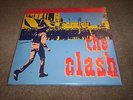
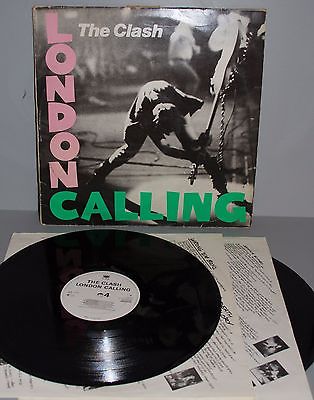
The Clash - London Calling Vinyl LP 1979
£
21
$
28


Favourite Auctions
To save auctions to your favourites, please login
If you don't have an account, please register
Description
My albums are from a private collection collected over some 40 years. All have been played and loved and well looked after. All are in a good condition unless otherwise stated
CBS 88478 1979
Cover - Fair condition with riginal lyric record sleeves
Vinyl – Excellent (Double Album)
London Calling is the third studio album by English punk rock band the Clash. It was released as a double album in the United Kingdom on 14 December 1979 by CBS Records, and in the United States in January 1980 by Epic Records. London Calling is a post-punk album that incorporates a range of styles, including punk, reggae, rockabilly, ska, New Orleans R&B, pop, lounge jazz, and hard rock.
The album's subject matter included social displacement, unemployment, racial conflict, drug use, and the responsibilities of adulthood. The album received widespread acclaim and was ranked at number eight onRolling Stone's list of The 500 Greatest Albums of All Time in 2003. London Calling was a top ten album in the UK, and its lead single "London Calling" was a top 20 single. It has sold over five million copies worldwide, and was certified platinum in the United States.
After recording their second studio album Give 'Em Enough Rope (1978), the band separated from their manager Bernard Rhodes.[6] This separation meant that the group had to leave their rehearsal studio in Camden Town and find another location to compose their music. Tour manager Johnny Green and drum roadie Baker had found the group a new place to rehearse called Vanilla Studios, which was located in the back of a garagein Pimlico.
Prior to this move to the Vanilla Studios rehearsal space, the Clash's songwriters Mick Jones and Joe Strummer had experienced a period of writer's block. They had not written a new song from scratch in over one year, with the material on their recently released Cost of Living EP, composed of a cover song and three songs that had all been written over 12 months earlier. The Clash arrived at Vanilla in May 1979 without a single new song prepared for their third album.
Once in Vanilla Studios, the group began performing cover songs from a variety of genres, such as rockabilly, rock 'n' roll, rhythm and blues, and reggae. In contrast to previous rehearsal sessions, the band kept these rehearsals private, and disallowed hangers-on from attending the Vanilla sessions. This seclusion allowed the band to rebuild their confidence without worrying about the reaction from outsiders, who were familiar with their older punk rock musical style.
The band developed an "extremely disciplined" daily routine of afternoon musical rehearsals, broken by a late-afternoon social football game, which fostered a friendly bond between the band members. The daily football match was followed by couple of drinks at a local pub, which was itself followed by a second musical rehearsal session at Vanilla Studio in the evening
The band gradually rebuilt their musical and songwriting confidence during these rehearsal sessions during the summer of 1979, with the styles of the sessions' early cover songs setting the template for the diverse material that would be written for London Calling. The band were also encouraged by a growing appreciation of drummer Topper Headon's drumming skills, which they realised could be used to perform music in a wide array of genres and styles beyond punk rock. The Clash wrote and recordeddemos, with Mick Jones composing and arranging much of the music and Joe Strummer generally writing the lyrics. As early as their second album, the Clash had started to depart from the punk rock sound. While touring in the United States twice in 1979, they chose supporting acts such as rhythm and blues artists Bo Diddley, Sam & Dave, Lee Dorsey, and Screamin' Jay Hawkins, as well as neotraditional country artist Joe Ely and punk rockabilly band the Cramps. This developed fascination with rock and roll inspired their approach for London Calling.
In August 1979, the band entered Wessex Studios to begin recording London Calling. The Clash asked Guy Stevens to produce the album, much to the dismay of CBS Records. Stevens had alcohol and drug problems and his production methods were unconventional. During a recording session he swung a ladder and upturned chairs – apparently to create a rock & roll atmosphere. The Clash got along well with Stevens, especially bassist Paul Simonon, who found his work to be very helpful and productive to his playing and their recording as a band. The album was recorded during a five- to six-week period involving 18-hour days, with many songs recorded in one or two takes.
price rating