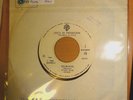
The Velvet Underground - s/t (1984 Pressing, Polygram Label VINYL LP
$
28


Favourite Auctions
To save auctions to your favourites, please login
If you don't have an account, please register
Description
Nice pressing from 1984 of The S/T The Velvet Underground. Note some ring wear on the top half of the front of the sleeve.
The Velvet Underground (album)
From Wikipedia, the free encyclopedia Not to be confused with The Velvet Underground & Nico. The Velvet Underground Studio album by The Velvet Underground Released March 1969 Recorded November–December 1968 Studio T.T.G. Studios, Hollywood, California[1] Genre- Folk rock
- rock
- pop
(1968) The Velvet Underground
(1969) Loaded
(1970) Singles from The Velvet Underground
- "What Goes On" / "Jesus"
Released: 1969
The Velvet Underground is the self-titled third studio album by American rock band the Velvet Underground. Released in March 1969, it was their first record with Doug Yule, who was a replacement for John Cale. Recorded in 1968 at TTG Studios in Hollywood, California, the album's sound—consisting largely of ballads and straightforward rock songs—marked a notable shift in style from the band's previous recordings. In 2003, Rolling Stone magazine ranked the album number 314 in their list of the "500 Greatest Albums of All Time".
Contents
[hide]- 1Background
- 2Music and lyrics
- 3Releases
- 4Critical reception
- 5Track listing
- 6Personnel
- 7References
- 8Further reading
- 9External links
Lou Reed, the band's principal songwriter, said of the album: "I really didn't think we should make another White Light/White Heat. I thought it would be a terrible mistake, and I really believed that. I thought we had to demonstrate the other side of us. Otherwise, we would become this one-dimensional thing, and that had to be avoided at all costs."[2] Drummer Moe Tucker said, "I was pleased with the direction we were going and with the new calmness in the group, and thinking about a good future, hoping people would smarten up and some record company would take us on and do us justice." Doug Yule said the album "was a lot of fun. The sessions were constructive and happy and creative, everybody was working together."[2]
The Velvet Underground was the band's first album for MGM Records, its first two albums having been issued on Verve, an MGM subsidiary. The previously strong Andy Warholinfluence is diminished,[according to whom?] with the most notable ties to the Factory being the cover and back photographs taken by Warholite Billy Name, and the opening track "Candy Says" about Warhol superstar Candy Darling (who reappears in Reed's 1972 song "Walk on the Wild Side"). The song was sung by Yule at Reed's insistence.[3] The LP sleeve was designed by Dick Smith, then a staff artist at MGM/Verve, with Billy Name's photo of the band sitting sedately on a couch at Andy Warhol's Factory.
"The Murder Mystery" included all four band members' voices. During the verses, Lou Reed and guitarist Sterling Morrison recite different verses of poetry simultaneously, with the voices positioned strictly to the left and right. For the choruses, Maureen Tucker and Doug Yule sing different lyrics and melodies at the same time, also separated left and right.[citation needed] The album's closing song, "After Hours", has a rare solo lead vocal by Moe Tucker, again requested by Reed as he felt the sweet, innocent quality of her voice fit the song's mood better than his own.
The album was produced by the band themselves, and issued in two different stereo mixes. The more widely distributed mix is the one done by MGM/Verve staff engineer Val Valentin. The other mix was done by Lou Reed, boosting his vocals and guitar solos, while reducing the level of other instruments. This version was dubbed the "Closet Mix" by Sterling Morrison, because it sounded to him as if it had been recorded in a closet.[4] The most dramatic difference is that the two versions also use an entirely different performance of "Some Kinda Love", which was taken from the same recording sessions.
The restraint and subtlety of the album was a significant departure from the direct abrasiveness of White Light/White Heat.[5][6] Music critic Greg Kot of the Chicago Tribune characterized it as folk rock,[7] and Rolling Stonemagazine's Troy Carpenter said that it focused on mellow, melodic rock.[5] According to music journalist Steve Taylor, The Velvet Underground is a pop album because of its more accessible songs and "has been called Lou Reed with a backing band due to the emphasis placed on songs rather than experimental sound work."[8]
Apart from the forceful rockers "What Goes On" and "Beginning to See the Light", the album contains reflective, melodic songs that are about various forms of love,[6] such as "Pale Blue Eyes", "Some Kinda Love", "Jesus", "I'm Set Free" and "That's the Story of My Life". Reed and Morrison's twin-guitar playing became the band's most prominent sound,[6] and the album had spare arrangements that lacked distortion. The only song that exhibited the band's avant-garde roots is "The Murder Mystery", which incorporated a raga rhythm, murmuring organ, overlapping spoken-word passages, and lilting counterpoint vocals.[6]
SaveSave
price rating






![Groove Armada: Back To Mine [3 DISC VINYL LP] 2000 DMC BACKLP4. VG+ Condition.](https://www.popsike.org/php/thumbnail.php?url=https://www.popsike.pics/pix/20151018/161862255426.jpg)