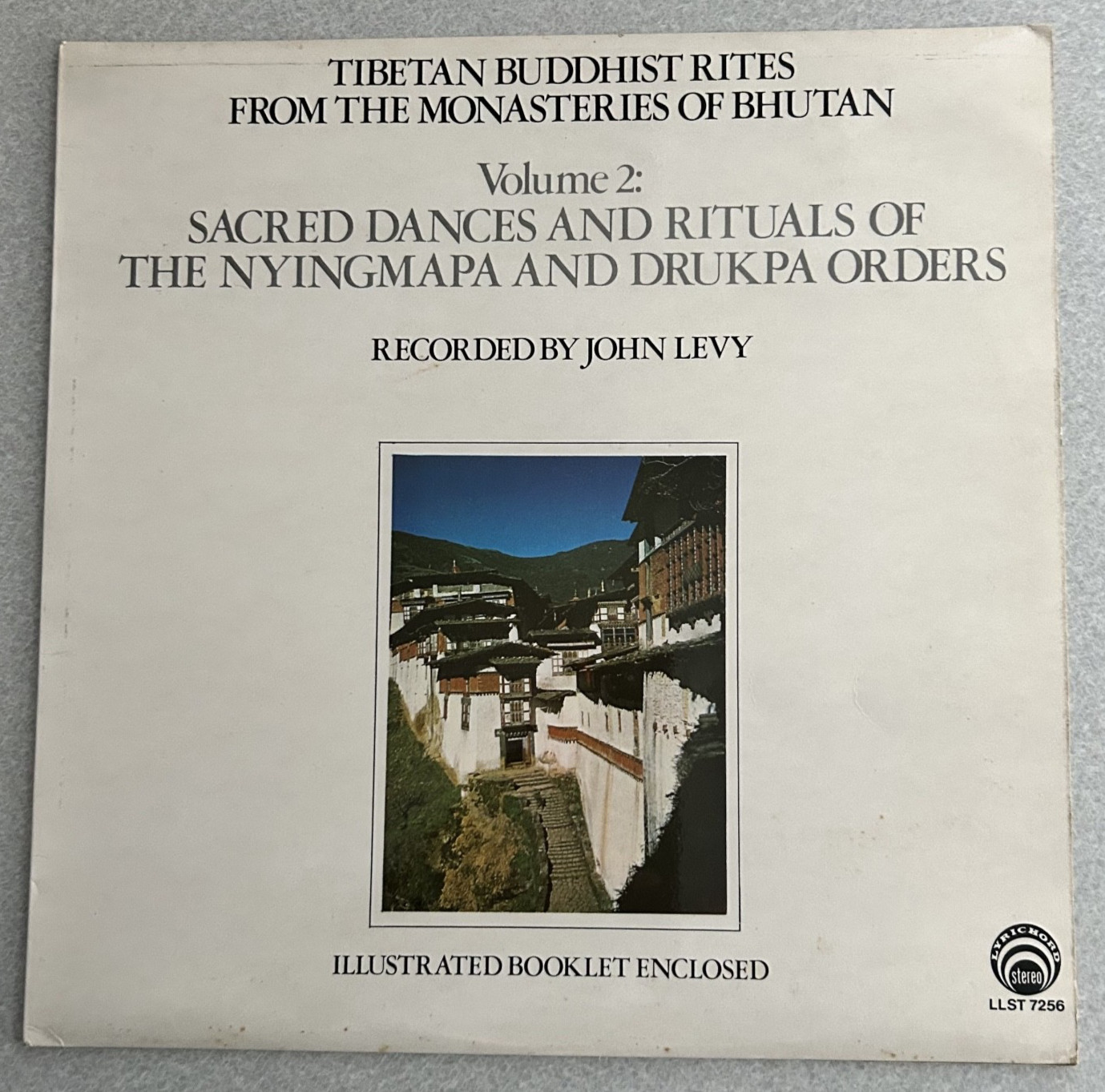
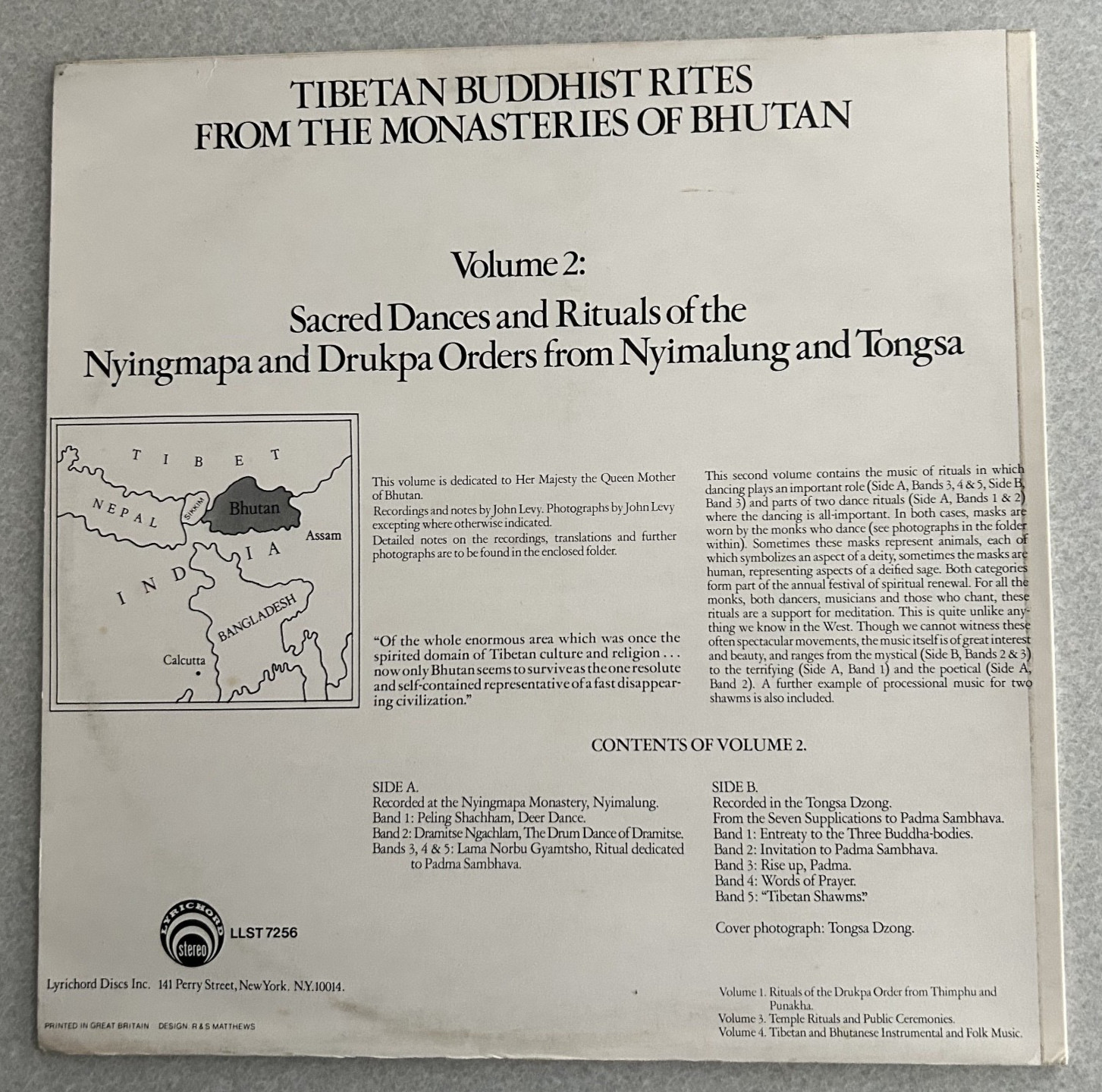
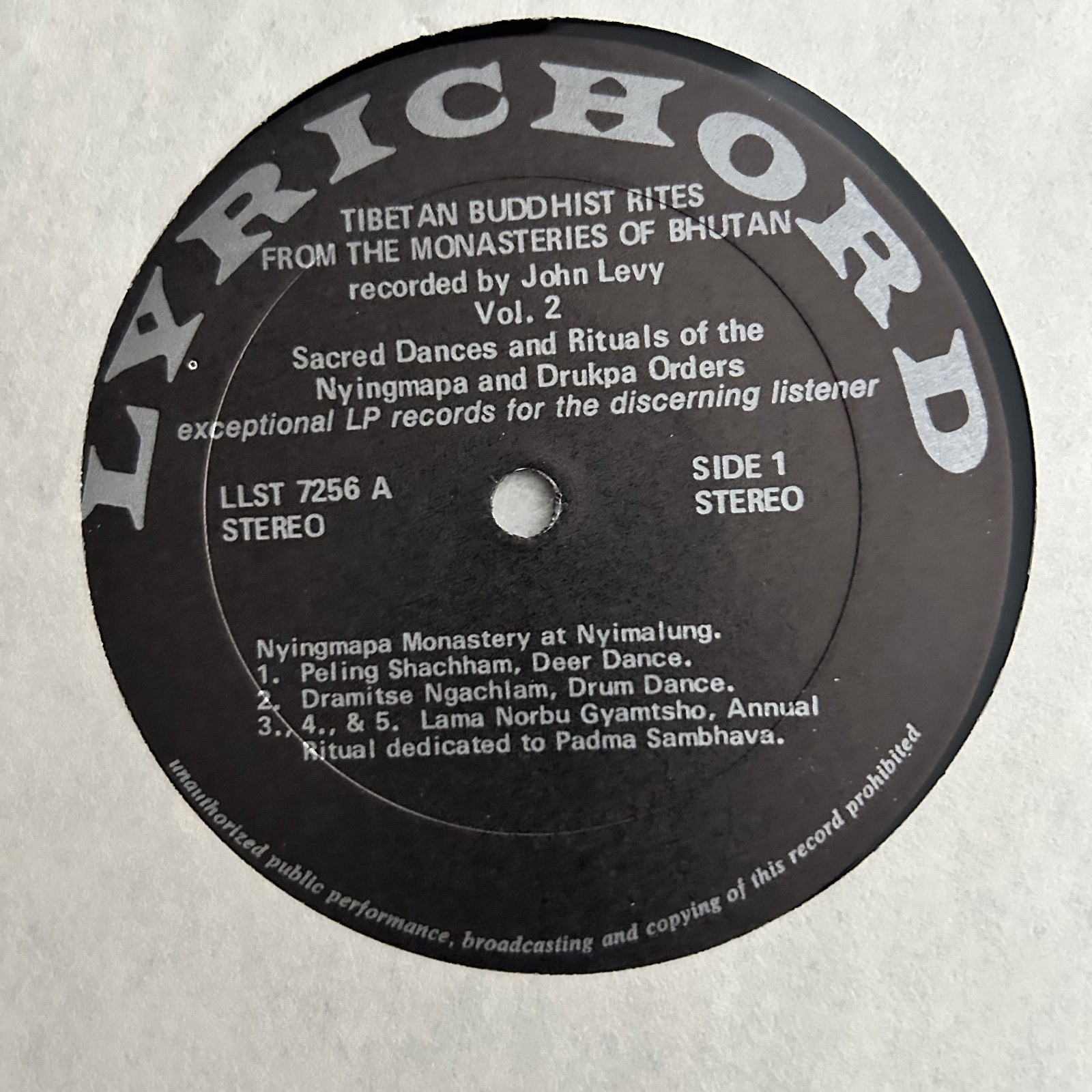
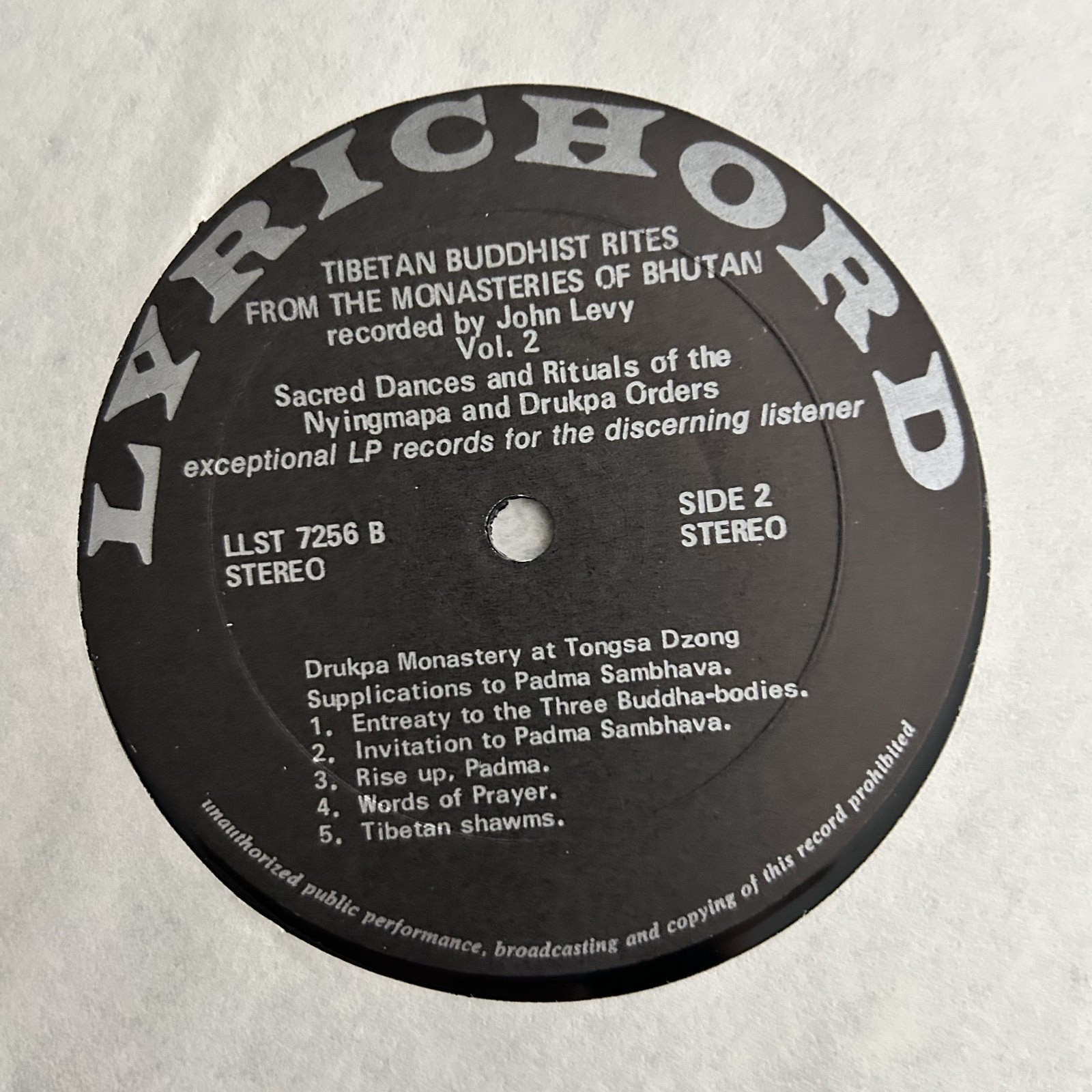
Tibetan Buddhist Rites From The Monasteries Of Bhutan Volume 2 LP 1972 Lyrichord
$
50
Favourite Auctions
To save auctions to your favourites, please login
If you don't have an account, please register
Description
Tibetan Buddhist Rites From The Monasteries Of Bhutan Volume 2 LP 1972 Lyrichord Booklet Archival Sleeve
This its music from another world of ancient rituals amazing
Side A recorded at the Nyingmapa Monastery, Nyimalung.
Side B recorded in the Tongsa Dzong. From the Seven Supplications to Padma Sambhava.
Illustrated booklet enclosed
The music of Bhutan is an integral part of its culture and plays a leading role in transmitting social values. Traditional Bhutanese music includes a wide spectrum of subgenres, ranging from folk to religious song and music. Some genres of traditional Bhutanese music intertwine vocals, instrumentation, and theatre and dance, while others are primarily vocal or instrumental.
Bhutan was first united in the 17th century, during the reign of Zhabdrung Ngawang Namgyal (1594–1652); the same period saw a great blossoming of folk music and dance. Religious music is usually chanted, and its lyrics and dance often reenact namtars, spiritual biographies of saints, and feature distinctive masks and costumes. Today, Bhutan has a robust tradition of monastic song and music not normally heard by the general public. The language used in these lyrics is generally Chöke.
The Cham dance is one of the most conspicuous religious musical subgenres in Bhutan, and is shared among Tibetan Buddhists in Tibet and in other countries, having roots in the 8th century. Lama and founder of Bhutan Zhabdrung Ngawang Namgyal is also credited with introducing many masked dances into Bhutanese tradition. Performed during modern Bhutanese tsechus (festivals), cham dances act both to achieve enlightenment and to destroy evil forces in a sort of ritual purification.Ordinary people watch cham dances in order to receive a spiritual benefit and merit. The music and choreography of the cham dance are heavily associated with Tibetan Buddhism, however some common features derive directly from the Bön religion. The Dramyin Cham in particular is a focal point of many modern tsechus.
The influence of Drukpa Buddhism and Buddhist music on Bhutanese culture is such that many folk songs and chanting styles are derived from Drukpa music. While some lamas and monks are credited for composing certain Bhutanese folk music, the majority of its creators are unknown or anonymous. Like religious music, the lyrics of folk music are most often in literary Dzongkha or Chöke, however there are also several traditional songs in Khengkha and Bumthangkha.
Vocal and behavioral discipline for traditional singing requires thorough training in order to master the correct pitch, facial expressions, gestures, and overall conduct while performing.
Along with traditional music, masked dances and dance dramas are common participatory components of folk music, and feature prominently at Bhutanese tsechus (festivals). Energetic dancers wearing colorful wooden or composition face masks employ special costumes and music to depict a panoply of heroes, demons, death heads, animals, gods, and caricatures of common people. The dances enjoy royal patronage and preserve not only ancient folk and religious customs but also perpetuate the art of mask making.
price rating




![THE ROLLING STONES [SHE'S A RAINBOW] 1967 MEXICO EPP 938 EP 45 London](https://www.popsike.org/php/thumbnail.php?url=https://www.popsike.pics/pix/20240520/226154812294.jpg)