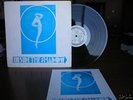
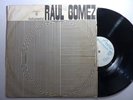
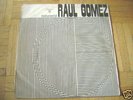
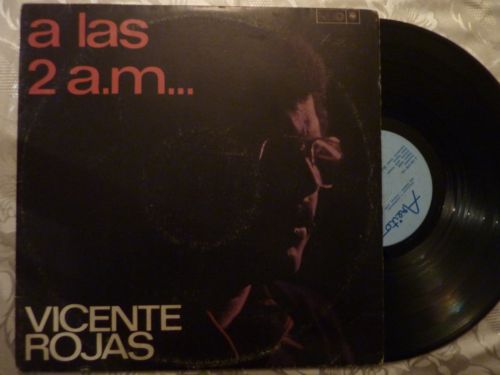
Vicente Rojas - A Las 2 A.M. - Areito LD-3933 Cuban Disco/Funk
$
20


Favourite Auctions
To save auctions to your favourites, please login
If you don't have an account, please register
Description
Vicente Rojas - A Las 2 A.M. - Areito LD-3933 Cuban Disco/Funk
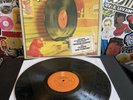
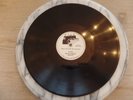
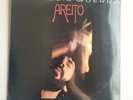
Vicente Rojas - A Las 2 A.M. - Areito LD-3933. Two clean labels. VG/VG(-).
Tracklist
A1 Esto No Es Para Bailar 3:01 A2 El Motivo De Vivir 3:35 A3 Por Los Caminos Del Amor 3:01 A4 Ser Lo Que Esperas 3:38 A5 Di ¿Que Somos? 3:50 A6 En La Nieve 2:02 B1 Siempre Es Igual 2:46 B2 En La Orbita 3:30 B3 Por Si Me Dejas 2:54 B4 La Vida Siempre Es Mucho Mas 3:47 B5 Si Sentimos Igual 2:52 B6 Hermandos En La Hazaña 3:26"Vicente Juan Rojas Salermo was born in 1951 in Gibara, a town on the north coast in eastern Cuba.
At the age of twelve he received the first violin, solfege and theory classes at the music school of his native town, with
teachers Pedro Gómez and Juan Angulo.
At the age of fourteen he was awarded a scholarship to study at the National School of Arts in Cubanacán, Havana,
after undergoing rigorous vocational tests.
There he studied violin and other theoretical subjects of music,
composed his first songs and made his first musical arrangements.
In 1970 he began his professional life as the first violinist of Revé, one of the most popular Cuban orchestras, with
which he performed various national and international tours, as well as numerous presentations on radio, television, cabarets,
nightclubs, carnivals, etc., And from where he released his first compositions and musical arrangements.
In 1973, he started working as a music producer at EGREM (Recordings and Music Editions Company of Cuba), and
made successful productions of the most popular performers of the moment, soon becoming one of the
most recognized and requested producers and arrangers.
Their music, sung as instrumental, spread quickly in all the Cuban radio stations with an astonishing
welcome for such a young artist.
In particular, Radio Encyclopedia, the prestigious national radio station that
disseminates instrumental
music
in Cuba, transmitted widely and with total acceptance by the public the majority of its creations.
Two of
those instrumental themes were, for many years, the presentation music of channels 2 and 6 of
Cuban
television
, the only ones that existed at that time.
From 1975 he began to participate in important national and international events, invited as a jury member
alongside great and renowned figures of music, and also as arranger and songwriter who
performed at those events.
In 1978 he began to compose with the Cuban author Alberto Vera, member of the legendary "Piloto y Vera" binomial, and make
that union one of the richest and most significant of the time by the number of famous songs that bequeathed to the
cultural island.
The themes that they produced then were interpreted by the most famous singers of the moment, and
they launched to the fame to young artists who began their careers in those days.
Most of the successes composed by
the duo Rojas (music) and Vera (letra) are part of one of the richest stages in the production of valuable musical numbers
that quickly spread and integrated into the memory of Cuban popular music, With themes in which the
unique
quality
of the melody was accompanied by lyrics that had, in addition to beautiful messages, an incredible power of
communication.
In 1979 he began to work as an advisor to the Cuban Radio and Television Institute (ICRT), and in
1980 he was in charge of the musical production of a special disc release that EGREM made with several artists
to honor the Day Of Mothers, and for which he composed some songs that became famous and remembered
songs like Siempre es igual, by Mirtha Medina and Alfredo Rodríguez, The reason to live, duet of Beatriz Márquez and Sergio
Farías,
Di, what are we? , With Sergio Farías, for then live, instrumental theme played by trumpeter Arturo Sandoval, and
Son ganas de ti, song of the group Los Dan, among others.
By then his music was heard and became famous in the
voices of the country's most popular singers.
In 1981 he created and directed the "Rafael Somavilla" Music Production Center of the ICRT, where the
young singing singers of the famous TV program "Todo el mundo sing"
were professionally trained
.
In 1985, next to Ariel Fontana, who put text to many of its melodies, composes several musical numbers that
quickly
destroy
with total success in the mass media.
Encouraged by Fontana and Beatriz Márquez, she decides to sing her own
songs, and chooses, for the first time, the titled
"Let's Get Started", making a duet with Beatriz herself.
In that same year he ventured into the realization of his first music videos.
The video clip he produces of the song
"Me quedé con Ganas" is remembered as the first production of that genre that marks a radical change in the way of
producing the music videos in the national scope, impelling a new way of making talented, original , Fresh and fluid
for the music clips
that until then were transmitted in the television channels of his native country.
This opens the doors to projects of
artistic quality with which it obtains more reputation and prestige.
That first video clip, written and directed by the
Cuban
filmmakers
Ada Garcia and Armando Álvarez, make it reach unlimited popularity and recognition that make it
the pioneer of video clips in Cuba, a category that is still being awarded today By the connoisseurs of the environment
In 1992 he emigrated to Spain, where he continued composing songs, performing record productions and musical arrangements
for Cuban and Spanish singers.
In December of 1994 he traveled to the United States of America and since then he lives in Miami, where besides being dedicated to
the musical production in his own study of recordings, continues presenting in programs of radio, television and
musical events, national and international."
No Cuban records are graded Mint or Near Mint. Most Cuban records after 1970, mainly on Areito, have some degree of ring wear due to their paper like sleeves. GRADING:
All records are strictly graded. Sleeves are graded first followed by the vinyl. Example: EX/VG. I have used both the Record Collector and Goldmine magazines standards to grade my records. Where indicated records are play graded (especially those of higher value) otherwise they are inspected under a strong light.
Pre-revolution labels like Panart, Puchito,Seeco, Duarte,Velvet Records and others from the 1950's as well as the post-revolution 1960's EGREM records were pressed using thick vinyl and generally will sound better than the 1970's and later Areito recordings. The pre-revolution records will often play better than they look.
M= Mint: refers to a brand new unplayed vinyl record.
NM = Near Mint: Record played only a few times with care. May have a few light marks when examined under a bright light otherwise appears new.
EX = Excellent: The record has some signs of being played but there is very little lessening in sound quality. The cover and packaging may have slight wear and/or small creasing. EX(-) is somewhere between VG and EX. A record with an EX(+) grade can be described as better than EX but not quite Near Mint.
VG = Very Good. The record has obviously been played many times but displays no major deterioration in sound quality despite noticeable surface marks and light scratches. Normal wear on the cover or extra items without any major defects is acceptable. VG(-) signifies a record has more surface noise as well as visual marking than a VG while VG(+) is not quite in the EX category.
GOOD: The record has been played so much that the sound quality has noticeably deteriorated and a lot of surface noise can be heard. The cover and contents suffer from folding, scuffing of edges, ring wear, spine splits, discolouration, etc.
FAIR: The record is only just playable and has not been taken care of. There is considerable surface that impacts on the playback, The record may jump or skip. The cover and contents will be torn, stained, water damaged and/or defaced.
Poor: The record will not play properly and skip and/or jump throughout many tracks. The cover will be badly damaged and/or partly mussing.
Bad: The record is unplayable and may be broken. This type of record is used only as a collection filler and I will only sell such a record if it is extremely rare to obtain.
ABOUT ME:
I have been selling vinyl records on E-Bay since 2000 and prior via mail-order. In all over 30 years experience. My work in the record and radio industries and music reviewer for a major newspaper has allowed me to accumulate a lot of vinyl records. In 2011, I started buying used Cuban vinyl records in Havana and I am currently one of the biggest resellers in North America. I employ several purchasing agents whom I have trained to provide me with quality vinyl.
WHY BUY CUBAN RECORDS FROM ME:
- Good quality/reasonable pricing.
- I pay more to obtain quality Cuban vinyl and resell at competitive prices.
- I am helping several Cuban people (my buyers) whose lives have improved since working for me.
- Strict grading.
- No hassle 30 day money back no questions asked guaranty.
- I only use strong quality mailers to ensure goods arrive undamaged.
- All Cuban records are washed using a professional cleaning system and are inspected before being listed.
I COMBINE SHIPPING COSTS.
price rating