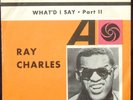
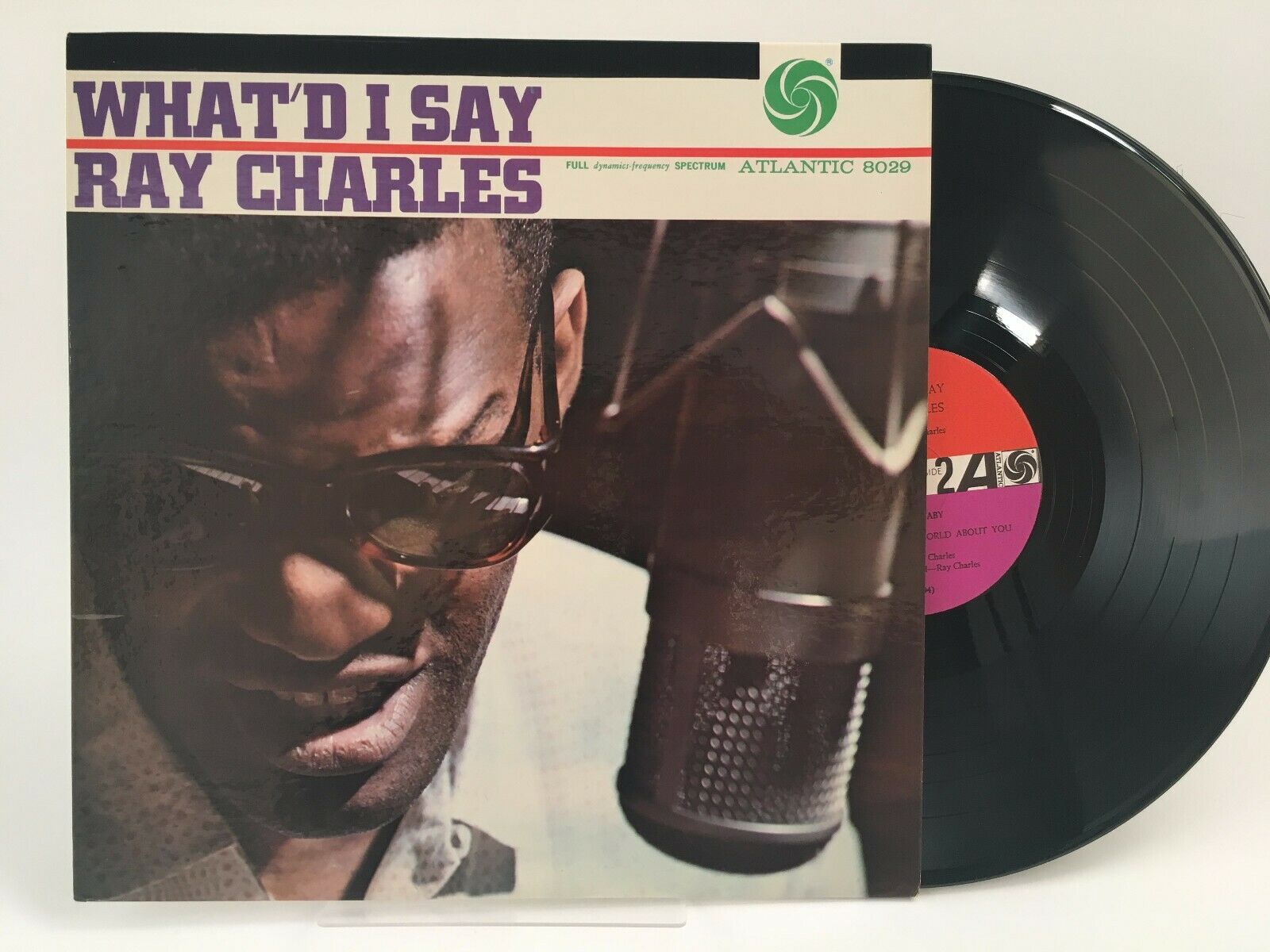
What'd I Say by Ray Charles
$
22


Favourite Auctions
To save auctions to your favourites, please login
If you don't have an account, please register
Description
Academy Books and Records
has been selling rare records since 1995
Shipping
All records are shipped in protection packaging designed expressly for records,
and include internal padding.
Record Condition Abbreviations
Condition is subjective and if you believe we have erred, please bring to our attention.SEALED generally is the highest and safest grade. Some of our investment-grade records, like rare wines, have been sealed for one or two generations, waiting to be opened and savored. A “LOOSE BAG” designation for a sealed record indicates a loose baggie (as opposed to a thin plastic heat-shrink wrap used today). These generally date a record to the 1950s or early 1960s and add evidence of early pressings.
M- or NM (Near Mint). We grade all opened records M- even if it appears they have never been played.
E+ (or VG++). Indicates a record that may have some light scuffs or an occasional light click from a hairline scratch. Unless you were listening for these rare errant sounds, you would probably not notice them. An E+ record is generally acceptable to the most discerning collectors.
E-E+ (or VG+). Most bands (songs) are M-, but 1 or more may have a noticeable pop and click or audible cut. Unless your favorite song is affected, these records can be exceptional values, selling for half the price of an M- recording. Many rare records can only be found in this condition; others come from the factory with this grade because of the grade of plastic or lacquer used. We have opened records and played them one time, and graded them E-E+.
E (or VG). Several bands have some noticeable clicks and pops, static, or hiss. The static and hiss are caused by repeated playing with a worn needle. You can spot these records by holding them up to a light. They will have a gray cast (from the surface being roughed up by being “played to death”).
Supplemental Condition Codes:
co = Cutout (a hole drilled by a distributor or manufacturer, or slit produced by a band saw, to mark a copy sold at a reduced price to a store and without the right to return it to the distributor if it does not sell. Similar to a remaindered book..
ss = Split seam
noj/nol = name on jacket/or label
toj/tol = tape or residue or damage therefrom on jacket/label.
PRECEDENCEEarlier issues of an album (and pressings within the issue) are generally more valuable than reissues. The rationale is that because records are stamped from a die, the earlier the pressing the crisper the impression and the fidelity of the playback.
Records designated “PROMO” are favored because they were sent to DJs and music journalists to hype new release. Naturally these were typically the first discs off the press.
At Academy we attempt to determine the precedence of each record within a discography history of issues.
We have indicated, where known, the year the performances were recorded, the first year released on long-play High Fidelity and the year of release of the specific album. This might be written “Recorded 1946-52, Released 1953.” If it is known that the specific record for sale was a first issue, we will so indicate. If it is known that the record was not part of the first issue, and this is significant to value or quality, the release date may be followed by the notation “reissue” or “r”.
Precedence is sometimes hard to determine and I’m sure we miss noting some reissues. In fact, if the record is not rare and the difference between say a 1974 and a 1976 release is inconsequential in terms of music quality or value, we do not devote the time to research or note same.
RECORDING CHANNELS
M = Mono[phonic] or one-channel
Mono is very crisp, with a lot of presence.
Stereo appeared in early 1958, so it is assumed that all recordings prior to 1958 are Mono, and all after the mid-to-late 1960s are Stereo. Between 1958 and the mid-1960s, most records were offered in both formats.
S = Stereo[phonic] or two-channel mixing.
B (Both) = Record contains some mono and some stereo recordings. This is common with anthologies that encompass music from both eras.
SE (Electronic stereo) or R (Rechanneled). Some recordings from the mono era were re-issued in the 1960s as artificial stereo records, under the generic descriptor “Enhanced for Stereo,” or “Electronically Re-Channeled.” Capital used the trademark “Duophonic.” These recordings are electronically split into two channels, and in the process lose some fidelity and presence. A true stereo or mono version is preferable, if available.
P (Partial) = Some stereo is electronically rechanneled and some is true stereo.
Q (Quadrophonic). Issued only in the early to mid-1970s, these recording are rare. They are playable on any turntable, but to reproduce as four channel output, you need a system that will pick up each of the four channels, and four speakers. But with such a set-up you can create true surround sound. We have a number of Quad records in our inventory. The price is typically 20% higher than stereo.
price rating