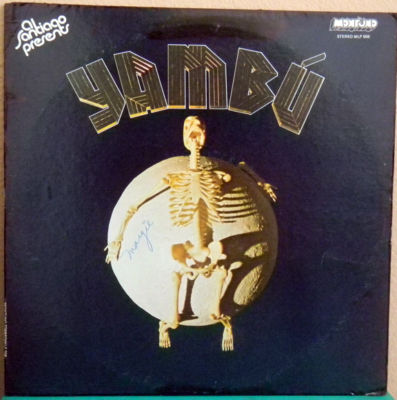
YAMBU: MONTUNO#506(Rare Al Santiago Label)- ('75) HEAR
$
27


Favourite Auctions
To save auctions to your favourites, please login
If you don't have an account, please register
Description
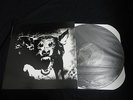
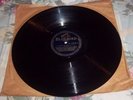
HEAR SOUND CLIPS! NO Significant Noise, NO SKIPS! LABELS CONDITIONS: SEE SCAN : VG++ (NM except for signatures on labels) COVER CONDITION : SEE SCAN : LIGHT GENERAL WEAR...Outside Bumped Corners....NO SPLITS...STRONG VG+ or better!
REMARKS: ORIGINAL PRESSING...COLLECTOR's ITEM!!!! 1975 WAS A GREAT YEAR FOR SALSA, FUNK & DISCO (ROCK FANS HATE THESE YEARS)....HERE WE HAVE SHADES OF ALL 3 GREAT RHYTHMS!!!! GREAT!
AL SANTIAGO (ALEGRE LABEL ) ALONG WITH GEORGE GOLDNER (TICO, COTIQUE) BELONG TO A FUTURE SALSA HALL OF FAME. THEIR LABELS HELPED A LOT IN CREATING THE FANIA EMPIRE!! (FANIA ACQUIRED BOTH!!) ...BOTH RECORD LABEL OWNERS CONFRONTED FINANCIAL PROBLEMS (Al With The Administration When The Label Grew Too Fast, George With His Gambling Problems) DESPITE THE GREAT SUCCESS THEY CREATED!
AL SOLD ALEGRE BUT HE CONTINUED AND THIS IS AN EXAMPLE...THE MONTUNO LABEL (AMONG OTHERS)!!
The term yambú, known as "the old people's rumba", is a precursor to the Cuban guaguancó.
(b Albert Santiago Alvarez , 23 Feb. '32, Spanish Harlem NYC; d 9 Dec. '96, Peekskill, NY State) Record producer, record store and label boss, composer, arranger, bandleader, saxophonist, pianist, school psychologist.
Al Santiago greatest contribution was the creation of the ALEGRE label.....
produced 49 albums on Alegre '60-6, including four more volumes by Pacheco and his Charanga, debut albums by Kako, Eddie Palmieri and Willie Rosario, others by Dioris Valladares (En Vete Pa'l Colegio '61 and Yo La Vi Vol.II '63), Orlando Marín (Se Te Quemo La Casa '62, reissued '78, and Que Chevere Vol.II '64), César Concepción (Sabado '63), Johnny Rodríguez (El Cancionero de America '63), Mon Rivera (a new lease of life was given to Rivera's career by Al's three trombone band on Que Gente Averigua '63, reissued as Mon y sus Trombones '76), Tito Puente (Y Parece Bobo c '65), Louie Ramírez (Vibes Galore c '66), Celio González (Ahora Si!/ This Is It! '66) and the esteemed first four Alegre All-Stars Latin jam session albums: The Alegre All-Stars '61, The Alegre All-Stars Vol.2 `El Manicero' c '65, The Alegre All-Stars Vol. 3 `Lost & Found' and The Alegre All-Stars Vol.4 `Way Out' , both mid-60s. Santiago stated in '94 that Julio Gutiérrez's Cuban Jam Session Vol. 1 '56 on Panart 'planted the seed for the Alegre All-Stars' and declared it to be 'the best descarga/jam session ever on record'.
The fourth Panart Cuban jam session release Cuban Jam Sessions In Miniature 'Descargas' (see Descargas Cubanas: Cuban Jam Session Vol. 2) '57 by Cachao was also a major influence on him: 'My favourite recording of all time! What a rhythm section!' 'I figured,' he told DJ Nancy Rodríguez in '90, 'why not make a band of the bandleaders and where I don't have a bandleader to fill up a chair, I would get one of their top musicians to do it. They would all be members of the Alegre family. I spoke to Johnny Pacheco and Charlie Palmieri and others as the first nucleus. They liked the idea, but had reservations of how to get together if they were working with their own bands. That was solved by rehearsing on Tuesdays, at the Tritons. The other problem was how to solve the mixture of different temperaments and characters, Kako an introvert, Pacheco an up-tempo man, Charlie a harmonic man, and Dioris vocals and merengues. We decided it would all be improvised without music, with mostly rhythm. We had an unusually large rhythm section ... so when you hear that record, what comes to mind is the Cachao music, that rhythm section ... In the beginning there was no designated leader ... Before the album came out, I had to make a decision. Who am I going to designate the leader of the Alegre All-Stars? ... I chose Charlie because of his harmonic way of thinking ... This hurt me in a way because after that, Johnny never wanted to record with the Alegre All-Stars again.'
Santiago and Perlman sold Alegre '66 to Branston Music, the umbrella corporation that owned Tico and Roulette Records, and he worked for Tico, producing Cuba Y Puerto Rico Son.. . '66, the first collaboration by Celia Cruz and Tito Puente, the tremendousSon Con Guaguancó c '66 by Celia and the 'Alegre All-Stars', and They Call Me La Lupe/ A Mi Me Llaman La Lupe '66 by La Lupe with Chico O'Farrill ('Chico wrote all the arrangements ... We worked on that project with a studio dream band ... My great friendship with Tito Puente got a little strained at that time. He didn't like the idea that after he caused La Lupe to reach her zenith as a recording artist and performer I should be producing her LP with Chico and a studio band.').
Next Santiago and Perlman formed Futura Records, which put out a Kako 45 and Willie Colón's first single. Around this time Al assembled a version of the 'Alegre All-Stars', comprising of an amazing four bassists and three Latin rhythm sections, together with three horns, tres, piano and background voices for a never released avant-garde descarga workout he dubbed The Four Bass Hit Session ; personnel incl. Cachao, Bobby Rodríguez and Julio Andino, basses; Kako, Frankie Malabe and Louie Ramírez, percussion; Willie Colón, playing trombone on his first recording with a band other than his own; Pedro 'Puchi' Boulong, trumpet; Mauricio Smith, alto sax/flute; Barry Rogers, making his recording debut on tres; Charlie Palmieri, piano; Héctor Lavoe, Chamaco Ramírez, Chivirico Dávila and Willie Torres, background voices.
Santiago became staff producer with Musicor '67, producing albums by Bobby Capó with Tito Puente, two albums by Kako, Orquesta Broadway (Do Their Thing '68), Mark Weinstein (the avant-garde Cuban Roots '68, feat. pianist Chick Corea), Willie Rosario (Two Too Much '68, Rosario's first with a baritone saxophone and four trumpet frontline, a combination he has retained until the present day), Dioris Valladares (Con Pimienta '68), Tito Rodríguez (Big Band Latino '68, which he issued under threat of litigation from Rodríguez, who never proceeded, and Instrumentales a la Tito '68), La Playa Sextet (Sonido de Puerto Rico '68) and Tato Díaz. After that he freelanced with various companies, perpetuating the Alegre All-Stars tradition under the name of the Salsa All-Stars (produced for Salsa Records '68) and two albums by the Cesta All-Stars (in fact a recording of Alegre All-Stars personnel made in '67, but Santiago lacked the funds at the time to pay the studio or musicians, let alone release the material; he sold the tapes to Joe Quijano, who after some overdubbing and insertion of material from elsewhere in the Cesta catalogue, issued the recordings as the Cesta All-Stars' Live Jam Session , late 60s, and Salsa Festival , early 70s, with sleeves that continued the single colour concept of the Alegre All-Stars' covers, crediting himself and Al as co-producers).
Al also did albums by Orquesta Capri (En Fuego and Felix Morales and his Orchestra Capri '72) and Orquesta Tentación (Nuestras Raices/Our Roots ) on Salsa. He worked on Pete & Louie/ The Beautiful People c '70 on Fania by Louie Ramírez and Pete Bonet ('Pacheco supervised the first session and gave in to Louie that I finish the LP and supervise the mixing'). Santiago formed Mañana Records '70, prod. albums by Capri and Tentación and conceived and prod. the ground-breaking Saxofobia Vol.1 '71 by Orlando Marín's 'La Saxofónica', featuring a unequalled frontline of five saxophones, with rhythm section and voices; Charlie Palmieri played piano on half the album and Louie Ramírez wrote half the charts and composed one tune. Though it was an artistic success, NYC Latin music industry politics at the time restricted airplay and undermined its commercial success. His other early '70s productions incl. an unreleased album by the New Yorican Orchestra, with Charlie Palmieri on piano, for Ralph Cartagena's Rico label, César Concepción's Hot & Salsa on Velvet (uncredited) and recording supervision (also uncredited) of Kako and Totico's Siguen Pa'lante y Pa'lante on Gema.
Santiago co-founded Montuno Records '75 and prod. three albums there incl. debut releases by Yambú and Saoco (the notable Siempre Seré Guajiro '76, co-produced with the band's co-leaders Henry Fiol and William Millán, and released through Mericana). He penned the liner notes for the Alegre All-Stars compilation They Just Don't Makim Like Us Anymore '76, and returned to Alegre '77, by that stage subsumed by Jerry Masucci's Fania Records empire, to produce Pa 'Bailar Na' Ma by Dioris Valladares, and the Alegre All-Stars 17th anniversary reunion Perdido (Vol.5 or 6?) . Masucci hired him as Director of Special Projects for Fania '78 in charge of reissuing classic albums and preparing compilations: 'I worked at Fania for about 11 months. And I made 39 compilations for them, which were 'Best of ...' albums without being called 'Best of ...' albums, because of course Masucci wanted me to fool the public and come up with a new title so they thought it might be a new record ... I wrote more than half the liner notes. Some of them I would write and give the credit to other people, like on the Frankie Dante (deceased) and his Orchestra Flamboyán (Best Foot Forward '78), I wrote the notes but Tito Puente got the credit.'
Back with Alegre '78, Santiago acted as consultant on Charlie Palmieri's The Heavyweight and prod. the eponymous album by the young band Fuego '77, feat. future Libre lead vocalist Frankie Vásquez. He formed Gaucho label '79 (named after his 11-year-old German Shepherd) on which he released a 45 in tribute to the great Cuban singer Miguelito Valdés by the Gaucho Band (aka The Santiago-Madera 22 Piece Studio Band): 'What a record! What personnel! Machito, Puente, Charlie, José Fajardo, Bobby 'Compañia' Rodríguez, Luis 'Perico' Ortiz, Puchi ... and the best Latin sax section ever assembled: Mario Bauzá, Bobby Porcelli (altos), Dick 'Taco' Meza, José 'Pin' Madera (tenors) and Mario Rivera on baritone'; 'Don Alfredo' (a tribute to Al's father) from the same session was issued as a bonus track on Saxofobia Plus '93. He prepared a compilation for the Miami-based company Armada and Rodríguez (now Armada and Fernández), titled Al Santiago's The Best of Cuba c '80, released on their Funny label.
For what turned out to be the last time, Al convened and conducted the Alegre All-Stars (or Nearly New Alegre All-Stars as he called them) for a successful gig at NYC's S.O.B.'s club on 17 June '96 to celebrate their 35th anniversary; personnel comprised of Puchi and Héctor 'Bomberito' Zarzuela, trumpets; Mauricio Smith and Bobby 'Compañia' Rodríguez, reeds; Jimmy Bosch, trombone; Oscar Hernández, piano; Joe Santiago, bass (Bobby Rodríguez was recovering from a back operation); Orlando Marín, timbales; Papo Pepin, conga; Johnny 'Dandy' Rodríguez, bongo; Willie Torres and Rudy Calzado, vocals. Al's health rapidly deteriorated between Sept. '95 and Nov. '96 (he was admitted to hospital on three occasions); he retired from his job as a school psychologist Sept. '96; prior to his final admission to hospital (15 Nov. '96) he began preparing the next two Mucho CDs: compilations of Marcelino Guerra's (d 30 June '96) Verne recordings and a 22 piece all-star band; he died 9 Dec. '96 from complications of diabetes and heart disease. During his final days he repeatedly spoke of joining 'The Celestial All-Stars' and reuniting with Latin greats such as Noro Morales and Machito.
TRACKS SIDE A:1 Dinamita
2 A New Thing
3 Cosas De Amor
4 Profesor
5 Hippopatamus
TRACKS SIDE B:
1 Caballo
2 Movin'on
3 Vecindad
4 Sunny
VOCALIST: RAFY PUENTE
LEADER & BASS: RAMON RODRIGUEZ
PIANO: MILTON HAMILTON
TIMBALES: REYNALDO ALCANTARA
BONGO: MANNY RIVERA
CONGAS: JOSE GONZALEZ
TRUMPETS: JAY SILVA & JOE MORRISON
TROMBONE: SAM BURTIS
GUESTS: CONGAS (FRANKIE MALAVE & EDDIE RODRIGUEZ)
ELECTRIC GUITAR (FREDDIE HARRIS & RODNEY JONES)
DRUMS (MIGUEL SEVILLA)
CHORUS: (IZZY CANO DAVILA, NESTOR SANCHEZ & WILLIE TORRES)
GIRL GROUP ON SUNNY: (LISETTE WILSON & CARLY SEVILLA)
"YAMBU is the unabashed sound of Latin New York. This distinctive sound is the result of exposing Caribbean music (itselfan amalgamation of Spanish and African influences) on the larger culture of the "melting pot". Yambu is the continuance of this sound, this sound is Yambu...its orthodox but impressive rhythm section...the speaking skins having conversations of slaps, bangs and thumps...Manny Rivera and Jose Gonzalez burning skin on skin...!!" (Reviewer Jose A. Ortiz)
Please Follow The Shipping Rates Below:
LPs
1 Item
Xtra Item
Air Mail Media U.S.A
$4.00 (Delivery Confirmation Included)
Add $0.25
Air Mail Priority U.S.A
$8.00 (Delivery Confirmation Included)
Add $1.00
Air Mail Canada
$6.75
Add $2.00
Air Mail Europe
$13.75
Add $2.50
Air Mail Asia
$13.75
Add $3.00
Air Mail Caribbean
$12.00
Add $2.00
Air Mail South America
$12.50
Add $2.50
If Buying More Than 3 Records We Will Inform You The Shipping & Handling....We do combine shipping for multiple purchases.
Insurance Available If Requested
* We offer a money back + shipping costs guarantee on our records (unless otherwise noted) if you feel the LP was not graded properly (in Grading “disputes” Return Shipping Not Included). We will issue a full refund upon its return, once our mistake has been verified.
You must contact us within 2 days of receiving item to qualify for a refund.
Item must be returned within 3 days.
Item must be returned in same condition as it was received.
Money will be refunded through PayPal.
Record Grading: Standard guidelines for grading records comes down to a subjective judgment that may vary from person to person. We grade records and LP covers visually AND (when possible) play-tested. We make every effort to give full disclosure (remember that the LP has at least 12 tracks and the grading may vary between each other) and your satisfaction is guaranteed. Don't assume that our vinyl determination of "Very Good+" is the same as yours!
RECORD OR COVER GRADED VG or LESS WILL BE "SOLD AS IS"
MINT: Unplayed, still sealed.
NM RECORDS: are shiny, with no visible defects, they might have one or 2 minor superficial scuff and they should play without any noise. Writing, stickers or other markings cannot appear on the label, nor can any “spindle marks” from someone trying to blindly put the record on the turntable. Major factory defects also must not be present; a record and label obviously pressed off center is not Near Mint. If played, it will do so with no surface noise. (NM records don’t have to be “never played”; a record used on an excellent turntable can remain NM after many plays if the disc is properly cared for.)
NM COVERS:
have no creases, ring wear or seam splits of any kind.
Picture Sleeves: should look as if they never housed a record. This is a great reason to remove your 45s from their picture sleeves and keep them separate. Just keeping the 45 inside the sleeve will cause damage than can reduce the grade of the sleeve.
VG++ (Excellent) RECORDS:
Barely noticeable play wear and background noise. May have surface scuffs and/or superficial marks, which will be inaudible or indiscernible from the background, no scratches. Very nice, flaws noted.
VG++ COVERS:
Artwork is still as close to perfect as can be. Some impression to the cover (minor outer ring wear) but no ink wear! Some slight creases to the corners, but not wrinkled and obtrusive to the eye. The corners can show white (where the artwork pasted slick was) meaning, slight wear. No seam splits or writing on the cover or taped repairs can make this grade.
VG+ RECORDS:
may show some slight signs of wear, including light scuffs or very light scratches that do not affect the listening experience. Slight warps that do not affect the sound are OK. Minor signs of handling are OK, too, such as telltale marks around the center hole, but repeated playing has not misshapen the hole. There may be some very light ring wear or discoloration, but it should be barely noticeable.
VG+ COVERS:
should have only minor wear. A VG+ cover might have some very minor seam wear or a split (less than one inch long) at the bottom, the most vulnerable location. Also, a VG+ cover may have some defacing, such as a cut-out marking. Covers with cut-out markings can never be considered Near Mint.
VG+ PICTURE SLEEVES:
might show some very light creasing where it is obvious that a record once resided (or still does reside). A VG+ picture sleeve might have some very minor seam wear or a split (less than one inch long) at the bottom, the sleeve’s most vulnerable location.
VG RECORDS:
They have more obvious flaws than their counterparts in better shape. They lack most of the original gloss found on factory-fresh records. Groove wear is evident on sight, as are light scratches deep enough to feel with a fingernail. When played, a VG record has surface noise, and some scratches may be audible, especially in soft passages and during a song’s intro and ending. But the noise will not overpower the music otherwise. Minor writing, tape, or a sticker can detract from the label. Many collectors who have jukeboxes will use VG records in them and not think twice. They remain a fine listening experience, just not the same as if it were in better shape.
VG COVERS and PICTURE SLEEVES:
will have many signs of human handling. Ring wear in the middle or along the edges of the cover where the edge of a record would reside, is obvious, though not overwhelming. Some more creases might be visible. Seam splitting will be more obvious; it may appear on all three sides, though it won’t be obvious upon looking. Someone might have written or stamped a price tag on it, too.
RECORDS GRADED VG OR BELOW WILL BE "SOLD AS IS"
Items are to be paid within 5 days (if not paid by that time it will be subject for relisting) of auction close and will be shipped within 48 hours of receipt of payment. Paypal is the preferred method of payment.
Carlos A. Flores 25830 Crippen Dr. Land O' Lakes, FL 34639
price rating