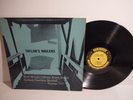
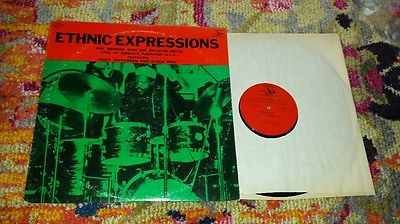
roy brooks & the artistic truth ethnic expressions lp orig 1973 im-hotep grail
$
909


Favourite Auctions
To save auctions to your favourites, please login
If you don't have an account, please register
Description
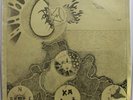
Extremely rare find and unique opportunity for any serious jazz collector. Original 1973 Im-Hotep LP "Ethnic Expressions" by Roy Brooks & the Artistic Truth. Unearthed from the estate of a jazz musician. Record is near mint with only minor signs of having been played. Cover shows some wear but no seam splits. In storage for years. Cleanest example we have ever seen! Certainly better than any that have sold in the last few years. A must for the serious collection. Will be shipped free via insured Priority Mail with signature confirmation. Will double box for safe shipment. Will be happy to provide additional photos. We are pleased to be able to offer this wonderful piece of jazz history. Good luck! We also have a few more nice jazz LP's listed this week. Have fun!
Ethnic Expressions by Roy Brooks & the Artistic Truth is one of two recordings drum master Roy Brooks cut for the tiny Afrocentric New York imprint Im-Hotep. Released in 1973, it has been one of the most sought-after "Holy Grail" recordings on the collector's market, with copies selling at auction for over $2,500. The reason is not merely its rarity, but the stellar quality of its music and the focus of its vision reinventing the unity of African-American self-determination through music. Recording at Small's Paradise in Harlem on the tenth anniversary of the assassination of John F. Kennedy, this large collective of musicians created a positive, musically sophisticated, emotionally powerful performance that epitomized 1970s jazz as it incorporated the free, progressive, and spiritual jazz elements of the 1960s in a setting that also included soul and blues expression. The personnel includes Brooks on drums and percussion; Olu Dara and Cecil Bridgewater on trumpets and flügelhorn; Hamiet Bluiett,Sonny Fortune, and John Stubblefield on saxophones, flute, and bass clarinets; pianists Joe Bonner(acoustic) and Hilton Ruiz (Rhodes); bassist Reggie Workman; and Richard Landrum and Lawrence Williams on African percussion. Vocalist Eddie Jefferson also appears on the "The Smart Set" and "Eboness," at his most expressive and soulful. The album's five tracks include two longer pieces in "M'Jumbe" (whose arrangement reflects the time Brooks spent with Charles Mingus a year earlier) and the closing "Eboness (Kwanza)," as well as three middle-length pieces
The 16-minute "M'Jumbe" begins in a free call and response between trumpet, percussion, and bowed bass, gradually adding more instruments until its groove emerges at two minutes and its melody unfolds near the three-minute mark. Even as the horn sections quote the theme, improvisation moves in and out, funky themes are introduced with another melodic statement, and brief moments of free playing slip through before formal solos are taken. The tune is always circular due to its impeccably preeminent rhythmic elements. "The Last Prophet" showcases the band's groove side with stellar piano work fromBonner and a horn section in full swagger. The interplay between Workman and Brooks is magical.Jefferson's hip R&B roots are brought into play on the finger-popping "The Smart Set" and his blues authority on "Eboness," with some deep soul work from Workman and Ruiz as well as a fine flute solo from Fortune. On "Eboness (Kwanza)," the vocalist referred to as "Black Rose" is Dee Dee Bridgewater. This is a bona fide jazz classic; its importance as an example of the best that jazz had to offer in the 1970s cannot be overstated. "