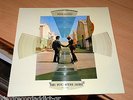
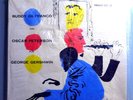
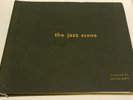
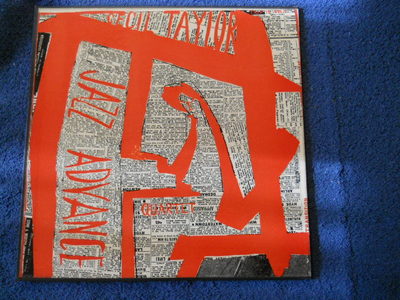
CECIL TAYLOR - Jazz Advance 1956 LP w/ Book Transition 19 PRISTINE NEAR MINT++
$
313


Favourite Auctions
To save auctions to your favourites, please login
If you don't have an account, please register
Description
Please check out my other newly listed rare JAZZ & JAZZ VOCAL LP's
CECIL TAYLOR
"Jazz Advance"
Transition TRLP 19
Released in 1956
His debut album, an avant-garde jazz masterpiece, in absolutely pristine condition
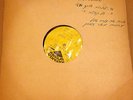
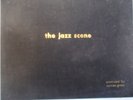
The small 8 page booklet (see photos above) is even harder to find than this album and is in superb condition.
ABOUT THE ARTIST:
by Scott Yanow Soon after he first emerged in the mid-'50s, pianist Cecil Taylor was the most advanced improviser in jazz; five decades later he is still the most radical. Although in his early days he used some standards as vehicles for improvisation, since the early '60s Taylor has stuck exclusively to originals. To simplify describing his style, one could say that Taylor's intense atonal percussive approach involves playing the piano as if it were a set of drums. He generally emphasizes dense clusters of sound played with remarkable technique and endurance, often during marathon performances. Suffice it to say that Cecil Taylor's music is not for everyone. Taylor started piano lessons from the age of six, and attended the New York College of Music and the New England Conservatory. Taylor's early influences included Duke Ellington and Dave Brubeck, but from the start he sounded original. Early gigs included work with groups led by Johnny Hodges and Hot Lips Page, but, after forming his quartet in the mid-'50s (which originally included Steve Lacy on soprano, bassist Buell Neidlinger, and drummer Dennis Charles), Taylor was never a sideman again. The group played at the Five Spot Cafe in 1956 for six weeks and performed at the 1957 Newport Jazz Festival (which was recorded by Verve), but, despite occasional records, work was scarce. In 1960, Taylor recorded extensively for Candid under Neidlinger's name (by then the quartet featured Archie Shepp on tenor) and the following year he sometimes substituted in the play The Connection. By 1962, Taylor's quartet featured his longtime associate Jimmy Lyons on alto and drummer Sunny Murray. He spent six months in Europe (Albert Ayler worked with Taylor's group for a time although no recordings resulted) but upon his return to the U.S., Taylor did not work again for almost a year. Even with the rise of free jazz, his music was considered too advanced. In 1964, Taylor was one of the founders of the Jazz Composer's Guild and, in 1968, he was featured on a record by the Jazz Composer's Orchestra. In the mid-'60s, Taylor recorded two very advanced sets for Blue Note but it was generally a lean decade. Things greatly improved starting in the 1970s. Taylor taught for a time at the University of Wisconsin in Madison, Antioch College, and Glassboro State College, he recorded more frequently with his Unit, and European tours became common. After being awarded a Guggenheim Fellowship in 1973, the pianist's financial difficulties were eased a bit; he even performed at the White House (during Jimmy Carter's administration) in 1979. A piano duet concert with Mary Lou Williams was a fiasco but a collaboration with drummer Max Roach was quite successful. Taylor started incorporating some of his eccentric poetry into his performances and, unlike most musicians, he has not mellowed with age. The death of Jimmy Lyons in 1986 was a major blow, but Cecil Taylor has remained quite active up until the present day, never compromising his musical vision. His forbidding music is still decades ahead of its time.
ABOUT THE ALBUM:
by Michael G. Nastos
The Transition label and the then new music of Cecil Taylor were perfectly matched, the rebellion in modern jazz was on in 1956, and the pianist was at the forefront. Though many did not understand his approach at the time, the passing years temper scathing criticism, and you can easily appreciate what he is accomplishing. For the reissue Jazz Advance, you hear studio sessions in Boston circa 1956, and the legendary, ear-turning set of 1957 at the Newport Jazz Festival. A young Steve Lacy is included on several tracks, and while revealing Taylor's roughly hewn façade, the few pieces as a soloist and with his trio of bassist Buell Neidlinger and drummer Dennis Charles are even more telling. At his most astonishing, Taylor slightly teases, barely referring to the melody of "You'd Be So Nice to Come Home To," wrapping his playful, wild fingers and chordal head around a completely reworked, fractured, and indistinguishable yet introspective version of this well-worn song form. Taylor is also able to circle the wagons, jabbing and dotting certain vital notes on the melody of "Sweet & Lovely." When inclined to turn off putting dissonant chords into playful melody changes, he does so, turning around Thelonious Monk's "Bemsha Swing" delightfully, and then scattering notes everywhere in his solo. Lacy's soprano sax is more than up to the task in interpreting Taylor's personal "Charge 'Em Blues" or laying out the straight-ahead mood on "Song." Neidlinger is the hardest swinging bassist on the planet during "Rick Kick Shaw," boosted by the Asian flavored piano of Taylor and especially the soaring punt-like drumming of Charles. The Newport sessions allegedly sent the crowd reeling with stunned surprise, as the quartet takes Billy Strayhorn's "Johnny Come Lately" starkly further than Monk might have, while Taylor's original "Nona's Blues" sports a jagged edge in what he called a "traditional, shorter form" as they were "at a jazz festival," and his original "Tune 2" is a ten-and-a-half minute languid strut, most Monk like, and a departure from any norm previously established. With Jazz Advance, the revolution commenced, Taylor was setting the pace, and the improvised music world has never been the same. For challenged listeners, this CD has to be high on your must have list.
TRACKS:Title/Composer Performer Time Stream
1 Bemsha Swing Denzil Best / Thelonious Monk Cecil Taylor 7:29
2 Charge 'Em Blues Cecil Taylor Cecil Taylor 11:07
3 Azure Duke Ellington / Irving Mills Cecil Taylor 7:29
4 Song Cecil Taylor Cecil Taylor 5:21
5 You'd Be So Nice to Come Home To Cole Porter Cecil Taylor 9:18
6 Rick Kick Shaw Cecil Taylor Cecil Taylor 6:06
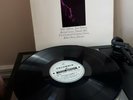
Record Grade: Near Mint, appears unplayed, full gloss, no marks that I can see on the record; no marks by the center hole; a 9.5 on a 1-10 scale
Jacket Grade: Near Mint
Labels: Black and gold
.
We ship around the world.
United States customers
We use the eBay calculated shipping system. Please click on the tab for details. We ship within 5 business days. For shipments within the U.S., delivery confirmations with tracking information is included. We use professional record mailers and one or more fillers. Shipping discounts are available on multiple purchases shipped in the same mailer - this applies to both U.S. and International shipments. When calculating postage, double albums count as two; box sets will probably cost more to ship than double albums.
International customers
All records are shipped via Airmail.
Discount is available on multiple purchases shipped in the same carton. Please tell us what country you live in and the number of LP's you want. Final cost is based on the weight of the package.
price rating