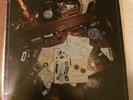
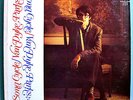
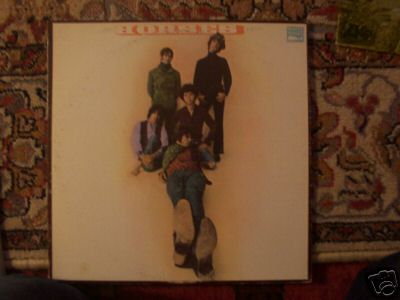
HORSES Rare LP DON JOHNSON White Whale KINGFISH 1970
$
82


Favourite Auctions
To save auctions to your favourites, please login
If you don't have an account, please register
Description
One of the obscure "serious" acts on the adventurous yet poppy White Whale label, Horses are more remembered for their rather off-the wall connections....their junior member, actor/guitarist Don Johnson of "Miami Vice" fame, their close links with the Grateful Dead (guesting on albums and eventually forming Dead side project Kingfish with Bob Weir)...but Horses were a splendid band in their own right.
Country rock-ish pop in the vein of Hearts and Flowers...and perhaps more closely their White Whale labelmates The Rockets (later to become Crazy Horse)...but with a surprisingly modern sound. Produced and largely written by John Carter and Tim Gilbert, best known for the Psychedelic pop songs of The Strawberry Alarm Clock and The Rainy Daze....this is in fact a superb album of 1969 West Coast pop-rock...with a guitar heavy powerpop edge uncannily like the current crop of young LA bands, this is a timely release for an unknown classic!
With the band featuring the first (rather good!) recorded work of Don Johnson of "Miami Vice" fame! With 10 of 11 tracks written by producers John Carter and Tim Gilbert, the duo most famous for writing "Incense and Peppermints" for the Strawberry Alarm Clock, and producing the legendary Rainy Daze.
For some reason when White Whale released the Horses album, it was barely released. In fact, members of the band didn't even know it existed until stumbling upon it by accident in the 1980s.
Sadly, the Horses album disappeared into the ether of time before members of Horses moved on to Kingfish (a band featuring The Grateful Dead's Bob Weir) and New Riders of the Purple Sage, amongst other things.
Tunes like Freight Train (the song Johnny Cash was eyeing for his Orange Blossom Special album), Birdie In A Cage (an acoustic workout with a raw but clean sound), Nothing At All (a melodic tune that could've been a smash soundtrack theme), Cheyenne (the song Roy O was aching to sing), Run Rabbit Run (a more rocking number that has shades of Johnny Cymbal or David Cassidy), Overnight Bag (a song that would give pub rockers and glam rockers a run for their money), Asia Minor (the wholesale chanting rocker) and Wind (a pensive Nick Drake like album closer) all show that Horses had a lot to offer if only the world were willing to listen. It also goes to show the best intentions for a perfectly hued musical vision can collapse under the weight of a heartless, fickle business.
This is a must for all West Coast pop rock, Powerpop, Country rock...and I suppose Grateful Dead and Don Johnson fans!....this is a seriously good album...and very, very obscure.
White Whale Records was started in 1965 in Los Angeles by Ted Feigin and Lee Lassiff. It was located in the first few years at 11115 Donna Pegita, Studio City, California, and later moved to 8961 Sunset Blvd. in L.A. proper.
The label started successfully when Feigin and Lassiff visited the Revelaire club and signed a Westchester, California, surf band called the Crossfires. The group at the time had six members (L-R in photo at right): Howard Kaylan (lead vocals), Jim Tucker (rhythm guitar), Don Murray (drums), Al Nichol (lead guitar, vocals), Chuck Portz (bass), and Mark Volman (vocals, percussion). Several of the members had come from a folkie high school group, so when the Byrds started making folk-rock "the next big thing," the newly-renamed Turtles jumped right in with White Whale's first single, Bob Dylan's "It Ain't Me Babe" [White Whale 222]. The song went top-10 in late summer, 1965, and prompted White Whale's first LP, It Ain't Me, Babe, released in October. The Turtles' followup, "Let Me Be" [White Whale 224] made the top 30 later that fall, but otherwise, 1965 was uneventful for the label, with just three other singles (by Matthew More Plus Four [White Whale 223], the Answer [White Whale 225], and LA-based surf guitarist Jan Davis [White Whale 226]) completing the first calendar year's effort.
In early 1966, the Turtles' third single, "You Baby" [White Whale 227] reached the top 20, followed by a mid-charter ("Follow Me", White Whale 228, #65) by a new duet called Lyme & Cybelle, who actually were a teenage Warren Zevon and songstress Tule Livingston. Two additional singles by the duo failed to chart, and Zevon signed on to White Whale as a songwriter. Years later, after White Whale was dead and all but forgotten, Zevon growled his way to the top-25 with "Werewolves of London" [Asylum 45472, 1978]. By that time, however, Zevon had already been well known in the music industry, having played keyboards for the Everly Brothers and having penned Linda Ronstadt's hit "Poor Poor Pitiful Me."
Meanwhile, the Turtles started a precipitous slide off the charts. Their second album, You Baby, failed to dent the top 200, and the singles weren't doing much better. Their fourth single, "Grim Reaper of Love" [White Whale 231], released in early summer, 1966, only made #81. This was followed a month or so later by "We'll Meet Again"/"Outside Chance" [White Whale 234], which failed to chart at all. The label scrambled to quickly issue "Making My Mind Up"/"Outside Chance" [White Whale 237], but again it failed to chart. Now desperate, White Whale immediately shifted to "Can I Get to Know You Better" [White Whale 238], which scraped the bottom of the charts at #89. All in all, 1966 was not the Turtles' best year, but better times were coming.
Aside from the Turtles' woes in 1966, White Whale did have a few successes. Nino Tempo, fresh from working with Phil Spector, teamed with his sister April Stevens for the Spectoresque "All Strung Out" [White Whale 236], which reached the top-30 in the fall. The duo managed to add three more minor chart records over the next two years, but the highest of these, "I Can't Go On Living Without You, Baby" [White Whale 252], only made #86. White Whale also put out two non-chart records by the group Everpresent Fullness, and strangely enough, issued an LP of vintage-1966 material by the group years later, in 1970. The group was formed in Los Angeles in 1965, and by the time the album had come out, they had been disbanded for years.
Perhaps more interesting was the unusual (bizarre?) "Smashed! Blocked!" by the British band John's Children [White Whale 239], which reached #102 late in the year. Although it was the only single released by the group on White Whale, again the label saw fit to issue an album years later, when the label was strapped for cash. The ploy failed for both the Everpresent Fullness and John's Children albums, since neither charted, but both are today looked upon as collectible, the latter mostly as the early work of future T.Rex guitarist Marc Bolan.
By early 1967, the Turtles' touring schedule and disastrous decline in the charts was wearing thin, and drummer Don Murray and bassist Chuck Portz left the group, to be replaced by John Barbata and Chip Douglas. For some time, the group had been using a song on stage that seemed to go over well, but hadn't made its way to the recording studio. The song was given to them some eight months earlier on a scratchy acetate demo by songwriters Garry Bonner and Alan Gordon. The problem was, the song was almost a parody of itself, with very trite lyrics that no self-respecting rock and roll band would be caught dead singing. In fact, Bonner and Gordon had been turned down by everybody already, months ago. The group decided to start working on the song, "Happy Together," for a single [White Whale 244]. What resulted was not only an example of 1960s pop at its best, but also a new direction for the band. It's unlikely that many other bands could have pulled off the wry, we're-not-really-serious tone of the record that started to be the Turtles' trademark (mock rock?), but musically, the record was filled with little musical surprises and a strong hook. It starts with a catchy guitar riff that continues incessantly thoughout most of the song, getting lower and lower in volume until it's virtually subliminal (but impossible to get out of one's mind), backed by a simple drum beat that could well have been taken from listening to a kid pounding on garbage cans. But on that simple beginning is built a minor masterpiece. After the first verse, the drummer puts in a little (pah-dah-pah, pah-dah-pah) riff that the listener is hoping to hear again, but it's there just once. Likewise the little organ "wah wah" heard behind the line "invest a dime" in the second verse, but never again. By the second verse, Douglas' vocal arrangements for the backup vocalists has them singing parts of lines interacting delightfully with Kaylan's lead vocal. And there is an oboe as a backing instrument (only in the second time the chorus "Me and you, and you and me..." is sung), again only once in the song. Add horns and strings to slowly build to a crescendo, along with an off the wall "How is the weather?" thrown in near the end (Translation: "See? I told you we weren't serious!"), and you've got a #1 record. In fact, you've got the only #1 record for either the Turtles or the White Whale label.
With "Happy Together" as a start, 1967 proved to be as successful chartwise for the Turtles as 1966 had been unsuccessful. Their followup, "She'd Rather Be With Me" [White Whale 249], the second of several Bonner-Gordon hits for the group, reached #3 in late spring, and by the end of the year they had two more top-15 singles with "You Know What I Mean" [White Whale 254] and the psychedelic "She's My Girl" [White Whale 260]. In fact, late in 1967 the label showed a decided shift toward the trendy psychedelic and away from the mainstream pop/rock and roll that had marked the first two years of the label's existence. Whereas graphics for the album covers had been done earlier by photographer Guy Webster, by late 1967 Kittyhawk Graphics, a company run by Dean Torrence of Jan & Dean fame, designed much more "modern" (psychedelic) covers, starting with the Turtles' Golden Hits package. In fact, Dean also found time to participate in a remake of the Beach Boys' "Vegetables", issued as White Whale 261 by a "group" called Laughing Gravy.
But for the label in 1967, the Turtles were definitely carrying the load by themselves. Nino & April weren't top-30 anymore, and bands such as Smokestack Lightning, the Brothers, and the Committee couldn't even crack the top 100. Late in the year, White Whale put out a master by Walter Scott, erstwhile lead singer for Bob Kuban & the In-Men, but even in the face of a big hit the year before fronting Kuban's band on "The Cheater," that record didn't chart, either.
1968 for White Whale was much like 1967. The Turtles, now with a stable lineup of Kaylan, Volman, Nichol, Barbata, and Jim Pons on bass, scored a top-10 record with "Elenore," another in the series of put-ons started by "Happy Together." "Elenore" [White Whale 276] is perhaps the only top- 10 record ever to have a lyric containing the phrase "et cetera." Two other Turtles offerings, "Sound Asleep" [White Whale 264, #57] and "The Story of Rock and Roll" [White Whale 273, #48] did not fare nearly as well. The label's foray into psychelia continued with a group called "J.K. and Company," who merited a non-charting album but no singles. "J.K." was Jay Kaye, son of Mary Kaye (of the Mary Kaye Trio fame). Interestingly, the album was recorded in Vancouver, British Columbia, Canada, although Kaye was from Las Vegas.
In addition to the psych-pop, White Whale got into bubblegum in 1968, trying to ride any popular trend. They put out a single by a group called Professor Morrison's Lollipop which reached #88 ("You Got the Love," White Whale 275), and although White Whale put three singles out by the group, none other charted and they did not invest in an album. The group itself was from Lincoln, Nebraska, and was formerly a garage band known as the Coachmen. The group were signed to White Whale during a brief association of White Whale with the kings of bubblegum, Jerry Kasenetz and Jeff Katz. Another single [White Whale 294] from this association was the non-chart "Balloon Man"/"Here We Go" by Artie Resnick, one of the usual writers for the K-K empire.
But while White Whale's bubblegum days were brief, they happened upon another genre in 1968 that proved successful: international music. Rene Herrera and Rene Ornelas had been working for years as Rene & Rene, a bi-lingual duet based in Laredo, Texas, on the Mexican border. In early fall, White Whale released "Lo Mucho Que Te Quiero" backed with "Lloraras" [White Whale 281], but the record did little. Undaunted, the reissued the "A" side backed with "Mornin'" a few weeks later [White Whale 287] and the record clicked, making it to #14 nationally. Their followup, "Las Cosas" [White Whale 298] only reached #128, but it encouraged Lasseff and Feigin to purchase more masters. An album by Rene & Rene, and also one by the group Triste Janero followed. The purchase of international masters continued throughout the remaining life of the label. By 1970, White Whale sought to cash in on the "Dutch Invasion" by purchasing two albums' worth of masters from Dutch pop acts.
The artists whose singles were issued from 1968 on reads like a list of unknowns, for the most part: the Brothers, the XL's,Harper & Rowe, Deni Lynn, the FBI Band, Bobby Lile, Hangtown Fry, the Odyssey, the Kinfolk, the Christmas Spirit, the Charles E. Funk Rebellion, the Amberstones, Zebra, Hungry Tiger, the Skunks, and many others.
On the other hand, White Whale also released some records by artists either on their way up or down. Smokestack Lightning, the Rainy Daze, and Feather all signed with other companies later. Dobie Gray had several singles issued on White Whale during the interim between his "In Crowd" hit (1962) and "Drift Away" (1974), the most successful being "Rose Garden" [White Whale 300], which made #119. Soul artist Jerry-O put out three singles to no chart success after his one minor hit on the Shout label a few years earlier. After the Vegas label folded, Kenny O'Dell switched to White Whale for several singles, but no hits. Recycled ghoul Bobby (Boris) Pickett had a couple of 45s, also, but he was either after or before his time, as "Monster Mash" charted both before and after his stint with White Whale. Reputedly, ex-members of the Knickerbockers were among the group called Steel Wool, who tried (and failed) with a cover version of the Guess Who's "No Sugar Tonight" [White Whale 346]. White Whale even reissued old hits by Bob & Earl ("Harlem Shuffle," White Whale 310) and Keith Colley ("Enamorado," White Whale 311) to no avail.
Had White Whale been able to hang on a few years longer, they would have found they had success in the wings. Two early singles by the Dillards were issued, as well as one by a folky group called the Reivers who were fronted by future country star Paul Davis. The 1970 album by the group Horses featured future Miami Vice star Don Johnson. And an album by the Rockets included Billy Talbot and Ralph Molina, later of Neil Young's Crazy Horse.
White Whale had few hits after 1968. With the exception of the Clique's "Sugar on Sunday" [White Whale 323], which made #22 in 1969, and Liz Damon's Orient Express, who made #33 with "1900 Yesterday" [White Whale 368] in early 1971, no other single made the top 50. The Clique was a band from Austin, Texas. The flip of "Sugar on Sunday," a song called "Superman" that R.E.M. revived years later, was the only cut on the groups' album that they played on. The others were done by producer Gary Zekley and studio musicians. "Sugar on Sunday" was a tune penned by Tommy James, with a couple of French words (femme joli, or "pretty girl") that for all intents and purposes sounded like "Bim Joe Lee" on the single; if they had had a contest to decipher the lyrics, probably no one listening on the radio would have won. The album also contained the original version of "Hallelujah," which would later be a hit for the group Sweathog.
Liz Damon's Orient Express was essentially the label's swan song. Liz Damon was the lead singer fronting a lounge/cabaret band based in Hawaii, and Damon had the dubious distinction of having the last hit, the last 45, and the last album issued on White Whale. As is the story with many small labels, a star or two can keep a label afloat financially, and when that star leaves or becomes passe, the label usually crumbles financially. The White Whale label had first, last, and always been carried by the success of the Turtles. When the group disbanded, White Whale was in deep trouble. They put out a post-breakup collection of odds and ends on an album called Wooden Head, but it had no chart success. With their only true money makers gone, White Whale closed its doors in 1971.
The first label was dark blue with black print, with the logo in white and black at the top of the label. This label was used until WWS-7125. Starting with WWS-7126, the label switched to a new design which was blue-grey with some white, and featured a series of fine-line red concentric circles. The logo on this label design appeared at the far right of the label. This was used until the last album issued. Promotional albums used the same design, but said "PROMOTION COPY" under the "Stereo" notation on the left side of the center hole.
We would appreciate any additions or corrections to this discography. Just send them to us via e-mail. Both Sides Now Publications is an information web page. We are not a catalog, nor can we provide the records listed below. We have no association with White Whale Records. Should you be interested in acquiring albums listed in this discography (all of which are out of print), we suggest you see our Frequently Asked Questions page and follow the instructions found there. This story and discography are copyright 2003 by Mike Callahan.
Horses - Horses
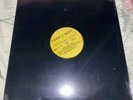
Very, very rare LP on White Whale. 1970. WW 7121.
Vinyl has two very light surface scratches (scuffs). Plays very quietly. Very well cared for.
Cover has some shelf wear. Light ring wear. No splits, tears, bends, or writing of any kind.
1. Freight Train 2. Class of '69 3. Birdie in a Cage 4. Nothing at All 5. Cheyenne 6. Run Rabbit Run (Jump for Joy) 7. Country Boy 8. Overnight Bag 9. Horseradish 10. Asia Minor 11. Wind
TERMS AND CONDITIONS: Winning bidder is responsible for $6.00 postage for USPS Priority shipping in the continental US. All items are expertly packaged in heavy duty cardboard. All items are guaranteed to be as described or money back (not postage).
PAYMENT: Postal Money Orders or Paypal only. Items will be shipped the next day after payment is received. Payment must be received within 10 business days from the end of the auction. Please, always enter the item number and description on ALL payments, otherwise shipment may be delayed. Thank you, good luck, and happy bidding!