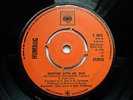
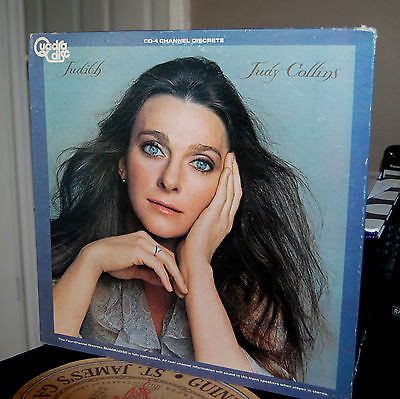
JUDY COLLINS. " JUDITH " ELEKTRA US 1975 QUADRAPHONIC LP. ORIG G/F EX.
£
20
$
27


Favourite Auctions
To save auctions to your favourites, please login
If you don't have an account, please register
Description
More Images
Judy Collins ?– Judith
Label: Elektra ?– EQ1032 Format: Vinyl, LP, Album, QuadraphonicCountry: US Released: 1975 Genre: Rock Style: Blues Rock, Soft Rock
TracklistHide Credits
A1 The Moon Is A Harsh Mistress English Horn, Flute – George MargeFlute [Bass] – Romeo PenqueLute [Alto] – Bill Slapin*Piano – Judy CollinsViola – Emanuel VardiViolin – Gene OrloffWritten-By – Jimmy Webb 2:59 A2 Angel, Spread Your Wings Bass – Tony LevinDrums – Stephen Gadd*Electric Piano – Ken AscherGuitar – David Spinozza, Hugh McCracken, Steve BurghPercussion – Ralph MacDonaldSynthesizer [Arp] – Ken BichelWritten-By – Danny O'Keefe 3:05 A3 Houses Written-By – Judy Collins 4:32 A4 The Lovin' Of The Game Bass – Tony LevinDrums – Stephen Gadd*Guitar – Charlie Brown (7), David SpinozzaHarmonica – Don BrooksOrgan – Pat RebillotSteel Guitar, Resonator Guitar – Eric WeissbergWritten-By – Pat Garvey (2) 3:03 A5 Song For Duke Bass – Tony LevineDrums – Stephen Gadd*Electric Piano – Pat RebillotGuitar – David Spinozza, Hugh McCrackenHorns – Arthur Clarke, Frank Wess, Garnett Brown, Randy Brecker, Seldon Powell, Tony StuddWritten-By, Piano – Judy Collins 3:33 A6 Send In The Clowns Written-By – Stephen Sondheim 3:57 B1 Salt Of The Earth Backing Vocals – Cissy Houston, Denver Collins, Eunice Peterson, Steve Goodman, Sylvia ShemwellBass – Tony LevinDrums – Stephen Gadd*Guitar – Eric Weissberg, Hugh McCrackenOrgan, Electric Piano – Paul GriffinWritten-By – Mick Jagger, Keith Richards* 3:59 B2 Brother, Can You Spare A Dime Acoustic Guitar – Eric Weissberg, Hugh McCracken, Steve GoodmanBass – Tony LevinDrums – Stephen Gadd*Written-By – Jay Gorney 3:12 B3 City Of New Orleans Bass – Tony LevinDrums – Stephen Gadd*Guitar – Hugh McCracken, Judy Collins, Steve GoodmanHarmonica – Don BrooksSteel Guitar, Backing Vocals – Eric WeissbergWritten-By, Backing Vocals – Steve Goodman 4:07 B4 I'll Be Seeing You Written-By – Irving Kahal, Sammy Fain 3:44 B5 Pirate Ships Accordion – Dominic Cortes*Cello – George RicciFlute – Romeo PenqueHarp – Corky HaleRecorder – George MargeWritten-By – Wendy Waldman 2:42 B6 Born To The Breed Bass – Tony LevinDrums – Stephen Gadd*Guitar – Charlie Brown (7), Eric WeissbergHarmonica – Don BrooksOrgan – Pat RebillotWritten-By, Piano – Judy Collins 4:45Companies etc
- Recorded At – A&R Studios
- Phonographic Copyright (p) – Elektra Records
- Published By – White Oak Songs
- Published By – Cotillion Music, Inc.
- Published By – Road Canon Music
- Published By – The Wildflowers Company
- Published By – Ashcroft Music
- Published By – Beautiful Music, Inc.
- Published By – Revelation Music Publishing Corp.
- Published By – ABKCO Music, Inc.
- Published By – Harms, Inc.
- Published By – Buddah Music, Inc.
- Published By – Turnpike Tom Music
- Published By – Williamson Music
- Published By – Big Kitty Music
- Manufactured By – Elektra/Asylum/Nonesuch Records
- Copyright (c) – Elektra/Asylum/Nonesuch Records
- Phonographic Copyright (p) – Elektra/Asylum/Nonesuch Records
Credits
- Arranged By, Conductor – Arif Mardin (tracks: A1, A2, A4, A5, B1 to B3, B5, B6), Jonathan Tunick(tracks: A3, A6, B4)
- Art Direction – Glen Christensen
- Bass – John Beal (tracks: A3, A6, B4)
- Cello – Charles McCracken (tracks: A3, A6, B4), Kermit Moore (tracks: A3, A6, B4)
- Design – David Larkham & Friends*, Ron Wong
- Engineer [Assistant Recording Engineer] – Glenn Berger
- Engineer [Recording Engineer], Supervised By [General Recording Supervisor] – Phil Ramone
- Guitar – Cliff Morris (tracks: A3, A6, B4)
- Harp – Abe Rosen (tracks: A3, A6, B4)
- Horns – Albert Richmond* (tracks: A3, A6, B4), Larry Wechsler (tracks: A3, A6, B4)
- Percussion – Hank Jaramillo* (tracks: A3, A6, B4)
- Photography By [Photographs By] – Francesco Scavullo
- Piano, Celesta – Thomas Pearson (tracks: A3, A6, B4)
- Producer – Arif Mardin
- Trombone – Garnett Brown (tracks: A3, A6, B4), Vinnie Fanuele* (tracks: A3, A6, B4), Wayne Andre(tracks: A3, A6, B4)
- Viola – George Brown (2) (tracks: A3, A6, B4), Julien Barber (tracks: A3, A6, B4)
- Violin – Al Miller (4) (tracks: A3, A6, B4), Alvin Rogers (tracks: A3, A6, B4), Ann Barak (tracks: A3, A6, B4), Bob Rozell (tracks: A3, A6, B4), Cy Berger (tracks: A3, A6, B4), Dan Reed (2) (tracks: A3, A6, B4), Guy Lumia (tracks: A3, A6, B4), Harriet Reynolds (tracks: A3, A6, B4), Harry Cykman (tracks: A3, A6, B4), Julie Held (tracks: A3, A6, B4), Larry Goldman (tracks: A3, A6, B4), Marilyn Wright (tracks: A3, A6, B4), Mathilde Pincus (tracks: A3, A6, B4), Norman Carr (tracks: A3, A6, B4)
- Vocals – Judy Collins
- Woodwind – Jerry Smith (17) (tracks: A3, A6, B4), Joel Kaye (tracks: A3, A6, B4), Les Scott* (tracks: A3, A6, B4), Bob Steen* (tracks: A3, A6, B4), Sidney Weinberg (tracks: A3, A6, B4)
Notes
Quadraphonic CD-4 issue.Gatefold sleeve.
Recorded at A&R Studios, New York
A1: White Oak Songs ASCAP
A2: Cotillion Music, Inc. & Road Canon Music BMI
A3, A5, B6: The Wildflowers Company ASCAP
A4: Ashcroft Music ASCAP
A6: Beautiful Music, Inc. / Revelation Music Pub. Co. ASCAP
B1: ABKCO Music, Inc. BMI
B2: Harms, Inc. ASCAP
B3: Buddah Music, Inc. / Turnpike Tom Music ASCAP
B4: Williamson Music, Inc. ASCAP
B5: Big Kitty Music ASCAP
(labels) ? 1975 Elektra Records
(sleeve) ? & © 1975 Elektra/Asylum/Nonesuch Records
A Division of Warner Communications Inc.
Printed in U.S.A.
Special thanks to Carole Grant.
Many thanks to Rich Blakin, Sam Ginsberg, Bruce Greenhut, Lew Hahn, Roberta Kleine, Gene Paul, George Piros and Chris Washington for their help.
As always, deep appreciation to Max Margulis.
Special thanks to David Geffen.
This album is dedicated to my mother, Marjorie Byrd Hall.
"The Lovin' Of The Game" appears on sleeve, "The Loving Of The Game" appears on label.
Barcode and Other Identifiers
- Rights Society: ASCAP, BMI
- Matrix / Runout (Matrix Side A): EQ-1032-A SP
- Matrix / Runout (Matrix Side A): EQ-1032-B SP
Review by Mark Deming [-]
By the mid-'70s, Judy Collins had earned a reputation as a masterful interpretive singer as well as shown a late-blooming gift as a songwriter. But while much of her work displayed an artful and contemplative tone, after she scored a surprise hit single with her a cappella rendition of "Amazing Grace," Collins was nudged a few steps closer to the mainstream, and 1975's Judith often strikes an uncomfortable balance between misguided pop confections and sturdier material which more readily suits her talents. While several of the cuts feature unexpectedly lush orchestral arrangements, these are often among the highlights. Her graceful and affecting versions of Jimmy Webb's "The Moon Is a Harsh Mistress" and Stephen Sondheim's "Send in the Clowns" (as well as her own "Houses") are lovely and inspired, while the overcooked light rock of "Angel, Spread Your Wings" and "Salt of the Earth" (one of the least effective Rolling Stones covers ever) serve as perfect examples of what doesn't work for Collins in the studio. Other highlights include two vintage chestnuts, "Brother, Can You Spare a Dime?" and "I'll Be Seeing You" -- which suggest Collins would have done well to consider an album of great songs of the 1930s -- and two very different songs about motherhood, "Born to the Breed" and "Pirate Ships," both of which ring honest and true throughout. Judith's high points are sublime, but the low points are just sorry enough to mark this as a turning point toward one of the less-distinguished periods of Collins' career.
Strictly Graded - RECORD COLLECTOR Grading System.
Grading System: In order to assist everyone who buys and sells rare discs, Record Collector magazine has originated a set of standards for the condition of second-hand records, I have added a (+) or (-) to my gradings where applicable.
MINT: The record itself is in brand new condition with no surface marks or deterioration in sound quality. The cover and any extra items such as the lyric sheet, booklet or poster are in perfect condition. Records advertised as Sealed or Unplayed should be Mint.
EXCELLENT: The record shows some signs of having been played, but there is very little lessening in sound quality. The cover and packaging might have slight wear and/or creasing.
VERY GOOD: The record has obviously been played many times, but displays no major deterioration in sound quality, despite noticeable surface marks and the occasional light scratch. Normal wear and tear on the cover or extra items, without any major defects, is acceptable.
GOOD: The record has been played so much that the sound quality has noticeably deteriorated, perhaps with some distortion and mild scratches. The cover and contents suffer from folding, scuffing of edges, spine splits, discoloration, etc.
FAIR: The record is still just playable but has not been cared for properly and displays considerable surface noise; it may even jump.
The cover and contents will be torn, stained and/or defaced.
POOR: The record will not play properly due to scratches, bad surface noise, etc. The cover and contents will be badly damaged or partly missing.
BAD: The record is unplayable or might even be broken, and is only of use as a collection-filler.
POSTAGE DISCOUNTS FOR MULTIPLE PURCHASES.REQUEST INVOICE PRIOR TO PAYMENT SO YOU BENEFIT.
Compatible Discrete 4
From Wikipedia, the free encyclopedia Compatible Discrete 4 An RCA Quadradisc recording. The color fringes around the reflections are caused by the ultrasonic signal that contains the difference information used to separate the four channels. Media type Vinyl record Encoding Analog signal Capacity Four stereo channels Read mechanism pick-up cartridge Usage Audio storageCompatible Discrete 4 (CD-4) or Quadradisc (not to be confused with compact disc) was introduced in May 1972 as a discrete quadraphonic system created by JVC and RCA in 1971.[1] Record companies who adopted this format include Arista, Atlantic, Capricorn, Elektra, Fantasy, JVC, Nonesuch, A & M, Reprise and Warner.[2]
This was the only fully discrete (all channels recorded separately) quadraphonic phonograph record system to gain major industry acceptance.
CD-4 was responsible for major improvements in phonograph technology including better compliance, lower distortion levels, pick-up cartridges with a significantly higher frequency range, and new record compounds such as Q-540, which were highly anti-static.
A typical CD-4 system would have a turntable with a CD-4 cartridge, a CD-4 demodulator, a discrete four-channel amplifier, and (ideally) four full-range loudspeakers.[3] Some manufactures built the CD-4 demodulator into complete four-channel receivers.
Simply put, CD-4 consists of four recorded signals (LF, LB, RB, RF) using a coding matrix similar to FM broadcast stereo multiplexing.
Operation
In the CD-4 system, the quadraphonic audio was divided into left and right channels, which were recorded orthogonally in the vertical plane of the disc groove, which is the case with normal stereo. The CD-4 record track is broader than a conventional stereo track, so the playing time is less than a conventional stereo record.
The audio frequencies (20 Hz to 15 kHz), often referred to as the sum channel, would contain the sum of the left front plus left back signals in the left channel and the sum of the right front plus the right back signals in the right channel. In other words, when observing the audio frequencies only, the record appeared to have an ordinary stereo recording.
Along with this audio, a separate 30 kHz carrier was recorded on each groove wall. The carrier on each side carried the difference signal for that side. This was the information that enabled a combined signal to be resolved into two separate signals. For the left carrier it would be left front minus left back, and for the right carrier it would be the right front minus the right back.
These audio signals were modulated onto the carriers using a special FM-PM-SSBFM (frequency modulation-phase modulation-single sideband frequency modulation) technique. This created an extended carrier frequency range from 18 kHz to 45 kHz for the left and right channels. The algebraic addition and subtraction of the sum and difference signals would then yield compatible and discrete quadraphonic playback.
The CD-4 encoding/decoding matrix:
Quadraphonic channel Sum channel Difference channel Left front = LF + LB + LF ? LB Left back = LF + LB ? LF ? LB Right front = RF + RB + RF ? RB Right back = RF + RB ? RF ? RBprice rating