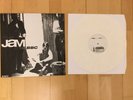
John Prine ? Sweet Revenge ? Rare 1973 Atlantic Monarch Original Vinyl LP+Insert
$
50


Favourite Auctions
To save auctions to your favourites, please login
If you don't have an account, please register
Description
Welcome to Classic Cadillac Records! My goal is to provide each and every customer with the best possible buying experience, no matter the size of the order. Unlike most sellers, I advertise all my items clearly and in as much detail as possible, without shouting at you in all caps. I take multiple high quality pictures and never use stock photos, so you know exactly what you?re buying. I take great pride in my work and go the extra mile, which can clearly be seen in my listings compared to other sellers that put minimal effort into theirs. I visually grade all my records as accurately as possible and will never grade anything above Near Mint unless it?s still sealed. Please note that a visual grade can differ from a play grade, and am happy to spot check a record upon request. All orders are shipped within 1 business day (usually sooner) and packed with extra care to ensure fast, safe arrival. I combine shipping on multiple orders to save you money and gladly ship worldwide. Please look closely at all pictures, read all relevant details and ask any questions you may have before buying. I offer a full 30-day return policy on everything I sell, so buy with confidence! And most importantly, thanks for looking! Sweet Revenge Studio album by John Prine Released October 1973 Genre Folk, alt-country, Americana Label Atlantic Producer Arif Mardin John Prine chronology Diamonds in the Rough
(1972) Sweet Revenge
(1973) Common Sense
(1975)
Sweet Revenge is the third album by American folk singer and songwriter John Prine, released in 1973.
Recording and composition[edit]
Sweet Revenge was produced by Arif Mardin and was mostly recorded at Quadraphonic Sound Studios in Nashville. As Prine biographer Eddie Huffman observes, Sweet Revenge was a full-band LP recorded in Tennessee, but the singer had grown dramatically as a vocalist and recording artist over the previous two years. He sounded fully integrated with the backing musicians this go-around..." Two songs, "Blue Umbrella" and "Onomatopoeia", were recorded at Atlantic Recording Studios in New York City while "Dear Abby" was cut live at a gig at New York's State University. "Dear Abby" was attempted in the studio but, as Prine told David Fricke in 1993, "The studio version of that was cut with a band, and it was real stiff and humorless. We cut it once, live, and that was it. That was the power of the song, in the way people would turn their heads the minute I'd get to the first verse, the first chords. That was the reason we used the live version." The album features many of the same musicians who played on Prine's debut album, along with Cissy Houston, who was a member of the Elvis Presley accompaniment group, the Sweet Inspirations, and Houston, Deidre Tuck, and Judy Clay sing with Prine on the title track's call-and-response sections, adding a soulful blend to Prine's ragged hillbilly edge. "Sweet Revenge" quotes a line from Hunter S. Thompson's Fear and Loathing on the Campaign Trail and reflects some of Prine's frustrations with how his second album was received, commenting in the Great Days: The John Prine Anthology liner notes, "I'd quit my job at the post office, I had this album out that got incredible reviews, and then this second one where the critics started to hit me. I think it got under my skin."
In the liner notes to John Prine Live, Prine writes that "Mexican Home" was partially inspired by his father Bill sitting on his front porch in Maywood, Illinois, while "Grandpa Was A Carpenter" was his homage to his grandfather Empson Schobie Prine. "Christmas in Prison" mixed humor with pathos, romantic longing with some of Prine's most cinematic imagery to date. In the Great Days liner notes, Prine writes of the tune, "It's about a person being somewhere like a prison, in a situation they don't want to be in. And wishing they were somewhere else. But I used all the imagery as if it were an actual prison, with the lights swinging around the yard, the food tasting bad, making guns out of wood or soap. And being a sentimental guy, I put it at Christmas." "Please Don't Bury Me" was a rollicking country toe-tapper with some intricate guitar interplay but had been redrafted, with Prine recalling in Great Days, “That song was originally about this character I had in mind called Tom Brewster. He dies but he wasn't suppose to, like that scene in those old movies. The angels have to send him back, but they can't the way he is. So they send him back as a rooster. Which is why his name is Brewster. I ended up trashing that whole part and came up with this idea of the guy just giving all of his organs away, and I made a whole song out of that.”
The album cover is a far cry from the somewhat naive portraits of the singer on his first two LPs: a bearded, demin-clad Prine - wearing sunglasses and pointy-toed cowboy boots, a cigarette jutting from his lips - sprawls across the leather front seats of a 1959 Porsche convertible, the "first toy" the singer purchased with his record company money.
Reception
Professional ratings Review scores Source Rating Allmusic Christgau's Record Guide AVillage Voice critic Robert Christgau wrote: "Prine is described as surrealistic and/or political even though the passion of his literalness is matched only by that of his detachment: inferential leaps and tall songs do not a dreamscape make, and Prine offers neither program nor protest." Writing for Allmusic, critic Jim Smith wrote of the album "Sympathy takes a back seat to cynicism here, and while that strips the record of some depth, Prine's irreverence is consistently thrilling, making this one of his best. It's not as uniformly brilliant as the debut, but it did steer his music in a new direction — where that record is often hallmarked for its rich sensitivity, Sweet Revenge established cynicism as Prine's dominant voice once and for all. In 1993, David Fricke opined that the album marks "a swing back to the expansive textures of John Prine but with a harder edge, born of Prine's own increased confidence." Tom Nolan's 1974 review of the album for Rolling Stone was positive, calling the album "a more human work, more mature, and a step forward artistically and toward a wider audience," and "his best record yet."
Track listing
All tracks composed by John Prine, except "Nine Pound Hammer".
- "Sweet Revenge"
- "Please Don't Bury Me"
- "Christmas in Prison"
- "Dear Abby"
- "Blue Umbrella"
- "Often is a Word I Seldom Use"
- "Onomatopoeia"
- "Grandpa Was a Carpenter"
- "The Accident (Things Could Be Worse)"
- "Mexican Home"
- "A Good Time"
- "Nine Pound Hammer" (by Merle Travis)
price rating