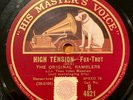
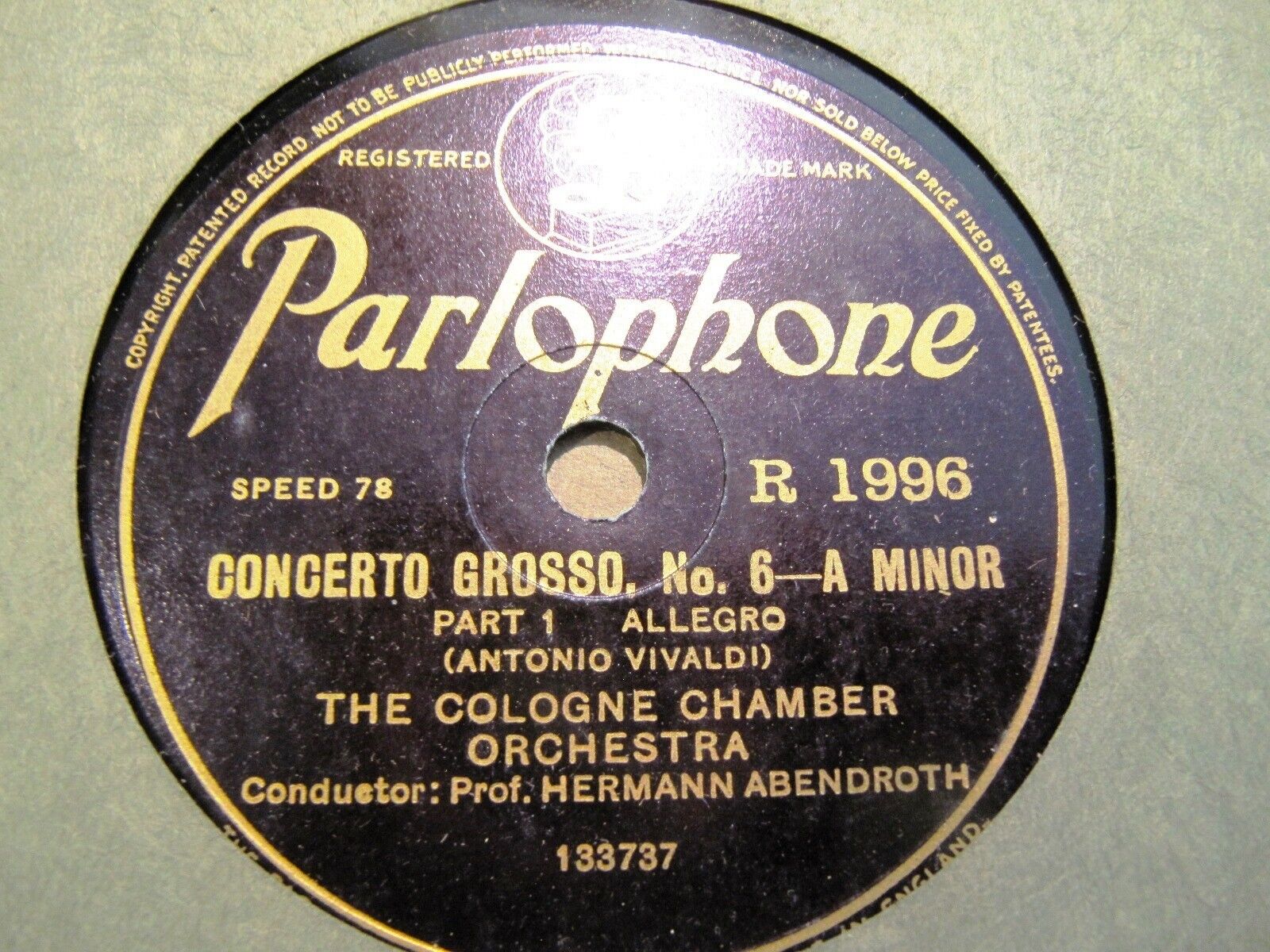
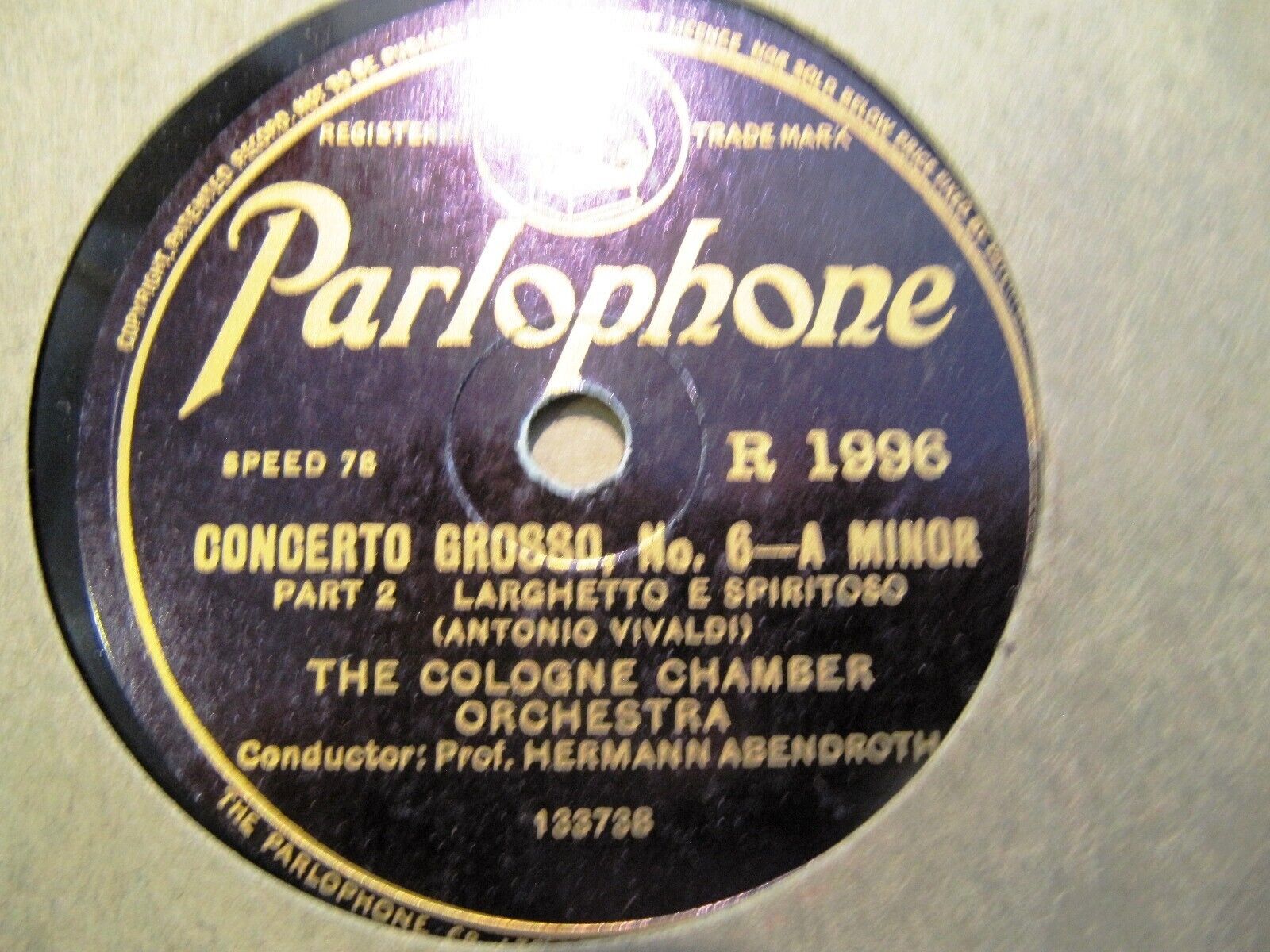
1933 HERMANN ABENDROTH Kölner Kammerorchester Vivaldi VIOLIN Concerto PARLO 1996
$
35


$ 35
Sold For
May 25, 2024
Sold Date
Apr 27, 2024
Start Date
1
Number Of Bids
USA
Country Of Seller
eBay
Sold at
Favourite Auctions
To save auctions to your favourites, please login
If you don't have an account, please register
Description
A series of great Orchestra Records by great conductors on 78 rpm records
Click on this link to see more great Conductors and Orchestral Records!
First recording of the Cologne Chamber Orchestra by founder-conductor Hermann Abendroth
In 1933 Abendroth recorded 2 movements each of a Mozart Serenade, from two different Handel Concerti Grossi, and the present record of
Vivaldi Concerto Grosso No. 6 A Minor
Antonio Vivaldi: Concerto for 2 Violins in A minor, RV 522
1 - Allegro
2 - Larghetto e spirituoso
Please see top of the page for condition
The Kölner Kammerorchester (Cologne Chamber Orchestra) (= KKO) was founded in 1921 by Hermann Abendroth bigger Köln’s orchestras, for the purpose of performing early music.
First documented concerts of this ensemble took place under the direction of Hermann Abendroth and Otto Klemperer in the context of the again-created Rheinischen Kammermusikfestes (Rheinisch Chamber Music Festival) in each May of the years 1921-1925 in Köln and in the Musiksaal of the Brühler Schlosses. When Abendroth left Köln at the beginning of the 1930’s, 1934 his pupil Erich Kraack took over the conducting in 1934. Kraack shifted the location of the ensemble to Leverkusen, where KKO in the casino concerts the Bavarian AG could soon recover and again strengthen its good reputation of the orchestra.
Abendroth has been very highly regarded in some collecting circles for a good number of years now, but very few of his performances have found their way into the UK since the war. His first recordings were made acoustically for Polydor. There were two 1927 Brahms symphonies for HMV and then a series of German Odeons up to the early 1940s, some of which appeared on English Parlophone. After the war Abendroth remained in the Eastern bloc, and just some of his later recorded repertoire reached the West, principally on the American Urania label.
The 1927 Brahms Fourth Symphony is in general a somewhat placid, soft-centred reading. As one would expect of a German conductor born in 1883 the approach is romantic and subjective. There are also marked fluctuations of pulse and tempo, but these seem somewhat flat and contrived. At this point I should also mention the transfers which, as throughout the set, are poor and amateurish—not only are there some jarring side-joins, but at one point in the slow movement no attempt is made to join two admittedly difficult sides: the music just stops and starts again. The 1941 Brahms First is a better performance, for the two inner movements have real life and feeling. Elsewhere, however, dullness and idiosyncrasy make an unhappy mix.
All the Cologne Chamber Orchestra items receive sprightly performances, and even if it is not Tahra's fault that only isolated movements from Mozart, Handel and Vivaldi were recorded, they make up an unsatisfying little group. Beethoven's Fifth receives a competent, solid interpretation, with one or two quirks, but inspiration is pretty well lacking. The later rehearsal sequence is interesting, however (a translation is provided in the notes), and shows Abendroth controlling proceedings in a firm yet courteous fashion.
The second set is a very different matter. Those familiar with Furtwangler's live wartime recordings in Berlin will know that the early German tape machines then in use were capable of capturing a remarkably good sound-quality, which was liable, however, to be affected by some distortion. Leipzig's engineers were still more expert, for the sound is almost modern, with remarkable presence and tonal bloom, and in general it contains much less distortion. Parallels can also be drawn between the nature of Furtwangler's inspiration in those dark days and the quality of the Gewandhaus concerts. Abendroth seems continually inspired to produce performances of outstanding beauty and vitality in conditions which must have been appalling towards the end of the war. The orchestra play with extraordinary commitment, as if music were the only thing left to console the human spirit. In 1944 symphony orchestras could still play Bach and Handel without feeling guilty, and both composers are served by noble, aristocratic readings on the grandest scale. The two Haydn symphonies and the Mozart have wonderful grace and humanity, and there is also an old-fashioned warmth and vitality in the Schubert. Both the Schumann and Brahms overtures receive warm-blooded, ardent interpretations, so in every way I commend this second set very highly.'
price rating